

NATO Ammunition Market
NATO Ammunition Market Size, Share, Trends, Growth, and Industry Analysis, By Caliber (Small Caliber (5.56mm, 7.62mm, 9mm), Medium Caliber (20mm, 30mm, 40mm), Large Caliber (105mm, 120mm, 155mm)), By Type (Conventional Ammunition, Guided/Smart Ammunition), By Application (Defense/Military, Law Enforcement), Regional Analysis and Forecast Period 2026-2035
NATO Ammunition Market Overview
As per Econ Market Research analysis, the Global NATO Ammunition Market was valued at approximately US$ 35.42 Billion in 2026 and is predicted to reach US$ 51.43 Billion by 2035, expanding at a CAGR of 4.22% over the forecast duration. The base year is 2025.
NATO Ammunition Market Size 2025-2035 (USD Billion)

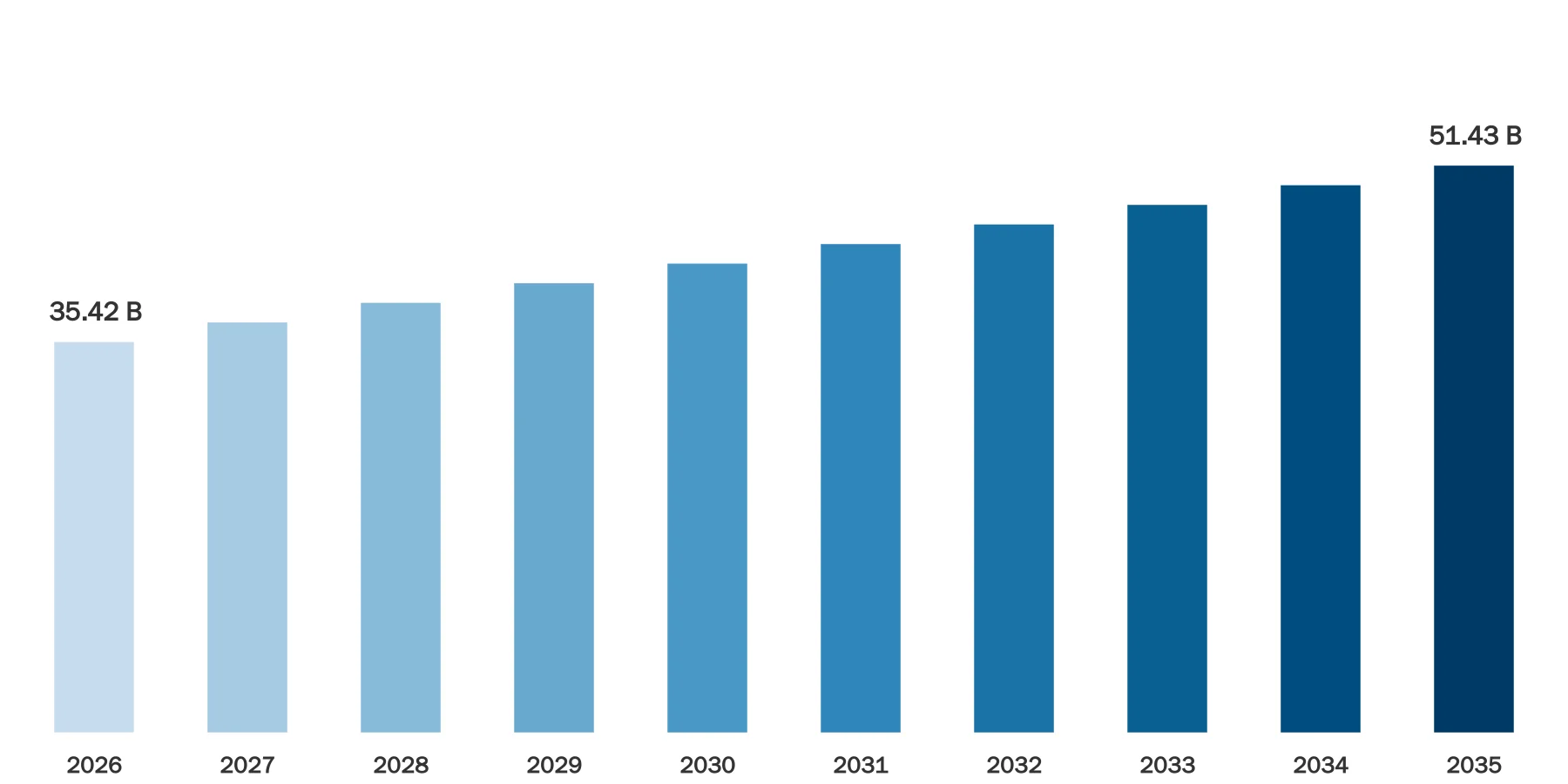
Source: Econ Market Research
NATO Ammunition market encompasses different ammunition types such as small arms, artillery, missiles, and bombs, designed for a given military application. The key objective of this market is to ensure armed forces become well-equipped and ready for a range of defense needs and military operations.
Growing geopolitical tensions and the expanding defense budgets of various nations present a significant thrust to the NATO Ammunition Market, while the ongoing modernization process of member countries', military capabilities is also supporting it. Demand for high-quality ammunition solutions like precision-guided munitions and smart weapons is also growing in the market. Initiatives undertaken by the countries of NATO to hold joint exercises and undertake collaborative defense projects are further supporting the market growth of the region. As the global security landscape continues to evolve, the NATO Ammunition Market will play an extremely important role in enabling allied military forces', preparedness and strength.
Dynamic Insights
Escalating geopolitical tensions and conflicts across most regions create a need for greater military preparedness among NATO member countries, hence a rise in defense budgets in most of these nations. This increase in expenditure directly reflects in the procurement and modernization of ammunition as nations seek to enhance their arsenals with advanced and efficient ammunition systems. Technological advancements have also been part of this market dynamics.
Precision-guided munitions and smart ammunition systems are being widely used in military forces, highlighting higher accuracy and effectiveness in combats. Improved process in production and materials applied for the manufacturing also increase their performance and cost-effectiveness. Collaboration among NATO member allies in joint exercises, such as shared defense mechanisms, promotes a cohesive effort for ammunition supply and logistics as well. However, regulatory compliance and disruption of supply chains, among many others, influence the market stability.
Drivers Insights
Increasing Geopolitical Tensions
The most significant reason for ammunition demand by member countries in NATO has been increased global instability and prolonged conflict. As regional adversaries and even non-state actors pose growing threats to nations, the emphasis is increasingly on readiness at the military level. Nations are compelled to spend more on defense, and part of this defense is the ammunition supply.
Continuous demand for training and operational readiness brings about procuring again, leading to healthy growth in the NATO Ammunition Market. With this, the defense budgets are surging, affecting both the demand and the rate of production of ammunition since its member states are investing hugely in the acquisition of improved munitions to achieve national security and collective security.
Technological Advancements in Ammunition
The ammunition technology is constantly in progress, and one of the primary drivers of the NATO Ammunition Market. Precision-guided munitions, smart ammunition, and advanced fusing technologies improve upon the effectiveness and efficiency of military operations.
This implies that forces can have much more precision shots in action while limiting collateral destruction, which goes in accordance with the changing character of modern warfare. This development of next-generation munitions, with the emphasis on the design of new weapons, brings together defense contractors and military organizations, thus ensuring growth in the market by bringing forth new products that can help meet the changing requirements of modern combat.
Restraints Insights
Regulatory and Compliance Challenges
The NATO Ammunition Market faces significant regulatory hurdles that can restrict market growth. Strict compliance with international arms control agreements and national regulations regarding ammunition manufacturing, storage, and transfer can complicate operations for manufacturers and suppliers. These regulatory challenges may lead to increased costs and extended timelines for product development and procurement, hampering responsiveness to emerging military needs. Additionally, maintaining compliance with various regulations across different countries can create logistical complexities, further straining resources and impacting market dynamics.
Supply Chain Disruptions
Given the intensification of global supply chain issues caused by factors like the COVID-19 pandemic, geopolitics of conflict, and instability in the economy, major constraints were placed on the NATO Ammunition Market. Supply chain disruptions in raw materials as well as components that form ammunition will delay production and the terms of fulfilling military contracts. Continuing variations in material prices also pressure the budget, forcing military organizations to change procurement policies. These supply chain vulnerabilities threaten the timely availability of ammunition, which compromises military readiness and operational capability.
Opportunities Insights
Focus on Sustainability and Green Technologies
The growing environmental concerns in military operations open up new avenues for innovation in the NATO Ammunition Market. Eco-friendly ammunition solutions such as biodegradable materials and less toxic propellants are gaining traction. As defense forces become more conscious of sustainability in their operations, ammunition manufacturers will have a chance to innovate and lead in this area. This way, sustainable practices not only meet the regulations of defense organizations but also enhance their reputation by harmonizing the military in broader environmental goals and societal expectations.
Segment Analysis
By Caliber Size
This general categorization splits ammunition into three size ranges: small, medium, and large calibers. Ammunition falling into the small caliber category generally includes those for use in handguns and rifles, these are the preferred loads for most infantry due to their light weight and general versatility. Medium calibers are found primarily in machine guns and automatic cannons, balancing power output and portability in an equally wide range of ground and aerial platforms.
These comprise large caliber ammunition in both artillery shells and missiles: these are used to perform heavy fire support tasks such as delivering significant amounts of explosive power over considerable ranges. Demand varies in every category, depending on strategy and the specific requirement involved, but each plays its part in modern war environments. In the changing nature of threats, variety in the caliber of available ammunition to military forces will be increasingly vital for preparation in multiple arenas of combat.
By Weapon Platform
The weapon platform-based classification of ammunition categorizes the different types of ammo under their respective intended uses and platforms: aerial, terrestrial, and naval. Aerial platforms are fighter jets, drones, and other fighter planes. They use their specific type of ammunition: precision, speed, air-to-ground, and air-to-air. Terrestrial platforms involve ground-based tanks, armored personnel carriers, and others.
These must have heavy-duty ammunition designed to break through enemy',s defense systems and provide fire support in direct contact. Naval platforms include warships and submarines. Munitions designed especially for naval operations are: these are mostly anti-ship and anti-submarine munitions. This is some form of segmentation in strategic use of NATO forces. Every weapon platform requires that unique ammunition to perform that function. It is key that the right ammunition has to be available for each platform to achieve operational success.
Regional Analysis
The United States is a huge market in North America, characterized by high defense spending and a strong domestic manufacturing base. The U.S. military',s emphasis on modernization and technological advancement in munitions, as well as its involvement in global security initiatives, results in a high demand for various types of ammunition. Additionally, Canada, being a NATO ally, also invests in the modernization of its military capabilities, thus further enhancing the regional market.
In Europe, the main users of the NATO Ammunition Market are the United Kingdom, Germany, and France. The defense budgets of all these countries are on an upward trend, which is a result of emerging threats and also the need to improve military preparedness. Collaborative defense projects and joint exercises contribute more toward standardization and interoperability in the supply of ammunition in NATO.
This contributes to growth in the region. Eastern European nations are also building up their military strength in response to increased security concerns, though ammunition and related defense mechanisms are being purchased in more significant numbers. The surge in emphasis on technological ingenuity, particularly in terms of precision-guided ammunition, reflects the ongoing innovation in military tactics among members of the North Atlantic Alliance.
Competitive Landscape
Companies in the area of ammunition, like Northrop Grumman, BAE Systems, and Rheinmetall, dominate through their long experience and facilities, developing high-end advanced munitions to suit modern NATO forces. All are significant investors in research and development to produce precision-guided munitions and ammunition of the next generation-a market that is growing rapidly focused on technology-based solutions.
Beside these old major defense contractors, other small special firms have begun to surge into the marketplace. With niche products and innovative solutions for special military needs, these small specialized firms take a different position from conventional firms. Other means that enhance the competitive spirit involve public-private partnerships. Companies make public-private collaborations to team up resources and skills with others as they come up with unique product developments.
Moreover, the push towards more sustainable and eco-friendly type of munitions is actually forcing most of the companies to look for alternatives with a greener touch to them. All these forces add a dimension to competitive dynamics of the game, and in that sense the manufacturers are always made flexible and adapt to the shifting regulatory changes and new thrusts in the priorities within the defense mechanism, looking at interoperability and also standardization of procurement kept in mind by the member states of NATO.
List of Key Players:
Northrop Grumman Corp.
General Dynamics Corp.
BAE Systems Plc
Diehl Stiftung &, Co. KG
CBC Global Ammunition
Nammo AS
Recent Developments:
In Oct 2024, it was announced that NATO alliance will make a renewed effort to establish common munitions standards. This initiative aims to reduce costs and enhance usability on the battlefield, drawing insights from the lessons learned during Russia',s conflict in Ukraine.
Global NATO Ammunition Report Segmentation
NATO Ammunition Market Report Scope & Segmentation
| Attributes | Details |
|---|---|
Market Size (Current) | US$ 35.42 Billion in 2026 |
Market Size (Forecast) | US$ 51.43 Billion in 2035 |
Growth Rate | CAGR of 4.22% from 2026 to 2035 |
Forecast Period | 2026 – 2035 |
Base Year | 2025 |
Historical Data Available | Yes |
Regional Scope | Global |
Segments Covered | By Caliber
By Type
By Application
|
Frequently Asked Questions
Common questions about this report
The study period covers historical insights and forecast projections for the period 2026-2035.
About the Author
Market research expert with years of industry experience

Related Reports
Explore more market insights from the same category