

Mobile Wallet Market
Mobile Wallet Market Size, Share, Trends, Growth, and Industry Analysis, By Type (Open, Semi-closed, Closed), By Technology (NFC, QR Code, Digital, Text-based), By Application (Retail andamp; E-commerce, Banking, Transportation, Others), Regional Analysis and Forecast Period 2026-2035
Mobile Wallet Market Overview
As per Econ Market Research analysis, the Global Mobile Wallet Market valuation stood at US$ 19.95 Billion in 2026 and is expected to reach US$ 177.31 Billion by 2035, growing at a steady CAGR of 27.47% from 2026 to 2035. 2025 serves as the base year.
Mobile Wallet Market Size 2025-2035 (USD Billion)

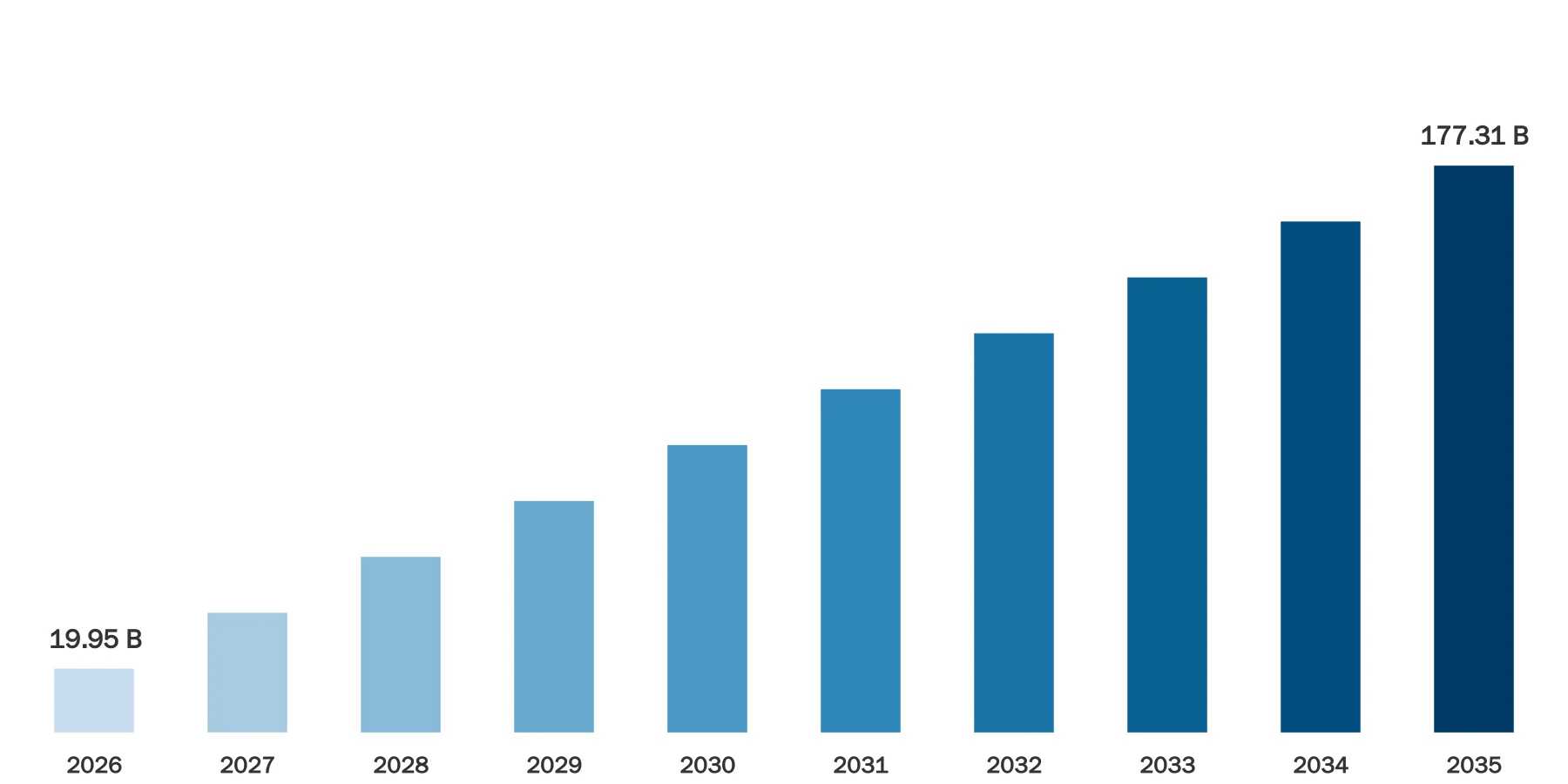
Source: Econ Market Research
Traditional payment methods were revolutionized when the mobile wallet market entered the market at the beginning of the 21st century. Mobile wallets were introduced as a safe and practical replacement for physical wallets. They hold payment details, loyalty cards, and even identity documents thanks to smartphone technology. Around the middle of the 2000s, this invention became well-known, LED by innovators like Apple Pay, Google Wallet, and Samsung Pay.
The market for mobile wallets expanded quickly as customers accepted digital transactions more and more, this was made possible by the widespread use of smartphones and the growing popularity of cashless transactions. By enabling users to conduct smooth, contactless transactions, these digital wallets improve the general effectiveness of financial transactions. Mobile wallets have become more than just payment devices, they can now track budgets, offer rewards, and facilitate peer-to-peer money transfers. Since then, the market for mobile wallets has developed into a vibrant ecosystem with a wide range of participants, encouraging competition and innovation to satisfy the changing demands of a population that is increasingly tech-savvy and connected.
Mobile Wallet Market Dynamics
The confluence of evolving consumer behaviors, technology breakthroughs, and strategic industry collaborations shape the dynamics of the mobile wallet business. The key variables driving the growth of this market are the rising reliance on digital transactions and the rapid adoption of smartphones. User confidence has increased as a result of the introduction of strong encryption and biometric authentication capabilities in response to security concerns. Strong rivalry between major firms such as Apple, Google, and other financial institutions has spurred ongoing innovation as they compete to provide a wider range of services. To set offers apart, it is now strategically necessary to integrate extra features like budget management tools, digital receipts, and loyalty programs.
Furthermore, government initiatives and regulatory environments have a significant impact on how the mobile wallet sector develops. Banks, retailers, and mobile wallet providers are increasingly forming partnerships to promote interoperability and increase acceptance points. User experience, efforts to establish confidence, and seamless integration into daily life will continue to be important elements impacting the worldwide adoption trajectory of mobile wallets as the market develops. The market for mobile wallets is dynamic and competitive due to these dynamics', continuous evolution.
Mobile Wallet Drivers
Smartphone Penetration and Digital Adoption
The increasing popularity of smartphones and the resulting rise in digital adoption have completely changed how people interact with technology and go about their daily lives. Due to their widespread availability and powerful processing power along with fast internet, smartphones have made it possible for people to access a wide range of digital services, such as productivity, entertainment, and communication apps. People all over the world are adopting increasingly digital lifestyles as a result of the widespread use of smartphones, with users depending on them for everything from social media and online shopping to professional duties.
Significantly, the development of digital adoption and smartphone penetration has accelerated the evolution of financial transactions. By utilizing smartphone capabilities, mobile wallets have replaced older ways as a simple and secure way for users to make cashless payments. The smooth incorporation of mobile wallets into smartphone users', everyday routines underscores the revolutionary influence of this technological convergence, providing unparalleled ease and accessibility in the domain of digital financial transactions.
Ongoing Advancements in Security Technologies
Continuous security technology advancements are necessary to protect sensitive data and uphold user confidence in the face of growing cyberthreats and a rise in sophisticated hacking efforts. Advancements in financial services, such as digital payment platforms and mobile wallets, are crucial in mitigating the always changing Cyber Security dangers. Among the cutting-edge innovations supporting the security framework of digital platforms are biometric recognition systems, multifactor authentication techniques, and strong encryption algorithms.
Modern security features are incorporated into these platforms to strengthen their resilience and encourage users to accept digital transactions as customers grow more cautious about the security of their financial and personal information. In an era dominated by the digital transformation of various aspects of daily life, the continued commitment to staying ahead of potential threats and vulnerabilities guarantees that security technologies remain at the forefront of innovation, fostering a secure and resilient environment for the continued growth of digital services, including mobile wallets.
Restraints:
Limited Merchant Acceptance
Not all retailers have adopted or put in place the required infrastructure to take mobile wallets, despite the fact that these payment methods are becoming more and more popular among customers. This restriction makes it more difficult for customers to use digital transactions smoothly by creating a fragmented payment landscape where they could run into scenarios where their preferred mobile wallet is not supported. Obstacles that merchants may encounter include the price of updating point-of-sale systems or worries about security and technological difficulties. Therefore, in situations where mobile wallet adoption is limited, consumers might turn to more conventional payment options like cash or credit cards.
Mobile wallet providers, financial institutions, and merchants must work together to address the issue of restricted merchant acceptance to encourage broader use, expedite integration procedures, and create incentives for companies to implement the technology. Realizing the full potential of mobile wallets and moving toward a more widely used and integrated digital payment ecosystem depends on overcoming this constraint.
Technological Barriers
Technical obstacles pose a significant obstacle to the wider implementation of mobile wallets, hindering their accessibility for specific populations and geographical areas. Even while smartphone adoption rates have increased dramatically worldwide, a sizable portion of the populace still lacks access to these gadgets, which makes it difficult for them to participate in digital payment ecosystems. Additionally, dependable internet access is necessary for mobile wallets to operate without hiccups, and users may experience difficulties completing transactions in places with spotty or inadequate network infrastructure.
Another technological obstacle is digital literacy since people who are not comfortable or knowledgeable about smartphones and related technology could be unwilling to use mobile wallets. Furthermore, the adoption of the new payment paradigm may prove difficult for older generations or those with limited exposure to digital interfaces, thus exacerbating the issue of the digital divide. It will take coordinated efforts to improve digital literacy, build out network infrastructure, and encourage accessible smartphone use to get beyond these technological obstacles.
Opportunities:
Rising Preference for Cashless Transactions
Transactions involving cash are becoming less common as communities come to appreciate the advantages of efficiency, convenience, and improved security. Some causes, including the widespread use of cellphones, the global digitization of financial institutions, and increased awareness of hygienic concerns particularly in light of the COVID-19 pandemic are driving this trend. In addition to fitting in with today',s fast-paced lifestyles, the preference for cashless transactions creates opportunities for cutting-edge financial technology like digital payment systems, contactless cards, and mobile wallets.
Companies and financial institutions are in a good position to take advantage of this chance by providing easy-to-use, safe cashless solutions that meet changing customer demands and preferences. Additionally, the demand for cashless transactions is increased by the expanding ecosystem of digital services, e-commerce, and online shopping, which creates an ideal environment for the growth of a variety of payment methods.
Expanding E-commerce Landscape
The increasing global popularity of online shopping has led to a rise in the need for safe, effective, and smooth payment methods. The emergence of e-commerce platforms fosters the perfect atmosphere for the assimilation and acceptance of diverse digital payment technologies, such as contactless payment methods, digital wallets, and mobile wallets. New and user-friendly payment solutions are needed as consumers look for more simple and dependable ways to make transactions in the digital economy. The potential is in meeting the unique needs of e-commerce, which include seamless and speedy checkout processes, strong security measures, and device compatibility.
In particular, mobile wallets, which provide a quick and safe substitute for conventional payment methods, can significantly improve the entire e-commerce payment ecosystem. There is an opportunity for cooperation and innovation as companies and financial institutions take advantage of this trend to develop customized solutions that expedite the online shopping experience, supporting the expansion and sustainability of the e-commerce market.
Segment Overview
By Type
Based on type, the global mobile wallet market is divided into remote and proximity. The proximity category dominates the market with the largest revenue share in 2023. Transactions involving a mobile device that is physically close to the point-of-sale terminal are referred to as proximity mobile payments. Technologies like Near Field Communication (NFC) and Quick Response (QR) codes are frequently used in this manner. In-store transactions that just require a consumer to tap their smartphone or scan a code to complete are frequently linked to proximity payments.
Transactions involving a mobile device that is not in close proximity to the point of sale (POS) terminal are referred to as remote mobile payments. This category is frequently linked to online shopping, bill payment, and other activities that don',t require the user to be present in person at a designated place. Remote payments are a useful choice for e-commerce, app-based transactions, and other digital services because customers usually utilize their mobile devices to enter their payment information or validate the transaction.
By Technology
Based on the technology, the global mobile wallet market is categorized into near-field communication, QR code, text-based/ short message service, and digital only. The QR code category leads the global mobile wallet market with the largest revenue share in 2023. Mobile wallets based on QR codes make use of two-dimensional barcodes that a mobile device',s camera can scan. Merchants present a QR code at the moment of sale, and users keep payment information within a smartphone app. Users begin the payment transaction by scanning the code. This approach is popular because it provides a flexible and easily accessible payment solution without requiring specific hardware for both proximity and remote payments.
Text-based mobile wallets, often known as SMS wallets, allow users to transact using text messages. By texting certain codes or commands, users can start payments or transfers. This solution offers a straightforward and convenient way for users to manage their mobile wallet transactions, making it especially important in areas where smartphone use is lower or data connectivity is scarce. With the use of short-range wireless communication technology, NFC-based mobile wallets enable data interchange between devices that are near together&mdash,typically within a few centimeters. By tapping their NFC-enabled mobile devices against compatible point-of-sale terminals, users can make contactless payments. This technology is widely used for proximity payments in physical retail environments since it provides a rapid and secure means of completing transactions.
Mobile wallets that are completely digital, such as those that don',t have a physical equivalent like a plastic card, are known as digital-only wallets. These wallets frequently contain smartphone apps that hold payment details, loyalty cards, and different types of digital currency. The mobile wallet',s digital interface is the only way for users to access extra features, manage their finances, and make payments.
By Application
Based on application, the global mobile wallet market is segmented into retail &, e-commerce, banking, hospitality, and transportation. The retail &, e-commerce segment dominates the mobile wallet market. Mobile wallets are essential for quick and safe transactions in the retail and e-commerce industries for both in-person and online purchases. Mobile wallets allow users to access loyalty programs, make quick and easy payments, and get customized discounts. Including mobile wallet alternatives improves the checkout process for online shops, decreasing friction and raising consumer happiness.
Mobile wallets are a component of digital banking services offered by the banking industry. Customers are able to handle their finances, transfer money, and make payments straight from their mobile devices by connecting their bank accounts to mobile wallets. In the banking industry, mobile wallets play a part in the wider digital revolution of financial services by providing users with a quick and easy way to handle a variety of transactions while on the go.
The hospitality sector, in particular hotels, restaurants, and other service-oriented enterprises, finds use for mobile wallets. The payment procedure is streamlined when customers pay for meals, lodging, and other services using mobile wallets. Furthermore, loyalty programs may be integrated with mobile wallets, enabling users to accrue points and take advantage of tailored services in the hospitality industry.
Mobile wallets are widely utilized in the transportation sector for ticketing and fare payments. Through their mobile wallets, users may pay for ridesharing services, hold digital tickets, and access public transportation services. In the transportation industry, contactless and cashless payments are becoming increasingly popular, and this integration helps to make transactions run more smoothly.
Mobile Wallet Overview by Region
The global mobile wallet market is categorized into North America, Europe, Asia-Pacific, and the Rest of the World. Asia-Pacific emerged as the leading region, capturing the largest market share in 2023. This region',s countries China, India, South Korea, and Japan have seen an unparalleled rise in the use of mobile wallets due to consumers', rising inclination toward cashless transactions and the widespread availability of smartphones. Particularly in terms of mobile payments, China leads the world, apps like Alipay and WeChat Pay are revolutionizing regular transactions. These mobile wallets provide full ecosystems that meet a variety of consumer needs by integrating features like social networking, ride-hailing, and e-commerce in addition to payment services.
Particularly with the introduction of demonetization, India has seen a revolution in mobile wallets that has led to a substantial move towards digital payments. Indian mobile wallet companies provide a range of financial transactions, hence promoting financial inclusion and decreasing dependence on conventional banks. The dynamic regulatory environment in the Asia-Pacific area, which encourages innovation and cooperation between financial institutions, technology businesses, and merchants, further emphasizes the region',s supremacy.
Throughout the forecast period, North America is anticipated to post a significant CAGR. The region',s market domination is a result of multiple reasons, all of which are responsible for this predicted increase. North America has a favorable environment for the growth of mobile wallets due to its advanced digital payments ecosystem, high smartphone adoption rates, and strong technological infrastructure. Furthermore, the increasing popularity of digital services and customer preferences for safe and easy payment options fuel the ongoing growth of mobile wallets. The market is further stimulated by strategic partnerships between digital companies, financial institutions, and merchants.
Mobile Wallet Competitive Landscape
In the global mobile wallet market, a few major players exert significant market dominance and have established a strong regional presence. These leading companies remain committed to continuous research and development endeavors and actively engage in strategic growth initiatives, including product development, launches, joint ventures, and partnerships. By pursuing these strategies, these companies aim to strengthen their market position, expand their customer base, and capture a substantial share of the market.
Mobile Wallet Market Leading Companies:
Amazon Web Services, Inc.
Visa Inc.
American Express
PayPal Holdings Inc.
Apple Inc.
Google Inc.
Airtel
Mastercard
Alipay
Samsung
AT&,T, and various others.
Mobile Wallet Recent Developments
In June 2023, International visitors now have an additional simple way to make cashless purchases in China thanks to a partnership between Mastercard, a payments network, and Alipay, a Chinese mobile payment platform. Through cooperation, foreign visitors can link any Mastercard card to their Alipay digital wallet, simplifying e-payments in China.
In June 2023, Google announced that Google Wallet will now be available in Albania, Argentina, Bosnia and Herzegovina, North Macedonia, and Montenegro, among the other five new nations.
In January 2023, eight new nations have added support for Samsung Wallet: Canada, Australia, Brazil, Hong Kong, Malaysia, India, Taiwan, and Singapore. This announcement was made by Samsung Electronics. The wallet is a safe, portable app that facilitates everyday basics organization.
Mobile Wallet Market Report Segmentation
Mobile Wallet Market Report Scope & Segmentation
| Attributes | Details |
|---|---|
Market Size (Current) | US$ 19.95 Billion in 2026 |
Market Size (Forecast) | US$ 177.31 Billion in 2035 |
Growth Rate | CAGR of 27.47% from 2026 to 2035 |
Forecast Period | 2026 – 2035 |
Base Year | 2025 |
Historical Data Available | Yes |
Regional Scope | Global |
Segments Covered | By Type
By Technology
By Application
|
Frequently Asked Questions
Common questions about this report
The study period covers historical insights and forecast projections for the period 2026-2035.
About the Author
Market research expert with years of industry experience

Dipali Bhingare serves as the Market Research Director at Econ Market Research. With a focus on translating complex global economic shifts into actionable business intelligence, she oversees the strategic direction of comprehensive market studies. Her work empowers organizations to navigate volatile industries through data-driven forecasting and deep-dive competitive analysis.
Related Reports
Explore more market insights from the same category