

mHealth Apps Market
mHealth apps Market by Technology (AI, machine learning algorithms and others), by Application (monitoring services, fitness solutions, diagnostic services, treatment services, and others based on application), and by End-User (Healthcare, Patients, Insurance Companies, Research Centers, Pharmacy, Biopharmaceutical Companies, Government, Tech Companies, Other End-Users), Global Industry Analysis, Size, Share, Growth, Trends, Regional Analysis, and Forecast
Market Overview
As per Econ Market Research analysis, the Global mHealth Apps Market was valued at approximately US$ 79.85 Billion in 2026 and is predicted to reach US$ 307.23 Billion by 2035, expanding at a CAGR of 16.15% over the forecast duration. The base year is 2025.
mHealth Apps Market Size 2025-2035 (USD Billion)

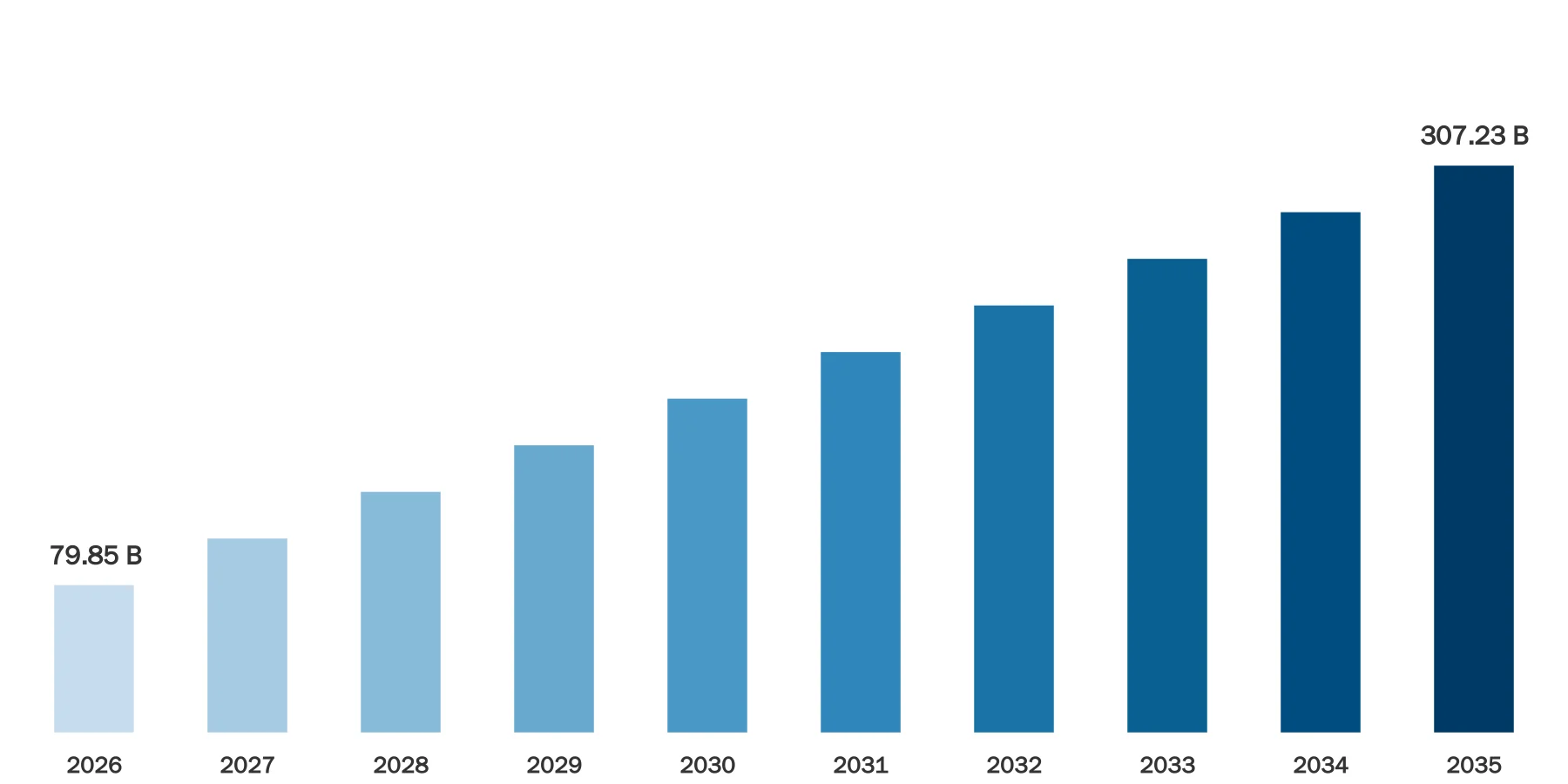
Source: Econ Market Research
A mobile health application, or mHealth app, is a kind of software created for smartphones, tablets, or wearable devices with the intention of supporting healthcare and promoting wellness. These apps provide a wide range of features and services that make it easier to monitor, educate, manage, and communicate about one',s health.
As technology advances and healthcare changes, mHealth apps', features and applications also evolving. These apps offer convenient access to health-related tools, information, and support directly from mobile devices, which has the potential to empower people, encourage proactive healthcare, and improve health outcomes.
Market Growth Factors
The market growth of mobile health application is influenced by several factors, including the rising individual knowledge of the benefits of mobile health applications, advancements in networks coverage, rapid expansion in smartphone usage, an ageing population, and an increase in the prevalence of chronic diseases.
Market Drivers
Growing Incidence of Chronic Illnesses is Fueling Growth
The most widespread use of these apps has been caused by chronic illnesses like heart disease, diabetes, hypertension, cardiac problems, and respiratory problems. People are becoming more aware of their health as these diseases become more prevalent. For an instance, according to a study by the WHO, an estimated 17.9 million deaths worldwide in 2019, or 32% of all fatalities, were attributable to CVDs (cardiovascular diseases). Heart attack and stroke deaths accounted for 85% of these fatalities. Because of this, it is necessary to continuously monitor the health conditions, and these apps are wonderful for doing so remotely by reminding patients to take care of their health according to their schedules and requirements, which eliminates the need for in-person clinic visits.
Medical Professionals Are Using Mobile Apps More Frequently
The increasing recommendations from healthcare experts to utilize mobile medical apps is expected to drive mHealth apps market. These apps offer potential benefits for enhancing patient care, empowering individuals to monitor their health, and facilitating communication between patients and healthcare providers. As a result, the use of mobile medical apps is likely to gain momentum.
Market Opportunities
Factors such as the widespread use of smartphones, the need for remote healthcare services, the convenience of virtual consultations, the growing interest in personal health and fitness, the challenge of medication adherence, the potential for data analysis, and the growing concern about chronic diseases create significant opportunities for the market expansion.
Market Challenges
Because mHealth apps handle sensitive health information, ensuring data security is critical, unauthorized access or breaches can lead to violations of privacy and the misuse of personal health records.
Misuse of healthcare records in the context of mHealth apps can have serious ramifications. When sensitive health information enters into the wrong hands, it can result in a variety of forms of misuse. Personal medical records can be used to commit insurance fraud. Furthermore, unauthorized access to health data might lead to prejudice or stigmatization based on a person's medical history.
Segments Analysis
Application Insight
By application, the market is segmented into monitoring services, fitness solutions, diagnostic services, treatment services, and others.
During the forecast period, the monitoring services category is expected to have the largest market share. This is mostly due to an increase in the geriatric population suffering from chronic illnesses that needs ongoing monitoring. As a result, the growing senior population would encourage the use of these applications for frequent health monitoring.
End User Insights
By end user, the market is segmented into healthcare, patients, insurance companies, research centers, pharmacy, biopharmaceutical companies, government, tech companies, and other end-users.
The healthcare providers segment is predicted to increase at a considerable CAGR throughout the projected time frame. Mobile phones are now widely available in low and middle-income countries. As a result, practically all illnesses and chronic ailments can be screened easily. Chronic diseases necessitate numerous hospital visits, regular check-ups, and a variety of lifestyle adjustments as determined by a physician. mHealth can help patients become more aware of their illness, engage in lifestyle treatments, make clinical decisions, stick to medicine, follow screening regimes, and receive rehabilitation support. Individuals suffering from chronic conditions have turned to mHealth as a convenient and cost-effective method of disease management. As a result of these considerations, the market for suppliers of mHealth solutions is rapidly expanding.
Technology Landscape
MHealth apps have the potential to revolutionize healthcare delivery, empower people, and enhance overall health outcomes as the technological landscape develops. The incorporation of AI and machine learning algorithms to deliver personalized health recommendations based on user data and predictive analytics is an example of the developing technology landscape in mHealth apps.
Regional analysis
During the forecast period, North America is expected to uphold its global market dominance. The United States is one of the countries with the highest percentage of major health app companies operating in the industry. Furthermore, the increasing internet penetration rate in various states in the United States will have a significant impact on market growth.
Due to the increasing number of smartphones and internet users in the region, Asia-Pacific is predicted to experience tremendous growth. The market expansion in this region is also anticipated to be fueled by the rapidly increasing smartphone penetration. Furthermore, initiatives taken by government to introduce and advance mobile health applications will also play a major role in growth of the market.
Competitive Landscape
The competitive landscape of mHealth apps can be characterized as fragmented rather than centralized. Each rival focuses on a particular area of healthcare, such as telemedicine, mental health assistance, medication adherence, chronic illness management, or fitness tracking. The market is still extremely competitive and fragmented because there is no dominant firm or small group of leading businesses. Users have a wide range of options to pick from that cater to their individual health and wellness needs due to this fragmentation, which also promotes diversity and innovation in the mHealth app ecosystem.
Key Players
Fitbit, Inc.
Apple Inc.
Omada Health
Livongo Health
Boston Scientific Corporation
Omron Healthcare, Inc.
Abbott
Jawbone Health Hub, Inc.
Regulatory Environment
The regulatory landscape around mHealth apps is complex and ever-changing. Governments and regulatory agencies all around the world are realizing the importance of developing guidelines and standards to assure the safety, privacy, and efficiency of these apps. For an instance on the basis of the FDA',s interpretation of the 21st Century Cures Act, which Congress adopted in 2016, the agency released a new drafting advice in December 2017. The guideline is meant to explain to app developers how it wants to govern so-called clinical decision support (CDS) apps, which give doctors suggestions for diagnoses and treatments. Patient decision support (PDS) applications, which merely provide information to the patient, are distinct from and different from CDS apps.
Recent Developments
April, 2020 Google and Apple revealed their intention to release APIs that would allow Android and iOS products to communicate with one another.
April, 2020 A COVID-19 tracking system that relies on GPS tracking electronic bracelets and a coronavirus contact tracing application has been created by the Kingdom of Bahrain.
April, 2020 For the debut of the former's chatbot throughout LifeLink's 14 Philadelphia facilities, Jefferson Health system and LifeLink established a relationship. The chatbot would employ AI to help with the coronavirus epidemic pre-screen
mHealth Apps Market Report Scope & Segmentation
| Attributes | Details |
|---|---|
Market Size (Current) | US$ 79.85 Billion in 2026 |
Market Size (Forecast) | US$ 307.23 Billion in 2035 |
Growth Rate | CAGR of 16.15% from 2026 to 2035 |
Forecast Period | 2026 – 2035 |
Base Year | 2025 |
Historical Data Available | Yes |
Regional Scope | Global |
Segments Covered | By App Type
By Application
By Platform
|
Frequently Asked Questions
Common questions about this report
The study period covers historical insights and forecast projections for the period 2026-2035.
About the Author
Market research expert with years of industry experience

Related Reports
Explore more market insights from the same category