

Metal Working Fluid Market
Metal Working Fluid Market Size, Share, Trends, Growth, and Industry Analysis, By Product Type (Neat Oil, Soluble Oil, Semi-Synthetic Fluids, Synthetic Fluids), By Application (Removal Fluids, Forming Fluids, Protecting Fluids, Treating Fluids), By Industry Vertical (Automotive, Aerospace, Construction, Electrical andamp; Power), Regional Analysis and Forecast Period 2026-2035
Market Overview
As per Econ Market Research analysis, the Global Metal Working Fluid Market generated revenue of US$ 13.54 Billion in 2026 and is forecast to achieve US$ 18.94 Billion by 2035, at a CAGR of 3.8% during the study period 2026–2035. The base year considered is 2025.
Metal Working Fluid Market Size 2025-2035 (USD Billion)

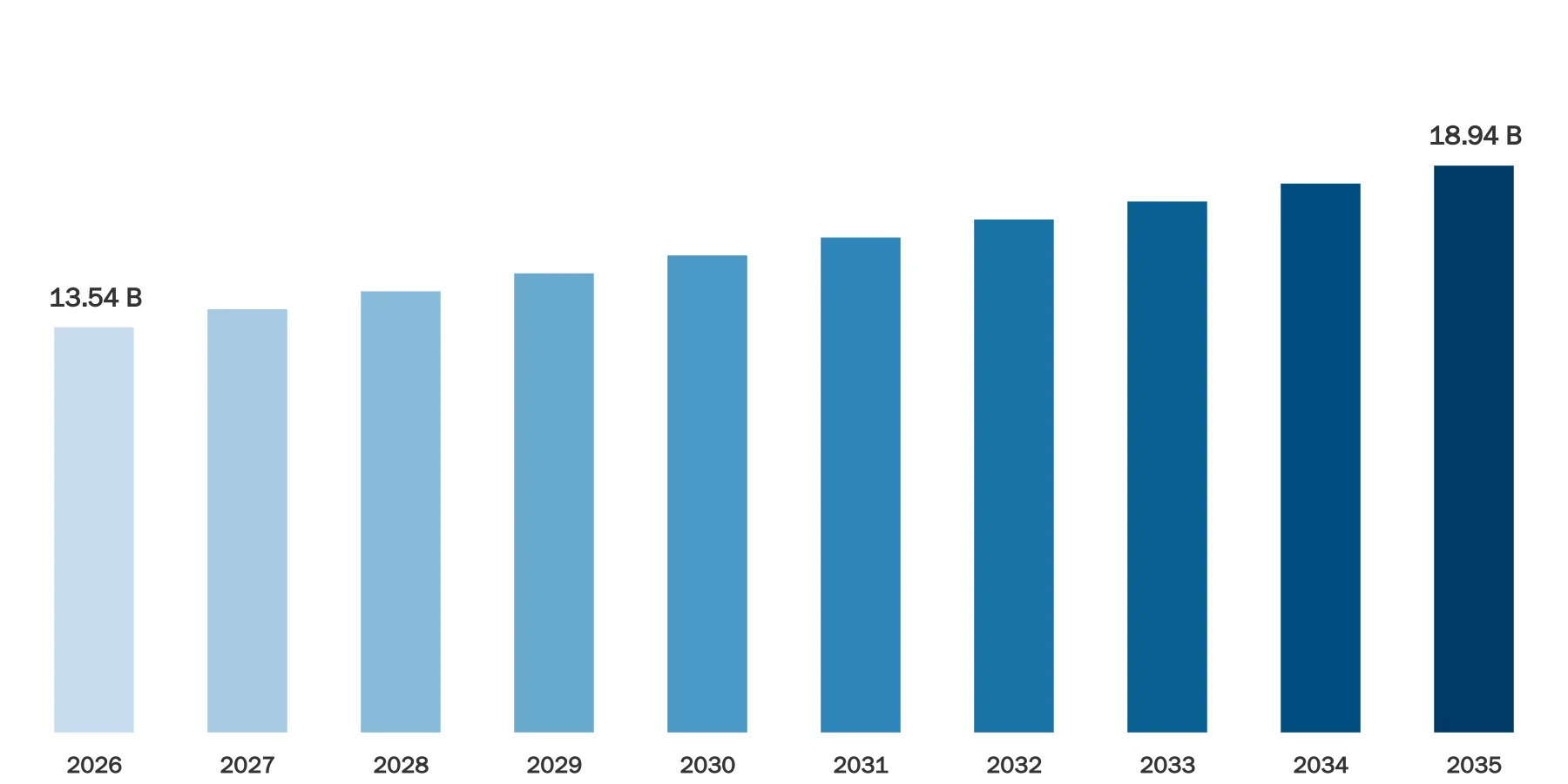
Source: Econ Market Research
The global metalworking fluid market involves fluids and oils used in making metal products. These fluids help make metalworking processes smoother and more efficient by reducing friction, managing heat, and improving the metal',s surface. Industries like automotive, aerospace, and construction heavily rely on these fluids. To keep up with safety and environmental rules, companies are developing greener fluids. Challenges include price changes in raw materials and figuring out how to safely dispose of used fluids.
The market for metalworking fluid is anticipated to continue expanding due to the introduction of new technologies and research expenditures. Since water-based fluids function well and are more environmentally friendly, they are perhaps the most often used. The Asia-Pacific region, with nations like China and India in particular, will have significant markets due to their fast expanding industries. Additionally, there will be a greater demand for high-quality metalworking fluids as manufacturing techniques advance, such as CNC machining and 3D printing. Businesses face intense competition, so in order to stay ahead of the curve, they',re concentrating on developing better products, forming alliances, and branching out into new markets.
Metal Working Fluid Dynamics
The metalworking fluid market is influenced by various factors. One key factor is the demand for metal products in industries like cars, planes, and buildings. As these industries grow, so does the need for metalworking fluids to make the manufacturing process smoother. Another important factor is government regulations, which are rules set by the government to ensure that workers stay safe and that the environment is protected. This means that companies need to use fluids that are safer and less harmful to the environment. Additionally, changes in the prices of raw materials can affect the market. If the cost of the materials used to make metalworking fluids goes up, companies might have to raise their prices, which could decrease demand.
On the other hand, if the prices go down, companies might be able to lower their prices and attract more customers. Moreover, advancements in technology play a big role in the market. New technologies can lead to the development of better metalworking fluids that work more efficiently and are safer for workers and the environment. Finally, competition among companies in the market is fierce. Companies are always trying to come up with new and innovative products to stay ahead of their competitors. This can lead to improvements in the quality and performance of metalworking fluids, benefiting both companies and customers.
Metal Working Fluid Drivers
Growing Demand for Metal Products
The construction, automotive, and aerospace industries are among those that are growing steadily, which is driving up demand for metal products. Since these fluids are necessary for a variety of metalworking processes, including cutting, machining, and forming, the market for metalworking fluids is directly impacted by this growing need. Effective metalworking fluids are becoming more and more necessary as more items made of metal are produced. It is anticipated that this factor would keep driving market expansion, particularly in emerging nations where industrialization is accelerating.
Stringent Government Regulations
The demand for environmentally friendly and bio-based metalworking fluids is being driven by government laws that are designed to ensure worker safety and environmental sustainability. Laws frequently compel businesses to utilize fluids that are less hazardous to the environment and the health of its employees, encouraging producers to create more environmentally friendly substitutes. This driver encourages a move toward sustainable practices in addition to promoting market innovation. The need for ecologically friendly metalworking fluids is predicted to grow as environmental consciousness grows around the world.
Restraints:
Volatility in Raw Material Prices
Fluctuations in the prices of raw materials used in metalworking fluids can pose a significant challenge for manufacturers. Sudden price changes can impact production costs, profitability, and pricing strategies. When raw material prices increase, manufacturers may struggle to maintain competitive pricing or may need to pass the increased costs onto consumers, potentially reducing demand. Managing these fluctuations effectively is essential for companies to remain competitive and sustainable in the market.
Disposal Concerns and Environmental Impact
Disposal of used metalworking fluids presents environmental challenges due to their potential toxicity and impact on ecosystems. Proper disposal methods are necessary to prevent pollution and comply with regulations. However, implementing effective disposal practices can be costly and complex for companies. Moreover, the environmental footprint of metalworking fluids throughout their lifecycle is a growing concern among consumers and regulatory bodies. Addressing these disposal concerns and minimizing the environmental impact of metalworking fluids are critical restraints that the market needs to overcome.
Opportunities:
Technological Advancements
Ongoing advancements in technology present opportunities for innovation in metalworking fluid formulations and applications. Technologies such as nanotechnology, microemulsions, and Additive Manufacturing are enabling the development of high-performance fluids with enhanced lubrication, cooling, and corrosion protection properties. By investing in research and development, companies can capitalize on these technological opportunities to differentiate their products and gain a competitive edge in the market.
Segment Overview
By Product
The metalworking fluid market can be segmented by product type into mineral-based, synthetic, and bio-based fluids. Mineral-based fluids, derived from petroleum or mineral oils, have traditionally been widely used in metalworking due to their affordability and effectiveness in lubrication. Synthetic fluids, on the other hand, are chemically engineered to offer superior performance characteristics such as higher thermal stability, improved lubrication, and better environmental compatibility.
Bio-based fluids, made from renewable sources such as vegetable oils or animal fats, are gaining traction in the market due to their eco-friendly nature and biodegradability. These fluids offer comparable performance to synthetic fluids while reducing environmental impact, making them increasingly popular among environmentally conscious industries.
By Application
By Application, the market is segmented into cutting fluids, grinding fluids, forming fluids, protecting fluids, and treating fluids. Cutting fluids are used to lubricate and cool metal during cutting operations, while grinding fluids serve a similar purpose during grinding processes. Forming fluids aid in shaping metals through processes like stamping or rolling. Protecting fluids help prevent corrosion and rust on metal surfaces, while treating fluids are used for specialized treatments such as heat treatment or surface finishing. Each type of fluid is formulated to meet specific performance requirements and optimize the efficiency and quality of metalworking operations.
By End-Use
Segmentation by end-use includes cutting fluids, grinding fluids, forming fluids, protecting fluids, and treating fluids are all utilized in different stages of metal production and processing. Cutting fluids are commonly used in machining operations in industries such as automotive, aerospace, and machinery manufacturing. Grinding fluids find applications in precision grinding processes for producing smooth and accurate surfaces. Forming fluids are essential for shaping metal components in industries like metal fabrication and construction.
Protecting fluids help preserve metal integrity during storage and transportation, particularly in industries exposed to harsh environmental conditions. Treating fluids cater to specialized treatments required in sectors such as metallurgy, where precise control over metal properties is crucial. Understanding these end-use applications allows manufacturers to tailor their product offerings to meet specific industry needs and requirements.
Metal Working Fluid Overview by Region
The metalworking fluid market exhibits regional variations driven by factors such as industrialization, economic development, and manufacturing activities. North America and Europe are mature markets with established manufacturing sectors, leading to steady demand for metalworking fluids. Stringent regulations regarding worker safety and environmental protection also drive the adoption of eco-friendly fluids in these regions. In contrast, the Asia-Pacific region is experiencing rapid industrialization, particularly in countries like China and India, making it a key growth market for metalworking fluids.
The burgeoning automotive, aerospace, and machinery industries in these countries are driving significant demand for high-performance fluids. Additionally, the Middle East and Africa region is witnessing increased investment in infrastructure and construction projects, creating opportunities for metalworking fluid suppliers. Latin America, while comparatively smaller in market size, is also showing potential for growth, driven by expanding manufacturing sectors and rising industrial activities.
Metal Working Fluid Market Competitive Landscape
Major companies such as Exxon Mobil Corporation, Houghton International Inc., and Fuchs Petrolub SE dominate the market with their extensive product portfolios and global presence. These industry leaders invest significantly in research and development to develop advanced formulations that meet evolving customer demands for performance, efficiency, and environmental sustainability.
Additionally, strategic collaborations and acquisitions are common strategies employed by market players to enhance their market position and expand their customer base. Furthermore, regional players and niche manufacturers also contribute to the competitive landscape, catering to specific market segments or geographic regions with specialized products and services. With increasing focus on sustainability and regulatory compliance, companies are investing in eco-friendly and bio-based formulations to differentiate themselves and gain a competitive edge in the market.
Metal Working Fluid Market Leading Companies:
Quaker Houghton
ExxonMobil Corporation
FUCHS Petrolub SE
Chevron Corporation
BP plc
TotalEnergies SE
Castrol Limited
Idemitsu Kosan Co., Ltd.
China Petroleum &, Chemical Corporation (SINOPEC)
LUKOIL
Valvoline Inc.
Chem Arrow Corporation
Chevron Phillips Chemical Company
Lubrizol
Henkel
Metal Working Fluid Recent Developments
May 2023, Univar Solutions China Company Limited, a subsidiary of Univar Solutions Inc. a prominent global provider of specialty ingredients and chemicals, has announced a new exclusive partnership agreement with Solvay. This agreement extends the collaboration between the two companies to encompass a diverse range of lubricant and metalworking fluid additives across various markets in Eastern China, such as Shanghai, Jiangsu, Zhejiang, Anhui, Hunan, and Jiangxi. The partnership will feature advanced specialty additives and components designed to enhance metal surface cleaning, finishing, and treatment processes. These include surfactants, degreasers, emulsifiers, boosters, and other additives that are highly sought after by formulators seeking multifunctional ingredients. These ingredients demonstrate outstanding compatibility with a wide range of processes and applications while effectively reducing friction and wear.
Feb 2024, LANXESS Corporation',s Material Protection Products (MPP) division has extended its distribution collaboration with Palmer Holland for industrial preservatives across North America. Effective since January, this agreement broadens Palmer Holland',s existing product range to include the metalworking fluids and lubricants sectors, following LANXESS', acquisition of IFF',s microbial control business in July 2022.
Metal Working Fluid Report Segmentation
Metal Working Fluid Market Report Scope & Segmentation
| Attributes | Details |
|---|---|
Market Size (Current) | US$ 13.54 Billion in 2026 |
Market Size (Forecast) | US$ 18.94 Billion in 2035 |
Growth Rate | CAGR of 3.8% from 2026 to 2035 |
Forecast Period | 2026 – 2035 |
Base Year | 2025 |
Historical Data Available | Yes |
Regional Scope | Global |
Segments Covered | By Product Type
By Application
By Industry Vertical
|
Frequently Asked Questions
Common questions about this report
The study period covers historical insights and forecast projections for the period 2026-2035.
About the Author
Market research expert with years of industry experience

Related Reports
Explore more market insights from the same category