Mens Suits Market Overview
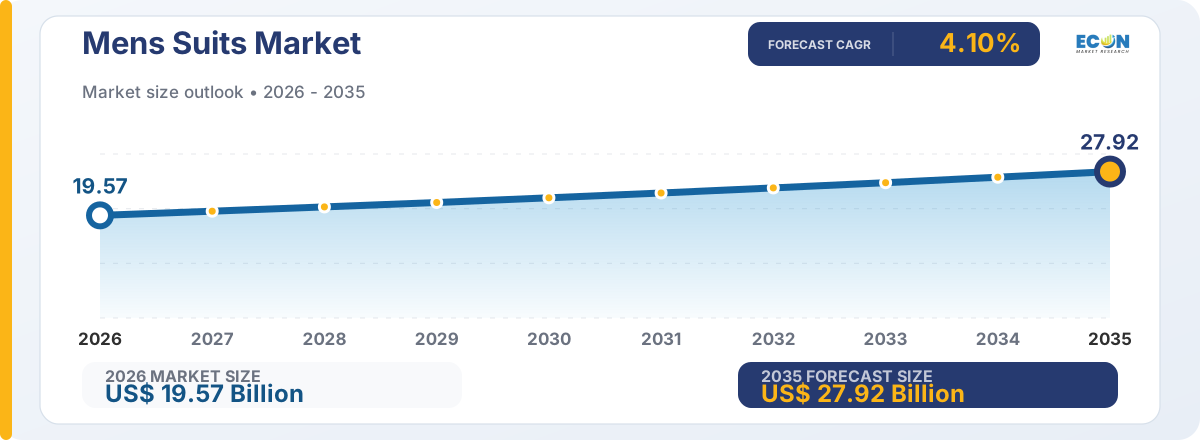
As per Econ Market Research analysis, the Global Mens Suits Market was recorded at US$ 19.57 Billion in 2026 and is projected to expand to US$ 27.92 Billion by 2035, registering a CAGR of 4.10% over the forecast period. The base year used is 2025.
A suit is composed of a jacket, trousers, and sometimes a vest. The fabrics used for the construction are wool, cotton, polyester, etc. These suits are worn in formal occasions, corporate meets, weddings, and social gatherings. Rising demand in the market due to increasing need for formal wear especially in corporate settings, weddings, and social events drives the market. The market has witnessed a trend in recent years to modern and custom-fit suits with more choices regarding style, color, and fabric.
The growth of the global men',s suits market is also influenced by changing fashion trends and the rise of online shopping, making it easier for consumers to access a wide range of products. Premium and luxury suits have also been in demand, as consumers seek high-quality and durable products. However, the market faces challenges such as fluctuating raw material costs and competition from casual wear. Despite these challenges, the market is still expected to grow with evolving consumer preferences and an increasing focus on personalized and fashionable options for men',s formal wear. The expansion of global retail networks, especially in emerging economies, further supports this growth trend.
Dynamic Insights
Demand from corporate sectors is the other significant factor due to growth in the same worldwide. Formal dress codes among more companies and continuing popularity of wedding and galas make demand for men',s suits remain robust. In addition, consumers are showing preference for tailored and bespoke suits with focus on fit and personal style that enhances market demand.
On the other hand, the market is facing challenges from changing fashion trends and the growing acceptance of casual dress codes in workplaces. This shift has reduced the demand for traditional formalwear, with many consumers opting for more comfortable and versatile clothing options. The rise of casual and semi-formal attire, combined with a broader acceptance of business-casual outfits, has LED to a slowdown in traditional suit purchases.
Moreover, the raw material prices, including wool and cotton, have fluctuations that influence the production cost and, consequently, the pricing strategy in the market. Online retail and digital platforms for customization are some of the technological advancements that have impacted the market positively because they give customers easier access to a wide range of styles, fabrics, and price points. These innovations make the shopping experience better, engage consumers, and drive growth.
Drivers Insights
Rising Corporate Sector and Formal Dress Codes
The increasing corporate sector in the world contributes to the growth of men',s suits demand. As companies continue to grow, especially in emerging economies, the need for professional attire is inevitable. Many corporate offices and industries such as law, finance, and consulting maintain formal dress codes, which ensure that men',s suits are an integral part of professional wardrobes.
Desiring an appareled, professional look often necessitates numerous purchases of suits, especially in urban centers. Where the culture is more business-like, the intake of international businesses and multinational companies into developing regions further promotes the need for more sophisticated dress, which propels the market',s growth.
Customization and Demand for Tailored Suits
There has been a growing shift toward personalized fashion, with consumers increasingly seeking suits that cater to their specific body types and preferences. Custom-tailored suits offer a high level of comfort and style, which appeals to customers looking for a more refined and personalized look. This driver is particularly significant as consumers are now more willing to invest in high-quality, bespoke suits that are perfectly tailored to their measurements. Online platforms and in-store tailoring services make it easier for individuals to access customized suits, ensuring better fit, fabric choices, and style options, which directly contribute to the market',s expansion.
Restraints Insights
Shift Toward Casual and Business-Casual Attire
One of the significant constraints in the men',s suits market is the change in the dress code in the workplace from formal to more casual or business-casual attire. In the last decade, many industries have adopted relaxed dress policies, where suits are no longer required to be worn every day. The growing startup culture and creative industries have increased the tolerance for casual dressing, which has resulted in the reduced consistent need for traditional formal suits. In addition, as more people now work remotely or have flexible working environments due to the pandemic, the demand for formal business attire has further reduced, thus affecting the sales of suits.
High Cost of Quality Materials
The production of high-quality men',s suits involves premium materials such as wool, silk, and high-end cotton, which are subject to fluctuating raw material costs. This increases the overall manufacturing cost, which in turn affects retail prices. Consumers may opt for more affordable alternatives or less expensive brands, limiting the reach of premium suit makers. Rising production costs, coupled with inflationary pressures, can lead to higher prices for customers, affecting overall market accessibility and slowing down demand in price-sensitive regions.
Opportunities Insights
Sustainability and Eco-Friendly Fabrics
The demand for sustainability in the fashion industry is on the rise, and the men',s suits market is no exception. Consumers are becoming more conscious of the environmental impact of the products they purchase. This has opened opportunities for manufacturers to innovate with eco-friendly fabrics and sustainable production methods. Using organic cotton, recycled materials, or plant-based fabrics in suit production can appeal to environmentally-conscious consumers. Companies that embrace sustainability can tap into a growing segment of the market interested in ethical and eco-friendly fashion, creating a huge opportunity for growth in the premium and luxury sectors.
Segment Analysis
By Product Type
The product type segment in the men',s suits market includes a variety of styles designed for different occasions and personal preferences. Single-breasted suits, the most common style, are characterized by a jacket with a single row of buttons, making them a versatile option for both business and casual settings. Double-breasted suits, on the other hand, feature a jacket with two rows of buttons and offer a more formal and sophisticated look. Three-piece suits, consisting of a jacket, trousers, and a vest, provide an extra layer of elegance, often favored for formal events and business attire. Blazers and sport coats are more relaxed compared to traditional suits, typically worn for semi-formal occasions or casual settings, and are made of various fabrics and patterns.
By Fabric Type
The fabric type segment reflects the different materials used in suit construction, each offering distinct characteristics in terms of comfort, durability, and appearance. Wool is a popular fabric for suits due to its softness, breathability, and ability to keep the wearer warm in winter while remaining cool in summer. Cotton suits are lighter, making them a popular choice for warmer climates or casual occasions.
Linen, another lightweight fabric, is ideal for summer and tropical environments, though it tends to wrinkle more easily. Synthetic fabrics, like polyester, are often used for affordable options, offering durability and easy maintenance but less breathability than natural fibers. Blended fabrics combine two or more materials, offering a balance of comfort, durability, and cost-efficiency, often appealing to a wide range of consumers seeking both performance and price.
By Price Range
The men',s suits market is categorized into three major categories in the price range segment based on the cost and luxury level of the products. The economy range provides affordable suits made from synthetic or blended fabrics for budget-conscious consumers. Mid-range suits balance quality and affordability, offering better fabrics such as wool blends and providing more options in terms of design and fit.
Luxury or high-end suits are aptly tailored for fashionable men of wealth who want to spend the money for better quality, original designs, and bespoke tailoring. These garments most often represent an investment in an individual',s sense of self and are also reminiscent of expensive occasions and formal businesses.
By End-User
The end-user segment identifies the different occasions and purposes for which men&rsquo,s suits are purchased. Corporate/business wear represents the largest portion of the market, as suits are still considered the standard attire for professional and formal work settings. Casual wear includes suits designed for less formal occasions, such as casual Fridays or dinner parties, where comfort and style are prioritized over strict formality.
Evening wear suits are typically reserved for special events like galas, cocktail parties, or evening weddings, where a more elegant and stylish appearance is required. Wedding wear suits are another prominent category, with many men opting for tailored, often customized suits for their big day.
By Distribution Channel
The channel of distribution is a representation of how menswear suits reach the consumer. Over the last couple of years, online shops have been an easy source through which the consumer could look at wide selections of menswear suits directly from home with easy delivery and even custom made suits. More e-commerce stores continue to create opportunities for shoppers.
Offline retailing, which encompasses brick-and-mortar stores and department stores, remains a critical distribution channel for suits. Here, customers can try on the suits before buying and receive professional advice from sales representatives. While online shopping has become increasingly popular, offline stores continue to attract customers who want to feel the fabric of the suits and receive professional fitting services.
Regional Analysis
North America, particularly the United States, is still one of the largest markets for men',s suits, due to the strong presence of the corporate sector, high demand for formal business attire, and a growing trend for custom-tailored suits. The region',s fashion-conscious consumer base and established retail infrastructure further boost the market. The United Kingdom, France, and Italy are also the major players in Western Europe, with a strong tradition of men',s fashion and a long-standing demand for luxury and bespoke suits.
Italian craftsmanship and high-end fabrics are particularly revered, making luxury and designer suits a significant segment in this region. Business and evening wear are also other sales drivers, especially in urban areas where formal dress codes remain prevalent. The market is growing very rapidly in Asia-Pacific. Countries like China, India, and Japan are among the emerging economies. The middle class in all these countries, besides an increasing demand for Western-style formal wear in the corporate sector, is driving the market. Therefore, rising disposable income and greater exposure to international fashion trends add up to the demand for premium suits.
Meanwhile, in the Middle East and Africa region, there is increasing demand for luxury suits. Specifically, countries like the UAE and Saudi Arabia see a rising high-income consumer who desires to look formal and well-groomed at work and also for social gatherings. Latin America is another area of opportunity with Brazil and Mexico being the key markets. Formal business attire demands and influence from Western fashion are the primary factors driving the luxury suit market. The region',s growing retail industry and increased accessibility to different suit styles also bolster the growth of the market.
Competitive Landscape
Armani, Hugo Boss, Ralph Lauren, and Burberry are the dominant global brands that command the high-end segment of the market with premium quality, tailored designs, and iconic status in the fashion world. The brands are committed to providing classic and modern styles, using the finest wool, silk, and exclusive blends, and appeal to the affluent as well as the best in bespoke suits. This further means luxury suit makers spend more time to put emphasis on the craftsmanship and customizing plus individualized service to corporate heads, celebrities, and high net-worth personalities.
Besides the luxury players, the lower and mid-range presents a substantial market share for mass market brands, such as Men',s Wearhouse, Zara, and H&,M. Compared to these more economical alternatives, the aforementioned retailers continue to provide economical suits to customers through the fabrication of blended fabrics, cotton, and synthetic materials. Being accessible, affordable, and convenient, the marketing strategies used by these companies on the web and in multiple physical locations can be accessed by most customers.
It',s available at multiple price ranges and caters to a diverse market of people: entry level for those searching for a suitable affordable suit, middle level for someone requiring a suitable suit for both formal and business casual events, the growing e-commerce market of shopping has provided another competitive front: ASOS, Amazon, etc., through their online marketing platform, selling hundreds of various designs of suits. As the market is expanding, there are also rising smaller niche brands and custom tailoring services with unique styles and personalized fits that appeal to consumers who wish to have one-of-a-kind suits.
List of Key Players:
LVMH
Kering
Ermenegildo Zegna
Hugo Boss
Tom Ford
Canali
Dolce &, Gabbana
Prada
Boglioli
Armani
Men&rsquo,s Suits Report Segmentation
Mens Suits Market Report Scope & Segmentation
| Attributes | Details |
|---|---|
| Market Size (Current)Current market valuation | US$ 19.57 Billion in 2026 |
| Market Size (Forecast)Projected market valuation | US$ 27.92 Billion in 2035 |
| Growth RateCompound Annual Growth Rate | CAGR of 4.10% from 2026 to 2035 |
| Forecast PeriodAnalysis timeline | 2026 – 2035 |
| Base YearReference year for analysis | 2025 |
| Historical Data AvailablePast market data availability | Yes |
| Regional ScopeGeographical coverage | Global |
| Segments CoveredMarket segments analyzed | By Type
By Style
By Distribution Channel
|
Leading companies covered in this report
- Hugo Boss
- Armani
- Ermenegildo Zegna
- Brooks Brothers
- Raymond
- Ralph Lauren
- Indochino
- SuitSupply
Frequently Asked Questions
Common questions about this report
The study period covers historical insights and forecast projections for the period 2026-2035.
About the Author
Market research expert with years of industry experience

Dipali Bhingare serves as the Market Research Director at Econ Market Research. With a focus on translating complex global economic shifts into actionable business intelligence, she oversees the strategic direction of comprehensive market studies. Her work empowers organizations to navigate volatile industries through data-driven forecasting and deep-dive competitive analysis.