

Matcha Tea Market
Matcha Tea Market Size, Share, Trends, Growth, and Industry Analysis, By Grade (Ceremonial Grade, Culinary Grade, Classic Grade), By Distribution Channel (Supermarkets/Hypermarkets, Specialty Stores, Online Retail, Foodservice), Regional Analysis and Forecast Period 2026-2035
Matcha Tea Market Overview
As per Econ Market Research analysis, the Global Matcha Tea Market was valued at approximately US$ 1.23 Billion in 2026 and is predicted to reach US$ 3.07 Billion by 2035, expanding at a CAGR of 10.8% over the forecast duration. The base year is 2025.
Matcha Tea Market Size 2025-2035 (USD Billion)

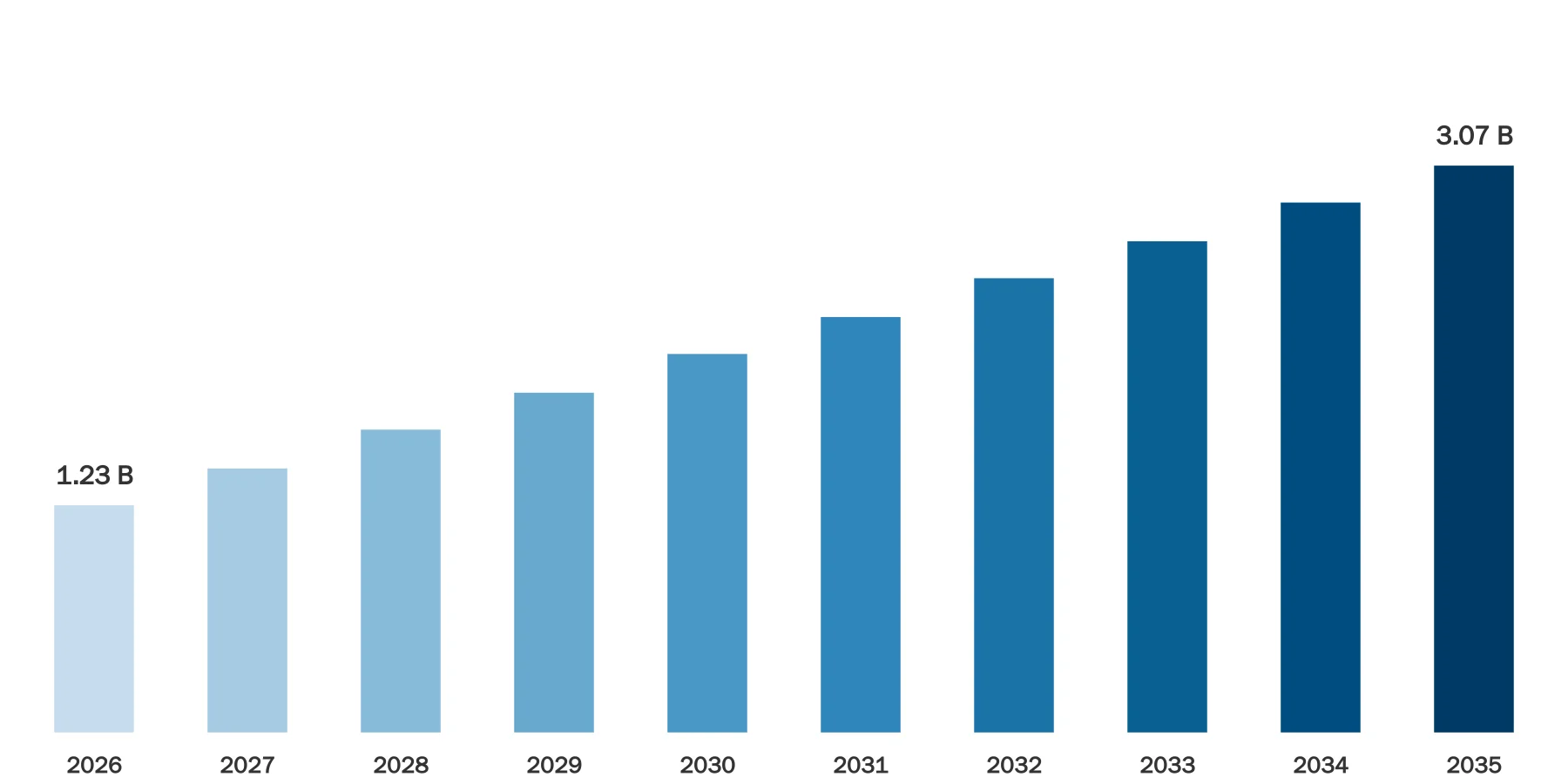
Source: Econ Market Research
Matcha is a powdered green tea ground finely, manufactured from that extraction. It is rich in antioxidants and hence offers the consumer many positive health benefits such as metabolism boost, improved focus, relaxation, and some other great benefits. Traditionally used during Japanese tea ceremonies, matcha has gained wide recognition in the global beverage and food sectors today. This has made the consumers get more informed of the matcha tea, they could help in improving some cognitive functions as well as reducing calories. It has made many health and fit enthusiasts fall in love with the product as well as health-conscious individuals looking for a healthier lifestyle.
The regional growth for the demand for matcha tea can be seen significantly increasing especially in the regions that include North America and Europe with the wellness products trend of growth on the rise. More forces driving the growth of the market include recent growth in matcha-flavored foods, beverages, and sweets such as lattes, snacks, and pastries. Because of its versatility in consumption, matcha tea can be a complete product line within both the beverage and food industries, thus growing more popular among consumers to serve as a healthy alternative beverage aside from traditional coffee, soda, and other Energy Drinks.
Dynamic Insights
A major driver of demand has been increased awareness of health and wellness among customers. More customers are going for natural and organic substitutes to traditional beverages, like coffee and soft drinks. Therefore, it is not surprising why matcha tea-a strong tea known for its antioxidant properties as well as its associated health benefits-metabolism booster, focus enhancer, and energy booster-would become a natural match for such a desire for healthier lifestyles. Matcha tea is enjoying a rising popularity because, like more and more individuals embracing a plant-based and clean-label diet, it fits perfectly within these trends.
On the other hand, it challenges the market because high price of matcha is of premium quality and that may be accessible only by some market groups. The further complicated sourcing of authentic Japanese matcha confers with problems associated with quality control and logistics issues in supply lines to take into account availability and pricing. Indeed, the emergence of online sales platforms and growth in the global wellness industry is working to mitigate these barriers and makes matcha products more readily accessible. Innovations in flavors and formats are also gracing the market with new matcha-based products, like lattes, ice creams, and energy bars that target a wider audience.
Drivers Insights
Rising Health Consciousness:
Increasing health consciousness and wellness is fuelling demand for matcha tea. Consumers increasingly seek a healthy alternative to sweetened beverages. They find matcha tea an opportunity to imbibe a natural source of antioxidants, vitamins, and minerals considered a catalyst that fosters an improvement in metabolism, stimulates more energy, and generally boosts one',s condition.
The tea further has its promotion in helping improve focus, reduced by stress, this is credited to L-theanine, an amino acid that facilitates relaxation without causing drowsiness. Since the health-conscious consumer becomes more in the generation of millennials and Gen Z and focuses on functional and nutritious beverages, demand for matcha is also expected to continue growing.
Increasing Popularity of Organic and Natural Products:
Another driving trend for the demand of matcha tea is a growing popularity in natural and organic food products. Consumers tend to gravitate toward products without artificial additives, preservatives, and hazardous chemicals. Matcha tea is quite a fit into this trend, since it is derived from organically cultivated green tea leaves. Controversies related to processed food and beverage products have been increasingly raising consumer awareness. This, in turn, has led to growing interest in organic and clean-label unprocessed products such as matcha. There is also an increase in customer interest in sustainable sourcing and minimal environmental damage, thus strengthening the demand for matcha.
Restraints Insights
High Cost of Premium Matcha:
Premium matcha tea appears relatively pricey and is among the key constraints in this market. The process of cultivation and harvesting good quality matcha requires skilled knowledge and close attention to details, hence making it expensive to produce. The delicate grinding process utilized for the pulverization of leaves in order to be grounded down to a fine powder also increases the production costs. For the budget-conscious consumers, premium matcha would be a costly indulgence. This level of price barrier will limit the spread of matcha to price-sensitive regions or lower-income consumer segments, as it serves as a limiter for market growth in certain areas.
Supply Chain and Quality Control Issues:
Matcha tea is traditionally grown in specific regions of Japan, such as Uji and Nishio, and the quality of matcha can vary significantly depending on where and how it is grown. Ensuring consistent quality is a challenge, as factors like climate, soil quality, and farming techniques can affect the final product. Additionally, the market is often affected by disruptions in the supply chain, such as logistical challenges, fluctuations in production yields, and the sourcing of authentic matcha. Issues with counterfeit or low-quality matcha can also undermine consumer trust in the product, presenting a restraint to market growth as consumers demand more transparency and quality assurance.
Opportunities Insights
Expansion of Product Innovation and Applications:
One great opportunity in the matcha tea market pertains to continuous innovation with matcha-based products and applications. Traditional matcha tea remains relatively in vogue, whereas newly developed products cater to varied consumer preferences in the market. To this end, ready-to-drink matcha beverages, matcha lattes, matcha-infused snacks such as ice creams, cookies, energy bars, and even beauty products featuring matcha for its antioxidant and anti-inflammatory properties have entered the market.
The multiplicity of applications by matcha presents its opportunity in fitting into multiple food and beverage categories. The multiple new revenue streams open up, and it appeals to an overall broader set of consumers. The trend remains functional foods, and the upward trajectory continues to offer a platform for the growth potential of matcha in representing health benefits across different product formats.
Segment Analysis
By production technology
By production technology, matcha tea can be produced using two main methods: pan frying and steaming. Pan-fried matcha tends to have a more robust, toasted flavor due to the method of cooking, which enhances its aroma. On the other hand, steamed matcha preserves more of its natural green color and subtle taste, as steaming is a gentler process that prevents oxidation. Both production methods affect the final taste, color, and texture of matcha, catering to different consumer tastes.
By grade
By grade, matcha tea is typically divided into ceremonial, classic, and culinary grades. Ceremonial grade matcha is the highest quality, characterized by its fine texture and vibrant green color, often used in traditional Japanese tea ceremonies. Classic grade is of mid-range quality, suitable for regular consumption but not as refined as ceremonial grade. Culinary grade matcha is the most affordable and is primarily used in cooking or baking, where the matcha flavor needs to be strong enough to stand out in dishes like cakes or ice cream.
By application
By application, matcha is widely used in various forms. It can be enjoyed as regular tea, prepared by whisking the powdered matcha with hot water. Matcha beverages are a popular trend, especially in cafes, with matcha lattes, smoothies, and other drinks gaining popularity. Matcha is also used in food products, including baked goods, snacks, and desserts, thanks to its unique flavor and health benefits. In addition to food and beverages, matcha is increasingly being incorporated into Personal Care and cosmetic products for its antioxidant properties, adding value to skincare and beauty items.
By form
By form, matcha is available in several formats to suit different preferences and consumer needs. Powdered matcha is the traditional form, used by tea enthusiasts to prepare beverages and culinary dishes. Ready-to-drink matcha beverages provide convenience for on-the-go consumption, offering an instant way to enjoy matcha without the need for preparation. Instant premixes offer a quick solution for those who prefer a pre-mixed matcha drink, combining the powder and other ingredients into a ready-to-use blend.
By product type
By product type, matcha can be categorized into traditional, unsweetened, sweetened, and flavored types. Traditional matcha is the pure form without any added ingredients, maintaining its natural flavor and health benefits. Unsweetened matcha allows consumers to control the sweetness of their drink or dish, while sweetened matcha provides a ready-to-consume product with a pleasant taste for those who prefer sweetness. Flavored matcha introduces a variety of options, including vanilla, chocolate, or berry flavors, catering to a wider audience who may enjoy a twist on the classic matcha taste.
By distribution channel
Matcha is sold through various channels. Mainstream products of matcha can be found in supermarkets and hypermarkets for the convenience and accessibility for consumers. Premium products on the other hand are sold in specialty stores targeting those who are looking for a particular, high quality, or unique matcha product. Online stores have become very popular when it comes to buying matcha since these can be sent right to the doorstep and various brands available. Retail and departmental stores would be able to offer more extensive shopping experience where matcha products are sold next to other health-conscious and beverage products.
By nature
By nature, matcha is classified into organic and conventional types. Organic matcha is grown without the use of synthetic pesticides or fertilizers, appealing to consumers who prioritize natural, eco-friendly products. Conventional matcha, while still high quality, may be grown using standard agricultural practices, often at a lower cost. Both types are popular in the market, with organic matcha increasingly in demand due to the growing trend of consumers seeking sustainable and health-conscious products.
Regional Analysis
The North American market is rapidly growing, largely due to the attraction of wellness and healthy lifestyles-the trend has now become popular in millennials and Gen Z consumers. Demand for matcha beverages is on the rise in cafes and restaurants, matcha lattes and matcha smoothies are now mainstream in cafes. In addition, matcha-based products, including snacks and supplements, have begun to pop up around the region. The region also experiences growing interest in organic and premium-grade matcha, which goes hand-in-hand with the clean-label, organic segment.
In Europe, however, especially in the UK, Germany, and France, interest in matcha is picking up because of higher demand for a plant-based diet and natural, organic food. Matcha is not only used in beverages, but as well in many food products, such as desserts and snacks, which gains popularity from health-conscious consumers seeking ingredients that are rich in antioxidants. This includes applications of matcha in personal care and cosmetics, which continue to grow due to increased demand for wellness products.
Asia Pacific is the biggest market for matcha, with Japan, for instance, being the birthplace of matcha tea. Although matcha',s more traditional consumption is well-established in the country, it is also gaining popularity in neighboring countries such as China, South Korea, and India, where younger consumers are embracing new forms of matcha in the form of ready-to-drink beverages and matcha-flavored products. Matcha is slowly emerging as a premium health product in Latin America, particularly in Brazil and Mexico, where consumers are getting more conscious of its health benefits. Middle East and Africa: On the same note, the Middle East and Africa region is also showing positive signs with gradual changes towards healthier, functional beverages going with the preferences of changing consumer behaviour.
Competitive Landscape
Major market players are large beverage companies and Specialty Tea brands, as well as newcomers to the market with an organic, premium, or flavored matcha product. Several brands-one of which is The Matcha Reserve, another Ippodo Tea Co., and a third, Matcha.com-are known for their high-grade ceremonial matcha and premium, authentic matcha demand. Many of these companies have focused on traditional ways of matcha production, direct sources from Japan, and different grades and forms of matcha, such as powders and even ready-to-drink beverages and instant premixes.
The two other major companies involved are Nestlé, and Starbucks, offering matcha-based drinks like lattes and smoothies in their international chains, thereby making it more accessible to a wider mainstream audience. They have been established brands with large distribution networks that have provided them the opportunity of capturing huge market share especially in the Western market though matcha remains an emerging trend there. Other companies have also cashed in on this chance by incorporating matcha into their product lines: Taylors of Harrogate sell matcha teas and sell products flavored with matcha.
Organic and sustainable products demand several brands, which have responded to the consumer preference for organic matcha by offering options that cater to their needs for ",clean-label", products. New players in the market innovate by introducing matcha in convenient formats, such as ready-to-drink bottles, flavored matcha products, and health supplements. This makes it even harder for companies to differentiate as competition is intensified by unique formulation and added convenience.
List of Key Players:
Aiya Europe GmbH
Tata Consumer Products Limited
Matcha Maiden
IPPODO TEA
The AOI Tea Company
Green Foods Corporation
Mizuba Tea Co.
Starbucks Coffee Company
DMatcha
Sasaki Green Tea Company
Aiya America Inc.
Vivid Vitality Ltd.
Recent Developments:
In June 2023, Cuzen Matcha has successfully completed the first closing of its Series A funding round, securing US$3.6 million from a group of investors. The round was led by Digital Garage Group, a well-known Japanese company with a strong background in technology and venture capital, along with Joyance Partners and over 20 angel investors.
Feb 2024, AIYA, a global leader in matcha production with a remarkable 136-year history, has made a significant investment in OMGTea, a prominent UK-based matcha green tea company. This partnership marks a key development in the matcha industry, with AIYA',s extensive global operations across Asia, Europe, and North America further strengthening its position in the market.
Global Matcha Tea Report Segmentation
Matcha Tea Market Report Scope & Segmentation
| Attributes | Details |
|---|---|
Market Size (Current) | US$ 1.23 Billion in 2026 |
Market Size (Forecast) | US$ 3.07 Billion in 2035 |
Growth Rate | CAGR of 10.8% from 2026 to 2035 |
Forecast Period | 2026 – 2035 |
Base Year | 2025 |
Historical Data Available | Yes |
Regional Scope | Global |
Segments Covered | By Grade
By Distribution Channel
|
Frequently Asked Questions
Common questions about this report
The study period covers historical insights and forecast projections for the period 2026-2035.
About the Author
Market research expert with years of industry experience

Related Reports
Explore more market insights from the same category