Luxury Interior Design Market Overview
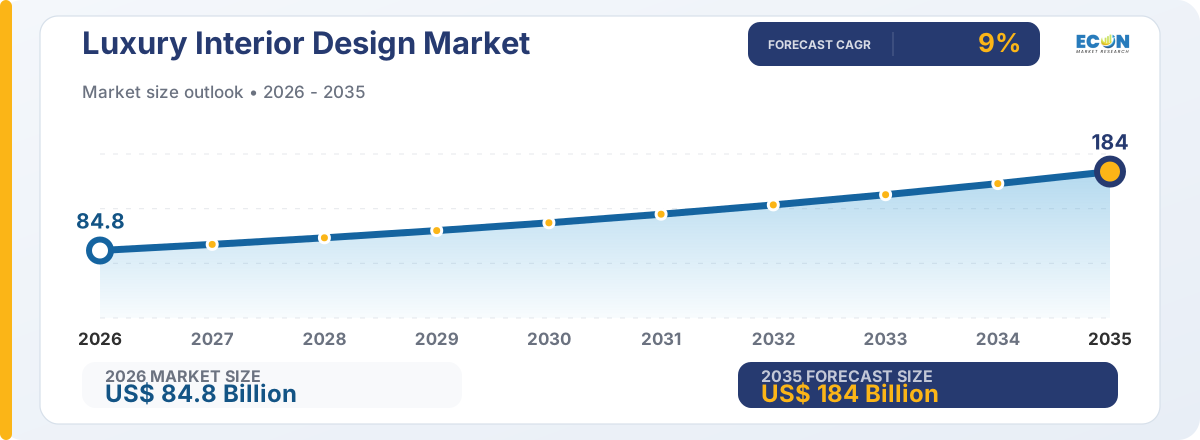
As per Econ Market Research analysis, the Global Luxury Interior Design Market was valued at approximately US$ 84.8 Billion in 2026 and is predicted to reach US$ 184 Billion by 2035, expanding at a CAGR of 9% over the forecast duration. The base year is 2025.
High-end Interior Design encompasses the concept of absorbing premium materials, cutting-edge designing, and unique elements in order to epitomize the tastes and preferences of high- net-worth clientele. This market fulfills the needs of individuals and firms that look for posh and elegant surroundings that improve comfort and style. High-end interior designers provide services, which span from planning a space in the best possible manner, color schemes, furniture selection, to exclusive dé,cor items that distinguish a space from others.
This market is growing because of an increase in disposable income, urbanization, and a desire for a personalized living or working space. Consumers are therefore willing to invest in designs that offer exclusivity and luxury. Additionally, the technological advancements such as smart homes and sustainable designs are influencing trends in the luxury interior design market. Some of the key factors which are contributing to the growth of the market are the rising demand for high-end residential projects, expansion of luxury hotels, and premium office spaces. With an emphasis on providing unique and lavish environments, the market is likely to witness steady growth in the near future.
Dynamic Insights
As wealth levels rise, especially in emerging markets, consumers are more likely to invest in luxurious and personalized living and working environments. Desire for exclusivity and celebrity culture, where celebrities flaunt opulent spaces, also play a significant role in market growth. This trend is very evident in the residential sector, where individuals express their social status through designer interiors.
The other big factor driving the market is luxury hospitality and commercial spaces. Luxury hotels, resorts, and premium office buildings are adding bespoke interior designs to attract high-end clients and create a specific brand identity. Sustainability is another key driver in which consumers seek eco-friendly materials and energy-efficient designs that don',t compromise on luxury. Technological advancements, including smart home integration and virtual reality for design previews, further fuel innovation in the luxury interior design space. However, challenges such as high design costs and reliance on skilled professionals may limit market accessibility for some potential customers.
Drivers Insights
Rising Disposable Income and Wealth Accumulation
Increasing disposable income and the accumulation of wealth, particularly in emerging economies, are among the key drivers in the market for luxury interior design. With further growth in these regions such as Asia-Pacific, Middle East, and Latin America, there will be more people willing to invest in luxurious residential and commercial properties.
Again, the increasing population of high-net-worth individuals around the world will not help but entrench this trend further. These high-income consumers are more likely to spend on high-end, bespoke interiors that reflect their social status and personal tastes. The demand for luxurious, exclusive, and personalized designs has been significant, as consumers seek out bespoke interior design solutions that incorporate rare materials, artisanal craftsmanship, and cutting-edge technological integrations.
Technological Advancements in Design and Materials
The luxury interior design market also benefits from adoption of new technologies in design and materials. Many smart home technologies, such as automated lighting and climate control systems, voice-activated appliances, are now integrated in luxury interiors in order to function more efficiently and securely. On the other hand, advanced software and virtual reality tools allow the designer to deliver highly detailed designs and customized choices to clients through a more engaging experience. Sustainability with green materials are other innovations whose use is catching on, more so with demanding rich customers needing not only interiors but also environments that are glamorous yet sustainable at the same time. Innovation paired with personalization in design improves luxury interior attractiveness.
Restraints Insights
High Costs and Affordability Issues
One of the primary restraints of the luxury interior design market is the high cost associated with premium services and materials. Luxury interior designs often require expensive materials, skilled artisans, and customized solutions, making the overall cost of design projects substantially higher than standard designs. These elevated costs can limit the accessibility of luxury interior design to only a small segment of the population&mdash,primarily high-net-worth individuals or businesses with large budgets. As a result, economic downturns or shifts in wealth distribution can negatively impact demand, as many potential customers may reconsider such high-end expenditures.
Dependence on Skilled Labor and Supply Chain Disruptions
Luxury interior design heavily relies on skilled labor, including designers, craftsmen, and artisans, who specialize in creating bespoke elements. The shortage of skilled professionals in certain regions can result in delays and increased costs for clients. Additionally, the luxury interior design sector is particularly vulnerable to disruptions in the supply chain. Sourcing rare or high-quality materials, such as exotic woods, stones, or custom-designed furniture, can be challenging due to logistical issues, geopolitical factors, or natural disasters. These factors can lead to longer project timelines and inflated costs, reducing the overall affordability and appeal of luxury interior design services.
Opportunities Insights
Expansion of Luxury Hospitality and Commercial Spaces
The luxury hospitality industry would be a large opportunity for the market for interior design. With the lifting of post-pandemic restrictions, travel and tourism industries are seeing recovery, and hotels, resorts, and luxury vacation rentals are looking towards offering luxury, high-end interior designs to attract elite clientele. This would also be prevalent in commercial areas such as offices, retail settings, and restaurants, where a unique and luxurious atmosphere would develop a better customer experience and brand differentiation.
As companies also invest premium spaces to attract prime clients and boost workers', productivity, the demand for sophisticated, tailored interior designs within commercial settings will increase. The continued development of luxury urban spaces also provides opportunities for interior designers to offer innovative and exclusive solutions to wealthy property owners and developers.
Segment Analysis
By Type
The global luxury interior design market is segmented by type of service into residential, commercial, hospitality, healthcare, and corporate sectors. Residential design is focused on creating personalized, luxurious living spaces for individual clients, offering designs that reflect their personal style and preferences. Commercial design caters to office spaces, retail environments, and other business-oriented settings, aiming to enhance functionality while maintaining a high level of luxury. Luxury hospitality design is applied to luxury hotels, resorts, and other types of leisure space, where exclusivity and memory are the priorities in creating memorable experiences for the guest.
Healthcare design, being at a level of luxury standard, addresses healthcare facilities', unique needs, with comfort, hygiene, and an aesthetically pleasing environment in mind. Corporate design is all about designing premium business office spaces to the business enterprise, keeping it sophisticated and useful, so as to show the brand and fulfill the needs of the profession.
By Design Style
By design style, the market can be categorized into modern, traditional, transitional, contemporary, industrial, and eclectic styles. Modern design embraces clean lines, minimalism, and a focus on function with luxurious materials. Traditional designs incorporate classic elements and intricate detailing, often inspired by historical periods, exuding elegance and comfort.
Transitional style blends modern and traditional elements to create a balanced, timeless aesthetic. The current design is marked by the presence of modern trends, which in most cases revolve around minimalism and new ways of applying materials, whereas Industrial Design includes raw, unfinished materials, exposed beams, and urban aesthetics. Eclectic design allows for individualized, creative mixing of styles, providing the client with a unique, personalized space that might combine old and new elements in some unexpected ways.
By End-Users
For end-users, the segments include high-net-worth individuals (HNWIs), corporate clients, hotels and resorts, luxury retailers, and private and government institutions. HNWIs are usually the biggest players in luxury residential and personal projects, as they are often interested in bespoke designs that reflect their status and individuality. Corporate clients are businesses that require sophisticated, functional spaces that align with their brand values and enhance productivity.
Hotels and resorts try to create distinctive and luxurious surroundings for their guests, targeting the luxury traveler who demands personal, luxurious designs. Luxury retailers will try to design exclusive, high-end shopping experiences that mirror their brand identity while providing a premium shopping environment. Private and government institutions are looking for elegant, refined designs in embassies, museums, and other high-security locations that also require luxury aesthetics.
By Material
The material used for luxury interior design ranges from furniture, flooring &, wall treatments, lighting, textiles &, fabrics, to decorative elements &, artworks. Luxury Furniture is one of the key factors in making such personalized, sumptuous spaces and is usually constructed from high-grade, long-lasting materials like leather, wood, or metal. Flooring and wall treatments set the tone while enhancing the luxuriance of space with marble, hardwood, or designer wallpapers.
Lighting is another important design element, with custom fixtures that not only illuminate but also make statements. Textiles and fabrics, such as luxurious drapes, upholstery, and cushions, add texture and warmth to interiors. Decorative elements and artworks, from sculptures to paintings, help to infuse personality into a design, often reflecting the tastes and preferences of the client while maintaining a sophisticated atmosphere.
By Project Type
As for project type, the luxury interior design market can be broken into two subgroups: renovation &, retrofitting and new construction. In the former, one looks to enhance already built structures by turning unmodern or even neglected interiors into lavish places with a different usage without destroying the basic form of the building. It is especially common in the residential and commercial segments where owners look to breathe life back into old buildings using the most up-to-date and lavish designs.
New construction, on the other hand, involves designing interiors for newly built structures. This allows for more freedom in design, as the interiors are created from scratch and can be completely customized to meet the needs and preferences of the client. Both project types require expertise, with renovation demanding careful attention to existing elements and new construction offering limitless creative potential.
Regional Analysis
The market in North America, particularly in the United States, remains strong due to the large number of HNWIs and the region',s real estate sector. Luxury residential and commercial projects are in demand, especially in cities like New York, Los Angeles, and Miami. The commercial and hospitality sectors continue to grow with the rise of luxury hotels, resorts, and office spaces. In Europe, main markets such as the UK, France, and Italy heavily contribute to the expansion of the market, although it focuses more on traditional and classic interior designs.
Rich heritage in these regions, coupled with the appreciation for fine craftsmanship, push the demand for luxury, mainly in residential and hospitality areas. The Asia-Pacific region has experienced rapid growth in luxury interior design due to increased disposable income and the rise in the number of wealthy consumers. There is high demand for residential and commercial interior design services, with the luxury apartment complexes, hotels, and office spaces under development at a fast pace.
The Middle East is another emerging market, where cities such as Dubai, Abu Dhabi, and Riyadh are witnessing an increased number of high-end residential and hospitality projects. This is being driven by the affluent consumer base and a high preference for rich, luxurious interiors. Latin America, though relatively small, still holds growth potential, especially in countries like Brazil and Mexico, where the demand for luxury interiors is on the rise, due to a growing middle and upper class. In the future of the global luxury interior design market, these regions will continue to play pivotal roles.
Competitive Landscape
Such prominent international design houses like Kelly Wearstler, Hirsch Bedner Associates (HBA), Studio McGee, and Philippe Starck offer bespoke services in residential, commercial, and hospitality sectors. The result is massive recognition via signature styles, pioneering designs, and the ability to satisfy the differing needs of high-net-worth individuals (HNWIs), corporate clients, and other luxury hospitality providers. They mainly focus on providing highly personalized and exclusive design solutions that combine modern luxury with functionality.
In addition to these established players, there is a growing presence of smaller, niche design firms that offer specialized services tailored to specific design styles, materials, or market segments. Boutique firms often emphasize personalized attention to detail and distinctive design approaches that differentiate them from larger firms. More competitive market strategies involve making use of the latest technological solutions, like 3D visualization and virtual reality.
The experience that clients get for their homes before project execution may help achieve a competitive advantage. Integration of sustainable materials into designs is another trend, as consumers want luxury designs that are environmentally conscious. Though big firms lead in brand recognition and global reach in the luxury interior design market, smaller, specialized firms compete on their own merit by providing exclusive, customized solutions and flexibility in responding to the needs of their clients.
List of Key Players:
Gold Mantis
HBA
Nelson
Gensler
HOK
Jacobs
CallisonRTKL
Stante
Perkins + Will
IA Interior Architects
Recent Developments:
On November 30, London-based global design brand YOO Worldwide teamed up with luxury real estate advisory firm SQUAREA, which has offices in Pune and Dubai, to promote branded residences for luxury and hospitality developers. Their first collaborative project will be a high-end development in East India. This partnership combines YOO Worldwide',s design and interior expertise with SQUAREA',s strengths in luxury marketing, sales, and managing HNI portfolios.
Global Luxury Interior Design Report Segmentation
Luxury Interior Design Market Report Scope & Segmentation
| Attributes | Details |
|---|---|
| Market Size (Current)Current market valuation | US$ 84.8 Billion in 2026 |
| Market Size (Forecast)Projected market valuation | US$ 184 Billion in 2035 |
| Growth RateCompound Annual Growth Rate | CAGR of 9% from 2026 to 2035 |
| Forecast PeriodAnalysis timeline | 2026 – 2035 |
| Base YearReference year for analysis | 2025 |
| Historical Data AvailablePast market data availability | Yes |
| Regional ScopeGeographical coverage | Global |
| Segments CoveredMarket segments analyzed | By Application
By Property Type
|
Leading companies covered in this report
- Hirsch Bedner Associates (HBA)
- Gensler
- Peter Marino
- Kelly Wearstler
- Rockwell Group
- Yabu Pushelberg
Frequently Asked Questions
Common questions about this report
The study period covers historical insights and forecast projections for the period 2026-2035.
About the Author
Market research expert with years of industry experience