

Luxury Crystal Ware Market
Luxury Crystal Ware Market Size, Share, Trends, Growth, and Industry Analysis, By Type (Bar & Drinkware, Tableware, Decoration, Lighting, Jewelry & Accessories), By Application (Personal and Home, Commercial), Regional Analysis and Forecast Period 2026-2035
Luxury Crystal Ware Market Overview
As per Econ Market Research analysis, the Global Luxury Crystal Ware Market reached a valuation of US$ 6 Billion in 2026 and is anticipated to grow to US$ 9.47 Billion by 2035, at a CAGR of 5.2% during the forecast timeline 2026–2035. The base year considered is 2025.
Luxury Crystal Ware Market Size 2025-2035 (USD Billion)

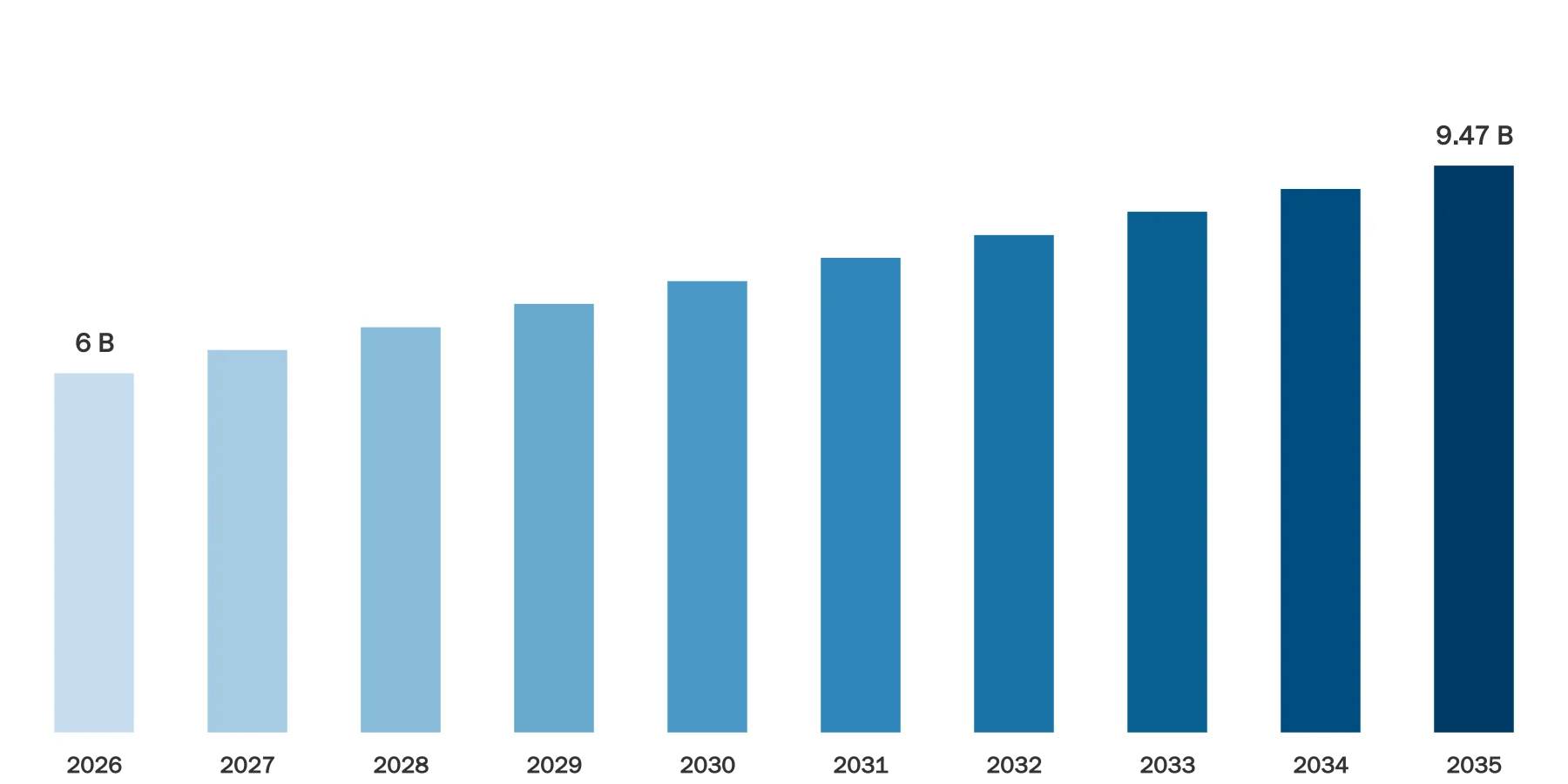
Source: Econ Market Research
The Luxury Crystal Ware Market is characterized by premium handcrafted glass products with lead oxide content ranging between 24% and 30%, enhancing brilliance and refractive index up to 1.7. Globally, over 65% of luxury crystal ware products are manufactured in Europe, particularly in regions with over 200 years of craftsmanship heritage. Approximately 48% of demand comes from high-net-worth households, while 32% is driven by hospitality sectors such as 5-star hotels and fine dining establishments. The Luxury Crystal Ware Market Report highlights that more than 70 million units of crystal ware are produced annually, with decorative and drinkware categories accounting for nearly 58% of total production volume.
The USA Luxury Crystal Ware Market shows strong consumption, with over 22 million units sold annually across premium retail and hospitality channels. Around 41% of U.S. demand originates from residential consumers with annual incomes exceeding $150,000. The hospitality sector contributes approximately 35% of total demand, driven by more than 1,200 luxury hotels and 15,000 upscale restaurants. Imports account for nearly 68% of total supply, primarily from European countries. The Luxury Crystal Ware Market Analysis in the U.S. also indicates that online sales represent 27% of transactions, reflecting increasing digital adoption among affluent consumers.
Market Latest Trends
The Luxury Crystal Ware Market Trends indicate rising consumer preference for handcrafted and limited-edition crystal products, with nearly 36% of buyers prioritizing artisanal craftsmanship over mass-produced alternatives. Sustainable production is gaining traction, with over 42% of manufacturers reducing lead content to below 24% and adopting eco-friendly melting processes that reduce energy consumption by up to 18%. Customization is another key trend, as approximately 29% of luxury buyers demand personalized engravings or bespoke designs.
Digital retail channels are expanding rapidly, contributing to nearly 31% of global luxury crystal ware sales. Augmented Reality tools are used by 12% of premium brands to enhance online shopping experiences. Additionally, collaborations with designers and luxury fashion houses have increased by 22% between 2023 and 2025. The Luxury Crystal Ware Market Insights also reveal that demand for crystal lighting products has increased by 17% due to Luxury Interior Design trends, while barware sets have seen a 14% rise in demand due to premium Home Entertainment culture.
Market Dynamics
DRIVER
Increasing Demand from Luxury Hospitality Sector
The Luxury Crystal Ware Market Growth is strongly driven by the expansion of luxury hospitality infrastructure, with over 8,500 new luxury hotels and resorts developed globally between 2020 and 2025. Approximately 67% of 5-star hotels utilize premium crystal glassware for dining and décor, enhancing guest experience. Fine dining establishments have increased by 19% globally, with over 45,000 upscale restaurants requiring high-end tableware and drinkware. The Luxury Crystal Ware Market Size is further supported by events and banqueting services, where over 60% of high-end venues use crystal ware for weddings and corporate functions. This demand contributes significantly to bulk procurement, with hospitality buyers purchasing an average of 500–2,000 units per order.
RESTRAINT
High Production Costs and Fragility
The Luxury Crystal Ware Market faces restraints due to high production costs, as manufacturing crystal involves temperatures exceeding 1,400°C and energy consumption levels that are 25% higher than standard glass production. Approximately 38% of manufacturers report rising costs of raw materials such as silica and lead oxide. Additionally, breakage rates during transportation and handling range between 6% and 12%, impacting supply chain efficiency. Insurance costs for shipping luxury crystal products have increased by nearly 15% over the last 3 years. The Luxury Crystal Ware Industry Analysis shows that price sensitivity among mid-income consumers limits market penetration, with only 21% of households willing to purchase premium crystal products.
OPPORTUNITY
Growth in E-commerce and Customization
The Luxury Crystal Ware Market Opportunities are expanding through e-commerce platforms, which have seen a 34% increase in luxury product sales between 2022 and 2025. Approximately 28% of consumers prefer online customization tools for engraving and design selection. Direct-to-consumer channels now account for 26% of total sales, reducing dependency on physical retail stores. Emerging markets contribute significantly, with online luxury purchases increasing by 41% in Asia-Pacific regions. The Luxury Crystal Ware Market Forecast indicates that digital marketing campaigns reach over 70% of target affluent audiences, enhancing brand visibility and conversion rates.
CHALLENGES
Competition from Premium Glass Alternatives
The Luxury Crystal Ware Market faces challenges from high-quality glass alternatives, which cost 35% to 50% less than crystal products. Approximately 44% of consumers cannot distinguish between crystal and premium glass visually, reducing perceived value. Manufacturers of premium glassware have increased production by 23% in the last 5 years, intensifying competition. Additionally, regulatory restrictions on lead content in crystal products affect nearly 18% of manufacturers, requiring costly adjustments in production processes. The Luxury Crystal Ware Market Outlook highlights that maintaining exclusivity while adapting to regulations remains a critical challenge for industry players.
SWOT Analysis
Strengths
High refractive index of 1.5–1.7 enhances visual appeal in 85% of products
Over 200 years of craftsmanship tradition in European manufacturing hubs
Premium positioning allows 2x–5x pricing compared to standard glassware
Strong demand from 48% high-income consumer segment
Weaknesses
Fragility leads to breakage rates of up to 12% during logistics
High energy consumption exceeding 1,400°C production requirements
Limited affordability, with only 21% of households purchasing luxury items
Dependence on skilled labor, with training periods exceeding 5–7 years
Opportunities
E-commerce growth contributing 34% increase in online luxury sales
Rising demand in Asia-Pacific with 41% growth in luxury consumption
Customization services adopted by 28% of buyers
Expansion in luxury hospitality with 8,500+ new properties
Threats
Competition from glass alternatives priced 35% lower
Regulatory constraints affecting 18% of manufacturers
Fluctuations in raw material supply impacting 38% of producers
Counterfeit products accounting for nearly 9% of market volume
Segmentation Analysis
The Luxury Crystal Ware Market segmentation is based on type and application, with drinkware and tableware collectively accounting for nearly 58% of total demand. Decorative and lighting segments contribute around 27%, while jewelry and accessories represent approximately 15%. By application, personal and home use accounts for nearly 63% of total consumption, while commercial applications contribute 37%. The Luxury Crystal Ware Market Research Report highlights that product diversification and application-specific demand significantly influence purchasing patterns across regions.
By Type
Bar & Drinkware
Bar and drinkware dominate with approximately 34% market share, driven by demand for crystal glasses, decanters, and cocktail sets. Over 45 million units of drinkware are sold annually, with whiskey glasses accounting for 28% of this segment. Premium bars and home entertainment setups contribute to nearly 52% of demand.
Tableware
Tableware accounts for around 24% of the Luxury Crystal Ware Market Size, including plates, bowls, and serving dishes. Approximately 31 million units are produced annually, with 60% used in hospitality settings. High-end restaurants purchase tableware in bulk quantities exceeding 1,000 units per order.
Decoration
Decorative crystal items hold about 15% share, including figurines, vases, and sculptures. Nearly 18 million decorative pieces are sold annually, with 40% purchased as gifts. Seasonal demand peaks during festive periods, accounting for 22% of annual sales.
Lighting
Crystal lighting contributes 12% of market share, with chandeliers and lamps dominating the segment. Over 9 million units are installed annually, with luxury residential projects accounting for 55% of installations.
Jewelry & Accessories
This segment holds 15% share, with crystal jewelry and accessories gaining popularity among 26% of luxury consumers. Approximately 14 million units are sold annually, driven by fashion collaborations and designer collections.
By Application
Personal and Home
Personal and home applications account for 63% of total demand, with over 50 million units purchased annually. High-income households represent 48% of buyers, and gifting contributes to 27% of purchases.
Commercial
Commercial applications represent 37% of the market, driven by hospitality and event industries. Over 25 million units are procured annually by hotels, restaurants, and event venues, with bulk orders ranging from 500 to 2,000 units.
Regional Analysis
The Luxury Crystal Ware Market Outlook shows strong regional variation, with Europe leading at approximately 38% market share, followed by North America at 27%, Asia-Pacific at 23%, and Middle East & Africa at 12%.
North America
Accounts for 27% of global market share
Over 22 million units sold annually
41% demand from high-income households
Hospitality sector contributes 35% of consumption
North America’s Luxury Crystal Ware Market is driven by high disposable income and luxury lifestyle trends. The U.S. dominates with nearly 78% of regional demand, while Canada contributes 15%. Online sales account for 27% of transactions, and luxury home décor trends influence 33% of purchases.
Europe
Holds 38% market share
Produces over 65% of global crystal ware
More than 200 heritage brands operate in the region
Exports account for 54% of production
Europe leads the Luxury Crystal Ware Industry due to established craftsmanship traditions. Countries like France, Austria, and the Czech Republic dominate production, with over 70 million units manufactured annually.
Asia-Pacific
Accounts for 23% market share
Luxury consumption increased by 41%
Over 18 million units sold annually
Urban population contributes 62% of demand
Asia-Pacific is the fastest-growing region, driven by rising middle-class income and urbanization. China and Japan contribute 58% of regional demand, while India shows a 22% increase in luxury purchases.
Middle East & Africa
Holds 12% market share
Luxury hospitality contributes 48% of demand
Over 5 million units sold annually
UAE accounts for 37% of regional consumption
This region is driven by luxury tourism and high-end real estate. Crystal chandeliers and décor items dominate with 44% share.
Competitive Landscape
The Luxury Crystal Ware Market Competitive Landscape is highly consolidated, with the top 10 companies controlling nearly 62% of global market share. European manufacturers dominate, accounting for over 55% of total production. Swarovski AG leads in brand recognition, with distribution in over 170 countries and more than 2,800 retail outlets. Baccarat Crystal produces over 500,000 handcrafted pieces annually, maintaining a premium positioning. Tiffany & Co operates more than 300 stores globally, with crystal ware contributing approximately 12% of its product portfolio. Innovation and design collaborations have increased by 22%, enhancing brand differentiation. Companies invest up to 8% of their operational budgets in design and product development.
List of Top Luxury Crystal Ware Companies
Swarovski AG
Kagami Crystal
Lalique
Steuben
WWRD Group
Baccarat Crystal
New Wave Group
Tiffany & Co
Louis Crystal
Ralph Lauren
Daum Crystal
Leading Companies by Market Share
Swarovski AG and Baccarat Crystal collectively hold approximately 28% of the global Luxury Crystal Ware Market Share. Swarovski operates in over 170 countries with more than 2,800 stores, while Baccarat produces over 500,000 handcrafted items annually, supplying to more than 80 countries.
Market Investment Outlook
The Luxury Crystal Ware Market Investment Outlook shows increasing capital allocation toward automation and sustainability, with approximately 35% of manufacturers investing in energy-efficient furnaces that reduce emissions by up to 20%. Investments in digital platforms have increased by 27%, enabling direct-to-consumer sales channels. Private equity interest in luxury goods has grown by 19% between 2022 and 2025. Emerging markets account for 33% of new investments, particularly in Asia-Pacific. Infrastructure investments in luxury hospitality, exceeding 8,500 new projects, further drive demand. Companies are allocating 6%–10% of budgets toward branding and marketing to capture high-net-worth consumers.
New Product Development
Innovation in the Luxury Crystal Ware Market focuses on lead-free crystal formulations, with over 42% of new products using alternative materials. Smart crystal lighting integrated with LED technology has increased by 18%, offering energy savings of up to 25%. Designers are launching limited-edition collections, with production runs often restricted to 1,000–5,000 units. Custom engraving technologies have improved precision by 30%, enhancing personalization options. Collaborations with luxury fashion brands have increased product launches by 22%, attracting younger consumers aged 25–40, who account for 31% of new buyers.
Recent Developments
Swarovski launched over 120 new crystal designs in 2024, increasing product portfolio by 15%.
Baccarat introduced 3 new eco-friendly production lines reducing emissions by 18% in 2023.
Lalique expanded distribution to 25 new countries, increasing global reach by 12% in 2025.
Tiffany & Co launched a limited collection of 2,000 crystal pieces in 2024, targeting premium buyers.
Daum Crystal introduced 40 new artistic designs in 2023, increasing decorative segment offerings by 20%.
Report Coverage of Luxury Crystal Ware Market
The Luxury Crystal Ware Market Report provides comprehensive coverage of production volumes exceeding 70 million units annually, with segmentation across 5 product types and 2 major application categories. The report analyzes over 25 countries and includes insights from more than 50 manufacturers. It evaluates regional market share distribution, with Europe at 38% and North America at 27%. The study includes data on consumer behavior, where 48% of buyers belong to high-income groups. It also examines supply chain dynamics, including breakage rates of 6%–12% and energy consumption levels above 1,400°C. The report covers competitive analysis of 10 key players controlling 62% of the market and highlights emerging trends such as 34% growth in e-commerce sales and 42% adoption of sustainable production methods.
Luxury Crystal Ware Market Report Scope & Segmentation
| Attributes | Details |
|---|---|
Market Size (Current) | US$ 6 Billion in 2026 |
Market Size (Forecast) | US$ 9.47 Billion in 2035 |
Growth Rate | CAGR of 5.2% from 2026 to 2035 |
Forecast Period | 2026 – 2035 |
Base Year | 2025 |
Historical Data Available | Yes |
Regional Scope | Global |
Segments Covered | By Type
By Application
|
Frequently Asked Questions
Common questions about this report
The study period covers historical insights and forecast projections for the period 2026-2035.
About the Author
Market research expert with years of industry experience

Related Reports
Explore more market insights from the same category