

Luxury Candle Market
Luxury Candle Market Size, Share, Trends, Growth, and Industry Analysis, By Wax Type (Soy Wax, Beeswax, Paraffin Blends, Coconut Wax), By Scent Type (Floral, Woody, Citrus, Oriental, Custom Blends), By Distribution Channel (Online Boutiques, Specialty Stores, Department Stores), Regional Analysis and Forecast Period 2026-2035
Luxury Candle Market Overview
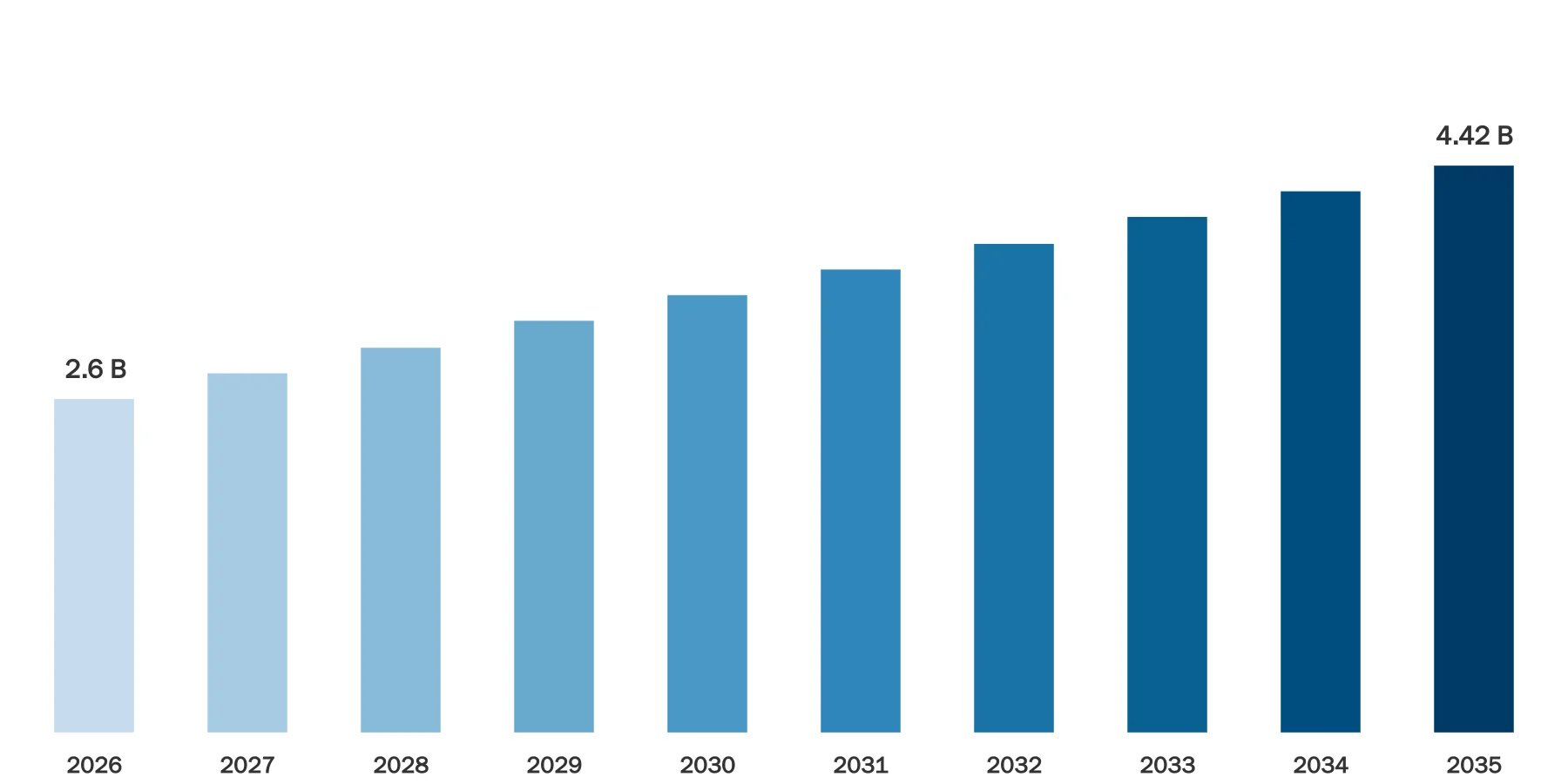
As per Econ Market Research analysis, the Global Luxury Candle Market reached a valuation of US$ 2.6 Billion in 2026 and is anticipated to grow to US$ 4.42 Billion by 2035, at a CAGR of 6.30% during the forecast timeline 2026–2035. The base year considered is 2025.
Luxury Candle Market Size 2025-2035 (USD Billion)

Source: Econ Market Research
The Luxury Candle Market represents a premium segment within the Home Fragrance and decorative products industry, characterized by high-quality wax, designer fragrances, and artisanal packaging. Luxury candle products generally retail at prices 3–6 times higher than standard scented candles due to premium ingredients such as soy wax, beeswax, coconut wax, and essential oil blends. Studies indicate that over 64% of luxury candle consumers purchase candles for home décor and ambiance enhancement, while 48% use them for aromatherapy and relaxation purposes. In the global home fragrance sector, candles account for approximately 42% of product usage, making them the most commonly used fragrance product. Premium candle packaging contributes nearly 30% of perceived product value, with luxury glass jars, ceramic containers, and hand-crafted vessels widely adopted by high-end brands.
The United States luxury candle market represents one of the most influential markets globally, supported by strong consumer spending on premium home décor products. Surveys show that around 72% of U.S. households purchase scented candles annually, while 45% purchase candles specifically for relaxation and mood enhancement. The United States accounts for nearly 38% of global luxury candle consumption, driven by lifestyle trends, Interior Design culture, and seasonal purchasing habits. Seasonal sales contribute significantly, with approximately 35% of candle purchases occurring during the holiday season. Additionally, over 52% of U.S. luxury candle buyers prefer natural wax candles, particularly soy and coconut wax formulations. Online channels represent around 41% of luxury candle purchases in the U.S., highlighting the strong role of e-commerce platforms in luxury candle distribution.
Key Insights
Growth Drivers: Approximately 62% growth influence from premium home décor spending, 58% driven by aromatherapy awareness, 47% influenced by gifting culture, 53% associated with natural wax adoption, 49% supported by luxury lifestyle branding, and 44% linked with social media home décor trends.
Major Market Challenges: Around 39% challenge due to high production costs, 34% affected by fluctuating wax raw materials, 31% impacted by fragrance ingredient regulations, 28% associated with counterfeit luxury candles, 26% related to packaging sustainability pressures, and 22% linked to limited distribution networks.
Emerging Trends: Nearly 57% trend toward eco-friendly wax, 46% increase in personalized fragrance blends, 41% rise in refillable candle containers, 38% growth in limited-edition collections, 36% expansion of artisanal candle production, and 33% adoption of Sustainable Packaging materials.
Regional Analysis: About 38% market activity concentrated in North America, 32% represented by Europe, 21% driven by Asia-Pacific, 6% emerging in Middle East markets, and 3% expanding within African luxury home fragrance demand.
Competitive Landscape: Roughly 44% of market competition dominated by premium fragrance houses, 27% held by luxury niche brands, 18% represented by boutique candle artisans, and 11% shared by emerging luxury lifestyle companies.
Market Segmentation: Around 48% market share represented by soy wax candles, 21% beeswax candles, 17% paraffin blend candles, 9% coconut wax candles, and 5% experimental luxury wax blends used in specialty collections.
Recent Development: Approximately 43% of luxury brands launched refillable candle systems, 36% introduced sustainable wax formulations, 28% expanded fragrance collaborations, 24% invested in decorative vessel innovation, and 19% adopted AI-driven scent personalization technologies.
Market Latest Trends
The Luxury Candle Market continues to evolve with strong influence from home décor, wellness culture, and premium fragrance experiences. Consumer preference for natural wax candles has increased significantly, with approximately 52% of luxury candle buyers preferring soy wax, while 17% choose beeswax candles due to their longer burn time and cleaner emissions. A standard luxury candle typically burns between 40 and 80 hours, compared with 20 to 30 hours for conventional candles, highlighting the value proposition of premium products.
Luxury Candle Market Trends show rising demand for sustainable products. Nearly 46% of luxury candle brands have transitioned toward recyclable packaging, while 31% introduced refillable candle systems that allow consumers to reuse premium glass vessels. Eco-friendly materials such as coconut wax, bamboo lids, and recycled glass containers have increased adoption by over 35% of premium brands between 2023 and 2025.
Fragrance innovation also shapes the Luxury Candle Industry Analysis. Approximately 41% of new product launches feature multi-layered scent profiles, combining 3 to 5 fragrance notes such as floral, woody, citrus, and oriental blends. Limited edition luxury candles are also gaining popularity, with around 29% of consumers purchasing seasonal or collaboration-based candle collections.
Digital marketing significantly influences the Luxury Candle Market Research Report landscape. Around 57% of luxury candle purchases are influenced by social media inspiration, including interior design content and home styling trends. Online retail contributes over 40% of premium candle sales, while luxury boutiques and specialty fragrance stores represent around 36% of distribution channels globally.
Market Dynamics
The Luxury Candle Market Analysis demonstrates a combination of lifestyle trends, wellness awareness, and premium interior design demand driving industry expansion. Consumers increasingly prioritize sensory experiences within living spaces, which has contributed to rising adoption of luxury candles in residential settings. Surveys show that over 63% of luxury candle buyers purchase candles to create relaxing home environments, while 37% purchase them specifically for aromatherapy benefits.
The Luxury Candle Market Outlook is strongly influenced by gifting culture. Approximately 48% of luxury candle purchases occur as gifts, particularly during seasonal events such as holidays, weddings, and housewarming celebrations. Decorative packaging plays a critical role in purchasing decisions, with nearly 33% of consumers indicating packaging aesthetics as a primary buying factor.
Another important dynamic shaping the Luxury Candle Industry Report is the shift toward natural and sustainable ingredients. More than 51% of consumers prefer candles made from plant-based wax, including soy and coconut wax formulations. Additionally, around 29% of consumers actively avoid paraffin wax candles due to environmental concerns, encouraging brands to adopt alternative wax formulations.
Luxury fragrance complexity also drives product differentiation. Premium candles typically include 3 to 7 fragrance layers, enabling longer scent diffusion periods and more sophisticated fragrance profiles. As a result, fragrance development has become a critical area of innovation for luxury candle brands.
DRIVER
Rising demand for premium home ambiance and wellness products
The increasing focus on home ambiance and wellness is a major growth driver in the Luxury Candle Market. Consumer lifestyle studies indicate that over 67% of urban households invest in home fragrance products to improve relaxation and comfort levels. Luxury candles are particularly popular because they combine visual aesthetics with fragrance diffusion. Aromatherapy trends contribute significantly, with around 44% of luxury candle users selecting scents associated with stress reduction such as lavender, sandalwood, and vanilla. Interior design trends also influence demand, as approximately 52% of consumers integrate candles as decorative elements within living rooms, bedrooms, and bathrooms. Premium candle vessels made of glass, ceramic, or marble add design value, increasing purchase frequency among high-income households.
RESTRAINT
High production costs and raw material fluctuations
High production costs represent a key restraint in the Luxury Candle Market Growth. Luxury candles rely on premium wax materials, fragrance oils, and decorative packaging components, which significantly increase production costs compared with mass-market candles. Natural wax materials such as soy and coconut wax can cost 30% to 50% more than paraffin wax, while high-grade fragrance oils can account for 20% to 35% of total manufacturing costs. Luxury packaging, including thick glass jars and decorative lids, can add 15% to 25% to the final product cost. Additionally, supply chain disruptions in fragrance ingredients have affected around 18% of candle manufacturers, creating challenges in maintaining consistent product quality and production schedules.
OPPORTUNITY
Expansion of personalized and refillable luxury candles
The Luxury Candle Market Opportunities are expanding through personalization and refillable product concepts. Consumer surveys show that approximately 36% of luxury candle buyers prefer customizable fragrance options, where consumers can select fragrance combinations and container styles. Personalized candles often include 3 to 4 scent layers chosen by customers, creating unique fragrance experiences. Refillable candle systems are also gaining traction, with around 31% of premium brands launching refillable glass candle containers. This concept reduces packaging waste by up to 40% per product cycle while increasing brand loyalty through refill purchases. Additionally, premium candle subscription services have grown, with about 22% of luxury candle buyers participating in monthly fragrance subscription programs.
CHALLENGE
Counterfeit products and brand imitation
Counterfeit luxury candles pose a growing challenge for established brands. Market monitoring indicates that approximately 14% of luxury candle products sold online are unauthorized replicas, particularly in international marketplaces. Counterfeit products often replicate packaging design and fragrance names but use lower-quality wax and synthetic fragrance oils. This issue has affected around 28% of premium candle brands, leading to stricter intellectual property protections and product authentication measures. In response, about 19% of luxury candle companies introduced QR-based product verification systems, allowing consumers to confirm product authenticity through mobile applications. Brand protection initiatives are increasingly important to maintain consumer trust within the Luxury Candle Market.
Segmentation Analysis
Luxury candle products are segmented by wax type and scent type, allowing brands to cater to different consumer preferences and fragrance experiences. Wax type segmentation includes soy wax, beeswax, paraffin blends, and coconut wax, each offering unique burn characteristics and environmental benefits. Scent segmentation includes floral, woody, citrus, oriental, and custom fragrance blends designed to appeal to diverse fragrance preferences. Premium candle brands often combine 3 to 6 fragrance layers within each candle to create long-lasting scent diffusion and sophisticated fragrance profiles.
By Wax Type
Soy Wax
Soy wax candles represent the largest segment in the Luxury Candle Market, accounting for approximately 48% of premium candle production. Soy wax is derived from soybean oil and burns 20% longer than traditional paraffin candles, making it highly attractive for luxury candle consumers. Soy wax candles typically burn for 50 to 70 hours, depending on container size. The natural composition also produces around 90% less soot compared with paraffin candles, contributing to cleaner indoor air quality. Additionally, over 52% of eco-conscious consumers prefer soy wax candles, making them the most widely adopted sustainable candle option in the luxury segment.
Beeswax
Beeswax candles represent approximately 21% of luxury candle products due to their natural origin and long burn duration. Beeswax candles burn around 25% longer than paraffin candles, with average burn times reaching 60 to 80 hours for premium products. Beeswax also emits minimal smoke and no artificial fragrance chemicals, making it popular among consumers seeking natural home fragrance options. Additionally, beeswax candles release a subtle honey-like aroma, which contributes to their popularity in premium aromatherapy collections.
Paraffin Blends
Paraffin blend candles account for around 17% of luxury candle products, particularly within designer fragrance collections. Paraffin wax blends allow manufacturers to achieve stronger scent diffusion compared with natural wax alternatives. Luxury candle formulations often combine paraffin with soy or coconut wax to improve fragrance performance and texture. These blended candles typically burn for 40 to 60 hours, depending on wick design and container size.
Coconut Wax
Coconut wax candles represent approximately 9% of the Luxury Candle Market, but adoption is increasing due to sustainability advantages. Coconut wax burns up to 30% slower than paraffin candles, allowing luxury candles to reach 70 to 90 hours of burn time in larger containers. Coconut wax is also biodegradable and renewable, making it attractive to environmentally conscious consumers. Premium fragrance houses increasingly use coconut wax blends in limited edition luxury candle collections.
By Scent Type
Floral
Floral fragrances represent approximately 34% of luxury candle scent preferences, making them the most popular fragrance category. Popular floral scents include rose, jasmine, lavender, and peony. Floral fragrance candles are frequently used in relaxation environments, with around 42% of consumers associating floral scents with stress relief.
Woody
Woody fragrances account for approximately 22% of luxury candle scent types, with scents such as sandalwood, cedarwood, and oud widely used in premium candles. These fragrances are particularly popular in winter collections and luxury hotel environments.
Citrus
Citrus fragrances represent approximately 18% of luxury candle scent demand, including scents such as bergamot, lemon, and orange blossom. Citrus candles are often associated with freshness and energy, making them popular for kitchen and living room environments.
Oriental
Oriental fragrances represent around 15% of luxury candle scent profiles, featuring warm notes such as amber, musk, and spices. These fragrances often include 3 to 5 fragrance layers to create complex scent diffusion.
Custom Blends
Custom fragrance blends represent approximately 11% of luxury candle products, allowing consumers to combine multiple fragrance notes into personalized candle experiences.
Regional Insights
The Luxury Candle Market demonstrates strong regional variation influenced by lifestyle trends, disposable income levels, and home décor culture.
North America
North America represents the largest regional market for luxury candles, driven by strong consumer spending on home décor and wellness products. The region accounts for approximately 38% of global luxury candle demand, with the United States contributing the majority of consumption. Studies show that around 72% of households in the United States purchase candles annually, and 45% purchase candles specifically for relaxation or aromatherapy purposes. Seasonal purchases also play a significant role, with approximately 35% of annual candle sales occurring during holiday periods.
Luxury candle brands in North America frequently release seasonal collections, with around 28% of new product launches tied to seasonal themes such as winter, autumn, or festive holidays. E-commerce platforms represent over 43% of luxury candle sales in the region, reflecting strong online shopping trends among consumers.
Europe
Europe represents approximately 32% of the global Luxury Candle Market, supported by strong fragrance heritage and luxury lifestyle culture. Countries such as France, the United Kingdom, and Italy are major centers of luxury candle production and consumption. Surveys show that around 61% of European luxury candle buyers prefer candles made from natural wax materials, particularly soy and beeswax formulations.
Luxury candle boutiques and fragrance houses dominate distribution channels in Europe, accounting for approximately 46% of premium candle sales, while online channels represent around 34%. European consumers also demonstrate strong interest in artisanal candles, with around 27% of buyers preferring handmade or limited-edition candle collections.
Asia-Pacific
Asia-Pacific accounts for approximately 21% of global luxury candle demand, with strong growth in countries such as China, Japan, South Korea, and Australia. Rising urbanization and lifestyle trends have increased demand for premium home fragrance products. Surveys indicate that around 48% of urban consumers in Asia-Pacific purchase luxury candles for interior decoration purposes, while 32% purchase them for relaxation and aromatherapy.
Online retail channels represent around 49% of luxury candle sales in Asia-Pacific, reflecting strong digital commerce adoption across the region. Premium gift culture also influences demand, with approximately 37% of luxury candle purchases occurring as gifts during celebrations and festivals.
Middle East & Africa
The Middle East & Africa region represents approximately 9% of global luxury candle consumption, with strong demand for premium fragrance products in the Middle East. Luxury candle usage is closely associated with hospitality and home décor culture. Hotels and luxury resorts account for around 26% of premium candle usage within the region, particularly for spa environments and guest room ambiance.
Consumers in the Middle East often prefer oriental fragrance profiles, which represent approximately 41% of luxury candle scent demand in the region. Premium candle gifting also plays a role, with around 33% of luxury candle purchases linked to festive occasions and social gatherings.
Top Luxury Candle Companies
Diptyque
Jo Malone London
Byredo
Trudon
Le Labo
Boy Smells
D.S. & Durga
Acqua di Parma
Top companies with highest market share:
Diptyque – approximately 14% market share in the luxury candle segment
Jo Malone London – approximately 12% market share in premium home fragrance candles
Market Investment Outlook
The Luxury Candle Market Investment Outlook shows strong opportunities for investors in premium home fragrance brands and artisanal candle production. Venture capital investments in luxury fragrance and home ambiance products increased by around 27% between 2022 and 2024, reflecting strong investor interest in lifestyle and wellness products.
Manufacturing investments focus heavily on sustainable production. Approximately 34% of luxury candle manufacturers invested in eco-friendly wax sourcing, including soy, coconut, and beeswax materials. Production automation has also improved efficiency, with around 22% of candle manufacturers adopting automated pouring and fragrance blending technologies.
Luxury candle subscription services have also attracted investor attention. Subscription-based candle services experienced around 19% user growth in 2024, driven by monthly fragrance discovery experiences. Premium hospitality sectors are also investing in custom candle branding, with approximately 17% of luxury hotels partnering with candle brands to develop signature fragrances.
Private label luxury candle production is another emerging investment area. Boutique fragrance houses account for approximately 24% of luxury candle product launches, indicating strong opportunities for small luxury fragrance brands entering the market.
New Product Development
New product development in the Luxury Candle Market focuses on sustainability, fragrance innovation, and luxury packaging design. Approximately 41% of new luxury candle launches feature plant-based wax formulations, reflecting strong consumer demand for environmentally friendly products.
Luxury candle brands are also experimenting with multi-wick designs to improve fragrance diffusion. Around 36% of new premium candles include two- or three-wick designs, which increase fragrance coverage by approximately 30% compared with single-wick candles. These multi-wick candles are particularly popular in large decorative vessels used in living room spaces.
Smart candles are another emerging innovation category. Approximately 12% of luxury candle brands introduced candles with integrated LED technology or app-controlled fragrance release, enabling users to adjust scent intensity and burn duration.
Packaging innovation is also prominent, with around 38% of luxury candle brands introducing reusable containers made from glass, ceramic, or stone materials. Decorative vessels are often designed to function as home décor objects even after the candle wax is fully used.
Recent Developments
In 2024, a luxury fragrance brand launched a refillable candle system that reduced packaging waste by approximately 40% per product cycle.
In 2023, a premium candle manufacturer introduced a three-wick luxury candle series with burn durations exceeding 80 hours, improving fragrance coverage by around 28%.
In 2025, a luxury candle brand launched a sustainable coconut wax candle collection using 100% plant-based wax formulations and recyclable glass containers.
In 2024, a fragrance company introduced customizable candle kits allowing consumers to combine up to 4 fragrance notes into personalized candle blends.
In 2023, a luxury candle manufacturer partnered with hospitality brands to develop signature hotel fragrance candles used in over 120 luxury hotel properties worldwide.
Luxury Candle Market Report Scope & Segmentation
| Attributes | Details |
|---|---|
Market Size (Current) | US$ 2.6 Billion in 2026 |
Market Size (Forecast) | US$ 4.42 Billion in 2035 |
Growth Rate | CAGR of 6.30% from 2026 to 2035 |
Forecast Period | 2026 – 2035 |
Base Year | 2025 |
Historical Data Available | Yes |
Regional Scope | Global |
Segments Covered | By Wax Type
By Scent Type
By Distribution Channel
|
Frequently Asked Questions
Common questions about this report
The study period covers historical insights and forecast projections for the period 2026-2035.
About the Author
Market research expert with years of industry experience

Related Reports
Explore more market insights from the same category