

Land Management Software Market
Land Management Software Market Size, Share, Trends, Growth, and Industry Analysis, By Component (Software, Services), By Deployment Mode (On-Premises, Cloud), By Application (Agriculture, Forestry, Real Estate, Mining, Government, Others), By End-User (Individual, Enterprises, Government Agencies), Regional Analysis and Forecast Period 2026-2035
Market Overview
As per Econ Market Research analysis, the Global Land Management Software Market was estimated at US$ 2.18 Billion in 2026 and is forecast to attain US$ 3.65 Billion by 2035, expanding at a CAGR of 5.97% between 2026 and 2035. The base year for the study is 2025.
Land Management Software Market Size 2025-2035 (USD Billion)

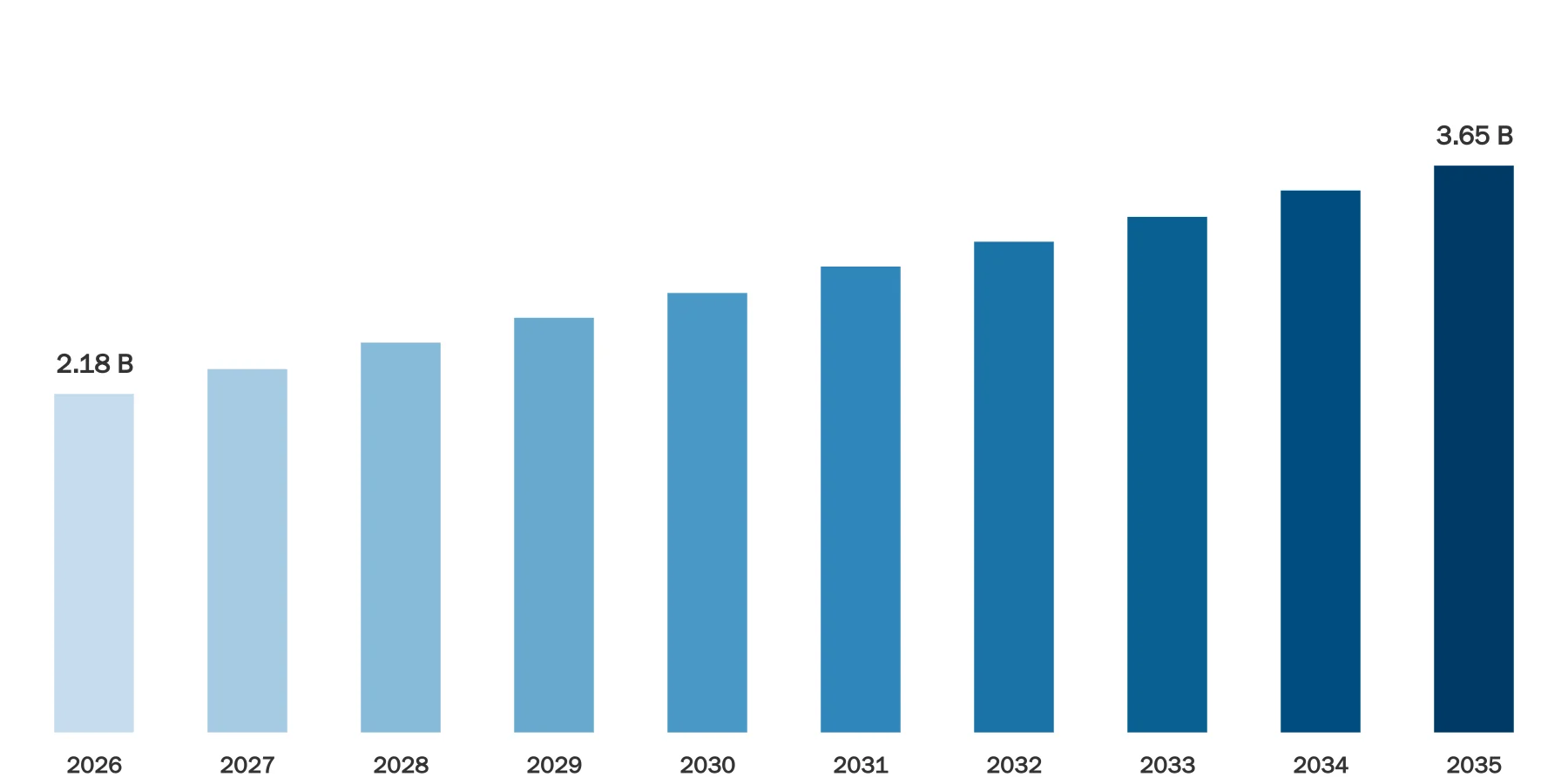
Source: Econ Market Research
Solutions for streamlining and optimizing many facets of land administration, such as property inventory, lease management, environmental monitoring, and regulatory compliance, are available in the land management software industry. For government organizations, Real Estate companies, and land developers, these software solutions facilitate effective data management, analysis, and reporting. These platforms support sustainable land use practices and improve decision-making processes with features including automated workflows, mobile accessibility, and GIS integration. Growth in this dynamic market is being driven by the growing demand for novel software solutions as land management becomes more complex and crucial for sustainable development.
Land Management Software Dynamics
Market expansion is fueled by an increasing need for effective land administration, which is brought on by urbanization and population increase. Market expansion is also fueled by the growing use of digital solutions to improve compliance and productivity. Demand is further stimulated by technological breakthroughs like AI-powered analytics and GIS integration. Obstacles, however, include problems with interoperability and data security. In response to changing client expectations, industry participants are forming strategic alliances, developing tailored solutions, and utilizing cloud-based platforms.
Land Management Software Drivers
Urbanization and Population Growth
The need for land management software is driven by urbanization and population growth, as cities grow and require effective land resource management. There is a greater demand for expedited procedures in property inventory, zoning, and infrastructure planning as more people move into metropolitan areas. By offering tools for spatial analysis, land parcel administration, and regulatory compliance, land management software assists municipalities and real estate developers in navigating the challenges of urban growth and ensures sustainable development in the face of fast population expansion.
Environmental Conservation and Sustainability Initiatives
Tools that make it easier to monitor, analyze, and manage natural resources are desperately needed as environmental challenges gain more and more attention. With the use of land management software, businesses may assess environmental effects, apply conservation methods, and adhere to legal requirements. This promotes a more sustainable approach to land development and management that is in line with international sustainability goals and initiatives.
Restraints:
Data Security Concerns and Privacy Regulations
The hazards of data breaches and illegal access are becoming a growing worry for individuals, governments, and enterprises. Complying with strict privacy requirements increases the complexity and expense of developing and implementing software. Furthermore, even though land management software systems have many advantages, some potential users may be discouraged from implementing them since maintaining data security necessitates continuous investment in Cyber Security measures.
Lack of Skilled Workforce and Training Opportunities
Many potential customers lack the specific knowledge needed to use these software solutions effectively. In addition, there are insufficient resources and training programs available to upskill the current workforce. This limits the potential impact of land management software on enhancing decision-making and efficiency in land administration procedures across several sectors and hinders its acceptance and deployment.
Opportunities:
Integration with IoT and Remote Sensing Technologies
Real-time data on land use, environmental conditions, and infrastructure assets can be obtained via land management software by utilizing IoT sensors and remote sensing technologies like drones and satellite photography. Improvements in information timeliness and accuracy as a result of this integration facilitate improved decision-making in domains such as natural resource management, land development, and disaster response. It creates opportunities for novel approaches and value-added services, which promote market expansion and distinction.
Expansion of Cloud-Based and SaaS Offerings
Users can access land management solutions from any location with internet connectivity thanks to the scalability, flexibility, and accessibility offered by cloud-based and Software as a Service (SaaS) models. This expansion streamlines upgrades and maintenance, lowers upfront infrastructure costs, and promotes stakeholder collaboration. It meets the increasing need for solutions for remote work and gives smaller businesses access to sophisticated land management tools, which promotes market expansion and uptake.
Segment Overview
By Product Type
Based on product type, the global land management software market is divided into web-based, and on-premise. The web-based category dominates the market with the largest revenue share in 2023. Web browsers are the only devices required to access web-based land management software, which is fully functional online. It is very flexible and easy because users can access the software remotely from any location with an internet connection. The company',s servers and infrastructure are used to install and run on-premise land management software. Internal software management is handled by users, who also handle upgrades, maintenance, and installation.
By Application
Based on the application, the global land management software market is categorized into oil &, gas, lease management, urban planning. Efficient management of land assets, such as leases, mineral rights, and surface rights, is made possible by land management software designed specifically for the oil and gas industry. Businesses may monitor property ownership, leases, royalties, and regulatory compliance with the use of these tools.
Software for managing leases is made to make the process of managing property leases easier for a variety of businesses, such as retail, commercial, and real estate. These solutions assist businesses in keeping track of leases, handling rent payments, and guaranteeing adherence to rules and specifications. Government organizations, city planners, and urban developers use land management software for urban planning to promote sustainable development and effective land usage within metropolitan regions.
Land Management Software Overview by Region
The global land management software market is categorized into North America, Europe, Asia-Pacific, and the Rest of the World. North America emerged as the leading region, capturing the largest market share in 2023. The area is known for its strong economy, cutting-edge infrastructure, and high rate of digital adoption in a range of sectors. The need for advanced land management systems is also fueled by strict regulatory requirements in industries like real estate, oil and gas, and urban planning. Due to the early adoption of new technology by North American businesses, land management software is widely used to maximize land usage, expedite operations, and guarantee compliance.
The region',s growing economies', fast industrialization, infrastructure expansion, and urbanization are all responsible for this growth. In order to meet the problems posed by urbanization and promote sustainable development objectives, governments are putting more and more emphasis on putting effective land management strategies into place. Furthermore, Asia-Pacific',s businesses are adopting digital technologies at an accelerated rate, which is increasing demand for sophisticated land management software solutions.
Land Management Software Competitive Landscape
In the global land management software market, a few major players exert significant market dominance and have established a strong regional presence. These leading companies remain committed to continuous research and development endeavors and actively engage in strategic growth initiatives, including product development, launches, joint ventures, and partnerships. By pursuing these strategies, these companies aim to strengthen their market position, expand their customer base, and capture a substantial share of the market.
Land Management Software Market Leading Companies:
P2 iLandMan
TotaLand
Landfolio
BluePrince
Bluetick LMS
LANDmanager
LandVantage
LandView
PermitDocs
Q5PROS, and various others.
Land Management Software Recent Developments
In September 2023, Spatial Dimension was fully acquired by Vela Software subsidiary acQuire Technology Solutions (acQuire), a global provider of information management software. Acquire',s portfolio now includes apps for land and lease management thanks to the acquisition of Spatial Dimension and its Landfolio solution. Leading land management software, Spatial Dimension',s Landfolio package automates and combines all essential components of land administration, including natural resource permit and lease administration, registration, and cadastre.
In September 2022, The purchase of Australian property management software business HiRUM and Spain-based vacation rental software company Kigo was announced today by Guesty, the leading platform for property management for the short-term rental and hospitality industries. By integrating the current teams from Kigo and HiRUM into Guesty, the company will be able to reach a wider audience worldwide, invest more in research and development, and enhance its offerings for users across all three platforms.
Land Management Software Market Report Segmentation
Land Management Software Market Report Scope & Segmentation
| Attributes | Details |
|---|---|
Market Size (Current) | US$ 2.18 Billion in 2026 |
Market Size (Forecast) | US$ 3.65 Billion in 2035 |
Growth Rate | CAGR of 5.97% from 2026 to 2035 |
Forecast Period | 2026 – 2035 |
Base Year | 2025 |
Historical Data Available | Yes |
Regional Scope | Global |
Segments Covered | By Component
By Deployment Mode
By Application
By End-User
|
Frequently Asked Questions
Common questions about this report
The study period covers historical insights and forecast projections for the period 2026-2035.
About the Author
Market research expert with years of industry experience

Dipali Bhingare serves as the Market Research Director at Econ Market Research. With a focus on translating complex global economic shifts into actionable business intelligence, she oversees the strategic direction of comprehensive market studies. Her work empowers organizations to navigate volatile industries through data-driven forecasting and deep-dive competitive analysis.
Related Reports
Explore more market insights from the same category