

Laboratory Informatics Market
Laboratory Informatics Market Size, Share, Trends, Growth, and Industry Analysis, By Product (LIMS, ELN, ECM, LES, CDS), By Delivery Mode (On-Premise, Web-Hosted, Cloud-Based), By End-User (Pharmaceutical andamp; Biotechnology Companies, CROs), Regional Analysis and Forecast Period 2026-2035
Laboratory Informatics Market Overview
As per Econ Market Research analysis, the Global Laboratory Informatics Market valuation stood at US$ 3.55 Billion in 2026 and is expected to reach US$ 7.26 Billion by 2035, growing at a steady CAGR of 8.3% from 2026 to 2035. 2025 serves as the base year.
Laboratory Informatics Market Size 2025-2035 (USD Billion)

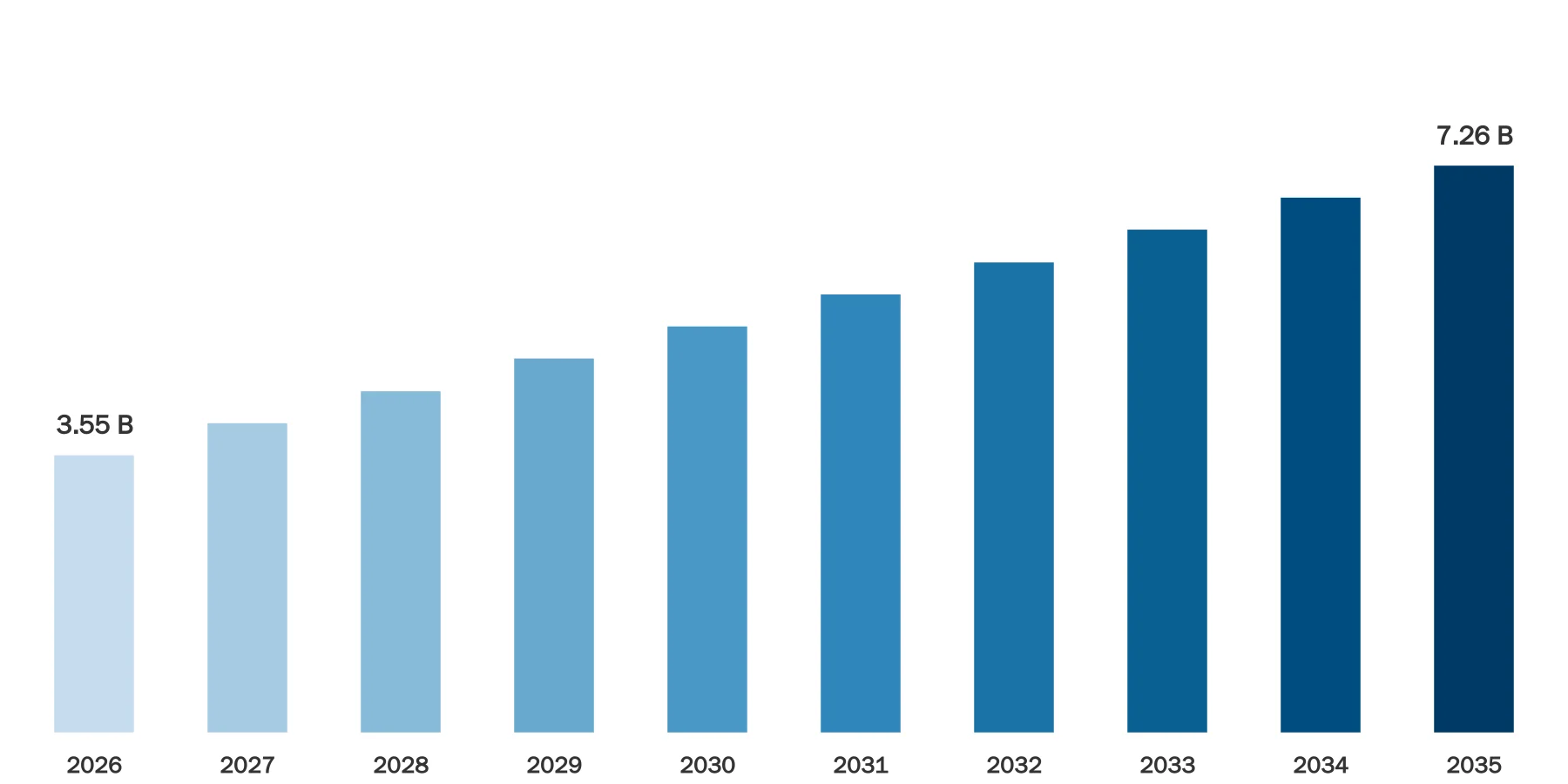
Source: Econ Market Research
Laboratory informatics systems enable labs to automate procedures, assure data accuracy, and adhere to regulatory requirements. Laboratory informatics encompasses a variety of tools, including Laboratory Information Management Systems (LIMS), Electronic Lab Notebooks (ELNs), and data analytics platforms. These instruments are critical for increasing efficiency, lowering human error, and facilitating scientific research and development.
The market for laboratory informatics is expanding due to rising demand for better data management and regulatory compliance in laboratories. Technological advancements, such Cloud Computing and Artificial Intelligence, are driving this expansion by providing more powerful and scalable solutions. Additionally, the need for data integration across different laboratory systems and the rise of personalized medicine are contributing to the expansion of this market. Laboratories in sectors like pharmaceuticals, biotechnology, and healthcare are key drivers of this trend, as they seek to enhance their operational efficiency and data accuracy through modern informatics solutions.
Dynamic Insights
One key factor is the growing demand for effective data management and regulatory compliance in laboratories. As research and development operations grow, laboratories need innovative systems to manage massive amounts of data, assure accuracy, and comply with tight standards. Laboratory Information Management Systems (LIMS) and Electronic Lab Notebooks (ELNs) are critical in meeting these requirements by automating operations, enhancing data integrity, and enabling industry compliance.
Technological advances play an important part in propelling the market. Cloud computing, artificial intelligence, and machine learning are improving the capabilities of laboratory informatics solutions, providing better data analysis, integration, and scalability. These technologies enable laboratories to handle complex data sets more effectively and gain deeper insights into their research. Furthermore, the rise of personalized medicine and increasing demand for data integration across various laboratory systems are pushing the adoption of advanced informatics solutions. However, challenges such as high implementation costs and the need for continuous updates and maintenance can impact market growth.
Drivers Insights
Increasing Demand for Data Management and Regulatory Compliance
Laboratories in a variety of industries, including pharmaceuticals, biotechnology, and healthcare, face increasing pressure to manage massive amounts of data accurately while adhering to tight regulatory criteria. Laboratory Informatics systems, including Laboratory Information Management Systems (LIMS) and Electronic Lab Notebooks (ELNs), are critical tools for automating data collecting, assuring data integrity, and enabling regulatory compliance. This increased demand for efficient data administration and adherence to laws promotes the use of laboratory informatics systems, which improve operational efficiency and enhance research and development operations.
Technological Advancements
The rapid evolution of technology, including cloud computing, artificial intelligence (AI), and machine learning, is significantly driving the laboratory informatics market. These advancements enable laboratories to handle complex data sets with greater efficiency and accuracy. Cloud-based solutions offer scalability and remote access, while AI and machine learning provide advanced data analysis and predictive insights. These technological innovations enhance the capabilities of laboratory informatics systems, allowing laboratories to integrate and analyse data more effectively, thus driving market growth.
Restraints Insights
High Implementation Costs
One of the biggest problems laboratories confront when implementing laboratory informatics solutions is the significant upfront investment necessary. Implementing advanced systems like LIMS or ELNs incurs significant expenses for software procurement, hardware infrastructure, and integration with current systems. Furthermore, continual maintenance and upgrades add to the overall cost of ownership. These high expenditures can be a hurdle for smaller laboratories or groups with limited funds, thus preventing wider adoption.
Complexity and Integration Issues
Integrating laboratory informatics solutions with existing systems and workflows can be complex and challenging. Laboratories often use a variety of legacy systems and technologies, and ensuring seamless integration with new informatics solutions requires careful planning and technical expertise. Integration issues can lead to disruptions in laboratory operations and affect overall efficiency. Moreover, the complexity of configuring and customizing these systems to meet specific laboratory needs can be a significant restraint, potentially deterring some organizations from adopting advanced informatics solutions.
Opportunities Insights
Growth in Personalized Medicine
The rise of personalized medicine creates substantial opportunities for the laboratory informatics business. Personalized medicine entails personalizing medical therapy to specific patient features, which necessitates sophisticated data analysis and integration. Laboratory informatics solutions can help manage and analyse patient-specific data, facilitate genomics research, and enable the development of tailored medicines. This expanding trend in customized medicine presents a significant market potential for informatics solutions that can handle complicated and unique data sets.
Segment Analysis
By Product
In the laboratory informatics market, the product segment includes various specialized systems designed to streamline laboratory operations. Laboratory Information Management Systems (LIMS) are used to manage samples, data, and laboratory workflows, offering comprehensive tracking and reporting capabilities. Electronic Lab Notebooks (ELNs) replace traditional paper lab notebooks, providing digital documentation and data management tools. Scientific Data Management Systems (SDMS) focus on storing and managing scientific data from multiple sources, while Laboratory Execution Systems (LES) assist in executing, managing, and documenting laboratory processes.
Electronic Data Capture (EDC) and Clinical Data Management Systems (CDMS) are critical in clinical trials and research for collecting, managing, and analysing clinical data. Chromatography Data Systems (CDS) are specialized in managing data from chromatography instruments. Lastly, Enterprise Content Management (ECM) systems support the storage, management, and retrieval of documents and content across an organization. Each product serves a unique function, contributing to the overall efficiency and effectiveness of laboratory operations.
By Delivery Mode
Laboratory informatics solutions are delivered in three modes: web-based, on-premise, and cloud-based. Web-based solutions are accessible via a web browser, allowing for flexibility and convenience of use from a variety of places without requiring costly local infrastructure. On-premise systems are installed and run on the organization',s own servers and hardware, providing better control over data protection and customisation but necessitating a considerable initial investment and ongoing maintenance.
Cloud-based solutions, on the other hand, use cloud computing to provide scalable and cost-effective options that include remote access capabilities. This distribution mechanism enables quicker upgrades, maintenance, and collaboration across many sites, making it increasingly popular among laboratories seeking flexible and scalable informatics solutions.
By Component
The components area of laboratory informatics focuses on software and services. Software components include informatics systems and applications used to handle laboratory data and procedures, such as LIMS, ELNs, and SDMS. These software solutions include the capabilities required for data collection, analysis, and reporting. Services, on the other hand, include the support and expertise required to implement and manage these systems. This comprises advice, training, technical support, and system integration. Software and services ensure that laboratories may efficiently use informatics solutions to improve their operations and meet regulatory standards.
By End-Use
The end-use segment of laboratory informatics encompasses a diverse range of industries and organizations that utilize these systems for various applications. In the Life Sciences sector, including Pharmaceutical and Biotechnology Companies, informatics systems are used for drug development, research, and regulatory compliance. Biobanks/Biorepositories and Contract Services Organizations (CSOs) rely on these systems for sample management and data handling. Molecular Diagnostics &, Clinical Research Laboratories use informatics for managing clinical and research data.
Academic Research Institutes and Contract Research Organizations (CROs) employ these solutions for research data management and analysis. Additionally, the Chemical Industry, Food &, Beverage and Agriculture Industries, Environmental Testing Laboratories, and Petrochemical Refineries and Oil &, Gas Industry leverage laboratory informatics to ensure quality control, regulatory compliance, and data accuracy in their respective fields. Each end-use category benefits from tailored informatics solutions to address specific industry needs and enhance operational efficiency.
Regional Analysis
North America dominates the market, owing to its sophisticated research infrastructure, high adoption rates of laboratory informatics solutions, and the strong presence of leading industry competitors. The region',s concentration on technical innovation, along with tight regulatory standards, drives rising demand for advanced informatics systems in pharmaceuticals, biotechnology, and clinical research.
Significant investments in research and development are driving growth in Europe, particularly in Germany, the United Kingdom, and France. The European market benefits from a solid regulatory framework and a considerable emphasis on increasing laboratory efficiency and data management. The existence of several biopharmaceutical businesses and research institutions increases the demand for superior laboratory informatics systems.
The Asia-Pacific region is experiencing rapid growth, driven by increasing investments in healthcare and biotechnology, coupled with a rising number of research and development activities. Emerging economies like China and India are expanding their laboratory infrastructure, which is propelling the adoption of informatics solutions. The region',s growth is also supported by the rising demand for personalized medicine and clinical trials.
Competitive Landscape
Major players include companies like Thermo Fisher Scientific, LabWare, Veeva Systems, and PerkinElmer, which are recognized for their extensive portfolios of laboratory informatics solutions such as LIMS, ELNs, and SDMS. These industry leaders benefit from their established market presence, broad customer base, and extensive R&,D capabilities, enabling them to deliver advanced and scalable solutions that address various laboratory needs.
In addition to these established firms, several emerging companies and niche players are gaining traction by focusing on specialized solutions and technological advancements. For instance, companies like STARLIMS and LabVantage Solutions are known for their tailored informatics systems that cater to specific industry requirements. The market also sees increasing activity from technology-driven firms leveraging cloud computing, AI, and machine learning to enhance the functionality and efficiency of laboratory informatics systems.
The competitive dynamics are further influenced by strategic partnerships, mergers and acquisitions, and collaborations aimed at expanding product offerings and entering new markets. As the demand for advanced laboratory informatics solutions grows, the competitive landscape is likely to continue evolving, with a focus on innovation and integration to meet the diverse needs of laboratories worldwide.
List of Key Players:
Abbott
LabLynx, Inc.
PerkinElmer, Inc.
Thermo Fisher Scientific, Inc.
LabVantage Solutions, Inc.
Waters
Agilent Technologies, Inc.
IDBS
McKesson Corporation
LabWare
Recent Developments:
In February 2024, LabVantage Solutions, Inc. introduced an integrated, digitally native ecosystem designed to enhance R&,D laboratory processes. This ecosystem combines advanced analytics, semantic search (AILANI), and purpose-built LIMS solutions to improve efficiency, productivity, decision-making, and collaboration while also reducing operational costs.
In November 2023, Thermo Fisher Scientific Inc. entered into a strategic partnership with Flagship Pioneering, a bioplatform innovation firm. This collaboration aims to accelerate the development and expansion of multiproduct platforms, create new platform companies with a focus on cutting-edge biotech tools and capabilities, and extend their existing supply relationship across life science tools, diagnostics, and services.
Global Laboratory Informatics Report Segmentation:
Laboratory Informatics Market Report Scope & Segmentation
| Attributes | Details |
|---|---|
Market Size (Current) | US$ 3.55 Billion in 2026 |
Market Size (Forecast) | US$ 7.26 Billion in 2035 |
Growth Rate | CAGR of 8.3% from 2026 to 2035 |
Forecast Period | 2026 – 2035 |
Base Year | 2025 |
Historical Data Available | Yes |
Regional Scope | Global |
Segments Covered | By Product
By Delivery Mode
By End-User
|
Frequently Asked Questions
Common questions about this report
The study period covers historical insights and forecast projections for the period 2026-2035.
About the Author
Market research expert with years of industry experience

Dipali Bhingare serves as the Market Research Director at Econ Market Research. With a focus on translating complex global economic shifts into actionable business intelligence, she oversees the strategic direction of comprehensive market studies. Her work empowers organizations to navigate volatile industries through data-driven forecasting and deep-dive competitive analysis.
Related Reports
Explore more market insights from the same category