

Interior Design Market
Interior Design Market Size, Share, Trends, Growth, and Industry Analysis, By Type (New Construction, Remodeling/Renovation), By End-User (Residential, Commercial (Office, Retail), Hospitality, Institutional), By Style (Modern, Contemporary, Traditional, Industrial), Regional Analysis and Forecast Period 2026-2035
Interior Design Market Overview
As per Econ Market Research analysis, the Global Interior Design Market accounted for US$ 161.67 Billion in 2026 and is expected to surpass US$ 261.8 Billion by 2035, witnessing a CAGR of 5.5% throughout 2026–2035. The analysis is based on 2025 as the base year.
Interior Design Market Size 2025-2035 (USD Billion)

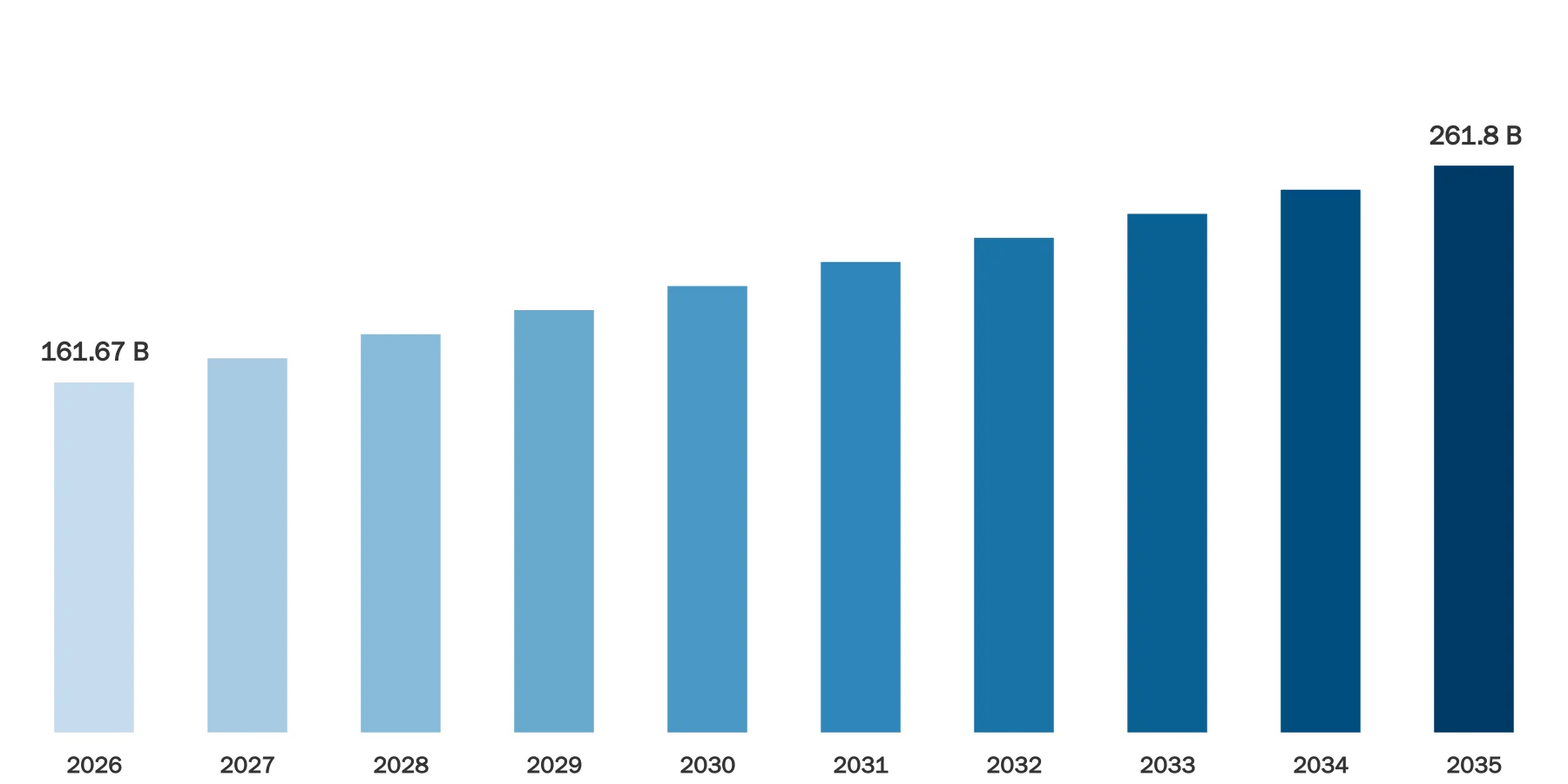
Source: Econ Market Research
Interior design is creating functional, aesthetically pleasing environments through the selection of colors, furniture, lighting, and layout. It aims to enhance the quality of life and improve the functionality of the space according to the client',s needs and preferences. This market is growing with urbanization, increasing disposable incomes, and the demand for personalization and innovative designs.
Interior design services are provided both in residential and commercial sectors, focusing on sustainability, smart homes, and multifunctional spaces. As technology develops, digital tools such as 3D rendering and Augmented Reality have become fundamental to the design process. With the growing need for creating comfortable and efficient living and working spaces, the interior design market continues to evolve under the impetus of both traditional design values and modern needs.
Dynamic Insights
Increasing demand for personalized, stylish, and functional spaces is one of the major drivers. Consumers are seeking interiors that reflect their individual tastes and lifestyles, contributing to a growing preference for custom-designed homes and offices. Additionally, increasing disposable incomes, especially in emerging economies, have fueled demand for high-quality interior design services.
Technological advancement also plays a significant role in the market. The use of digital tools, such as 3D modeling and virtual reality, has changed the way designs are conceptualized and presented to clients, thereby increasing precision and client engagement. The trend for sustainable design, driven by environmental concerns, has LED to the use of eco-friendly materials and energy-efficient solutions in interior spaces.
On the other hand, economic factors may impact the growth of markets because interior design projects are largely considered discretionary. During economic recessions, consumers and businesses are likely to spend less on renovation and design projects. However, in areas experiencing rapid urbanization and infrastructure development, demand for interior design services remains strong and contributes to overall market expansion.
Drivers Insights
Rising Demand for Personalized and Functional Spaces
With consumers seeking homes and workspaces that represent their personalities and lifestyle, there has been an increased demand for personalized and functional interior designs. The modern interior design market has shifted towards making spaces not only aesthetically pleasing but also highly functional. As smart homes become increasingly popular, many consumers are choosing designs that integrate technology for convenience, energy efficiency, and comfort.
This shift towards tailor-made spaces is especially prevalent within the residential space, where customers are investing in designs that will appeal to them and optimize use of space. Businesses are likewise investing in unique office designs meant to improve their employees', sense of well-being and productivity in the workplace and enhance comfort as well as team collaboration. Thus, this growth in personalization and practicality drives the interior design market.
Technological Advancements and Digital Tools
The integration of technology into the interior design process is a major driver in the industry. Tools such as 3D rendering, virtual reality (VR), and augmented reality (AR) allow interior designers to visualize and present their concepts with high accuracy and detail. These technologies not only help in streamlining the design process but also enhance customer experience by providing realistic previews of designs before implementation. Besides, digital tools make interior designing available to customers so that consumers can search and surf design ideas over the web and communicate with designers through internet communication. Wide adaptation of such technologies enhances efficiency, accuracy, and client satisfaction, thus stimulating interior design demand around the globe.
Restraints Insights
High Costs of Premium Design Services
One of the primary constraints of the global interior design market is that premium design services are too costly and may become out of reach for a majority of the consumer market. With demand for bespoke, high-end designs on the rise, however, not all people can afford top designers or buy expensive materials and furnishings. The cost of material, labor, and implementation, along with the cost of professional interior design services, can be cost-prohibitive for businesses or individuals with limited budgets. This is why some consumers turn to DIY (do-it-yourself) design solutions or less expensive alternatives, which can slow down the growth of the high-end segment of the market.
Economic Uncertainty and Budget Constraints
Economic fluctuations, such as recessions or economic slowdowns, pose a significant challenge to the growth of the interior design market. During periods of economic uncertainty, businesses and consumers tend to cut back on discretionary spending, which includes investments in home renovations and office redesigns. Tightened budgets can lead to delayed or canceled interior design projects, particularly in the commercial sector. For instance, in a downturn, companies may hold off on redesigning office spaces or building new properties. This makes the interior design market sensitive to broader economic conditions, limiting growth during uncertain times.
Opportunities Insights
Growing Popularity of Sustainable and Eco-friendly Designs
Sustainability is increasingly an important issue for interior designers since more consumers and businesses are concerned with reducing their ecological footprint. This has increased demand for green materials, energy-saving systems, and designs that contribute to sustainability in the use of reclaimed wood, energy-saving appliances, and low-VOC paints.
The trend toward green buildings, motivated by both environmental concerns and regulatory requirements, opens an opportunity for interior designers to penetrate the growing market segment. Sustainable practices and environmentally conscious designs will be the ways interior designers attract more eco-aware clients and stand out in a competitive market.
Segment Analysis
By End-Use:
The interior design market caters to various end-use segments, like residential, commercial, institutional, and industrial premises. The most significant market segment is residential since homeowners look to have their places of residence specifically designed to increase the comfort quotient of their houses. Commercial applications, including offices, retail, and hotels, use interior designs to create more aesthetically pleasing and functional areas that can elevate customer and staff experiences.
Institutional projects, such as hospitals and educational institutions, emphasize designs that are comfortable, functional, and safe. Industrial spaces, including factories and warehouses, emphasize efficiency, durability, and spatial optimization in support of operational workflows. All these varied end-use requirements create a need for specialized and versatile interior design solutions.
By Service Type:
The market is divided into service types: residential interior design, commercial interior design, sustainable/green design, and renovation and restoration services. Residential and commercial designs are prominent due to increased consumer demand for bespoke and innovative spaces. Sustainable design is fast picking up with increased environmental awareness, using eco-friendly materials and energy-efficient solutions. Renovation and restoration services are crucial for maintaining or upgrading existing properties, driven by rising urbanization and aging infrastructure. Together, these service types cater to evolving consumer and business needs, broadening the scope of the market.
By Design Style:
Design styles within the market cater to diverse aesthetic preferences, such as modern, traditional, contemporary, minimalist, rustic, and industrial designs. Modern and contemporary styles are highly in demand due to their sleek, functional appeal, while traditional designs focus on timeless elegance. Minimalist styles emphasize simplicity and efficiency, contrasting with the earthy charm of rustic aesthetics. Industrial designs, marked by raw finishes and functionality, are increasingly favored for urban spaces. This range of styles ensures that interior design caters to varied consumer tastes and project requirements.
By Market Type:
Interior design services are delivered through online and offline channels, catering to a wide range of client preferences. Online platforms, including e-design services, offer convenience, affordability, and access to virtual tools, making design services more accessible to a global audience. Offline channels, such as traditional design firms, remain critical for complex projects requiring hands-on expertise and personalized attention. This dual market structure enables flexibility, ensuring that clients have access to suitable design services regardless of their project scope or budget.
Regional Analysis
North America is at the top of the market because of high disposable incomes, having a culture of home improvement, and rise in smart home technologies. The United States drives growth in particular because of an already mature Real Estate sector and vast demand for interior design services in both residential and commercial buildings. Europe comes in second with a strong sense of sustainability and eco-friendly designs. Germany, the UK, and France, among others, favor minimalist and contemporary styles. Environmental awareness and compliance with regulations drive this.
The Asia-Pacific region is growing quickly, driven by urbanization, population increase, and economic growth in newly industrialized and developing economies. In China and India, both of which enjoy rapid growth of real estate as well as rising middle classes, interior design service opportunities are strong. Southeast Asia is also evolving into a leading source of inventive yet affordable design, targeting an increasingly youthful population.
In the Middle East and Africa, large-scale infrastructure projects, luxury developments, and a hospitality sector that is booming are fueling growth in the region, especially in the UAE and Saudi Arabia. Latin America is experiencing steady growth with modern and sustainable designs, mainly because of increased urbanization and housing demand in countries like Brazil and Mexico. These regional dynamics emphasize the overall demand for interior design services, with various trends and opportunities influencing each market.
Competitive Landscape
Large-scale projects in commercial and institutional segments are dominated by prominent players such as Gensler, Perkins &, Will, HOK, and HDR Inc. Smaller boutique firms and independent designers are doing well in personalized residential designs. The competition is based on design innovation, service quality, and project delivery timelines. Today, technology, from virtual design tools to 3D visualization, is becoming an important differentiator for firms and allows them to provide more immersive client experiences than their competitors can.
The emerging players and online platforms, such as Havenly and Modsy, are disrupting the traditional design landscape by offering affordable, on-demand design solutions. These platforms cater to a tech-savvy audience, leveraging digital tools to provide personalized designs remotely. Additionally, the increasing demand for sustainable and eco-friendly designs has spurred competition among firms to adopt green practices and materials, appealing to environmentally conscious clients.
Strategic collaborations, mergers, and acquisitions are common in the industry because companies want to expand their market presence and diversify their service offerings. The competitive landscape is further influenced by regional players who specialize in local design preferences, ensuring that firms remain agile and adaptive to shifting consumer trends and market demands. This dynamic competition drives innovation and growth across the interior design market globally.
List of Key Players
Perkins and Will
Hirsch Bedner Associates
Cannon Design
Areen Design Services Ltd
IA Interior Architects
Gensler
NELSON &, Associates Interior Design and Space Planning Inc.
Aecom
Jacobs Engineering Group Inc.
Stantec Inc.
Recent Developments
In Oct 2024, Credvest Group has expanded into the interior design industry with the launch of Aiti Interieurs. This strategic initiative reflects Credvest&rsquo,s commitment to growth and diversification, building on its extensive experience collaborating with leading developers. The introduction of Aiti Interieurs represents a significant milestone in the company&rsquo,s journey, addressing a clear market demand for innovative and customized design solutions. With a focus on delivering unique, high-quality interiors, Aiti Interieurs aims to cater to the evolving preferences of homeowners seeking personalized and exceptional living spaces.
Global Interior Design Report Segmentation
Interior Design Market Report Scope & Segmentation
| Attributes | Details |
|---|---|
Market Size (Current) | US$ 161.67 Billion in 2026 |
Market Size (Forecast) | US$ 261.8 Billion in 2035 |
Growth Rate | CAGR of 5.5% from 2026 to 2035 |
Forecast Period | 2026 – 2035 |
Base Year | 2025 |
Historical Data Available | Yes |
Regional Scope | Global |
Segments Covered | By Type
By End-User
By Style
|
Frequently Asked Questions
Common questions about this report
The study period covers historical insights and forecast projections for the period 2026-2035.
About the Author
Market research expert with years of industry experience

Dipali Bhingare serves as the Market Research Director at Econ Market Research. With a focus on translating complex global economic shifts into actionable business intelligence, she oversees the strategic direction of comprehensive market studies. Her work empowers organizations to navigate volatile industries through data-driven forecasting and deep-dive competitive analysis.
Related Reports
Explore more market insights from the same category