

In-vehicle Infotainment Market
In-vehicle Infotainment Market Size, Share, Trends, Growth, and Industry Analysis, By Component (Audio Unit, Display Unit, Navigation Unit, Communication Unit), By Operating System (Android, Linux, QNX, Microsoft), By Installation Type (In-Dash, Rear-Seat), By Vehicle Type (Passenger Cars, Commercial Vehicles), Regional Analysis and Forecast Period 2026-2035
In-vehicle Infotainment Market Overview
As per Econ Market Research analysis, the Global In-vehicle Infotainment Market accounted for US$ 34.46 Billion in 2026 and is expected to surpass US$ 76.29 Billion by 2035, witnessing a CAGR of 9.24% throughout 2026–2035. The analysis is based on 2025 as the base year.
In-vehicle Infotainment Market Size 2025-2035 (USD Billion)

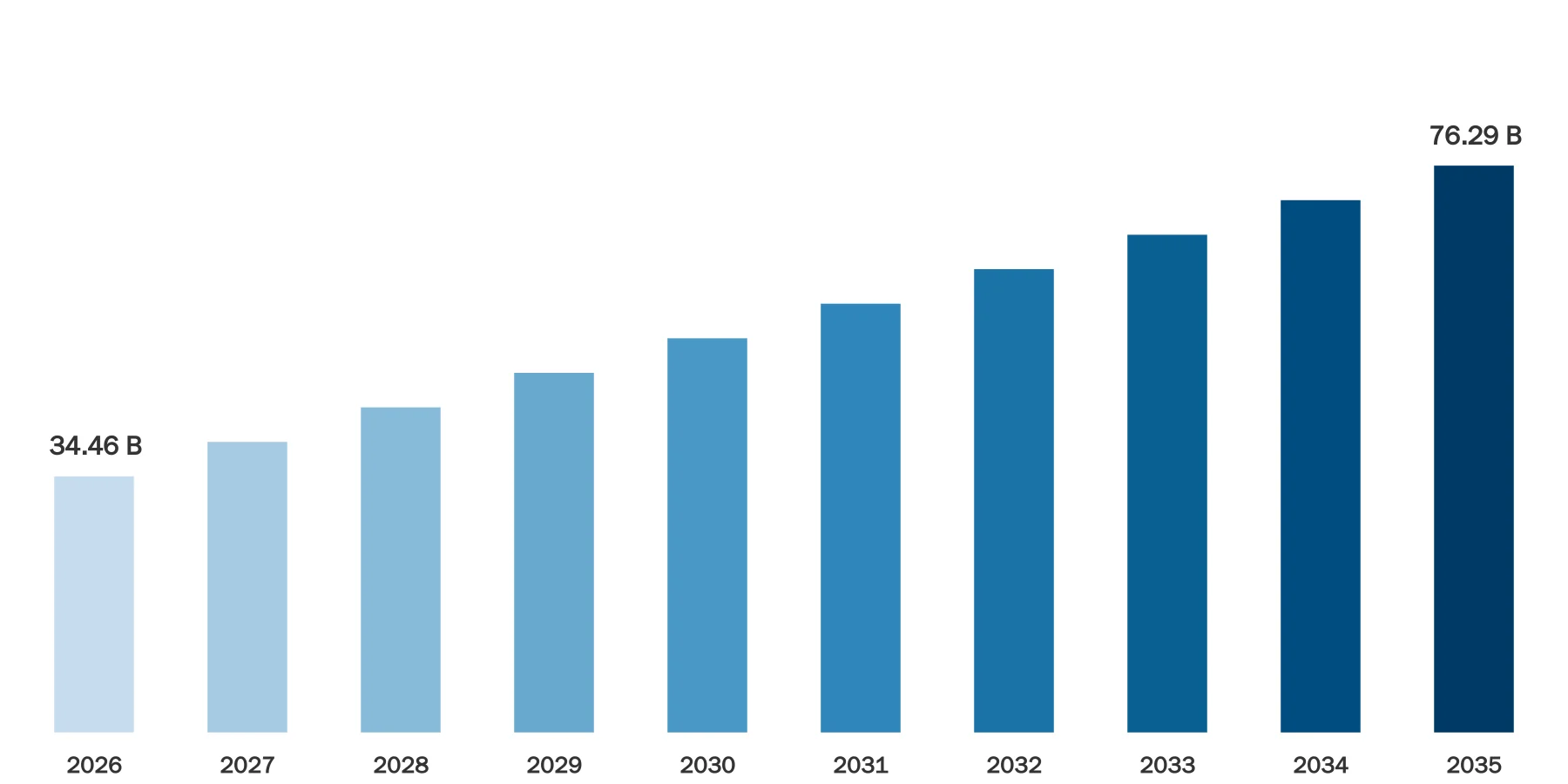
Source: Econ Market Research
In-vehicle Infotainment includes audio and video playback, navigation, voice recognition, and smartphone integration. As advanced technology is in its boom and people need better driving experience, IVI systems have become an important part of modern vehicles. In the in-vehicle infotainment market, rapid growth is witnessed due to an increase in smartphone usage, the need for connectivity, and advancement in technology.
Consumers expect the same digital convenience that they get with their smartphones and home devices from their vehicles. Due to this reason, automotive companies are investing heavily in the development of innovative IVI solutions that enhance safety and provide access to every application and service in a seamless manner. Moreover, the demand for electric vehicles and autonomous technologies makes use of advanced infotainment systems for user interface and entertainment purposes.
Dynamic Insights
Consumers, in recent times, need more connectivity and infotainment during movement. That creates a large demand. Therefore, when the technology upgrades, integrating vehicle systems to the gadgets of drivers or passengers becomes very important since they may include navigation or streaming services, voice control, among others. A car maker will have a reason to innovate and enhance the implementation of advanced solutions for infotainment of the car.
The IVI market also has challenges and issues, such as personal data and cybersecurity concerns that are being raised as it increases the risk of the unauthorized access of personal data, making consumers become wary and also raising the attentiveness of regulatory authorities in the same direction. A rapid change in technology needs continuous investment in research and development, which could sometimes be costly for the car manufacturers. These growths of electric and autonomous vehicles represent some wonderful opportunities for IVI systems, since such often depend on infotainment complexity to facilitate user interaction.
Drivers Insights
Increased Consumer Demand for Connectivity
Most crucial growth drivers for the in-vehicle infotainment market are the growing consumer expectations for seamless connectivity in vehicles. With smartphones and other devices becoming integral to day-to-day life, consumers are looking to integrate those technologies into their driving experience. Some of the core features include Bluetooth connectivity, smartphone mirroring (Apple CarPlay and Android Auto), and real-time navigation. Automakers know that better user experience with advanced infotainment systems can create a decisive difference in a competitive market, thereby boosting sales and customer satisfaction.
Advancements in Technology
The market for IVI is driven by rapid developments in technologies, particularly in Artificial Intelligence and cloud-based services. With AI, voice recognition systems will allow drivers to operate numerous functions handsfree, increasing safety and adding convenience. Furthermore, a cloud-based system allows constant updates of software plus addition of new features for enhancement in functionality of an IVI system. This steady innovation not only satisfies consumers', needs but also provides an opportunity for manufacturers to improve the performance of a vehicle and service offerings in such a way that the value proposition becomes even more attractive.
Restraints Insights
Data Privacy and Security Concerns
An important restraint in the in-vehicle infotainment market relates to data privacy and cybersecurity concerns. More vehicle units are getting connected and dependent on internet services, thus falling prey to cyber threats. Consumers are increasingly worried about data breach risk and unauthorized access to personal information. This skepticism may hamper the acceptance of advanced IVI systems because customers are not so keen on adopting technology that might violate their privacy. The automobile manufacturers have to invest in proper cybersecurity measures so that the customers will be confident in them and comply with the changing regulations.
High Development Costs
Continuous improvement of in-vehicle infotainment systems entail huge research and development expenditures. This means that the expensive technology used to manufacture new features, infuse advanced technologies, and incorporate safety as well as regulatory standards can weigh down the small manufacturers. These factors can be restraint on the innovation and successful introduction of new products on the market.
Opportunities Insights
Growth of Electric and Autonomous Vehicles
Electric and autonomous vehicle technology has been viewed as a significant opportunity for the IVI market. On the whole, infotainment systems in electric and self-driving cars are often of a complex nature, considering information and entertainment in addition to route optimization and charging stations. As more consumers purchase electric and self-driving cars, demand for these advanced infotainment systems will continue to rise with them. This will be propelled by offering an integrated high-end IVI solutions that improve the user experience for consumers to the market.
Segment Analysis
By Component
In the in-vehicle infotainment market, the component segmentation includes software, hardware, and services. Software plays a critical role in enabling various functionalities such as navigation, multimedia playback, and connectivity features. It encompasses operating systems, applications, and user interfaces that enhance the overall user experience. Hardware refers to the physical devices that support infotainment systems, including processors, displays, and audio equipment. Services encompass installation, maintenance, and support, which are essential for ensuring optimal performance and user satisfaction.
By Vehicle Type
Market segmentation by vehicle type Passenger cars Commercial vehicles Passenger cars are generally designed with high-end infotainment systems that enhance individual consumers', driving experiences through entertainment, navigation, and connectivity features. Automobile manufacturers are integrating more sophisticated IVI solutions in their passenger vehicles to offer seamless connectivity and multimedia experiences as consumer expectations grow. Commercial trucks are designed to gain operational functionality and safety through IVI systems focusing on navigation, fleet management, and communication between drivers.
By Fitting
The fitting segmentation categories are OE (Original Equipment) fitted and aftermarket systems. OE-fitted infotainment systems are those fitted in the vehicles during the manufacturing process, ensuring compatibility and optimal performance tailored to specific vehicle models. These systems are often designed with advanced features that meet manufacturers', standards for quality and safety. Aftermarket systems, on the other hand, are installed in vehicles after the initial purchase.
By Operating System
Based on OS, segmentation: Android, Linux, QNX, Microsoft, and several others. Android is an obvious choice because it has become familiar to most consumers and has a very strong ecosystem of applications. As Linux is open source by nature, it tends toward flexibility and customization options being offered by the manufacturers, QNX is known as robust and reliable, in safety-critical applications such as automotive environments, in which it is often preferred. The idea of Microsoft is to offer productivity and connectivity in their platforms, thus appealing to the business audience. Different operating systems give the option to automakers to pick the solution which would support their brand strategies and deliver functionality and usability that customers would expect from the products.
By Application
The application segmentation of the IVI market is categorized into navigation, Virtual Personal Assistants, app stores, music, and rear-seat entertainment. Navigation systems are important to provide real-time traffic updates and route optimization, significantly enhancing the driving experience. Virtual Personal Assistants provide hands-free operation, as drivers can use voice commands in interacting with the infotainment system, thereby promoting safety.
Application stores present a user with a host of applications which could be installed for the addition of fun to their lives like games or the latest news updates. Audio streaming applications represent a part of audio entertainment that adds more value in terms of entertainment while driving and in other transportation situations. The rear seat multimedia system caters to the passengers, particularly those family families whose vehicles carry multiple members of the family, to options that will surely make them entertained as the whole family travels together.
By Location
In terms of location segmentation, the market is divided into front row and rear row applications. Front row systems are primarily designed for the driver and front passenger, focusing on navigation, control of audio and communication systems, and ensuring that essential information is readily accessible. These systems are critical for maintaining driver awareness and enhancing safety while driving. Rear row systems, on the other hand, cater to passengers sitting in the back seats, providing them with entertainment options, such as video playback and games.
By Connectivity
Connectivity segmentation incorporates 3G/4G and 5G technologies. 3G and 4G are foundational for giving mobile internet access to the in-vehicle infotainment systems hence connecting the features like in-car navigation in real-time, music streaming, or even connectivity of applications to this vehicle. They formed grounds for connected vehicle experience with users always being ensured that they stay connected no matter how long they',re on the road.
5G connectivity constitutes a big step forward in terms of faster data transmission speeds and lower latency. This has led to the development of much more powerful applications, starting from high-definition video streaming and advanced telematics services, thereby changing the IVI landscape. Connectivity solutions are driving innovation and improving user experiences in the automotive sector.
By Form Factor
In the form factor segmentation, 3G/4G and 5G technologies are vital to fashion in-vehicle infotainment systems. Being equipped with 3G and 4G networks paved the way for the emergence of the connected vehicle and allowed for the most basic services, including car navigation, music streaming, and internet browsing. These represent a strong foundation to allow real-time data to flow to customers.
This evolution promises far more immersive user experiences and much reduced latency while boasting of vastly faster speeds. Along with the improvement in the functional aspect of IVI, this form factor shift in the industry opens scope for new applications that may well enable augmented reality or advanced driver-assistance systems and others, thus reshaping the automotive landscape even more drastically.
By Product Type
The product type segmentation includes an audio unit, a display unit, a heads-up display, a navigation unit, and a communication unit. Audio units are so important for offering quality, high-quality sound and amusement options that add to general driving experience. The users interact with the infotainment features by means of the display units, ensuring easy navigation through applications as well as settings.
Heads-up displays project critical information directly onto the windshield, allowing drivers to remain focused on the road as they access navigation and other critical data. Navigation units are specialized systems offering real-time mapping and route guidance, which is very crucial for modern driving. Communication units facilitate connectivity and interactions with mobile devices and networks to ensure that drivers stay connected.
By Display Size
This market is categorized into three segments based on the display size: less than 5 inches, 5-10 inches, and above 10 inches. This screen size less than 5 inches is used more often for entry-level infotainment systems and is generally used to accommodate basic functions that hold just audio controls and intuitive navigation. When space in a vehicle is minimal or in markets where people prefer fewer devices, then these tiny screens become very useful.
More typical of the mid-range vehicles are 5 to 10 inches screens, balancing functionality and usability with improved graphics and better touch capabilities. The greater the size of the screen, more than 10 inches, the more it would be an immersive experience and rich visual content allowing for multi-functionality such as split-screen navigation and entertainment.
Regional Analysis
North America leads, primarily because of elevated expectations from consumers about newer technology and a higher degree of emphasis on safety aspects. The automotive manufacturers and tech companies that operate here have encouraged innovation to an extent that the sophisticated IVI systems are integrated faster than ever, and with this trend towards an electric and connected vehicle base increasing manifold, the demand for superior infotainment solutions goes even higher in this region.
The IVI market in Europe is also going very well. Safety and emission regulations in that region are pretty stringent. All this is making it necessary for automobile companies to fit their vehicles with all the latest technologies. As electric vehicle adoption goes up in Norway and Germany, demand for integrated infotainment systems catering to navigation, connectivity, and multimedia options would rise. The Asia-Pacific region is also booming with increasing disposable incomes, higher levels of vehicle ownership, and a surging demand for connectivity features-specialty in emerging markets such as China and India. Here, as consumers in these countries look for more sophisticated infotainment options, the car manufacturers are responding by incorporating advanced IVI systems into vehicles to fulfil those needs.
Competitive Landscape
The main automobile players, such as Ford, General Motors, and Toyota, have continuously integrated advanced IVI systems into their cars for further improvements in connectivity, navigation, and entertainment experience. Most of these carmakers have partnered with the world',s biggest technology companies, Google and Apple, to integrate the former',s Android Auto and the latter',s Apple CarPlay in the operating systems for an easy integration of smartphones with the vehicle',s infotainment systems. This demand from the consumer has therefore put a constant pressure on the car manufacturers to keep improving their product lines.
Strong contenders in the technology arena include companies like Harman International, Bosch, and Panasonic: all specializing in producing hardware and software solutions supporting IVI systems. Such firms are investing a lot of research and development into producing innovative products that will satisfy the growing demand for features like voice recognition, touchless controls, and augmented reality navigation. Further to this, new entrants are also observed in the market, mainly in software space, and they tend to focus on certain applications or connectivity solutions. As this trend continues, with increased electrification and connectivity being the trends for the IVI market, it can be expected to increase the competition significantly. This competition will drive innovation and enrich consumer experience in vehicles.
List of Key Players:
Harman International
D.E.N.S.O.
JVC Kenwood
Clarion Corporation
Mitsubishi Motors
Alpine Electronics Inc.
Robert Bosch GmbH
Panasonic Corp.
Sin Seiki Co. Ltd.
Recent Developments:
In January 2024, Samsung Electronics and Hyundai Motor Group unveiled a strategic partnership aimed at integrating Samsung',s SmartThings platform with the connected car technologies of Hyundai and Kia.
In February 2024, L&,T Technology Services collaborated with Marelli to introduce Digital Twin solutions specifically designed for Automotive Infotainment systems.
In January 2024, Cinemo introduced new innovations in In-Car Infotainment, featuring capabilities such as video conferencing, immersive audio, and enhanced in-car entertainment options.
Global In-vehicle Infotainment Report Segmentation
In-vehicle Infotainment Market Report Scope & Segmentation
| Attributes | Details |
|---|---|
Market Size (Current) | US$ 34.46 Billion in 2026 |
Market Size (Forecast) | US$ 76.29 Billion in 2035 |
Growth Rate | CAGR of 9.24% from 2026 to 2035 |
Forecast Period | 2026 – 2035 |
Base Year | 2025 |
Historical Data Available | Yes |
Regional Scope | Global |
Segments Covered | By Component
By Operating System
By Installation Type
By Vehicle Type
|
Frequently Asked Questions
Common questions about this report
The study period covers historical insights and forecast projections for the period 2026-2035.
About the Author
Market research expert with years of industry experience

Dipali Bhingare serves as the Market Research Director at Econ Market Research. With a focus on translating complex global economic shifts into actionable business intelligence, she oversees the strategic direction of comprehensive market studies. Her work empowers organizations to navigate volatile industries through data-driven forecasting and deep-dive competitive analysis.
Related Reports
Explore more market insights from the same category