

Hydrogen Hubs Market
Hydrogen Hubs Market Size, Share, Trends, Growth, and Industry Analysis, By Supply Technique (Electrolysis, Steam Methane Reforming (SMR), Coal Gasification), By End-Use Industry (Automotive, Aviation, Marine, Industrial Feedstock, Power Generation, Defense), Regional Analysis and Forecast Period 2026-2035
Market Overview
As per Econ Market Research analysis, the Global Hydrogen Hubs Market was valued at US$ 226.1 Billion in 2026 and is expected to reach US$ 380.1 Billion by 2035, registering a CAGR of 5.89% during the forecast period 2026–2035. The base year considered is 2025.
Hydrogen Hubs Market Size 2025-2035 (USD Billion)

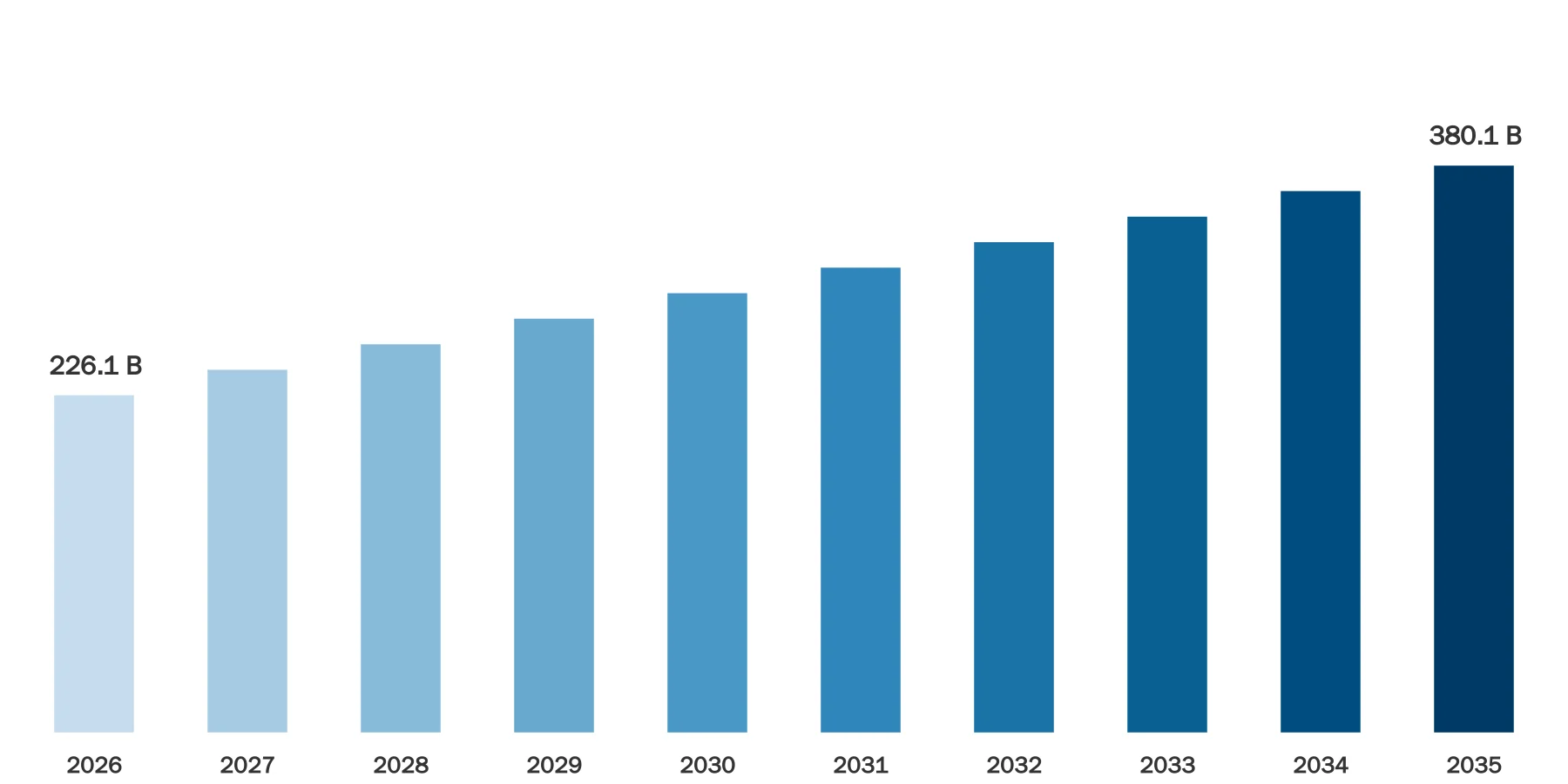
Source: Econ Market Research
As they become more important in the energy scene, hydrogen hubs are integrated infrastructures that support the production, delivery, and storage of hydrogen. With their promotion of hydrogen as a clean fuel for industry and transportation among other sectors, these centers quicken the shift to a sustainable energy economy. These centers, which concentrate on green and renewable hydrogen, support decarbonization initiatives by providing a scalable way to mitigate environmental effects while meeting the world',s expanding energy needs. A radical change toward a cleaner and more sustainable energy future is symbolized by the hydrogen hub market.
Hydrogen Hubs Market Dynamics
Technological R&,D for hydrogen production is accelerated by government investments and initiatives. Competitiveness is increased by cost reductions and technological developments, while infrastructure development is boosted by alliances between major suppliers. An increased emphasis on renewable energy sources and growing interest in Green Hydrogen are driving market expansion. A suitable ecosystem for the development of hydrogen hubs is created by policy frameworks and regulatory assistance, which are crucial. In response to environmental concerns and the growing demand for environmentally friendly energy options, the market for hydrogen hubs is growing quickly as sectors shift to sustainable practices.
Hydrogen Hubs Market Drivers
Increasing Government Initiatives and Investments
Globally, policymakers are making significant financial commitments and enacting laws that encourage the development of hydrogen infrastructure. Scientific funding, grants, and financial incentives foster a climate that is conducive to technological innovation and large-scale hydrogen production initiatives. These programs show a strong commitment to sustainable energy transitions while simultaneously encouraging business sector participation. Governments are essential in driving the development of hydrogen hubs and creating a more resilient and greener energy landscape by matching public resources with industrial demands.
Rising Demand for Environmentally Friendly Hydrogen
Sustainability is being pushed toward by consumers and companies due to growing environmental consciousness and the need to minimize carbon footprints. With the increasing demand for renewable-source green hydrogen, hydrogen hubs are becoming essential to fulfilling this environmentally conscious requirement. The expanding industry is fueled by investments in green hydrogen production technologies as a result of consumers and industries looking for greener alternatives. Hydrogen hubs are at the forefront of a cleaner, more sustainable energy future because of this demand dynamic, which also coincides with global climate targets.
Restraints:
High Initial Costs for Infrastructure Setup
The establishment of extensive and effective infrastructure necessitates a significant financial outlay, which restricts the scope and speed of hydrogen hub growth. Widespread adoption is hampered by the cost, especially in areas with tight budgets. Uncertainties regarding return on investment may cause investors to hesitate, which would impede the industry',s overall growth. To overcome this constraint and expedite the shift to sustainable energy, new funding models, government incentives, and technology developments that lower setup costs are needed to make hydrogen hubs more economically viable.
Limited Availability of Renewable Resources
The creation of green hydrogen is highly dependent on renewable energy sources, such as solar and wind energy. Production of sustainable hydrogen is not consistently and widely possible due to limitations in the availability, intermittent nature, and geographic distribution of these resources. For large-scale, economical, and ecologically friendly hydrogen generation to be achieved, this constraint must be overcome. To overcome the present restrictions on resource availability, this constraint must be addressed through improvements in energy storage technologies, a wider rollout of renewable infrastructure, and wise hydrogen hub location planning.
Opportunities:
Cross-Border Partnerships for Hydrogen Production and Trade
International cooperation projects encourage joint resource use, enabling areas rich in renewable energy to provide green hydrogen for those with greater need. These collaborations reduce production costs, strengthen the stability of the supply chain, and make it easier to develop a global hydrogen economy. Cross-border cooperation promotes economic growth and technology exchange while also bolstering international energy security by utilizing comparative advantages in resources and infrastructure
Green Hydrogen Production
The need for clean energy is growing, and hydrogen generated from renewable energy sources like solar and wind power is becoming more and more important. Investing in green hydrogen technology presents a viable approach to decarbonize transportation and industry. Using renewable energy to produce hydrogen helps to promote resilience and energy independence while also addressing environmental concerns. Green hydrogen is gaining popularity, which opens up a profitable market for investors, governments, and inventors.
Segment Overview
By Supply Technique
Based on supply technique, the global hydrogen hubs market is divided into steam methane reforming and electrolysis. The electrolysis category dominates the market with the largest revenue share in 2023. Because electrolysis doesn',t use fossil fuels, it is seen as a clean or green technique of producing hydrogen. It provides a means to create hydrogen with low carbon emissions, which is in line with the objectives of a sustainable and low-carbon energy future. A sizable amount of the hydrogen produced now worldwide comes from SMR, a proven and mature technology. It can manage large-scale production and is reasonably priced.
By Industry
Based on the industry, the global hydrogen hubs market is categorized into automotive, aviation, defense, marines, and space. The automotive vehicles category leads the global hydrogen hubs market with the largest revenue share in 2023. FCVs, or fuel cell vehicles, run on hydrogen as their fuel. Only water vapor is released as a byproduct when these cars use fuel cells to turn hydrogen into energy.
As a means of advancing the creation of a transportation infrastructure based on hydrogen, hydrogen hubs facilitate the production, delivery, and storage of hydrogen for use in the automotive industry. In particular, hydrogen-powered aircraft are being investigated as possible aviation fuel sources. Hydrogen finds its application in the defense industry where it can power distant sites, power military vehicles, and facilitate strategic maneuvers. Ship fuel cells, which lower emissions and encourage environmentally friendly shipping, rely on hydrogen, which is produced and distributed in the maritime industry through hydrogen hubs.
By End Use
Based on end use, the global hydrogen hubs market is segmented into liquid hydrogen and hydrogen fuel cells. The hydrogen fuel cells segment dominates the hydrogen hubs market. Fuel cell vehicles (FCVs), an alternative to conventional internal combustion engines, use hydrogen fuel cells. In addition, they provide efficient and sustainable energy for stationary power generation in buildings and enterprises. Several industries employ liquid hydrogen, including aerospace, transportation, and industry. It can be used as a vehicle fuel, an industrial feedstock, and a propellant for space exploration.
Hydrogen Hubs Market Overview by Region
The global hydrogen hubs market is categorized into North America, Europe, Asia-Pacific, and the Rest of the World. Asia-Pacific emerged as the leading region, capturing the largest market share in 2023. With their aggressive hydrogen policies, nations like South Korea and Japan are encouraging large investments in infrastructure, R&,D, and other fields. The region is leading the global hydrogen economy due to its strong industrial base and dedication to green hydrogen.
Asia-Pacific',s leadership emphasizes how important it is to shape the future of hydrogen as a clean and flexible energy source by focusing on lowering carbon emissions and attaining energy security. Throughout the forecast period, North America is anticipated to post a significant CAGR. Several factors have come together to encourage this rise, such as growing public awareness of climate change, pro-green government legislation, and an increase in the demand for clean energy options.
Sustainable hydrogen efforts benefit from the region',s emphasis on green hydrogen production, technological breakthroughs, and public-private sector collaborations. North America is anticipated to experience steady and strong growth, making a substantial contribution to the global hydrogen hubs landscape, given the growing desire in decarbonization and the integration of hydrogen into numerous industries.
Hydrogen Hubs Market Competitive Landscape
In the global hydrogen hubs market, a few major players exert significant market dominance and have established a strong regional presence. These leading companies remain committed to continuous research and development endeavors and actively engage in strategic growth initiatives, including product development, launches, joint ventures, and partnerships. By pursuing these strategies, these companies aim to strengthen their market position, expand their customer base, and capture a substantial share of the market.
Hydrogen Hubs Market Leading Companies:
Airbus
ARAMCO
Aranca
Linde plc
Scotland
Shell plc.
Sinopec, and various others.
Hydrogen Hubs Market Recent Developments
In October 2023, The US Department of Energy (DOE) announced funding of $7 billion to establish seven Regional Clean Hydrogen Hubs (H2Hubs) throughout the US mainland to expedite the low-cost, clean hydrogen',s commercial implementation.
In July 2023, Hankook',s i-Flex hydrogen hubs is upending conventional wisdom in tire construction.
In July 2022, The building of Holland Hydrogen is the result of investment decisions made by Shell Nederland B.V. and Shell Overseas Investments B.V., subsidiaries of Shell plc. By 2025, this initiative hopes to build the biggest renewable hydrogen plant in Europe. The produced hydrogen will be used at Shell Energy and Chemicals Park Rotterdam, taking the place of the refinery',s traditional grey hydrogen.
Hydrogen Hubs Market Report Segmentation
Hydrogen Hubs Market Report Scope & Segmentation
| Attributes | Details |
|---|---|
Market Size (Current) | US$ 226.1 Billion in 2026 |
Market Size (Forecast) | US$ 380.1 Billion in 2035 |
Growth Rate | CAGR of 5.89% from 2026 to 2035 |
Forecast Period | 2026 – 2035 |
Base Year | 2025 |
Historical Data Available | Yes |
Regional Scope | Global |
Segments Covered | By Supply Technique
By End-Use Industry
|
Frequently Asked Questions
Common questions about this report
The study period covers historical insights and forecast projections for the period 2026-2035.
About the Author
Market research expert with years of industry experience

Dipali Bhingare serves as the Market Research Director at Econ Market Research. With a focus on translating complex global economic shifts into actionable business intelligence, she oversees the strategic direction of comprehensive market studies. Her work empowers organizations to navigate volatile industries through data-driven forecasting and deep-dive competitive analysis.
Related Reports
Explore more market insights from the same category