

Hydrogen Electrolyzer Market
Hydrogen Electrolyzer Market Size, Share, Trends, Growth, and Industry Analysis, By Product Type (Proton Exchange Membrane (PEM) Electrolyzer, Alkaline Electrolyzer, Solid Oxide Electrolyzer), By Capacity (Low (andle; 150 kW), Medium (150 kW – 1 MW), 150–400 kW, 400–750 kW, 750 kW – 1 MW, High (andgt; 1 MW), 1–10 MW, 10–20 MW, Above 20 MW), By Outlet Pressure (Low (andle; 10 bar), Medium (10–40 bar), High (andgt; 40 bar)), By End Use (Ammonia, Methanol, Refining and Hydrocarbon, Electronics, Energy, Power-to-Gas, Transport, Metal Production and Fabrication, Pharma and Biotech, Food and Beverages, Glass Industry, Other Industrial Applications), Regional Analysis and Forecast Period 2026-2035
Hydrogen Electrolyzer Market Overview
As per Econ Market Research analysis, the Global Hydrogen Electrolyzer Market valuation stood at US$ 2.14 Billion in 2026 and is expected to reach US$ 15.92 Billion by 2035, growing at a steady CAGR of 25% from 2026 to 2035. 2025 serves as the base year.
Hydrogen Electrolyzer Market Size 2025-2035 (USD Billion)

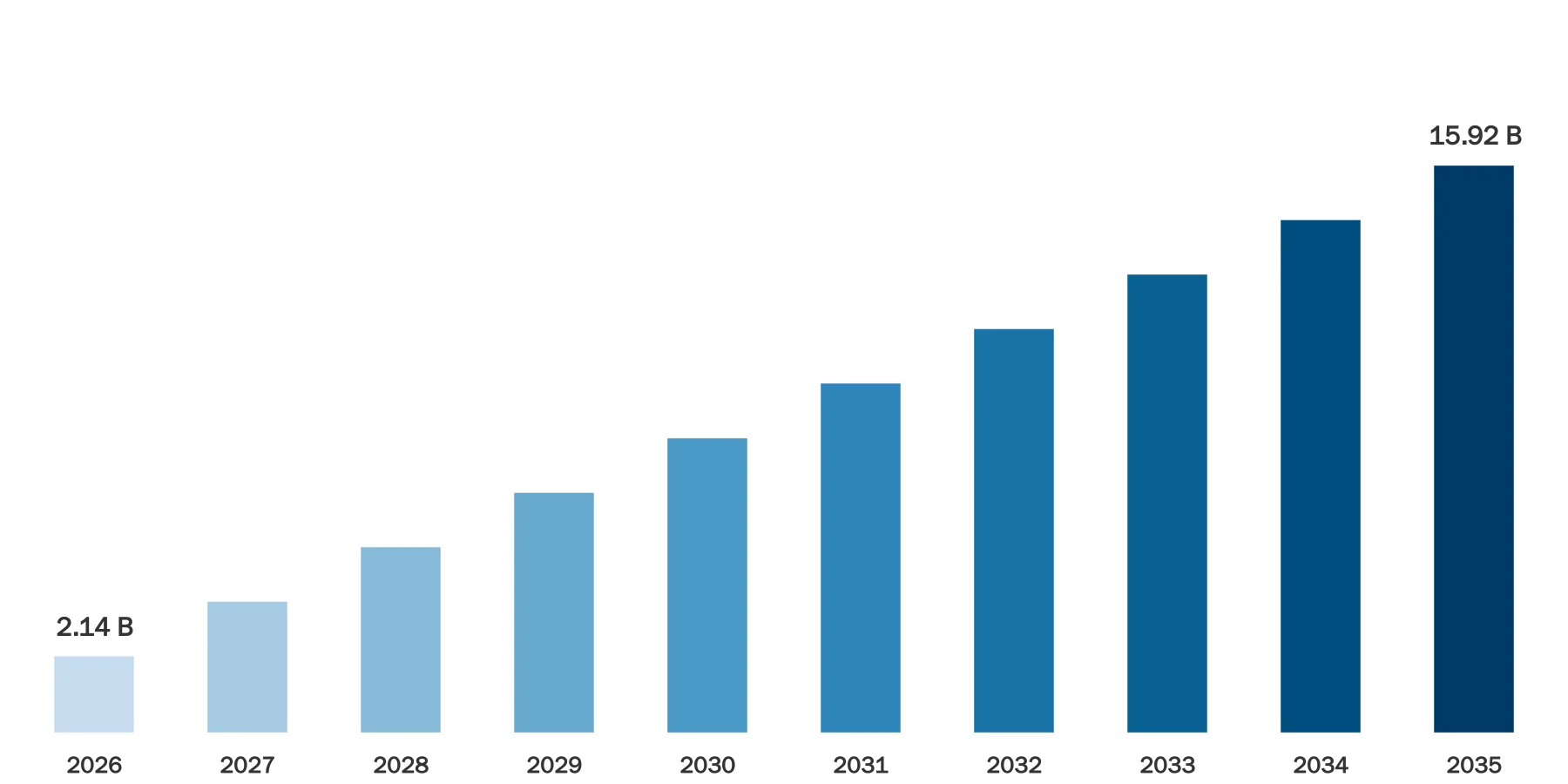
Source: Econ Market Research
During the forecast period, the market is expected to benefit from the growing popularity of hydrogen energy. Adoption of hydrogen electrolyzer is expected to grow steadily in the coming years with the implementation of stringent government norms to protect environment by reducing pollution. Also Increasing demand for green energy, stringent regulations associated with a high carbon footprint, and surging investment to develop the industrial sector globally are a few key factors expected to propel growth in the hydrogen electrolyzer market. Also, substantial growth in the adoption of hydrogen fuel in the transportation sector across other regions is estimated to drive growth in the market.
Growth Factors
The automotive and transportation sectors are experiencing high levels of technological advancement due to various attempts that are being made by governments to reduce carbon emissions from vehicles. Electric and hydrogen fuel cell vehicles require huge investments due to growing environmental concerns and the rapid development of innovative hydrogen fuel stations worldwide. Manufacturers are mainly focusing on developing new products with higher capacities to meet the increasing demand for hydrogen fuel from various end-use sectors, especially the energy and transportation sectors.
The hydrogen electrolyzer market has seen significant growth in recent years due to various factors, including:
Increasing demand for clean energy: With a growing concern for the environment, the demand for clean energy has increased. Hydrogen electrolyzers are a clean and renewable source of energy that can be used for various applications, such as fuel cells for transportation and power generation.
Government initiatives and subsidies: Governments are promoting the world',s use of clean energy sources by offering various incentives, such as tax credits, subsidies, and grants, to support the development and adoption of hydrogen electrolyzers.
Technological advancements: In terms of technology, advancements have LED to the development of more efficient and cost-effective hydrogen electrolyzers. For example, the development of proton exchange membrane (PEM) electrolyzers has made the production of hydrogen more efficient and affordable.
Growing demand for hydrogen fuel cell vehicles: Increasing popularity of the hydrogen fuel cell vehicles, the demand for hydrogen electrolyzers has been increasing. Hydrogen fuel cells offer a clean and efficient alternative to traditional combustion engines.
Increasing investment in renewable energy: The growing investment in renewable energy sources, such as wind and solar power, has created a need for energy storage solutions. Hydrogen electrolyzers offer a viable option for energy storage as they can convert excess renewable energy into hydrogen fuel.
Market Dynamics
The rising need for hydrogen as a clean and renewable energy source is the main factor driving the market for hydrogen electrolyzers. Government regulations, concerns about global warming, and the need to lessen reliance on fossil fuels are just a few of the causes that are driving up the demand for hydrogen.
The demand for hydrogen as a fuel is significantly influenced by governmental policies and restrictions. Many nations have established challenging goals for lowering greenhouse gas emissions, and the transition to a low-carbon economy is considered as requiring the usage of hydrogen in particular. Governments are providing subsidies and incentives to encourage the use of hydrogen technologies, such as hydrogen electrolyzers, which use renewable energy sources to create hydrogen from water.
The increased demand for decarbonization across numerous industries, including transportation, power generation, and industrial processes, is another factor driving the market for hydrogen electrolyzers. Since it may be utilized as a clean energy source for power generation, a feedstock for different industrial processes, and a zero-emission fuel for fuel cell cars, hydrogen is regarded as a crucial fuel in these industries.
Restraints:
The cost of hydrogen electrolyzers is a major constraint. Electrolysis requires a significant amount of energy, which means that the electricity used to power the process can be a major cost factor. The materials and components required to build a hydrogen electrolyzer can be expensive, especially for larger-scale systems. As a method of energy storage, hydrogen electrolyzers are currently less effective than batteries. An electrolyzer',s overall efficiency can be lowered because a large portion of the energy utilised to power it is wasted as waste heat. Although there is continuous research to increase the effectiveness of hydrogen electrolyzers, the technology is still in its infancy.
The creation of hydrogen through electrolysis is only environmentally sound if it is driven by renewable energy sources, which are readily available. As a result, the accessibility of renewable energy may significantly limit the utilisation of hydrogen electrolyzers in general. The production of hydrogen might not be profitable in regions with a lack of or high cost of renewable energy sources.
Hydrogen electrolyzers are currently limited in their scale. While small-scale electrolyzers exist, larger systems capable of producing hydrogen at an industrial scale are still in development. This can limit the potential applications of hydrogen electrolyzers and make them less competitive with other forms of energy storage.
Hydrogen is a highly flammable gas, which means that the production, storage, and transportation of hydrogen can pose safety risks. While these risks can be managed through proper design and handling procedures, they can also be a constraint on the use of hydrogen electrolyzers in certain applications.
Opportunities:
Hydrogen electrolyzers offer several opportunities in the field of energy production and storage.
Renewable Energy Storage: Hydrogen Electrolyzers can store renewable energy by converting excess electricity from renewable sources such as solar and wind into hydrogen. The stored hydrogen can be used later to generate electricity through fuel cells, making it an ideal solution for energy storage.
Decarbonization of Industries: Hydrogen electrolyzers can play a crucial role in decarbonizing various industries such as steel, chemical, and transportation. By using hydrogen produced from electrolyzers, these industries can significantly reduce their carbon footprint.
Grid Balancing: Hydrogen Electrolyzers can help balance the grid by providing a flexible source of energy. During times of low demand, excess electricity can be used to produce hydrogen, which can be stored and used later during peak demand periods.
Hydrogen Fueling Stations: Hydrogen Electrolyzers can be used to produce hydrogen for fueling stations, enabling the deployment of hydrogen fuel cell vehicles.
Off-grid Energy Generation: Hydrogen Electrolyzers can be used to generate energy off-grid, making it possible to produce energy in remote areas without access to the grid.
Hydrogen Electrolyzer Market, By Geography:
One of the markets for hydrogen electrolyzers in North America with the highest growth is predicted to be the United States. In the approaching ten years, the country is anticipated to develop at a respectable rate of 21.4%. The expansion is linked to the U.S. government',s expanding initiatives to increase hydrogen production in numerous nations.
Europe is likely to develop at a significant rate throughout the forecast period and is anticipated to dominate the hydrogen electrolyzer market in terms of revenue in 2022. Due to the growing use of hydrogen electrolyzers in the industries of metal production, automotive, Biotechnology, energy, and hardware manufacture, Germany is predicted to hold the highest position in the European market.
The market for hydrogen electrolyzers is anticipated to expand significantly in the Asia-Pacific region as a result of rising demand for clean energy and the implementation of government policies and initiatives to minimise carbon emissions. Due to the rising demand for clean energy and the implementation of government policies and measures to reduce carbon emissions, the hydrogen electrolyzer market in the Middle East and Africa area is predicted to have moderate growth.
Competitive Landscape:
The global hydrogen electrolyzer market is mainly dominated by a few significant players, who account for more than three-quarters of the revenue. Some of these key players are attempting to carve out a niche for a particular demographic.
Nel Hydrogen
Siemens AG
McPhy Energy
ITM Power Plc
Tianjin Mainland Hydrogen Equipment Co. Ltd
Gaztransport &, Technigaz
Giner Inc.
Green Hydrogen Systems
iGas Energy GmbH
Beijing CEI Technology Co., Ltd.
Next Hydrogen
Air Liquide
Ballard Power Systems
Enapter
Plug Power Inc.
Bloom Energy
Pure Energy Centre
Shandong Saikesaisi Hydrogen Energy Co., Ltd.
Idroenergy
Erredue SpA
SwissHydrogen SA
Hydrogen Electrolyzer Market Report Scope & Segmentation
| Attributes | Details |
|---|---|
Market Size (Current) | US$ 2.14 Billion in 2026 |
Market Size (Forecast) | US$ 15.92 Billion in 2035 |
Growth Rate | CAGR of 25% from 2026 to 2035 |
Forecast Period | 2026 – 2035 |
Base Year | 2025 |
Historical Data Available | Yes |
Regional Scope | Global |
Segments Covered | By Product Type
By Capacity
By Outlet Pressure
By End Use
|
Frequently Asked Questions
Common questions about this report
The study period covers historical insights and forecast projections for the period 2026-2035.
About the Author
Market research expert with years of industry experience

Dipali Bhingare serves as the Market Research Director at Econ Market Research. With a focus on translating complex global economic shifts into actionable business intelligence, she oversees the strategic direction of comprehensive market studies. Her work empowers organizations to navigate volatile industries through data-driven forecasting and deep-dive competitive analysis.
Related Reports
Explore more market insights from the same category