Humic Acid Market Overview
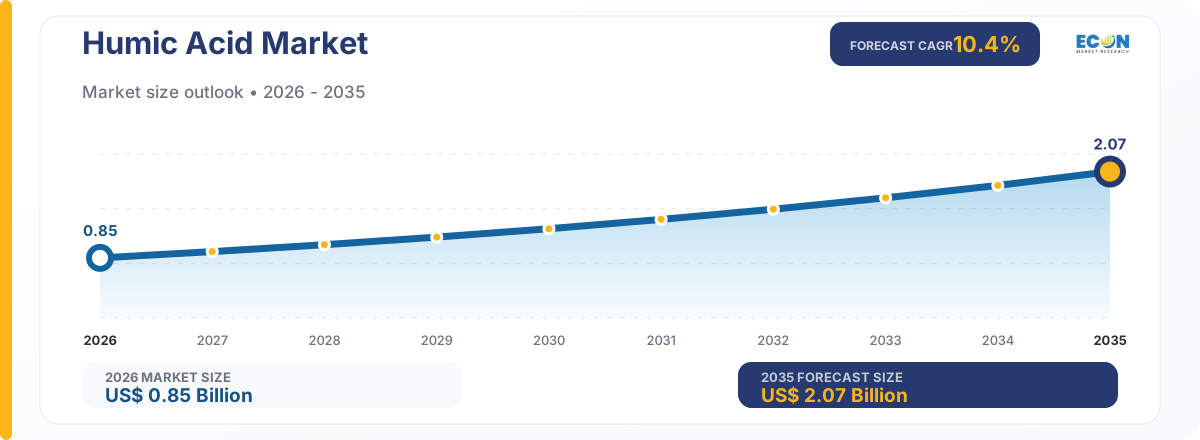
As per Econ Market Research analysis, the Global Humic Acid Market was valued at approximately US$ 0.85 Billion in 2026 and is predicted to reach US$ 2.07 Billion by 2035, expanding at a CAGR of 10.4% over the forecast duration. The base year is 2025.
Humic acid, a vital component of soil organic matter, plays a pivotal role in enhancing soil fertility and plant growth. It is a complex mixture of organic molecules formed through the decomposition of plant and animal matter over time. The global humic acid market is witnessing steady growth due to its widespread application in agriculture, horticulture, ecological restoration, and pharmaceuticals. In the field of agriculture, humic acid promotes improved plant development and yield by strengthening the structure of the soil, increasing nutrient availability, and improving water retention.
Moreover, it can chelate micronutrients, which makes it easier for plants to absorb them and improves crop quality. Humic acid',s capacity to promote root development and improve nutrient uptake in vegetables and ornamental plants is also beneficial to the horticulture industry. Humic acid is also used in environmental remediation procedures, where it contributes to soil and water conservation. Because of its supposed health benefits, the pharmaceutical industry uses it in medicine formulations and as a nutritional supplement.
Humic Acid Dynamics
The growth of the global humic acid market is being propelled by multiple dynamic factors. Global demand for organic food items and sustainable farming methods is one of the main factors. Growing consumer awareness of the advantages organic farming provides for the environment and human health has resulted in a heightened focus on soil fertility and health. Humic acid is becoming more and more popular as a natural soil supplement because it helps with soil structure, nutrient availability, and water retention, all of which improve crop quality and yields.
Furthermore, government initiatives and regulations aimed at promoting sustainable agriculture and environmental conservation are fuelling the demand for humic acid. Many countries are implementing policies to incentivize organic farming practices and reduce reliance on chemical fertilizers and pesticides. Humic acid',s role in enhancing soil health and reducing the environmental impact of agriculture aligns with these initiatives, driving its adoption among farmers and agricultural producers.
Humic Acid Drivers
Growing Demand for Organic Food
The market for humic acid is significantly driven by the growing public awareness of the advantages of eating organic food. Customers are choosing organic products because they are more worried about the possible health dangers linked to chemical residues in food.
The necessity for organic agricultural methods is increasing due to this trend, which also increases the demand for humic acid and other natural soil supplements. Humic acid is predicted to see considerable growth in the market as organic farming becomes more popular around the world due to its capacity to improve crop yields, increase soil fertility, and support sustainable agriculture.
Government Initiatives and Regulations
The market for humic acid is experiencing a notable surge due to government programs that support environmentally conscious practices and sustainable agriculture. In order to promote organic farming methods, lessen the use of chemical pesticides and fertilizers, and improve soil health, many nations are putting laws and regulations into place.
These campaigns frequently consist of grants, rewards, and assistance plans for farmers switching to organic agricultural practices. Adoption of natural soil supplements like humic acid is also being fuelled by restrictions that limit the use of specific synthetic inputs in agriculture. The demand for humic acid is anticipated to rise as long as governments continue to place a high priority on environmentally responsible farming methods and environmental stewardship. This will create growth prospects for market participants.
Humic Acid Restraints:
Variable Raw Material Quality
One of the key restraints affecting the humic acid market is the variability in raw material quality. Humic substances are derived from organic matter, such as peat, lignite, and leonardite, which can vary significantly in composition and quality. This variability can impact the effectiveness and consistency of humic acid products, leading to challenges in product standardization and quality control. Moreover, fluctuations in the availability and pricing of raw materials can affect the production costs of humic acid, potentially limiting market growth.
Regulatory Constraints
The humic acid market is further restricted by regulatory limitations. Although humic acid is regarded as a naturally occurring organic soil amendment, different countries and areas may have distinct legal frameworks governing its use. Regulatory standards for product certification, labeling, and registration can occasionally be complicated and onerous, which makes it difficult for market participants to comply with the law and gain access to the market. Moreover, market volatility and a deterrent to investment in the humic acid industry might be caused by uncertainties around future legislative developments involving agricultural inputs and environmental management techniques.
Humic Acid Opportunities:
Expansion of Sustainable Agriculture Practices
The growing emphasis on sustainable agriculture presents a significant opportunity for the humic acid market. As consumers, farmers, and policymakers increasingly prioritize environmental sustainability and soil health, there is a rising demand for natural Soil Amendments like humic acid. Market players can capitalize on this opportunity by offering innovative and eco-friendly solutions that help improve soil fertility, enhance crop productivity, and support sustainable farming practices. Moreover, partnerships and collaborations with agricultural organizations, research institutions, and government agencies can help accelerate the adoption of humic acid in sustainable agriculture initiatives.
Segment Overview
By Type
Humic acid is available in three main forms: powdered, liquid, and granular. Powdered humic acid is favoured for its ease of handling and mixing with soil or water, making it versatile for various agricultural, horticultural, and ecological applications. Liquid formulations offer convenience and uniform application, especially in large-scale agricultural operations, where they can be easily applied through irrigation systems. Granular humic acid products provide slow-release benefits, gradually releasing nutrients into the soil and promoting long-term soil health and plant growth. Each form of humic acid offers unique advantages, catering to different preferences and application requirements across diverse sectors.
By Application
Humic acid finds wide-ranging applications across various industries, including agriculture, Animal Feed, ecological remediation, pharmaceuticals, dietary supplements, and others. In agriculture, it enhances soil fertility, improves nutrient availability, and promotes sustainable farming practices. As an animal feed additive, it supports livestock health and productivity.
Ecological remediation efforts utilize humic acid to restore degraded ecosystems and mitigate environmental pollution. In pharmaceuticals, it is researched for potential therapeutic benefits, while in dietary supplements, it is marketed for overall health and well-being. The versatility of humic acid opens up opportunities for innovation and product development across multiple sectors, driving its widespread adoption and market growth.
Humic Acid Overview by Region
North America and Europe lead the market, driven by the widespread adoption of organic farming practices and stringent regulations promoting sustainable agriculture. These regions prioritize soil health and environmental conservation, fuelling the demand for humic acid as a natural soil amendment and fertilizer additive. In Asia Pacific, countries like China and India are witnessing rapid market growth due to the expansion of the agricultural sector and government initiatives to improve soil health and productivity.
The Asia Pacific region holds significant potential for the humic acid market, given its large agricultural land area and increasing awareness about sustainable farming practices. Latin America and the Middle East &, Africa regions are also emerging markets for humic acid, driven by the growing demand for high-quality crops, environmental concerns, and the need to optimize agricultural productivity.
Humic Acid Market Competitive Landscape
Major companies such as Humic Growth Solutions, Humintech GmbH, Biolchim SpA, Black Earth Humic LP, and Sikko Industries Ltd. are actively engaged in product innovation, expansion of distribution networks, and strategic partnerships to gain a competitive edge. These players focus on developing high-quality humic acid products tailored to meet the specific needs of diverse end-users across agriculture, horticulture, ecological remediation, pharmaceuticals, and other sectors. Additionally, mergers and acquisitions, collaborations with research institutions, and investments in R&,D activities are key strategies adopted by market players to strengthen their market presence and enhance their product portfolios.
The competitive landscape is further influenced by factors such as pricing strategies, regulatory compliance, and brand reputation, as companies strive to differentiate themselves and capture market opportunities in an increasingly competitive environment. As the demand for humic acid continues to grow globally, competition among market players is expected to intensify, driving further innovation and market expansion in the years to come.
Humic Acid Market Leading Companies:
National Pesticides &, Chemicals
Tagrow Co. Ltd
Agriculture Solutions Inc.
NPK Industries
Everwood Farm
Organic Approach LLC
Faust Bio-Agricultural Services
Nature',s Lawn and Garden
Humintech GmBH
Humic Acid Recent Developments
Sept 2022, Paine Schwartz Partners, renowned for its commitment to sustainable food chain investments, has finalized a significant strategic investment via Paine Schwartz Food Chain Fund VI (",Fund VI",) in Humic Growth Solutions (the ",Company",). Humic Growth Solutions is a prominent producer of humic acid products, boasting extensive manufacturing facilities in both the United States and Canada.
Humic Acid Report Segmentation
Humic Acid Market Report Scope & Segmentation
| Attributes | Details |
|---|---|
| Market Size (Current)Current market valuation | US$ 0.85 Billion in 2026 |
| Market Size (Forecast)Projected market valuation | US$ 2.07 Billion in 2035 |
| Growth RateCompound Annual Growth Rate | CAGR of 10.4% from 2026 to 2035 |
| Forecast PeriodAnalysis timeline | 2026 – 2035 |
| Base YearReference year for analysis | 2025 |
| Historical Data AvailablePast market data availability | Yes |
| Regional ScopeGeographical coverage | Global |
| Segments CoveredMarket segments analyzed | By Form
By Application
|
Frequently Asked Questions
Common questions about this report
The study period covers historical insights and forecast projections for the period 2026-2035.
About the Author
Market research expert with years of industry experience

Dipali Bhingare serves as the Market Research Director at Econ Market Research. With a focus on translating complex global economic shifts into actionable business intelligence, she oversees the strategic direction of comprehensive market studies. Her work empowers organizations to navigate volatile industries through data-driven forecasting and deep-dive competitive analysis.