

Home Textile Market
Home Textile Market Size, Share, Trends, Growth, and Industry Analysis, By Product (Bedroom Linen, Bathroom Linen, Carpets and Floor Coverings, Kitchen Linen, Curtains and Drapes), By Material (Polyester, Cotton, Silk, Wool, Others), By Distribution Channel (OfflineSupermarket / Hypermarket, Specialty Stores, Others), Regional Analysis and Forecast Period 2026-2035
Market Overview
As per Econ Market Research analysis, the Global Home Textile Market size amounted to US$ 147.32 Billion in 2026 and is anticipated to grow to US$ 264.43 Billion by 2035, recording a CAGR of 6.9% during 2026–2035. The base year taken for analysis is 2025.
Home Textile Market Size 2025-2035 (USD Billion)

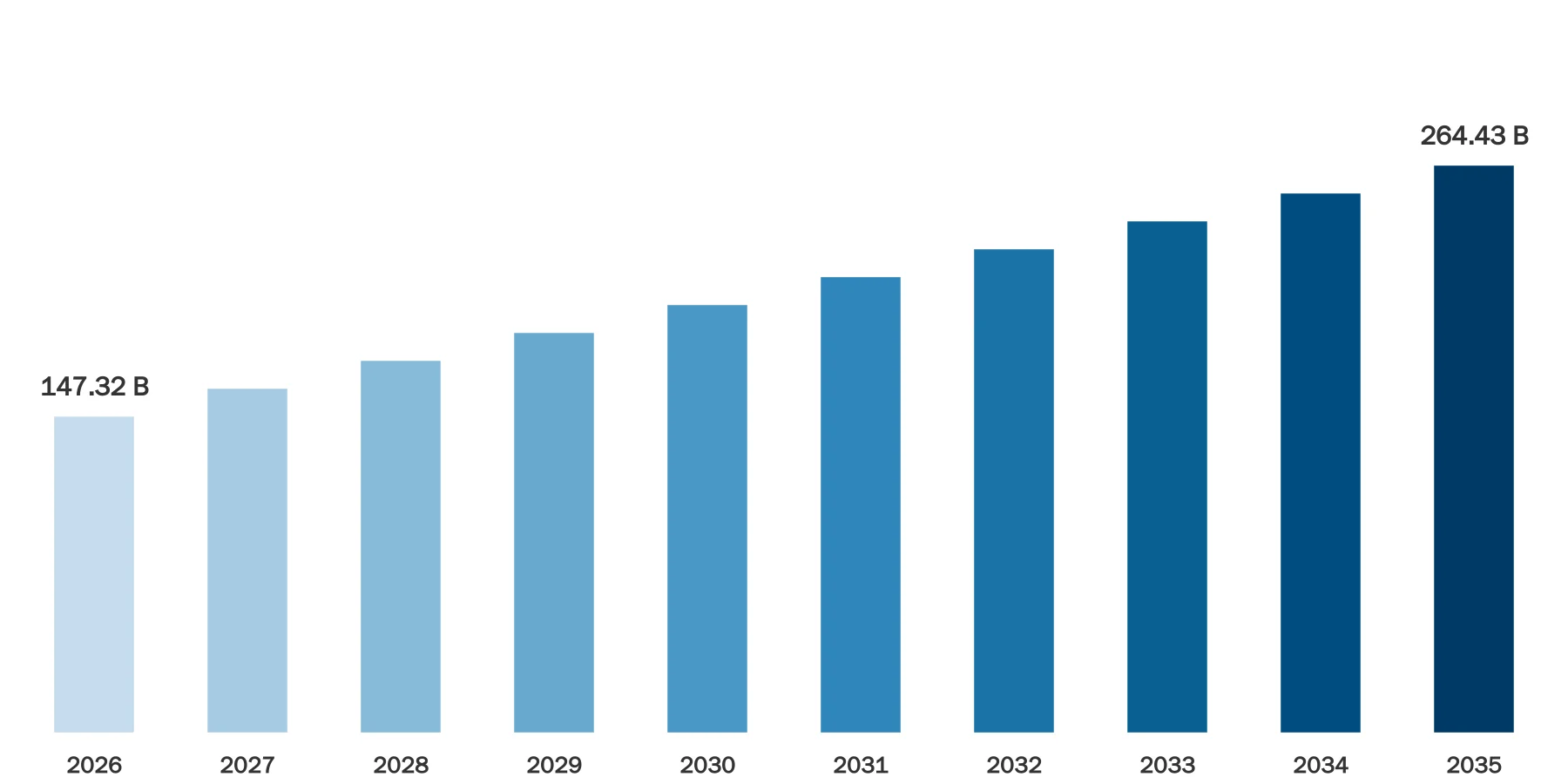
Source: Econ Market Research
The Home Textile Market includes products such as bed linen, bath linen, carpets, curtains, and kitchen textiles used across residential and hospitality sectors. Globally, more than 65 billion square meters of home textile fabrics are produced annually, with bedding accounting for nearly 35% of total household textile consumption. Around 72% of households worldwide use cotton-based home textiles, while synthetic materials represent approximately 22% of production volume. More than 58% of consumers replace bed linen every 12–18 months, indicating consistent demand cycles. Over 1.9 billion households globally purchase home textile products annually, and nearly 47% of purchases occur through organized retail channels, reflecting strong consumer adoption and distribution expansion across global markets.
The United States Home Textile Market represents one of the largest consumption hubs, supported by approximately 128 million households. Bedding products alone account for nearly 41% of total home textile purchases in the U.S., with around 90 million bedding sets sold annually. About 63% of American households replace towels every 2–3 years, while 48% replace bed sheets within 18 months. Online sales represent nearly 34% of total home textile purchases in the U.S. market. Additionally, the hospitality sector operates more than 5.5 million hotel rooms nationwide, each requiring 3–4 bedding sets per room, creating strong institutional demand for home textile products across hotels, resorts, and vacation rentals.
Market Latest Trends
The Home Textile Market Trends indicate growing consumer demand for premium and sustainable household fabrics. Globally, more than 46% of consumers prefer eco-friendly textile materials, including organic cotton and recycled polyester. Organic cotton cultivation reached approximately 280,000 metric tons annually, supplying a significant portion of the home textile production industry. Sustainable home textile products now account for nearly 28% of new product launches across major manufacturers.
Smart textiles are another emerging trend, with approximately 12% of newly launched bedding products integrating temperature-regulating fibers or antimicrobial coatings. In the hospitality industry, around 68% of luxury hotels now use high-thread-count bedding exceeding 300 thread counts, driving demand for premium linen products.
Digital commerce is also transforming the Home Textile Industry Analysis, as more than 38% of global home textile purchases occur through online platforms. Direct-to-consumer brands increased by nearly 40% between 2020 and 2024, enabling manufacturers to reach broader customer bases.
Customization is gaining momentum, with approximately 33% of consumers preferring personalized bedding designs or made-to-order curtains. Additionally, multifunctional textiles such as stain-resistant sofa covers and anti-allergy bedding represent nearly 19% of newly introduced product categories, reflecting shifting consumer preferences toward convenience and hygiene in household textile products.
Market Dynamics
DRIVER
Increasing Residential Construction and Household Formation
Rising residential construction significantly drives the Home Textile Market Growth. Globally, more than 230 million new housing units were constructed between 2020 and 2024, each requiring multiple home textile products including bed sheets, curtains, and carpets. A typical household uses approximately 8–12 textile products across bedrooms, bathrooms, kitchens, and living areas. Urbanization has accelerated housing demand, with nearly 56% of the global population living in urban areas and projections indicating continued growth in household formations.
Additionally, the hospitality industry supports textile consumption, with more than 17 million hotel rooms worldwide requiring 3–5 sets of bedding and towels per room. The rapid expansion of short-term rental platforms has added approximately 7 million rental properties globally, each requiring frequent textile replacements. These factors collectively increase large-volume procurement of home textile products across residential and commercial sectors.
RESTRAINT
Volatility in Raw Material Prices
Raw material price fluctuations represent a major restraint for the Home Textile Industry Analysis. Cotton production fluctuates annually due to climate variability, with global cotton output averaging around 25 million metric tons per year but experiencing deviations of 5–10% depending on weather conditions. Cotton prices can fluctuate by more than 20% within a single production cycle, affecting manufacturing costs for bedding and bath textiles.
Polyester fibers, which account for nearly 54% of synthetic textile production, depend heavily on petroleum Derivatives. Changes in crude oil supply impact polyester manufacturing costs, which can increase production expenses by 15–25%. Additionally, transportation costs for textile exports increased by approximately 18% between 2021 and 2024, affecting global trade and supply chain stability. Such cost volatility impacts pricing strategies for manufacturers and retailers, influencing profit margins and product availability in the Home Textile Market Outlook.
OPPORTUNITIES
Growing Demand for Sustainable and Organic Textiles
Sustainability represents a significant opportunity within the Home Textile Market Opportunities segment. Consumer awareness regarding environmentally friendly products has increased substantially, with approximately 52% of global consumers preferring sustainable textile products. Organic cotton cultivation expanded to more than 400,000 hectares globally, supplying sustainable raw materials for bedding and bath linens.
Manufacturers are increasingly adopting recycled polyester fibers, which require approximately 30% less energy during production compared to virgin polyester. Additionally, bamboo fiber textiles are gaining popularity, with global production exceeding 1.2 million tons annually. Bamboo textiles provide natural antibacterial properties and moisture absorption rates up to 40% higher than cotton, making them highly suitable for towels and bedding.
Sustainable certifications such as eco-labels and organic standards are influencing purchasing decisions, with nearly 37% of retailers prioritizing certified sustainable home textile products, creating strong growth potential in environmentally responsible manufacturing.
CHALLENGES
Counterfeit and Low-Quality Textile Products
Counterfeit products represent a significant challenge for the Home Textile Market Insights. Approximately 14–18% of textile products sold globally are estimated to be counterfeit or low-quality imitations, affecting brand reputation and consumer trust. Counterfeit bedding and towel products often use low-grade fibers with durability levels nearly 40% lower than authentic products.
Online marketplaces have contributed to the spread of counterfeit products, with nearly 22% of consumer complaints in textile retail involving product authenticity issues. Additionally, inconsistent quality standards across different manufacturing regions can result in defective products, affecting market credibility.
Manufacturers also face challenges related to quality compliance and certification processes. International textile safety standards require testing for more than 150 chemical substances, increasing regulatory complexity for producers. Addressing these challenges requires stronger supply chain monitoring and quality assurance processes within the Home Textile Market Research Report ecosystem.
SWOT Analysis
Strengths
Global textile manufacturing capacity exceeds 110 million tons annually, supporting large-scale home textile production.
Cotton-based textiles account for nearly 65% of bedding products globally, ensuring widespread consumer familiarity and preference.
The hospitality sector operates more than 17 million hotel rooms worldwide, creating consistent demand for home textiles.
More than 1.9 billion households globally purchase textile products each year, ensuring stable consumption patterns.
Weaknesses
Cotton production relies on approximately 2.5% of global agricultural land, limiting supply expansion.
Textile dyeing processes consume nearly 90–120 liters of water per kilogram of fabric, increasing environmental concerns.
Manufacturing defects affect approximately 6–8% of textile production batches annually.
Logistics disruptions can increase textile delivery times by 10–15 days in global supply chains.
Opportunities
Sustainable textile demand increased by nearly 35% between 2019 and 2024.
Online retail platforms account for more than 38% of home textile product sales globally.
Smart textiles with temperature control technology represent nearly 12% of new product innovations.
Urban population growth of over 4.4 billion people globally increases residential textile consumption.
Threats
Counterfeit textile products account for nearly 15% of global textile trade.
Cotton yield variability of 5–10% annually impacts supply stability.
Textile waste generation exceeds 92 million tons annually, increasing regulatory pressure.
Fluctuating freight costs can increase export expenses by 18–22% for textile manufacturers.
Segmentation Analysis
The Home Textile Market Segmentation is categorized by product type and material composition. Product categories include bedroom linen, bathroom linen, carpets and floor coverings, kitchen linen, and curtains and drapes. Material segmentation includes cotton, polyester, silk, wool, and other fibers such as bamboo or blended materials. Bedding and bath textiles together account for nearly 58% of global home textile consumption, while carpets and curtains collectively contribute approximately 29% of household textile purchases. Cotton remains the dominant material with nearly 60% market utilization, followed by polyester with approximately 24% share in manufacturing processes.
By Product
Bedroom Linen
Bedroom linen represents the largest product category in the Home Textile Market Size, accounting for nearly 38% of total household textile usage. Globally, more than 1.6 billion bedding sets are produced annually, including bed sheets, pillowcases, and duvet covers. The average household owns approximately 3–4 bedding sets per bed, supporting frequent replacement cycles. Hospitality and healthcare sectors also contribute significant demand, with hospitals using nearly 5 bedding sets per patient bed. High thread count products exceeding 300 threads per inch represent approximately 27% of premium bedding purchases globally.
Bathroom Linen
Bathroom linen accounts for approximately 20% of home textile consumption worldwide. Global towel production exceeds 30 billion units annually, including bath towels, hand towels, and washcloths. Cotton-based towels dominate this category with nearly 75% share, due to their high moisture absorption capacity of approximately 25–27 times their weight in water. Hotels require around 4–5 towel sets per room, while households typically own 6–10 towel units per family. Antibacterial towel fabrics represent nearly 11% of new product introductions in this category.
Carpets and Floor Coverings
Carpets and floor coverings account for nearly 17% of home textile usage globally. Approximately 4.5 billion square meters of carpets and rugs are manufactured annually, primarily using synthetic fibers such as polypropylene and polyester. Residential installations represent nearly 62% of carpet usage, while commercial spaces account for 38%. Area rugs ranging between 5–8 square meters represent the most commonly purchased size category.
Kitchen Linen
Kitchen linen products such as tablecloths, napkins, and dish towels account for approximately 12% of the home textile market share. More than 18 billion kitchen textile products are sold annually worldwide. Cotton kitchen towels dominate with nearly 70% share, as they provide superior heat resistance and absorbency. Restaurants and hospitality establishments purchase approximately 2–3 sets of kitchen linens per table setting, increasing institutional demand.
Curtains and Drapes
Curtains and drapes represent approximately 13% of global home textile consumption. Nearly 1.1 billion window curtain units are produced annually worldwide. Polyester fabrics account for approximately 52% of curtain manufacturing due to their durability and wrinkle resistance. Smart curtains integrated with light-blocking technology represent around 9% of newly introduced curtain products globally.
By Material
Polyester
Polyester accounts for nearly 24% of global home textile production. Synthetic polyester fibers are widely used in curtains, carpets, and upholstery due to their durability and stain resistance. Polyester fibers can withstand up to 200 wash cycles, compared with 120 cycles for natural fibers, making them suitable for high-usage environments.
Cotton
Cotton remains the dominant material in the Home Textile Market Analysis, accounting for approximately 60% of textile products. Cotton fabrics provide moisture absorption rates exceeding 25% of their weight, making them ideal for bedding and bath products. Global cotton textile manufacturing consumes approximately 16 million tons of cotton annually.
Silk
Silk textiles represent approximately 4% of premium home textile products. Global silk production exceeds 180,000 metric tons annually, primarily used in luxury bedding and decorative curtains. Silk fabrics can maintain durability for 15–20 years with proper maintenance, making them a premium material category.
Wool
Wool-based textiles account for nearly 6% of home textile products, primarily used in carpets and blankets. Wool fibers provide natural insulation and temperature regulation, capable of absorbing up to 30% moisture without feeling wet.
Others
Other materials including bamboo fiber, microfiber, and blended fabrics account for approximately 6% of the market. Bamboo textiles can grow up to 90 centimeters per day, making them a rapidly renewable textile resource.
Regional Analysis
The Home Textile Market Outlook demonstrates strong regional demand driven by population growth, housing construction, and retail expansion. Asia-Pacific leads global textile manufacturing and consumption due to large population bases and strong production capacity. North America and Europe show high per-capita consumption, while the Middle East & Africa region is witnessing increasing demand due to expanding hospitality sectors.
North America
North America accounts for approximately 24% of global home textile consumption. The United States dominates the region with nearly 85% of total North American demand. Around 128 million households in the U.S. purchase home textile products annually, with an average spending pattern involving 10–15 textile items per household per year.
The hospitality sector significantly contributes to textile demand, with more than 5.5 million hotel rooms across the United States and Canada. Each hotel room requires approximately 3–4 bedding sets and 6–8 towel units, resulting in high replacement cycles.
Online retail channels represent nearly 34% of home textile purchases in North America, driven by convenience and direct-to-consumer brands. Cotton bedding remains dominant with nearly 62% of total product demand, while polyester products account for around 21%. Consumer preference for eco-friendly materials has also increased, with nearly 44% of North American consumers seeking sustainable textile products.
Europe
Europe represents approximately 22% of the global home textile market share. Countries including Germany, the United Kingdom, France, and Italy collectively account for nearly 65% of regional consumption. Europe has more than 220 million households, each using an average of 8–10 textile products per home.
The hospitality sector in Europe includes more than 6.3 million hotel rooms, creating continuous demand for bed linen, towels, and curtains. Cotton and linen fabrics dominate the region with nearly 68% usage, reflecting consumer preference for natural fibers.
Sustainability regulations strongly influence textile manufacturing in Europe. Nearly 48% of textile manufacturers in the region use recycled or organic fibers. Additionally, consumers replace bedding approximately every 14–18 months, maintaining consistent product demand.
Asia-Pacific
Asia-Pacific represents the largest regional share, accounting for nearly 38% of global home textile consumption. The region includes more than 2.3 billion households, making it the largest consumer base for household textile products.
China and India collectively produce nearly 45% of global home textile exports, supported by large textile manufacturing capacities. China alone operates more than 20,000 textile manufacturing facilities, while India has approximately 4,500 textile mills producing bedding, towels, and carpets.
Urbanization in Asia-Pacific has increased rapidly, with more than 1.5 billion people moving into urban areas over the past 20 years. Residential construction continues to expand, with nearly 80 million housing units built annually across Asia-Pacific countries. These developments significantly increase demand for bedding, curtains, carpets, and kitchen textile products.
Middle East & Africa
The Middle East & Africa region accounts for approximately 8% of global home textile demand. The hospitality industry plays a major role in textile consumption, with countries such as the United Arab Emirates and Saudi Arabia operating more than 500,000 hotel rooms combined.
Tourism growth has increased hotel construction, requiring approximately 3–5 bedding sets and 8–10 towel units per hotel room. Residential development projects across the region include more than 12 million housing units under construction, supporting rising textile demand.
Cotton textiles account for nearly 58% of home textile purchases in the region, while polyester products represent around 26% due to their durability in warm climates. Additionally, luxury bedding products with thread counts above 400 threads per inch represent approximately 14% of premium hospitality purchases in the Middle East hospitality sector.
Competitive Landscape
The Home Textile Market Competitive Landscape consists of large global manufacturers and regional textile producers operating extensive supply chains across raw material procurement, textile processing, and product distribution. Globally, more than 70,000 textile manufacturing companies produce home textile products including bedding, towels, curtains, and carpets.
Leading manufacturers operate production facilities capable of producing more than 100 million textile units annually, supplying both residential and institutional customers. Large companies maintain vertically integrated operations involving spinning, weaving, dyeing, and finishing processes, enabling production capacities exceeding 500,000 textile meters per day.
Private label manufacturing accounts for nearly 42% of home textile production, with retailers outsourcing product manufacturing to specialized textile companies. Additionally, global textile trade involves more than 1,200 export hubs, with Asia accounting for nearly 60% of exported home textile products.
Technological advancements such as automated weaving machines have increased production efficiency by nearly 25%, enabling manufacturers to meet large-scale demand from residential and hospitality sectors.
List of Top Home Textile Companies
Welspun Group
Springs Global
New Sega Home Textiles
Ralph Lauren Corporation
Shenzhen Fuanna
Trident Group
Marvic Textiles
Shanghai Hometex, Honsun
Hunan Mendale Hometextile Company Ltd.
LLC Honsun Home Textile
Top two companies with the highest market share:
Welspun Group holds approximately 8–10% share in the global home textile supply segment, producing more than 90 million towel units annually across multiple manufacturing facilities.
Springs Global accounts for nearly 6–8% share of international bedding and bath textile production, distributing products across more than 60 countries.
Market Investment Outlook
The Home Textile Market Investment Outlook highlights expanding opportunities driven by urban housing growth and rising consumer spending on home décor products. Global textile manufacturers are investing heavily in automated manufacturing technologies, with more than 1,200 new automated weaving machines installed annually in textile factories.
Production facilities are also expanding capacity to meet growing global demand. Large textile manufacturers operate plants exceeding 500,000 square meters of manufacturing space, capable of producing more than 150 million textile units annually. Investments in sustainable manufacturing processes are increasing, with companies allocating nearly 20–30% of capital expenditure toward eco-friendly textile production technologies.
The hospitality sector continues to represent a major investment driver. Global hotel chains purchase approximately 120 million bedding sets annually, while cruise ships and resorts require continuous textile replacements every 12–18 months. Additionally, e-commerce logistics infrastructure now supports distribution networks capable of delivering textile products to more than 180 countries worldwide.
New Product Development
Innovation in the Home Textile Market Trends is focused on smart fabrics, antimicrobial materials, and sustainable textiles. Manufacturers are introducing bedding fabrics integrated with temperature-regulating fibers capable of maintaining comfort within 18–22°C temperature ranges. These advanced fabrics improve sleep quality and reduce heat retention during warmer conditions.
Antimicrobial textile technology is another innovation area. New towel and bedding fabrics incorporate silver-ion technology capable of reducing bacterial growth by nearly 99% within 24 hours. This feature has become particularly popular in hospitals and hospitality sectors.
Recycled textile fibers are also gaining traction. Manufacturers are producing fabrics using recycled plastic bottles, where approximately 25 recycled bottles can produce one polyester blanket. Additionally, stain-resistant upholstery fabrics can repel liquids for up to 10 minutes, allowing easy cleaning and maintenance. High-thread-count luxury bedding exceeding 600 threads per inch has also been introduced in premium home textile segments, targeting luxury hotels and upscale residential consumers.
Recent Developments
In 2025, Welspun expanded its manufacturing facility in India, increasing production capacity by nearly 18 million towel units annually.
In 2024, Springs Global introduced a new bedding collection using recycled polyester fibers made from more than 12 million recycled plastic bottles.
In 2024, Trident Group upgraded automated textile weaving machines, increasing factory productivity by approximately 22%.
In 2023, Shenzhen Fuanna launched antimicrobial bedding fabrics capable of reducing bacterial presence by over 95% within 24 hours.
In 2023, Hunan Mendale Hometextile Company expanded distribution networks across 35 international markets, increasing export shipments by approximately 15 million textile units annually.
Home Textile Market Report Scope & Segmentation
| Attributes | Details |
|---|---|
Market Size (Current) | US$ 147.32 Billion in 2026 |
Market Size (Forecast) | US$ 264.43 Billion in 2035 |
Growth Rate | CAGR of 6.9% from 2026 to 2035 |
Forecast Period | 2026 – 2035 |
Base Year | 2025 |
Historical Data Available | Yes |
Regional Scope | Global |
Segments Covered | By Product
By Material
By Distribution Channel
|
Frequently Asked Questions
Common questions about this report
The study period covers historical insights and forecast projections for the period 2026-2035.
About the Author
Market research expert with years of industry experience

Dipali Bhingare serves as the Market Research Director at Econ Market Research. With a focus on translating complex global economic shifts into actionable business intelligence, she oversees the strategic direction of comprehensive market studies. Her work empowers organizations to navigate volatile industries through data-driven forecasting and deep-dive competitive analysis.
Related Reports
Explore more market insights from the same category