

Helicopter Simulator Market
Helicopter Simulator Market Size, Share, Trends, Growth, and Industry Analysis, By Type (Full Flight Simulators, Fixed Base Simulators), By End-User (Military, Commercial), Regional Analysis and Forecast Period 2026-2035
Market Overview
As per Econ Market Research analysis, the Global Helicopter Simulator Market reached a valuation of US$ 4.13 Billion in 2026 and is anticipated to grow to US$ 8.6 Billion by 2035, at a CAGR of 8.6% during the forecast timeline 2026–2035. The base year considered is 2025.
Helicopter Simulator Market Size 2025-2035 (USD Billion)

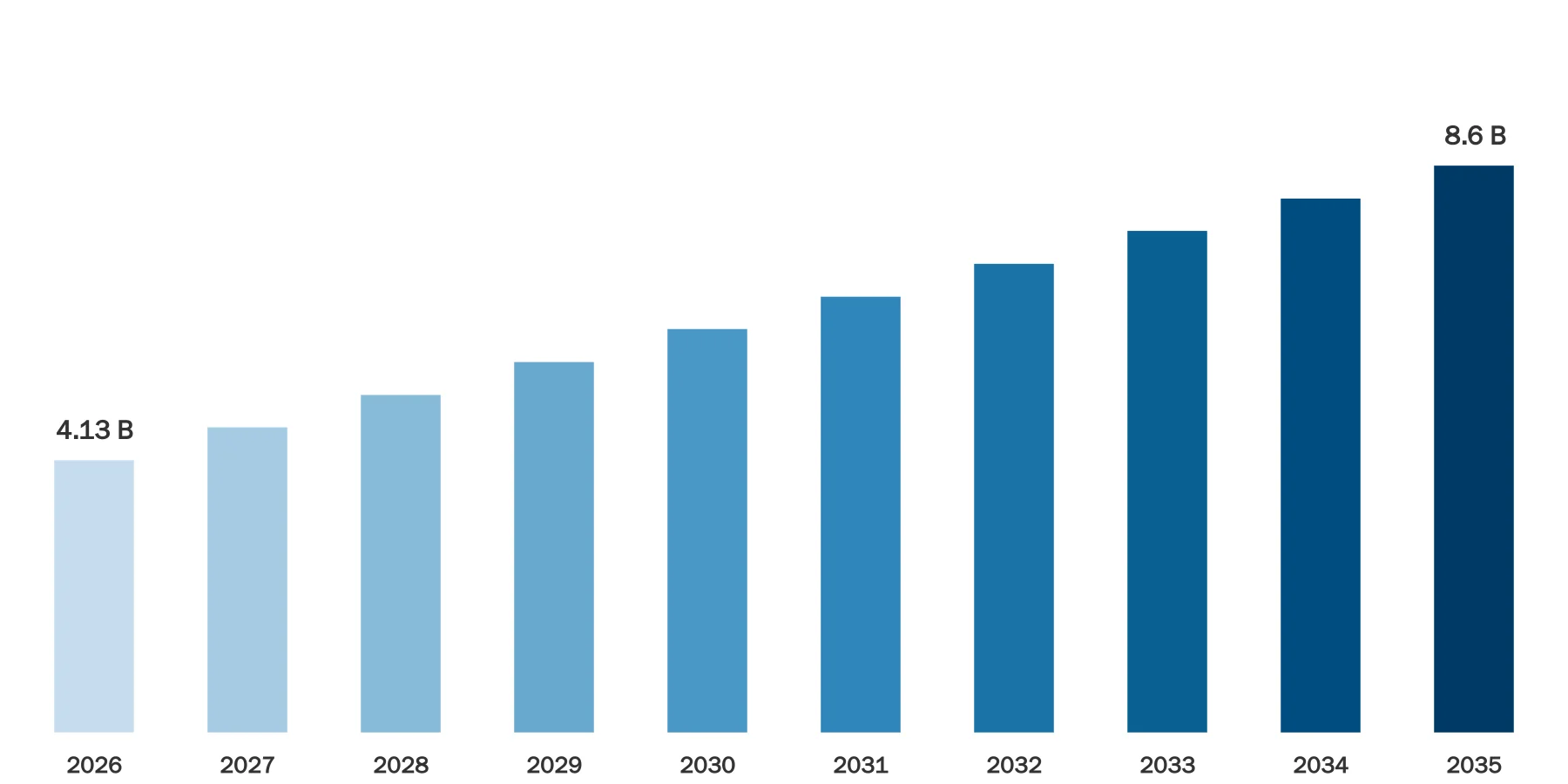
Source: Econ Market Research
The Helicopter Simulator market is all about creating, making, and distributing simulation systems that imitate the sensation of flying helicopters. These simulators offer a secure and affordable way for pilots to train, letting them hone their skills and practice emergency protocols without the dangers of actual flying. Helicopter simulators usually include a cockpit replica with state-of-the-art computer software that mirrors real-life flying conditions, such as weather conditions, landscape details, and aircraft behaviour.
Artificial intelligence systems are essential in pilot training programs for both civilian and military use. They aid in improving pilot abilities, enhancing safety measures, and lowering training expenses. Over the past few years, the Global Helicopter Simulator industry has seen a notable rise in growth because of various important reasons. Firstly, the growing need for pilot training in different industries like commercial aviation, military, and emergency services has led to the use of helicopter simulators as a more affordable training option.
Moreover, improvements in simulation technology, including high-quality graphics, accurate physics modelling, and immersive virtual environments, have made modern helicopter simulators more efficient and captivating than ever before. In addition, the aviation industry',s increased focus on safety and regulatory compliance has prompted increased investments in training facilities, particularly simulator facilities. This has consequently fuelled growth in the Global Helicopter Simulator market, as demand for well-trained pilots and advanced simulation technologies continues to rise.
Helicopter Simulator Dynamics
The growth of the Global Helicopter Simulator market is driven by factors like a focus on safety and efficiency in helicopter operations. Aviation organizations and military agencies are investing in advanced training solutions to improve pilot skills and readiness through simulation of complex manoeuvres, emergency procedures, and mission-specific scenarios in a controlled environment. Moreover, the increasing need for pilot training, especially in growing aviation markets, is driving the use of helicopter simulators. These regions frequently encounter issues like lack of pilots and inadequate training facilities, leading to the requirement for affordable and adaptable training options.
Furthermore, advancements in technology greatly influence the market for helicopter simulators. Progress in simulation software, hardware, and virtual reality has resulted in more realistic and immersive training environments. High-quality graphics, precise physics modelling, and interactive training scenarios all contribute to making helicopter simulators essential tools for pilot training programs. Furthermore, the integration of artificial intelligence and machine learning algorithms into simulator systems enables adaptive training programs tailored to individual learning needs and performance metrics. As a result, the Global Helicopter Simulator market is poised for continued growth as stakeholders prioritize safety, efficiency, and innovation in helicopter pilot training.
Helicopter Simulator Drivers
Increasing Emphasis on Safety and Efficiency
The aviation industry is placing a greater emphasis on safety and efficiency in helicopter operations, leading to an increased need for advanced training tools like helicopter simulators. These simulators offer pilots a safe environment to practice different manoeuvres, handle emergency situations, and experience mission-specific scenarios without the dangers of actual flight. As regulations become stricter and safety becomes a bigger concern, aviation organizations and military agencies globally are turning to helicopter simulators to improve pilot training and maintain operational readiness. This trend is expected to drive market growth significantly, highlighting the industry',s ongoing commitment to prioritizing safety in aviation.
Rising Demand for Pilot Training
The aviation industry is experiencing an increase in the need for well-trained pilots due to reasons like fleet growth, retirements, and higher demand for air travel. Helicopter simulators present a cost-efficient and adaptable option to fulfil this rising demand for pilot training. In particular, in developing countries with expanding aviation sectors, where there are pilot shortages and insufficient training facilities, helicopter simulators are essential in closing the gap between the need for skilled pilots and supply. With airlines, helicopter companies, and military branches working to tackle the lack of licensed pilots, the demand for helicopter simulators is projected to grow significantly, leading to market expansion.
Restraints:
The main challenge for the helicopter simulator market is the expensive investment needed to purchase and set up simulator systems. The advanced technology and hardware required for realistic simulation come at a high cost, which makes it difficult for smaller operators and training institutions to buy these systems. In addition, maintenance, upgrades, and licensing fees increase the overall cost of owning a simulator, creating barriers for some market players.
Regulatory Challenges and Certification Requirements
Helicopter simulators need to adhere to strict regulatory standards and certification requirements in order to guarantee their efficiency and dependability for pilot training. Securing certification from aviation entities like the Federal Aviation Administration (FAA) or the European Union Aviation Safety Agency (EASA) can be a challenging and time-consuming endeavour, requiring thorough testing and validation procedures. Keeping up with changing regulatory guidelines and adjusting to new certification criteria can present difficulties for simulator makers and users, which could potentially impede market expansion.
Opportunities:
Expanding Applications Beyond Pilot Training
Helicopter simulators are mainly used for pilot training, but there is a chance to explore other sectors and uses. These simulators can assist in military and law enforcement operations by aiding in mission planning, rehearsal, and evaluation. They are also valuable for maintenance training, enabling engineers and technicians to practice servicing and repairing helicopter systems in a simulated setting.
Additionally, helicopter simulators can be utilized in the research, development, and testing of new aircraft designs and technologies. By diversifying their offerings and targeting niche markets, simulator manufacturers can tap into new revenue streams and broaden their customer base. Additionally, the increasing adoption of simulators for recreational purposes, such as flight simulation enthusiasts and entertainment venues, presents another avenue for market expansion.
Segment Overview
By Product
By Product market is segmented into, Fixed Base Simulators and Full Flight Simulators. Fixed Base Simulators are stationary replicas of a cockpit with controls and instruments, providing a realistic flight experience while remaining on the ground. They are affordable and ideal for basic training, procedural exercises, and proficiency evaluations.
Full Flight Simulators, on the other hand, offer a more immersive experience by replicating the entire aircraft cabin and flight deck, including motion systems for a realistic sensation of flying. FFSs provide high-fidelity simulation of various flight conditions, maneuvers, and emergency scenarios, making them ideal for advanced pilot training, certification, and recurrent training requirements.
By Application
By application market is segmented into two main sectors, Commercial and Military. In the Commercial sector, these simulators are mainly utilized for training pilots in civilian aviation, such as commercial airlines, helicopter charter companies, and flight schools. They are essential for training pilots on different helicopter models, improving their skills in various flight techniques, and preparing them for potential emergencies. These simulators also help with regular training and skill assessments to ensure that pilots are competent and follow all regulations.
Helicopter simulators are widely used in the Military sector for various training purposes such as pilot training, mission-specific training, tactical exercises, and readiness assessments. These simulators replicate combat scenarios, challenging weather conditions, and critical missions to improve pilot skills, operational readiness, and mission effectiveness. They also assist in training crew coordination, mission planning, and equipment operation, promoting mission success and personnel safety in the Military.
Helicopter Simulator Overview by Region
North America leads the way due to top simulator manufacturers, strong aviation infrastructure, and strict safety rules. Commercial aviation and military activities in the region drive the need for helicopter simulators for both civilian and military use. Europe is a close second, with major players in the aerospace industry and a focus on safety and training.
Asia Pacific is also a promising market, due to rapid economic growth, rising air travel demand, and investments in aviation infrastructure. Countries like China and India in Asia are seeing an increase in military spending and growth in their commercial aviation industries, leading to a greater need for helicopter simulators. The Middle East and Latin America are also experiencing growth in this market due to investments in defense upgrades and expansions in commercial aviation.
Helicopter Simulator Market Competitive Landscape
Major companies such as CAE Inc., Lockheed Martin Corporation, Thales Group, and FlightSafety global dominate the market with their comprehensive portfolio of simulator solutions catering to both commercial and military applications. These companies focus on developing advanced simulator technologies, enhancing fidelity and realism, and expanding their global footprint through strategic collaborations and contracts with airlines, military agencies, and training institutions.
Moreover, smaller players and regional manufacturers contribute to market competition by offering specialized simulator solutions tailored to specific customer requirements or niche markets. As demand for helicopter simulators continues to grow globally, competition intensifies among market players to differentiate their offerings, deliver superior training experiences, and maintain a competitive edge in the evolving landscape of pilot training and simulation technology.
Helicopter Simulator Market Leading Companies:
CAE Inc.
Lockheed Martin Corporation
Thales Group
FlightSafety International
L3Harris Technologies, Inc.
Rockwell Collins, Inc.
Airbus SE
Boeing Company
Elite Simulation Solutions AG
FRASCA International Inc.
Indra Sistemas SA
TRU Simulation + Training Inc.
Leonardo S.p.A.
Textron Inc.
Havelsan A.S.
Helicopter Simulator market Recent Developments
In July 2021, CAE Inc. supplied a new Full Flight Simulator (FFS) to the Canadian Coast Guard, meeting the terms of a contract signed in February 2016 to aid the Canadian Coast Guard',s Fleet Renewal Plan.
In February 2021, Boeing revealed the enhancement of its LCT Helicopter simulator to boost helicopter Cyber Security and user safety, with anticipated improvements in device accuracy.
Helicopter Simulator Report Segmentation
Helicopter Simulator Market Report Scope & Segmentation
| Attributes | Details |
|---|---|
Market Size (Current) | US$ 4.13 Billion in 2026 |
Market Size (Forecast) | US$ 8.6 Billion in 2035 |
Growth Rate | CAGR of 8.6% from 2026 to 2035 |
Forecast Period | 2026 – 2035 |
Base Year | 2025 |
Historical Data Available | Yes |
Regional Scope | Global |
Segments Covered | By Type
By End-User
|
Frequently Asked Questions
Common questions about this report
The study period covers historical insights and forecast projections for the period 2026-2035.
About the Author
Market research expert with years of industry experience

Dipali Bhingare serves as the Market Research Director at Econ Market Research. With a focus on translating complex global economic shifts into actionable business intelligence, she oversees the strategic direction of comprehensive market studies. Her work empowers organizations to navigate volatile industries through data-driven forecasting and deep-dive competitive analysis.
Related Reports
Explore more market insights from the same category