

Hair Care Appliances Market
Hair Care Appliances Market Size, Share, Trends, Growth, and Industry Analysis, By Product (Hair Dryers, Flat Irons, Curling Irons, Hair Stylers, Trimmers andamp; Clippers), By Power Source (Corded, Cordless), By Application (Household, Commercial), Regional Analysis and Forecast Period 2026-2035
Hair Care Appliances Market Overview
As per Econ Market Research analysis, the Global Hair Care Appliances Market accounted for US$ 7.14 Billion in 2026 and is expected to surpass US$ 12.56 Billion by 2035, witnessing a CAGR of 6.6% throughout 2026–2035. The analysis is based on 2025 as the base year.
Hair Care Appliances Market Size 2025-2035 (USD Billion)

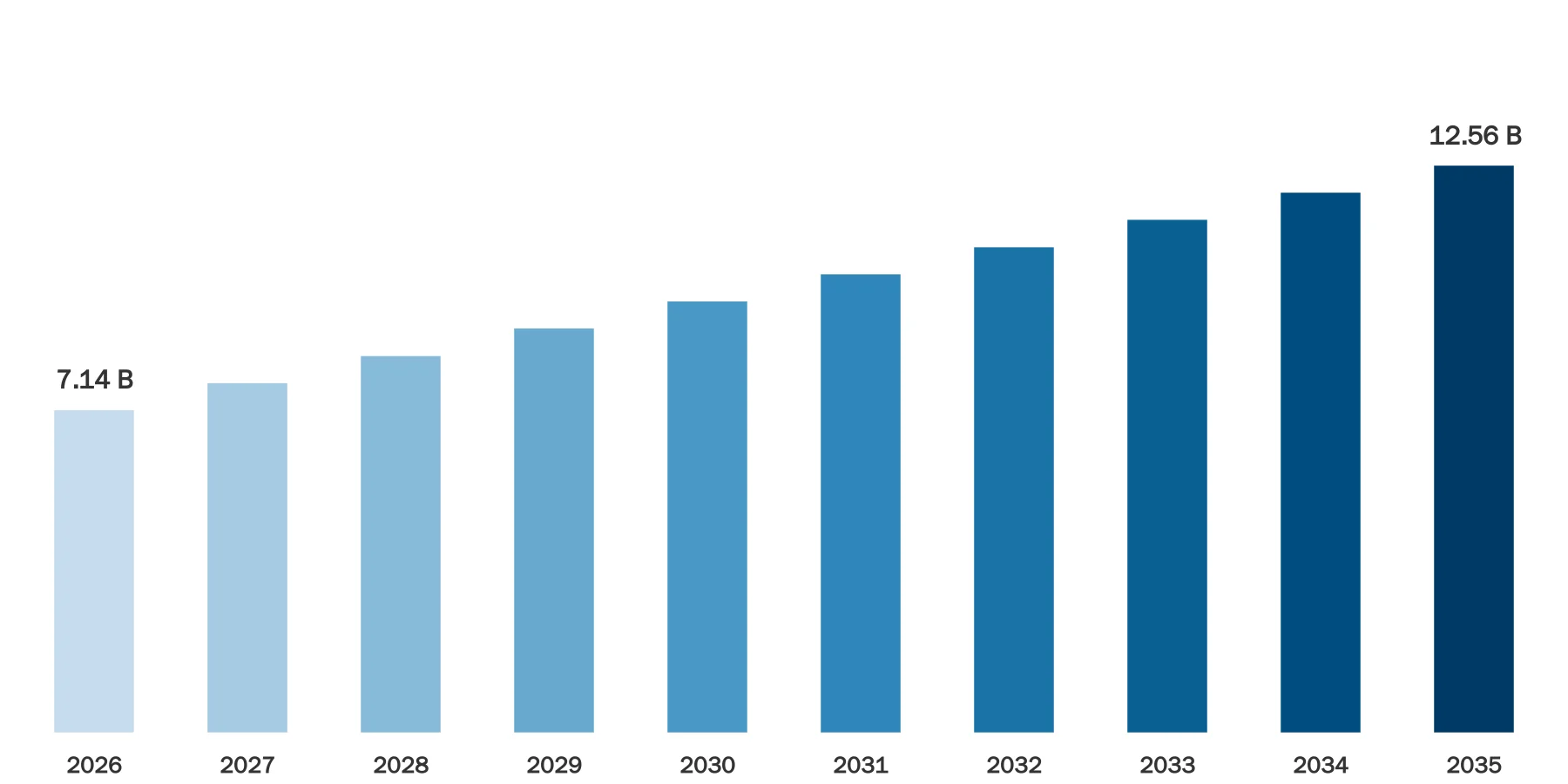
Source: Econ Market Research
Hair Care Appliances refer to tools like hair dryers, straighteners, curlers, and razors used for grooming and styling. These products cater to different consumers, from regular users seeking basic tools to professionals needing advanced equipment. Recent technological advancements have introduced features like ceramic heating for gentler styling and ion technology to minimize frizz in these appliances, enhancing their performance and user experience.
The market is driven by factors like changing fashion trends, increasing disposable income, and growing awareness about personal grooming. Additionally, the rise of social media influencers and beauty bloggers has contributed to the demand for Hair Styling Tools as consumers seek to replicate popular hairstyles. Major players in the market include renowned brands like Dyson, Philips, Conair, and Panasonic. Geographically, regions like North America, Europe, and Asia-Pacific are significant markets for hair care appliances, with increasing demand observed in emerging economies due to rising urbanization and changing lifestyles.
Hair Care Appliances Dynamics
Technology is constantly shaping the hair appliance market. Companies are always coming up with new ways to improve their products, like adding features like ceramic heating elements, ionization technology, and digital controls. This is because consumers want their hair styling tools to be easy to use and work well. Fashion and lifestyle trends also affect the market because people want appliances that can help them create the latest hairstyles. Additionally, the rise of social media influencers and beauty bloggers has amplified consumer awareness and desire for professional-quality styling results, further driving demand for high-performance hair care appliances.
Market dynamics are also influenced by macroeconomic factors such as disposable income levels, urbanization rates, and demographic trends, which affect purchasing power and consumer behaviour. Geographically, emerging economies present significant growth opportunities due to rising urbanization, increasing disposable incomes, and growing consumer awareness about personal grooming. However, the market faces challenges such as intense competition, price sensitivity among consumers, and the proliferation of counterfeit products, which can hinder growth and profitability for manufacturers.
Hair Care Appliances Drivers
Technological Advancements
The continuous development of hair care technology is fuelling the growth of the market. Companies are constantly releasing new upgrades to improve their products and make them easier to use. These upgrades include things like infrared heating, better ways to control temperature, and more ways to customize styling settings. These features meet the changing needs and wants of customers.
Also, by adding smart tech like Bluetooth and being able to connect to mobile apps, users can change how they style their hair and get salon-quality results at home. Technological advancements not only improve product functionality but also contribute to the premiumization of hair care appliances, driving higher average selling prices and revenue growth for manufacturers.
Increasing Disposable Income and Urbanization
Rising wealth, particularly in developing countries, along with rapid city growth, are major factors driving the demand for hair care tools. As cities expand, so too does the need for Personal Care and grooming items. Furthermore, urban lives frequently entail demanding schedules, leading people to seek convenience and efficiency in their grooming routines. Hair care tools provide a user-friendly option for quick and effective styling, catering to city dwellers who want to stay well-groomed despite their fast-paced lifestyles. Additionally, the growing middle-class population in emerging markets has more purchasing power to invest in premium hair care appliances, further fuelling market growth.
Restraints:
Intense Competition
The hair care appliance industry is fiercely competitive, with many companies fighting for a piece of the market. This fierce rivalry sparks price wars and profit squeeze as companies struggle to stand out and win customers. Counterfeit products add to the problems, damaging faith in well-known brands and grabbing market share. To stay visible and relevant, manufacturers pour money into advertising and marketing, driving up costs and cutting into profits.
Environmental Concerns and Sustainability
There',s increasing concern about how hair care appliances harm the environment and how sustainable they are. People are worried about energy use, product packaging, and what happens to appliances when they',re thrown away. This makes it harder to sell products and leads to more rules. Companies are being forced to make eco-friendly, energy-saving products that don',t hurt the environment and meet changing consumer needs. Also, using sustainable materials and making things in a sustainable way needs a lot of money in research and development, which is a problem for businesses in a competitive market.
Opportunities:
Growing Demand for Professional-grade Products
With a desire for salon-like results at home, more people are seeking out professional-quality hair care appliances. The focus on personal grooming has LED consumers to invest in high-end tools that provide superior styling and longevity. Manufacturers can take advantage of this by creating premium products with advanced features that meet the needs of selective customers. Additionally, the influence of social media personalities and beauty bloggers has increased the demand for salon-grade hair care appliances due to their promotion of professional styling techniques.
Segment Overview
By Product
The product segmentation encompasses a variety of tools designed for different styling purposes. Flat irons and hair dryers are essential tools for straightening and drying hair, respectively. Hair curlers are specialized devices used to create curls or waves in the hair. Hot brushes combine the functionalities of a hair dryer and a brush, allowing users to simultaneously dry and style their hair. Multi-purpose appliances offer versatility by incorporating multiple styling functions into a single device, catering to diverse styling needs and preferences.
By Mobility
This segmentation categorizes hair care appliances based on their portability. Portable appliances are compact and lightweight, designed for convenient use while traveling or on the go. Non-portable appliances, on the other hand, are larger and typically intended for use in a fixed location, such as at home or in a salon. The mobility segmentation reflects the varying lifestyles and usage scenarios of consumers, offering options tailored to their specific needs and preferences.
By Application
The application segmentation distinguishes between commercial and personal use of hair care appliances. Commercial applications encompass usage in professional settings such as hair salons, spas, and beauty parlours, where appliances are utilized to cater to the styling needs of clients. Personal applications refer to the use of appliances by individuals for their personal grooming and styling routines at home. This segmentation acknowledges the dual usage contexts of hair care appliances, catering to both professional and individual consumers.
By End-User
The end-user segmentation categorizes consumers based on gender, distinguishing between men and women. While both genders utilize hair care appliances for grooming and styling purposes, their specific preferences and styling needs may vary. Women often use a wider range of appliances for styling hair of different lengths and textures, while men may primarily use appliances such as hair dryers or flat irons for basic grooming routines. This segmentation enables manufacturers to tailor product offerings and marketing strategies to effectively target the distinct preferences and requirements of male and female consumers in the market.
Hair Care Appliances Overview by Region
Developed markets like North America and Europe have high product awareness and penetration and focus on premium, innovative products due to affluent consumers and grooming culture. In contrast, the Asia-Pacific region is a growing market driven by rising incomes, urbanization, and increased awareness of personal care. Emerging economies like China and India have high demand for hair care appliances due to a growing middle class and a thriving beauty and wellness industry.
Moreover, cultural factors play a significant role in shaping market dynamics, with preferences for specific hair styles and grooming practices influencing product preferences and usage patterns. Latin America and the Middle East &, Africa regions also present growth potential, driven by improving economic conditions and a growing focus on personal appearance and grooming among consumers.
Hair Care Appliances Market Competitive Landscape
Leading manufacturers such as Dyson, Philips, Conair, and Panasonic dominate the market with their extensive product portfolios, strong brand recognition, and widespread distribution networks. These companies focus on continuous innovation to introduce new features and technologies, maintain market leadership, and capture consumer attention. Additionally, strategic partnerships, mergers, and acquisitions play a crucial role in expanding market reach and enhancing product offerings.
Emerging players, including regional manufacturers and start-ups, are also gaining traction by offering niche products targeting specific consumer segments or addressing unique styling needs. Moreover, the proliferation of online platforms and e-commerce channels has democratized market access, enabling smaller players to compete effectively and reach a wider audience. However, competition in the hair care appliances market is not only limited to product offerings but also extends to factors such as pricing strategies, marketing initiatives, and customer service. Manufacturers continuously strive to differentiate themselves through branding, product quality, and customer experience, aiming to capture market share and sustain growth in the increasingly competitive landscape.
Hair Care Appliances Market Leading Companies:
Conair Corporation
Dyson
GHD (Good Hair Day)
Philips
Panasonic
Remington
Braun
Parlux
John Paul Mitchell Systems
SharkNinja
Hair Care Appliances Report Segmentation
Hair Care Appliances Market Report Scope & Segmentation
| Attributes | Details |
|---|---|
Market Size (Current) | US$ 7.14 Billion in 2026 |
Market Size (Forecast) | US$ 12.56 Billion in 2035 |
Growth Rate | CAGR of 6.6% from 2026 to 2035 |
Forecast Period | 2026 – 2035 |
Base Year | 2025 |
Historical Data Available | Yes |
Regional Scope | Global |
Segments Covered | By Product
By Power Source
By Application
|
Frequently Asked Questions
Common questions about this report
The study period covers historical insights and forecast projections for the period 2026-2035.
About the Author
Market research expert with years of industry experience

Dipali Bhingare serves as the Market Research Director at Econ Market Research. With a focus on translating complex global economic shifts into actionable business intelligence, she oversees the strategic direction of comprehensive market studies. Her work empowers organizations to navigate volatile industries through data-driven forecasting and deep-dive competitive analysis.
Related Reports
Explore more market insights from the same category