

Green Supplement Market
Green Supplement Market Size, Share, Trends, Growth, and Industry Analysis, By Product Type (Algae, Grasses, Vegetables), By Form (Tablets, Capsules, Powder), Regional Analysis and Forecast Period 2026-2035
Green Supplement Market Overview
As per Econ Market Research analysis, the Global Green Supplement Market valuation stood at US$ 1.64 Billion in 2026 and is expected to reach US$ 2.35 Billion by 2035, growing at a steady CAGR of 4.05% from 2026 to 2035. 2025 serves as the base year.
Green Supplement Market Size 2025-2035 (USD Billion)

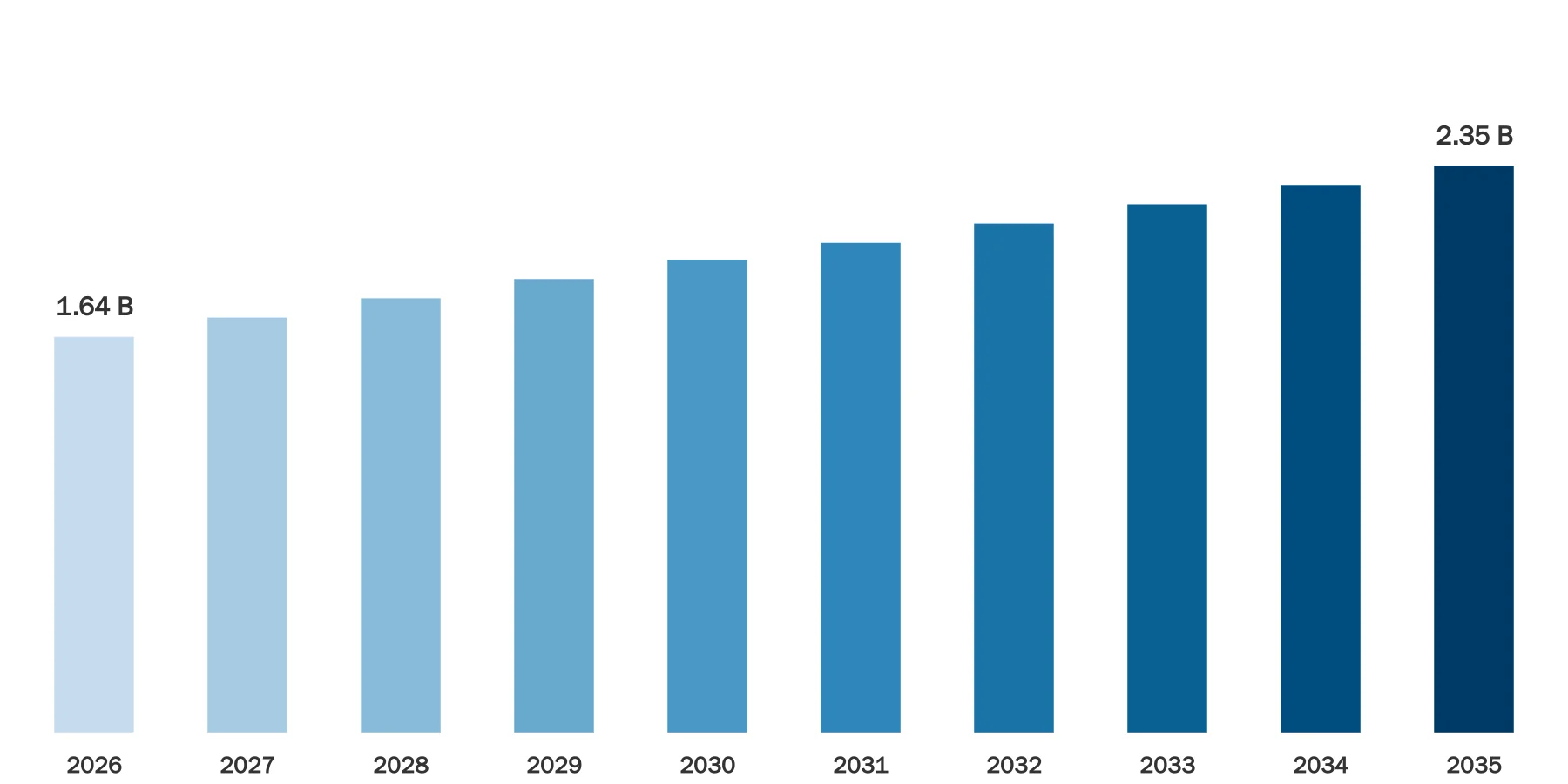
Source: Econ Market Research
The Green Supplement Market Report highlights a rapidly evolving sector driven by increasing health awareness, with over 65% of global consumers actively seeking plant-based nutritional products in 2025. Approximately 72% of dietary supplement users prefer natural or organic formulations, while 48% of global supplement buyers consume green supplements at least 3 times per week. Spirulina and chlorella account for nearly 38% of total consumption volume, while wheatgrass and barley grass contribute around 27%. The average daily intake of green supplements ranges between 3 g to 10 g per individual. E-commerce channels contribute to nearly 55% of total distribution, reflecting a strong digital shift. Product launches increased by 22% between 2023 and 2025, indicating strong innovation activity.
The USA Green Supplement Market Analysis shows that nearly 74% of adults use dietary supplements, with 41% specifically consuming green supplements weekly. Around 58 million adults in the United States use plant-based supplements, and nearly 36% prefer algae-based products such as spirulina and chlorella. Powder-based supplements account for nearly 44% of consumption, while capsules contribute 33%. Retail penetration in the USA exceeds 80% across pharmacies and supermarkets, while online platforms account for 62% of purchases. Organic-certified green supplements represent nearly 29% of total products sold. Fitness consumers contribute approximately 52% of demand, while vegan consumers account for 24%. The USA market has witnessed over 18% increase in product launches between 2023 and 2025.
Market Latest Trends
The Green Supplement Market Trends indicate strong growth in plant-based nutrition, with nearly 67% of consumers prioritizing clean-label products and 54% demanding non-GMO certifications. Superfood blends containing 5–10 ingredients have gained popularity, representing approximately 46% of new product launches. Algae-based supplements have seen a consumption increase of 31% due to high protein content ranging from 55% to 70%. Personalized nutrition is another major trend, with nearly 28% of consumers opting for customized supplement plans based on age, weight, and activity levels.
Functional beverages incorporating green supplements have grown by 26% in the last 2 years, while ready-to-mix powders dominate with 49% share among convenience-based consumers. Sustainable Packaging adoption has increased by 33%, reflecting environmental concerns among 61% of buyers. Subscription-based supplement services have grown by 19%, especially among urban populations aged 25–40 years. Additionally, digital marketing campaigns have increased consumer engagement by 42%, with influencer-driven promotions contributing to 37% of brand awareness.
Market Dynamics
DRIVER
Increasing Demand for Plant-Based Nutrition
The primary driver in the Green Supplement Market Growth is the rising demand for plant-based diets, with approximately 79 million people globally identifying as vegan or vegetarian. Around 68% of millennials prefer plant-based food and supplement options, while 52% of Gen Z consumers actively purchase green supplements. Nutritional deficiencies such as iron deficiency affecting nearly 30% of the global population and vitamin deficiencies affecting 45% have increased reliance on supplements. Algae-based supplements offer protein content of 60% and essential amino acids, making them attractive alternatives. Fitness participation has increased by 34% globally, boosting supplement consumption frequency to 4–5 times per week among active individuals.
RESTRAINT
High Product Cost and Limited Awareness
A major restraint in the Green Supplement Market Analysis is the relatively high cost of organic and certified products, which are priced 20% to 45% higher than conventional supplements. Nearly 41% of consumers in developing regions remain unaware of green supplement benefits, limiting penetration. Supply chain challenges have increased raw material costs by 18% due to climate variability affecting algae and grass production. Certification processes such as organic labeling add an additional 12% cost burden. Limited accessibility in rural areas, where only 23% of retail stores stock green supplements, further restricts market growth.
OPPORTUNITY
Expansion in Emerging Markets
The Green Supplement Market Opportunities are expanding significantly in emerging economies, where urbanization rates exceed 56% and health awareness is rising among middle-income populations. Asia-Pacific alone accounts for over 60% of global population, with supplement consumption increasing by 27% between 2022 and 2025. Online penetration in developing countries has grown by 35%, enabling wider distribution. Affordable packaging formats under 100 grams have increased adoption by 22% among first-time users. Government health initiatives promoting preventive healthcare have increased supplement usage by 18% in several regions.
CHALLENGES
Regulatory Compliance and Quality Control
The Green Supplement Market faces challenges related to regulatory frameworks, with over 25 different global standards governing supplement approvals. Nearly 32% of manufacturers report delays of up to 6–12 months in product approvals. Quality inconsistencies affect around 17% of products due to contamination risks in algae cultivation. Labeling requirements vary across regions, increasing compliance costs by 15%. Consumer trust issues persist, with 28% of buyers concerned about product authenticity and ingredient transparency.
SWOT Analysis
Strengths
High nutrient density with protein content reaching 60% in algae-based supplements
Increasing consumer adoption with over 65% preference for natural products
Strong e-commerce distribution contributing 55% of total sales
Wide application across fitness, wellness, and medical nutrition segments
Weaknesses
Higher pricing by 20%–45% compared to conventional supplements
Limited awareness among 41% of consumers in emerging regions
Shelf-life constraints averaging 12–24 months
Dependence on climate-sensitive raw materials
Opportunities
Growing vegan population exceeding 79 million globally
Rising online sales penetration increasing by 35%
Expansion in Asia-Pacific with 60% population base
Product innovation with multi-ingredient blends increasing by 46%
Threats
Regulatory variations across 25+ countries
Competition from synthetic supplements holding 48% share
Risk of contamination affecting 17% of production batches
Price sensitivity among 52% of consumers
Segmentation Analysis
The Green Supplement Market Segmentation is based on Product Type and Form, with diverse consumption patterns across global regions. Product types such as algae, grasses, and vegetables collectively contribute to 100% of the market, with algae leading at approximately 38%, followed by grasses at 27%, and vegetables at 35%. In terms of form, powder dominates with 49%, capsules hold 33%, and tablets account for 18%. Consumers prefer powders for flexibility, while capsules offer convenience.
By Product Type
Algae
Algae-based supplements hold around 38% market share, driven by high protein content of 55%–70%. Spirulina alone contributes to nearly 22% of total algae consumption. These supplements are rich in vitamins such as B12 and iron, addressing deficiencies affecting 30% of the population. Consumption frequency averages 4 times per week among fitness users.
Grasses
Grasses such as wheatgrass and barley grass account for approximately 27% of the market. These products contain chlorophyll levels of up to 70%, promoting detoxification benefits. Around 41% of users consume grass-based powders daily, with average intake between 5 g and 8 g. Demand has increased by 24% due to digestive health benefits.
Vegetables
Vegetable-based supplements contribute nearly 35% of the market, including spinach, kale, and broccoli blends. These products provide fiber content of 10%–15% and antioxidants supporting immune health. Nearly 46% of consumers prefer vegetable blends due to taste and versatility. Multi-vegetable formulations have increased by 29% in recent product launches.
By Form
Tablets
Tablets account for approximately 18% of the market, offering precise dosage of 500 mg to 1000 mg per serving. Around 34% of older consumers prefer tablets due to ease of storage. Shelf life extends up to 24 months, making them suitable for bulk purchases.
Capsules
Capsules hold around 33% share, with gelatin and plant-based variants. Nearly 52% of working professionals prefer capsules due to convenience and portability. Dosage ranges from 2 to 4 capsules per day, with rapid absorption rates improving effectiveness by 15%.
Powder
Powder form dominates with 49% share, driven by flexibility in mixing with beverages. Approximately 61% of fitness users prefer powder supplements, with daily intake averaging 7 g. Powder-based products support customization and combination with smoothies, increasing adoption by 28%.
Regional Analysis
The Green Supplement Market shows strong regional diversity, with North America holding around 32%, Europe 28%, Asia-Pacific 30%, and Middle East & Africa 10%. Consumption patterns vary based on health awareness, income levels, and distribution channels.
North America
North America accounts for approximately 32% of the global market, with the United States contributing nearly 75% of regional demand. Around 74% of adults consume supplements, and 41% use green supplements weekly. Online sales contribute 62% of total distribution, while retail stores account for 38%. Organic products represent 29% of the market, reflecting strong demand for clean-label products. Fitness participation exceeds 50% of the population, driving consistent consumption. Product innovation has increased by 18% between 2023 and 2025, with over 120 new launches annually.
Europe
Europe holds around 28% market share, with countries such as Germany, the UK, and France leading consumption. Approximately 63% of consumers prefer organic supplements, while 47% demand vegan-certified products. Powder form accounts for 45% of consumption, followed by capsules at 35%. The region has witnessed a 21% increase in plant-based diet adoption, supporting supplement demand. Regulatory compliance is strict, with over 15 certification requirements for new products. Distribution through pharmacies accounts for 40% of sales, while online channels contribute 50%.
Asia-Pacific
Asia-Pacific accounts for nearly 30% of the market, driven by a population exceeding 4.5 billion. Urbanization rates above 56% and rising middle-class income have increased supplement adoption by 27%. Powder-based supplements dominate with 52% share, while algae-based products account for 42% due to regional availability. China and India contribute nearly 60% of regional demand. Online platforms have grown by 35%, enabling wider access. Traditional herbal blends combined with green supplements have increased by 23%.
Middle East & Africa
The Middle East & Africa region holds approximately 10% market share, with growth driven by increasing health awareness among urban populations. Around 38% of consumers use supplements, while 19% specifically consume green supplements. Retail penetration remains limited at 28%, but online sales are increasing by 31%. Powder form accounts for 48% of consumption, followed by capsules at 30%. Import dependency exceeds 65%, affecting product pricing. Fitness industry growth of 22% has contributed to rising demand for nutritional supplements.
Competitive Landscape
The Green Supplement Market Competitive Landscape is characterized by strong competition among global and regional players, with over 150 active manufacturers. The top 10 companies account for nearly 48% of total market share, while smaller players contribute 52%. Product differentiation is driven by ingredient quality, organic certification, and packaging innovation. Around 37% of companies invest in digital marketing, while 29% focus on product innovation.
Private label brands have increased by 18%, intensifying competition. Strategic partnerships and acquisitions have grown by 14% between 2023 and 2025. Companies are expanding distribution networks, with 62% focusing on e-commerce platforms. Research and development investments account for approximately 8% of operational budgets, supporting new product launches and formulation improvements.
List of Top Green Supplement Companies
GNC Holdings Inc.
Herbalife Nutrition Ltd.
Amway Corporation
Vitacost.com Inc.
Herbal Hills
General Nutrition Centers Inc.
Puritan’s Pride, Inc.
Pharmafreak
NOW Foods
New England Greens LLC
Cyane
Earthrise Nutritional
Tate & Lyle
BASF
DSM
Danone
Blue California
Changsha Sunfull Bio-tech Co. Ltd
Leading Companies by Market Share
Herbalife Nutrition Ltd. and Amway Corporation collectively hold approximately 22% of the global market share, supported by distribution networks spanning over 90 countries and product portfolios exceeding 150 SKUs each. Their direct selling models contribute to 65% of their total sales volume, while digital channels account for 35%.
Market Investment Outlook
The Green Supplement Market Investment Outlook indicates strong investment potential, with over 40% of companies increasing capital allocation toward product innovation and distribution expansion. Venture capital investments in plant-based nutrition startups have increased by 26% between 2023 and 2025. Manufacturing capacity expansion projects have grown by 19%, with new facilities focusing on algae cultivation and processing.
E-commerce infrastructure investments have increased by 33%, enabling faster delivery and improved customer engagement. Private equity participation has risen by 17%, particularly in emerging markets. Sustainable sourcing initiatives have attracted 21% more investments, reflecting environmental concerns. Companies are also investing in automation, with 14% increase in production efficiency through advanced technologies.
New Product Development
New product development in the Green Supplement Market has accelerated, with over 120 new products launched annually. Multi-ingredient blends combining 5–10 superfoods account for 46% of innovations. Functional beverages infused with green supplements have increased by 26%, targeting convenience-focused consumers.
Flavor enhancement technologies have improved taste profiles, increasing consumer acceptance by 32%. Organic-certified products have grown by 29%, reflecting demand for clean-label options. Personalized supplement kits have increased by 28%, allowing customized nutrition plans. Packaging innovations such as biodegradable materials have increased by 33%, aligning with sustainability trends.
Recent Developments
In 2023, over 85 new green supplement products were launched globally, with 46% featuring multi-ingredient blends.
In 2024, algae-based supplement production increased by 31%, improving supply chain efficiency.
In 2024, online sales penetration reached 62%, marking a 19% increase compared to 2022.
In 2025, organic-certified products accounted for 29% of total offerings, reflecting growing demand.
In 2025, sustainable packaging adoption increased by 33%, driven by environmental concerns.
Report Coverage of Green Supplement Market
The Green Supplement Market Report Coverage provides a comprehensive analysis of market trends, dynamics, segmentation, and regional insights, covering over 25 countries and 150 companies. The report evaluates product types including algae, grasses, and vegetables, along with forms such as tablets, capsules, and powders.
It includes analysis of consumer behavior, with over 65% preference for natural products and 54% demand for non-GMO certifications. Distribution channels such as e-commerce and retail are examined, with online sales contributing 55% of total volume. The report also covers regulatory frameworks across 25+ countries, highlighting compliance challenges.
Additionally, the report analyzes technological advancements, investment trends, and new product developments, providing insights into over 120 annual product launches. Strategic initiatives such as partnerships, acquisitions, and expansion plans are also included, offering a detailed overview of the competitive landscape and future opportunities.
Green Supplement Market Report Scope & Segmentation
| Attributes | Details |
|---|---|
Market Size (Current) | US$ 1.64 Billion in 2026 |
Market Size (Forecast) | US$ 2.35 Billion in 2035 |
Growth Rate | CAGR of 4.05% from 2026 to 2035 |
Forecast Period | 2026 – 2035 |
Base Year | 2025 |
Historical Data Available | Yes |
Regional Scope | Global |
Segments Covered | By Product Type
By Form
|
Frequently Asked Questions
Common questions about this report
The study period covers historical insights and forecast projections for the period 2026-2035.
About the Author
Market research expert with years of industry experience

Related Reports
Explore more market insights from the same category