

Green Steel Market
Green Steel Market By Production Technology (Molten Oxide Electrolysis, Electric Arc Furnace) By Energy Source (Wind Energy, Solar Energy) By End-User (Automotive & Transportation, Building and Construction, Electronic Industrial Equipment) - Global Industry Analysis, Size, Share, Growth, Trends, Regional Outlook, and Forecast Period 2026-2035
Market Overview
As per Econ Market Research analysis, Global Green Steel Market size stood at US$ 233.28 Billion in 2026 and is projected to reach US$ 466.56 Billion by 2035, growing at a CAGR of 8% over the forecast period 2026–2035. 2025 is taken as the base year.
Green Steel Market Size 2025-2035 (USD Billion)

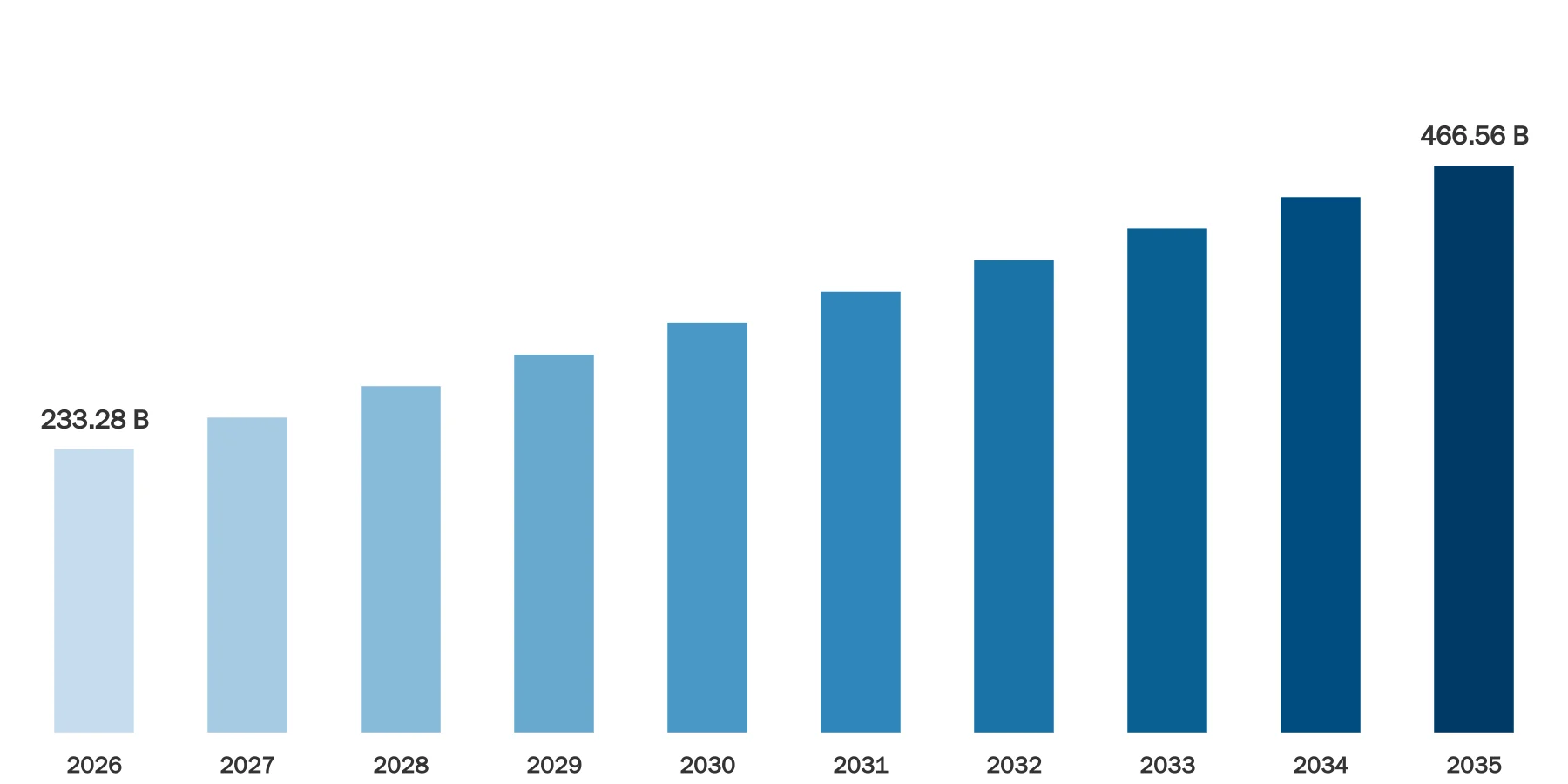
Source: Econ Market Research
Green steel industry demand has risen in the last year as a result of innovative branded products launched by steelmakers in Europe and the United States that provide consumers with a carbon-efficient alternative while utilizing available capacities. Green steel is being purchased by public and private steel buyers in the construction, automotive, and metal products sectors. This includes the First Movers Coalition and CEM Industrial Deep Decarbonization initiatives.
According to the World Steel Association, the production of 1860 million tonnes of steel released approximately 1.85 tonnes of CO2 into the atmosphere. Green steel production has increased as a result of rising industrial emissions from various steel products, prompting organizations to form alliances and strategies with private steelmakers.
Furthermore, because green steel is produced entirely from renewable sources such as Green Hydrogen, the burgeoning R&,D in Fuel Cell Electric Vehicles (FCEVs) and hydrogen-powered automobiles has a positive impact on green steel technological advancement. Furthermore, some Asian countries, such as China, South Korea, New Zealand, and others, are currently using FCEVs made by Toyota, Hyundai, and others. They also plan to use green hydrogen in their vehicles in the coming years, fueling global green steel growth.
Impact of COVID-19
COVID-19 has harmed the global green steel industry, particularly in the power and energy sectors. The pandemic also had an impact on steel product export and import in all regions, resulting in a decrease in green steel supply. Green steel demand fell by about 12%-14% during the COVID-19 period.
Steel consumption has decreased during the pandemic, according to current green steel demand conditions in the majority of developing countries. Several large industries involved in green steel manufacturing have faced numerous challenges.
The post-pandemic scenario, on the other hand, has already increased both technological advancement and the green transition. Following COVID-19, developing economies like China are expected to accelerate the normalization of economic activity across sectors. This will increase demand for green steel products as well as imports of green steel.
Market Dynamics
Market Drivers
Increasing CO2 emissions Over the last decade, total carbon dioxide emissions from the steel and iron sector have increased, owing primarily to increases in steel consumption and the energy required for production. Significant CO2 emissions reductions are required to achieve the Net Zero Scenario. Carbon dioxide emissions can be reduced in the short term primarily through increased energy efficiency and scrap collection, allowing for more scrap-based production.
Significant reductions in emissions intensity will necessitate the implementation of new technologies such as electricity-based production, hydrogen utilization, and CCUS. Green Steel initiatives are expected to reduce CO2 emissions.
Green steel is expected to play an important role in assisting nations around the world in meeting their long-term development goals and lowering their carbon footprints. Green steel is essential for reducing countries reliance on energy imports, protecting the environment, and meeting the world',s growing energy demands. Furthermore, the production of steel emits a significant amount of CO2. As a result, governments around the world are expanding decarbonization strategies and promoting green steel, particularly in industries such as automotive and construction.
Market Restraints
The primary challenge in the global green steel market has been a lack of understanding of carbon accounting calculations, as forecasting the levels of carbon tax during the manufacturing process is extremely difficult. This, in turn, is delaying the process of recognizing green steel, despite the fact that only a small percentage of Northern European companies will be producing fossil-fuel-free steel by 2022.
SMS groups and other industries have developed a few digital tools. Nonetheless, companies have found it difficult in recent years to quantify the number of CO2 emissions from various processes of a complete manufacturing unit. As a result, market development is hampered when original equipment manufacturers are unable to demonstrate emission-free products.
Market opportunities
Growing demand for sustainable products: With the increasing concern for the environment and the need for sustainable products, there is a growing demand for green steel. Companies that can offer sustainable steel products are likely to have a competitive advantage.
Government support: Governments around the world are supporting the shift towards green steel production. They are providing incentives and funding for companies that are investing in sustainable steel production methods. This support creates a favorable environment for the growth of the green steel market.
Technological advancements: The development of new technologies and innovative methods of producing green steel is creating new opportunities for companies to enter the market. These technologies are enabling companies to produce green steel more efficiently and at a lower cost.
Partnership opportunities: Collaboration between companies in the green steel market is likely to increase, as companies seek to share knowledge and resources to develop new products and processes. This collaboration can create new opportunities for companies to enter the market or expand their presence.
Increased investment: The green steel market is attracting increasing investment from venture capitalists and other investors. This investment is driving the growth of the market and creating new opportunities for companies to develop and scale their operations.
Regional Analysis
Europe is expected to grow at the fastest CAGR between 2023 and 2032. The steel industry, according to the European Commission, accounts for approximately 5% of CO2 emissions in the region and 7% globally, which is a significant concern that must be addressed in order to meet carbon emission targets. To address this, the European Union is implementing a long-term strategy aimed at achieving a climate-neutral Europe by 2050, which will benefit the region',s green steel market.
In accordance with this, many steel manufacturers in Germany, Sweden, the United Kingdom, Norway, and other countries are implementing effective clean steel-making solutions to support carbon-neutral targets.
North America is also a hugely profitable market for green steel in the region. In recent years, the green steel industry in the United Kingdom has grown as a result of increased investments and offtake partnerships among new companies to meet new business strategies.
Competitive Landscape
Some of the main manufacturers of Green Steel Market are:
Deutsche Edelstahlwerke
SSAB
Salzgitter AG
JSW Steel
ArcelorMittal
H2GreenSteel
Hesteel Group
Liberty Steel Group
Nucor
Voestalpine
Green Steel Market Report Scope & Segmentation
| Attributes | Details |
|---|---|
Market Size (Current) | US$ 233.28 Billion in 2026 |
Market Size (Forecast) | US$ 466.56 Billion in 2035 |
Growth Rate | CAGR of 8% from 2026 to 2035 |
Forecast Period | 2026 – 2035 |
Base Year | 2025 |
Historical Data Available | Yes |
Regional Scope | Global |
Segments Covered | By Production Technology
By Energy Source
By End User
|
Frequently Asked Questions
Common questions about this report
The study period covers historical insights and forecast projections for the period 2026-2035.
About the Author
Market research expert with years of industry experience

Dipali Bhingare serves as the Market Research Director at Econ Market Research. With a focus on translating complex global economic shifts into actionable business intelligence, she oversees the strategic direction of comprehensive market studies. Her work empowers organizations to navigate volatile industries through data-driven forecasting and deep-dive competitive analysis.
Related Reports
Explore more market insights from the same category