

Green Hydrogen Market
Green Hydrogen Market Size, Share, Trends, Growth, and Industry Analysis, By Technology (Proton Exchange Membrane, Alkaline, Solid Oxide), By Source (Solar, Wind, Others), By Application (Power Generation, Transport, Others), By End User (Food andamp;, Beverages, Medical, Chemical, Petrochemicals, Glass, Others), Regional Analysis and Forecast Period 2026-2035
Market Overview
As per Econ Market Research analysis, the Green Hydrogen Market was valued at US$ 12.56 Billion in 2026 and is expected to register strong growth to US$ 388.56 Billion by 2035, with a CAGR of 45.9% throughout the forecast period. The base year considered is 2025.
Green Hydrogen Market Size 2025-2035 (USD Billion)

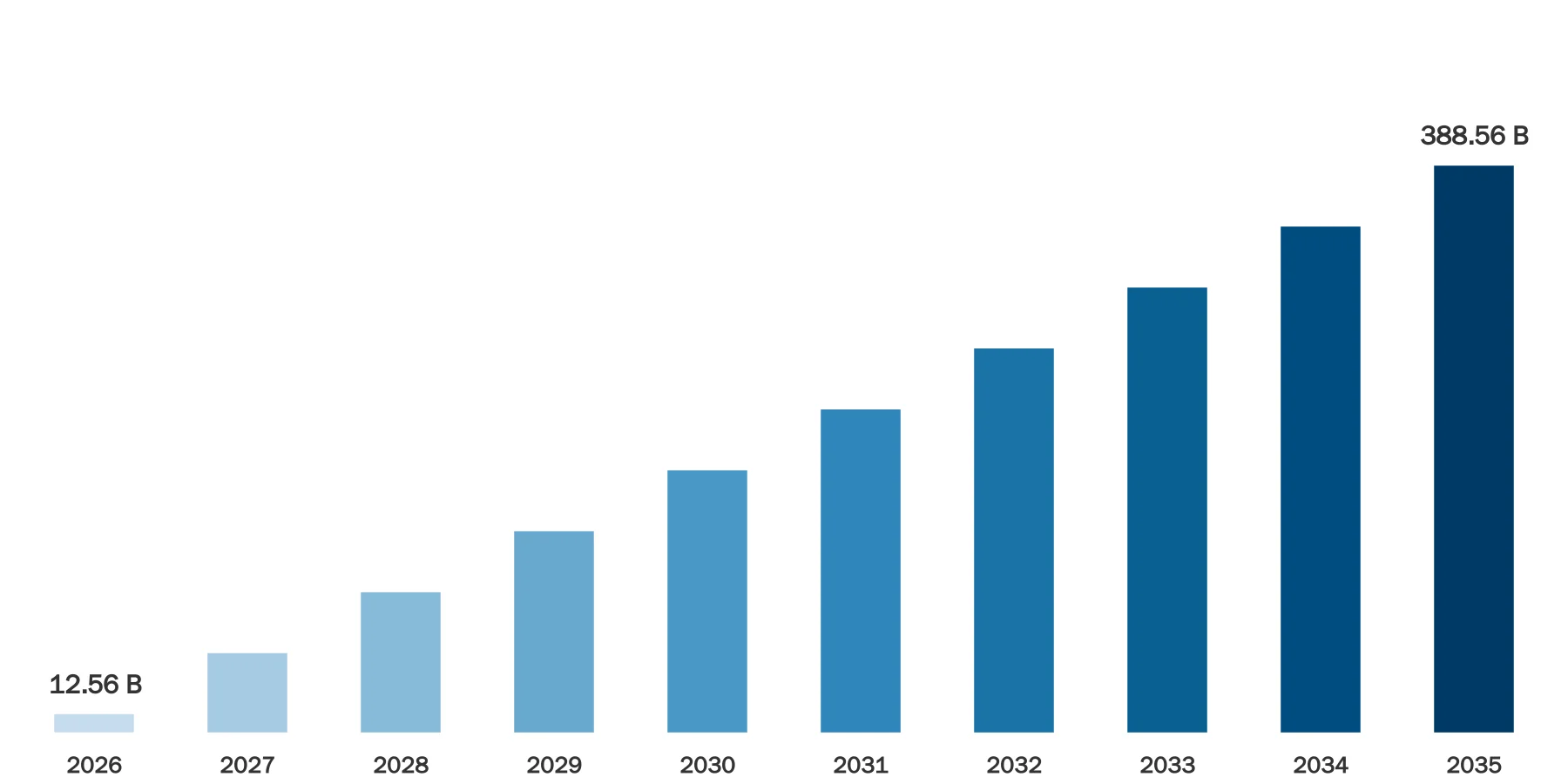
Source: Econ Market Research
Green hydrogen refers to hydrogen gas produced by the electrolysis process, which includes converting water (H2O) into hydrogen (H2) and oxygen (O2) using electricity generated from renewable sources (such as solar or wind power). Since renewable energy sources are used in its production, green hydrogen is considered environmentally friendly and has the potential to replace fossil fuels as a clean energy carrier. Green hydrogen is the cleanest form of hydrogen wherein there is no carbon byproduct at all. The demand for green hydrogen as a renewable source of energy is exponentially increasing in a wide range of sectors such as Food & Beverages, Hospitals and Chemicals industries.
Market Growth Factors
The market growth of green hydrogen is influenced by several factors, including the following:
Decreasing costs of renewable energy
Green hydrogen is becoming more economically feasible as the cost of renewable energy technologies, such as solar and wind power, continues to fall. Green hydrogen is a more attractive option for various applications as the cost of producing it through electrolysis falls along with the cost of electricity from renewable sources. Green hydrogen has wide range of uses, including energy storage, transportation fuel, industrial process feedstock, and power production. Its versatility and capacity to meet numerous energy demands make it an attractive option for various sectors, offering up new market opportunities and driving its growth.
Market Drivers
Renewable Energy Expansion
The growing use of renewable energy sources such as solar and wind power is a major driver of the green hydrogen industry. Green hydrogen is produced by electrolysis, which requires electricity generated from renewable sources. As renewable energy capacity grows, it provides a consistent and long-term supply of electricity for green hydrogen synthesis. In the United States, hydrogen is used as a fuel for power plants. In 2020, a number of major European automakers, including CNH, Daimler, DAF, Ford, MAN, Scania, and Volvo, announced intentions to convert their truck fleets to hydrogen power by 2040. Airbus is also working on hydrogen-powered aircraft and intends to launch commercial service by 2035. Power plants across the United States have announced the use of combustion gas turbines powered by a fuel mixture of natural gas and hydrogen. The Long Ridge Energy Generation Project (485 MW) in Ohio has been using a gas-fired combustion turbine that works on a 95% natural gas/5% hydrogen fuel blend in order to eventually run on 100% GH2.
Decarbonization and Climate Goals
Green hydrogen is being driven by the growing need to cut greenhouse gas emissions and mitigate the impacts of climate change. Green hydrogen is seen as a clean and sustainable energy carrier that can help decarbonize sectors such as transportation, industry, and power generation as governments struggle to reach their decarbonization targets. Green hydrogen usage is consistent with national and international climate policy, such as the Paris Agreement, which aims to keep global warming far below 2 degrees Celsius. Many countries have established targets and policies to minimize greenhouse gas emissions, and green hydrogen is seen as a crucial tool in achieving these goals.
Market Opportunities
Green hydrogen can be produced in countries with abundant renewable energy resources and potentially exported to places with low renewable energy potential. Consequently, green hydrogen can be transported and utilized as a globally accessible clean energy source, enhancing energy security and decreasing dependence on imported fossil fuels. The growth of the green hydrogen market stimulates innovation and research and development (R&,D). Electrolysis technologies, materials, storage solutions, and hydrogen infrastructure advancements are critical for improving the efficiency, scalability, and cost-effectiveness of green hydrogen production and utilization. These technical developments open the door to new ideas, patents, and market competitiveness.
Market Challenges
The cost of producing green hydrogen is one of the most significant challenges. Green hydrogen production is currently more expensive than hydrogen produced from fossil fuels. Renewable energy, electrolyzer technology, and infrastructural development all add to the total cost. Cost competitiveness with conventional energy sources will require additional breakthroughs in electrolysis technology, economies of scale, and cost reductions in renewable energy.
Segments Analysis
Technology Insights
The primary technique for producing green hydrogen is electrolysis. Alkaline electrolyzers, proton exchange membrane (PEM) electrolyzers, and solid oxide electrolyzers are examples of electrolyzers. The operating temperature, efficiency, scalability, and cost of these electrolyzers vary. Electrolysis technology advancements aim to improve efficiency, reduce capital and operating costs, and increase the lifespan and durability of electrolyzer systems. The alkaline electrolyzer segment has the largest market share, owing to its higher operating time capacity and low capital cost. In addition, the segment is expected to expand at a faster pace during the forecast period.
Application Insights
Green hydrogen can be used as a clean transportation fuel, providing an alternative to conventional fossil fuel-based vehicles. It can power (FCEVs), enabling longer range and faster refueling times than battery electric vehicles. Green hydrogen is particularly well-suited to heavy-duty transportation, such as trucks, buses, trains, and ships, where electrification may be difficult. Green hydrogen may be used to generate energy as a fuel for gas turbines or in fuel cells. It provides a flexible and dispatchable energy source that may be stored and used when power demand is high or renewable energy supply is low. Green hydrogen-based power generation can assist to balance the intermittent nature of renewable energy sources, resulting in a more stable and resilient energy supply.
End User Insights
The chemical sector is a major producer of by-product hydrogen, which is consumed within the sector as well as distributed for industrial use.
Regional Analysis:
Europe is the largest region contributing to energy transition into a clean hydrogen-based energy over the coming years. For example, in August 2019, the U.K. government announced a USD 14.8 billion investment plan for a project that is expected to use 4 GW of offshore wind for green hydrogen production by 2030.
North America is also gradually moving towards clean source of energy by implementing clean energy policies across United States and Canada. In the U.S., California holds the majority market share with the growth driven by aggressive de-carbonization targets such as phasing out of gas- or diesel-powered public buses by 2040.
The Asia Pacific region is recognizing the potential of hydrogen gas as a clean energy source and making substantial investments in this sector. In India, Ocior signed an MoU with Gujarat government to invest INR 40,000 Cr. (USD 400 Billion), in green hydrogen.
Competitive Landscape
The global green hydrogen market is fragmented, with a number of large, small, and medium-sized players accounting for majority market revenue. The competitive landscape is dynamic as new competitors enter the market and current ones develop their businesses. As businesses look to improve their positions and capture market opportunities, partnerships, collaborations, and mergers and acquisitions are often used strategies in the market.
Key Market Players:
Air Liquide
Air Products and Chemicals, Inc.
Air Products Inc.
Bloom Energy
Cummins Inc.
ENGIE
Linde plc.
Nel ASA
Siemens Energy
Toshiba Energy Systems &, Solutions Corporation
Uniper SE
Recent Development
On Mar 2023, L&,T signs a partnership with French company McPhy Energy to explore green hydrogen market.
On April 2021, Bloom Energy with its Korean partner SK Engineering &, Construction Co., Ltd., has successfully deployed its first 100 kilowatts of solid-oxide fuel cells (SOFC) powered solely by hydrogen.
On January 2021, Total and Engie partnered to develop France&rsquo,s largest site for the production of green hydrogen from 100% renewable electricity.
Green Hydrogen Market Report Scope & Segmentation
| Attributes | Details |
|---|---|
Market Size (Current) | US$ 12.56 Billion in 2026 |
Market Size (Forecast) | US$ 388.56 Billion in 2035 |
Growth Rate | CAGR of 45.9% from 2026 to 2035 |
Forecast Period | 2026 – 2035 |
Base Year | 2025 |
Historical Data Available | Yes |
Regional Scope | Global |
Segments Covered | By Technology
By Source
By Application
By End User
|
Frequently Asked Questions
Common questions about this report
The study period covers historical insights and forecast projections for the period 2026-2035.
About the Author
Market research expert with years of industry experience

Related Reports
Explore more market insights from the same category