

Goldfish Market
Goldfish Market Size, Share, Trends, Growth, and Industry Analysis, By Type (Common Goldfish, Fancy Goldfish), By Application (Domestic, Commercial/Aquarium), By Distribution Channel (Pet Stores, Online Retail, Supermarkets), Regional Analysis and Forecast Period 2026-2035
Goldfish Market Overview
As per Econ Market Research analysis, Global Goldfish Market size stood at US$ 17.78 Billion in 2026 and is projected to reach US$ 24.85 Billion by 2035, growing at a CAGR of 3.79% over the forecast period 2026–2035. 2025 is taken as the base year.
Goldfish Market Size 2025-2035 (USD Billion)

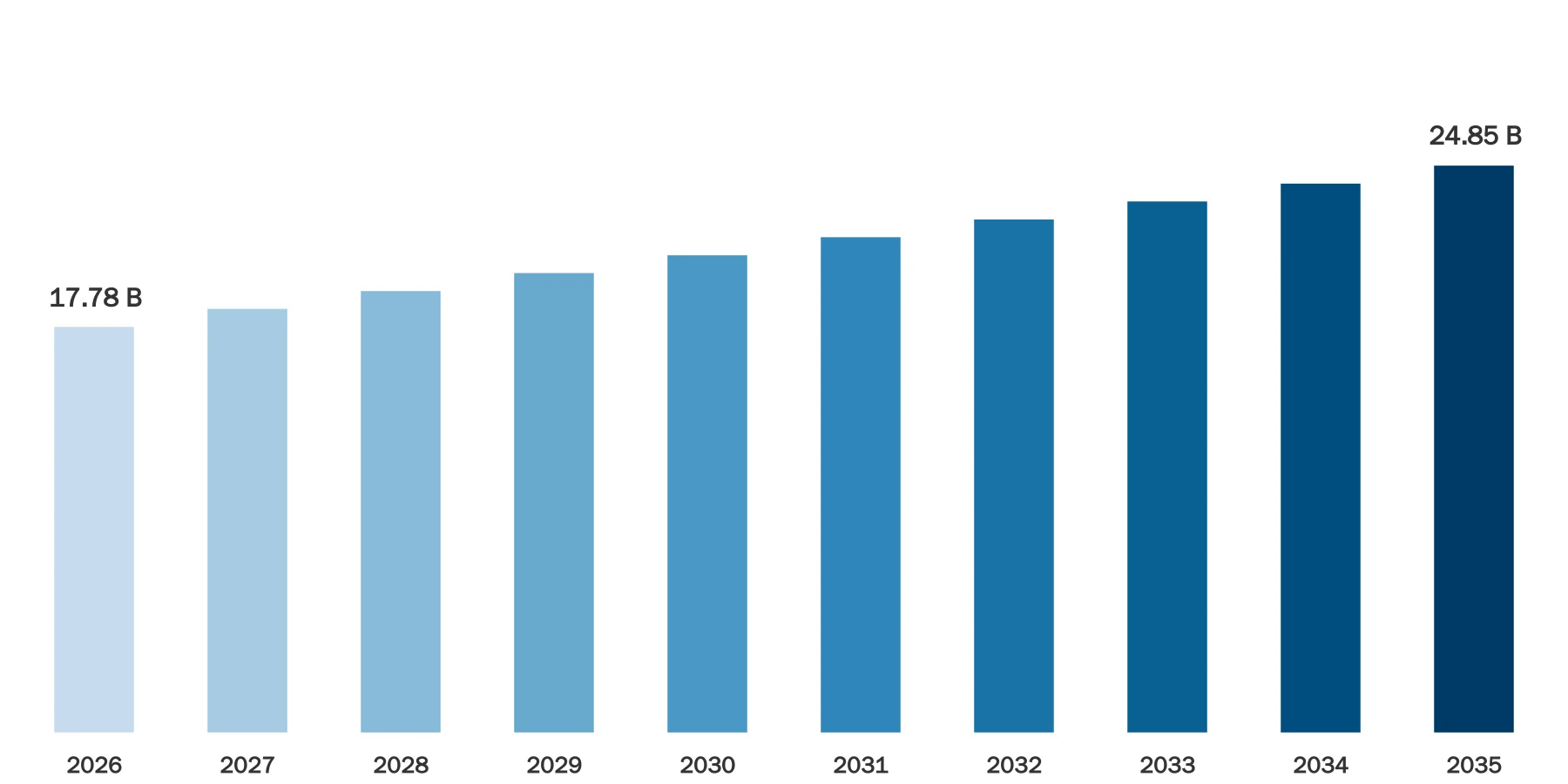
Source: Econ Market Research
Nestled in Hong Kong, the goldfish market is a bustling hub known for its colorful ambiance and kaleidoscope of colors. Offering a wide variety of goldfish breeds, aquatic plants, and decorative accessories, this market has been a sanctuary for tourists and aquatic aficionados since its founding. Since its founding decades ago, the market has transformed from a collection of typical market stalls to an alluring location filled with a multitude of businesses and merchants who specialize in ornamental fish. As one strolls through the market',s winding alleyways, they come across an incredible assortment of goldfish species, from the stately ryukin and elegant oranda to the delicate pearlscale and unusual bubble eye.
Every store includes immaculately maintained tanks that present these marine wonders in all of their beauty, enthralling customers with their vivid colors and unique characteristics. The smell of incense and the soothing sound of water tumbling in elaborate fish tanks add to the market',s atmosphere, making it even more tranquil and engrossing. In addition to having a large assortment of goldfish, the market has a wide range of accessories, such as elaborate Aquarium dé,cor, specialty fish food, and knowledgeable guidance from seasoned sellers. Hong Kong',s rich cultural legacy and its lasting passion for ornamental fishkeeping are testaments to the Goldfish Market, which attracts both seasoned aquarists searching for uncommon breeds and interested tourists appreciating these aquatic jewels.
Market Dynamics
The dedicated sellers who carefully curate their collections and serve a wide range of customers, from seasoned hobbyists to inquisitive visitors, are essential to its vibrancy. These exhibitors, who are frequently well-established family companies, add to the market',s attraction by offering a wide variety of goldfish breeds and aquatic accessories. Seasonal variations and industry trends in ornamental fishkeeping determine market dynamics. Holidays and celebratory seasons see market peaks as demand for ornamental fish symbols of luck and prosperity rises.
In order to address shifting demands, the market also introduces new breeds and accessories in response to shifting customer trends and tastes. The dynamics of the market are also greatly influenced by domestic and foreign tourism. Tourists swarm to the market to take in the vibrant atmosphere and see the kaleidoscope of colors, which adds to its vibrancy. Furthermore, vendors use contemporary lighting, filtration systems, and sustainable practices to appeal to eco-aware customers, which has an impact on the industry. This dynamic combination of custom and adaptability is what makes the goldfish Market survive and provide visitors and aficionados with a constantly changing experience.
Market Drivers
Vendor Expertise and Curation
These suppliers, who are frequently family-run companies that have been around for generations, have an unmatched depth of expertise and love for ornamental fish. Their knowledge goes much beyond simple salesmanship, it includes a thorough comprehension of different goldfish breeds, their distinct qualities, and the nuances of keeping them healthy and vibrant. In this market, curation is a skill that has been carefully developed. Vendors carefully choose and display a wide variety of goldfish varieties, every tank is a work of art that displays a unique range of colors, shapes, and fin configurations. Their carefully chosen collections serve a wide range of customers, from experienced aquarists looking for uncommon breeds to newcomers excited to discover this fascinating aquatic environment.
In addition to demonstrating the vendors', commitment, their knowledge and curation provide visitors with educational resources. Their wisdom, imparted via conversations and mentoring, elevates the whole experience and cultivates a more profound admiration for these decorative animals. This understanding, together with the skillful curation, takes the goldfish market above and beyond a simple marketplace, turning it into a sanctuary where beauty, passion, and knowledge come together to create an enthralling experience for both tourists and devotees.
Technological Integration
Technology innovations are used by aquarium enthusiasts and vendors to maximize goldfish care and presentation. Contemporary filtration systems have become essential for maintaining water quality and providing a comfortable habitat for these sensitive aquatic animals. These devices help to keep the goldfish on exhibit healthy and vibrant in addition to maintaining immaculate tank conditions. Furthermore, creative lighting solutions have changed the atmosphere of the market, improving the fish tanks', visual attractiveness and fostering the health of the goldfish.
For example, LED lighting mimics natural lighting conditions, highlighting the fish',s vibrant colors and complex patterns and enthralling viewers with their stunning visual displays.In addition, vendors are focusing on sustainability-driven practices and using eco-friendly technology that lower energy and water waste. This use of sustainable technology not only addresses environmental issues but also draws in ethical customers looking for enterprises that practice environmental responsibility. Technology has evolved at the goldfish market in a way that harmoniously combines history and innovation, improving the experience for visitors and fans while protecting the decorative fish on exhibit.
Restraints
Government regulations on animal trade and imports
Strict laws enforced by regulatory organizations seek to guarantee moral behavior, protect animals, and stop the spread of alien species. These laws affect the market',s capacity to obtain particular breeds from particular areas. The complicated paperwork, permits, and compliance requirements associated with these restrictions might cause delays and difficulties when importing uncommon or exotic goldfish breeds. An additional layer of restriction is imposed on some species because of their endangered status or conservation concerns.
The range and potential options of the market may be diminished if vendors are subject to prohibitions or limitations regarding the selling or exhibition of specific breeds. Vendors have additional challenges as a result of these policies', dynamic character, which calls for constant adaptation and conformity to shifting standards. The markets adaptability and capacity to meet customer expectations can be hampered by compliance expenses, administrative hassles, and uncertainty about upcoming regulatory changes.
Space and Infrastructure Limitations
The market',s physical boundaries, which are sometimes tucked away in busy metropolitan environments, limit potential growth and make it difficult to add new merchants or improve current stalls. Because of this, sellers are unable to create larger displays or provide a wider variety of goldfish breeds, which restricts the market',s ability to satisfy a wide range of customer preferences. Additionally, the limited space detracts from the entire shopping experience by occasionally creating packed and congested aisles that lower the market',s appeal and turn off potential customers.
Constrained infrastructure, such as obsolete or insufficient facilities, makes it difficult to integrate contemporary amenities like sophisticated filtration systems or ecologically friendly procedures. This constraint makes it more difficult for the market to adjust to changing industry norms and customer demands for a more engaging and ecologically friendly buying experience. In order to overcome these limitations, significant financial and logistical resources must be allocated to modernizing infrastructure and maybe moving to larger spaces.
Opportunities
Expanding product range beyond goldfish breeds
Enhancing the market',s attractiveness as a one-stop shop for both experienced aquarists and casual hobbyists can be accomplished by introducing supplementary Pet Accessories, specialist fishkeeping equipment, and related aquatic products. Aquatic plants, specialized filtration systems, high-quality fish food, elaborate aquarium decorations, and other accessories can improve the market',s value proposition by providing consumers with a wide range of goods to improve their aquatic pastime. In addition, adding instructional materials like books, manuals, or seminars about aquascaping methods, fish maintenance, and sustainable fishkeeping practices might draw in new hobbyists looking for advice and information.
The market can further establish itself as the preferred destination for fishkeeping aficionados of all stripes by developing into a center for ornamental fish acquisition as well as providing an informative and comprehensive experience. The market can further establish itself as the preferred destination for fishkeeping aficionados of all stripes by developing into a center for ornamental fish acquisition as well as providing an informative and comprehensive experience. The market',s client base will grow and engagement will rise as a result of this diversification, which is in line with changing consumer preferences and the trend toward immersive and instructional experiences.
E-commerce and Digital Expansion
Building a strong internet presence allows the market to reach a global audience of aquatic lovers across geographic limits. Customers who might not have access to the physical market can have a smooth buying experience by showcasing the market',s varied variety of goldfish breeds, aquarium accessories, and specialist equipment through an easy-to-use and secure e-commerce platform. Additionally, the market may use technology to interact and educate customers because digital expansion. Live Streaming, lessons, and online forums can create a thriving virtual community that helps customers, no matter where they are in the world, by exchanging experiences, providing professional guidance, and building relationships. In addition to increasing consumer loyalty, this digital interaction establishes the market as a reliable authority in the ornamental fishkeeping industry. Moreover, diversifying revenue streams via online sales reduces reliance on foot traffic and seasonal variations, guaranteeing a more consistent flow of cash.
Segment Overview
By Type
Based on type, the global goldfish market is divided into common goldfish, fancy goldfish. The common goldfish category dominates the market with the largest revenue share in 2023. These goldfish are considered the more traditional and original types. They typically exhibit a sleek, streamlined body shape with a single, undivided tail fin. Common goldfish often have vibrant coloration, ranging from orange and red to yellow and white, and they may feature metallic or calico patterns. They',re known for their hardiness, adaptability to various water conditions, and robust nature, making them suitable for outdoor ponds or spacious aquariums.
In contrast, fancy goldfish represent a group bred for their unique and often exaggerated physical characteristics. They showcase diverse body shapes, including rounder, egg-shaped bodies, or elongated forms, coupled with distinct features like double tails, bulging eyes (as seen in breeds like the bubble eye or celestial Eye), or head growths known as wen (found in breeds like the Oranda or Ranchu). Fancy goldfish boast a wide spectrum of colors and patterns, captivating enthusiasts with their ornate appearances.
By Size
Based on the size, the global goldfish market is categorized into small goldfish, large goldfish. The small goldfish category leads the global goldfish market with the largest revenue share in 2023. This category typically encompasses breeds that remain relatively compact in size throughout their lives. Examples include varieties like the common goldfish, comet, shubunkin, and various other smaller fancy goldfish breeds. These fish tend to grow to a modest size, making them suitable for smaller aquariums or ponds. They',re often favored by hobbyists with limited space or those looking to create community tanks with other smaller fish species. The category of large goldfish comprises breeds that have the potential to attain significant size as they mature. Varieties such as the Ryukin, Oranda, Lionhead, and Fantail fall into this group. These goldfish can develop substantial body mass, longer fins, and prominent features, making them visually striking. Due to their larger size potential, they often require more spacious aquariums or ponds to thrive comfortably.
By Colour
Based on colour, the global goldfish market is segmented into orange goldfish, multicolored goldfish. The orange goldfish segment dominates the goldfish market. This segment includes goldfish breeds predominantly displaying shades of orange as their primary color. Varieties like the common goldfish, comet, and some types of Ryukin often fall into this category. These fish typically exhibit vibrant shades of orange across their bodies, fins, and sometimes with metallic or shimmering scales.
The intensity and variations in the hue of orange can vary among different breeds and individual specimens. In contrast, the multicolored segment encompasses goldfish breeds showcasing a diverse palette of colors beyond solely orange hues. This category includes fish like the Shubunkin, Sarasa Comet, and various fancy goldfish breeds like the Calico Fantail or Panda Butterfly. These goldfish boast a captivating blend of colors, including patches or speckles of orange, white, red, black, and sometimes blue or purple, creating a mosaic-like appearance.
By Distribution Channel
Based on distribution channel, the global goldfish market is divided into pet stores, online marketplaces. The pet stores category dominates the market with the largest revenue share in 2023. Traditional brick-and-mortar pet stores serve as physical hubs where customers can personally engage with and purchase goldfish. These stores offer a hands-on experience, allowing customers to view and select fish in person, assessing their health, coloration, and behavior before making a purchase. Pet stores often provide expert advice and guidance from knowledgeable staff, aiding customers in selecting suitable fish and offering immediate access to supplies, equipment, and accessories needed for goldfish care.
On the other hand, online marketplaces cater to a broader audience by providing a convenient platform for purchasing goldfish from the comfort of one',s home. These platforms offer an extensive selection of goldfish breeds, often showcasing diverse options that might not be readily available in local stores. Customers can browse through a wide range of fish, compare prices, and read reviews before making a purchase. Online marketplaces typically provide shipping options, allowing customers to receive their chosen fish at their doorstep.
Overview by Region
The global goldfish market is categorized into North America, Europe, Asia-Pacific, and the Rest of the World. Asia-Pacific emerged as the leading region, capturing the largest market share in 2023. Goldfish are deeply ingrained in Asian cultures, especially in China and Japan, where they are seen as symbols of abundance, prosperity, and good fortune. Due to the cultural respect accorded to goldfish, there is a considerable demand for these decorative fish, which supports a vibrant business in the area. The appreciation and raising of goldfish dates back to the era of ancient Asian civilizations.
Centuries of experience and breeding technique development have resulted in a variety of distinctive goldfish varieties that are popular among collectors and enthusiasts both locally and globally. Strong infrastructure, such as specialized breeding facilities, wide distribution networks, and a well-established market environment, underpins the ornamental fish trade in the Asia-Pacific area. The region',s dominance is fueled by the renowned goldfish breeding and trading skills of nations like China, Japan, Thailand, and Singapore. The area has a sizable domestic market for ornamental fish thanks to its expanding middle class and vast population. Furthermore, ongoing innovation in breeding methods and the release of new kinds satisfy changing customer tastes, so reinforcing the region',s dominance in the world goldfish industry.
Competitive Landscape
In the global goldfish market, a few major players exert significant market dominance and have established a strong regional presence. These leading companies remain committed to continuous research and development endeavors and actively engage in strategic growth initiatives, including product development, launches, joint ventures, and partnerships. By pursuing these strategies, these companies aim to strengthen their market position, expand their customer base, and capture a substantial share of the market.
Key Players
Pool Fisheries
Blue Ridge Fish Hatchery
Arkansas Farm Bureau
Hazorea Aquatics
Oasis Fish Farm
Aqua Leisure
Imperial Tropicals
BioAquatix
Captive Bred
Shanghai Wanjin Ornamental Fish Farm
Liuji Goldfish Farm
Thailand Goldfish Farm
Dandy Orandas
Zhao’s Fancies
Recent Developments
In July 2024, In order to fulfill rising consumer demand, Campbell Soup Company stated that it will be investing about $160 million in its Richmond, Utah, manufacturing site to enhance Goldfish cracker output. The new line will create 1,500 Goldfish each second, or over 5 million Goldfish per hour, a 50% increase in the bakery',s current output. Building an on-site flour mill that will be independently owned and run is another aspect of the plan.
Goldfish Market Report Scope & Segmentation
| Attributes | Details |
|---|---|
Market Size (Current) | US$ 17.78 Billion in 2026 |
Market Size (Forecast) | US$ 24.85 Billion in 2035 |
Growth Rate | CAGR of 3.79% from 2026 to 2035 |
Forecast Period | 2026 – 2035 |
Base Year | 2025 |
Historical Data Available | Yes |
Regional Scope | Global |
Segments Covered | By Type
By Application
By Distribution Channel
|
Frequently Asked Questions
Common questions about this report
The study period covers historical insights and forecast projections for the period 2026-2035.
About the Author
Market research expert with years of industry experience

Dipali Bhingare serves as the Market Research Director at Econ Market Research. With a focus on translating complex global economic shifts into actionable business intelligence, she oversees the strategic direction of comprehensive market studies. Her work empowers organizations to navigate volatile industries through data-driven forecasting and deep-dive competitive analysis.
Related Reports
Explore more market insights from the same category