

Genset Market
Genset Market Size, Share, Trends, Growth, and Industry Analysis, By Fuel (Diesel, Gas, Biofuels, Gasoline, Fuel Cell, Producer Gas, Others), By End Use (Industrial, Commercial, Residential), By Application (Standby, Prime & Continuous, Peak Shaving), By Portability (Portable, Stationary), By Power Rating (Below 100 kW, 100 to 2000 kW, Above 2000 kW), Regional Analysis and Forecast Period 2026-2035
Market Overview
As per Econ Market Research analysis, the Global Genset Market valuation stood at US$ 53.9 Billion in 2026 and is expected to reach US$ 97.65 Billion by 2035, growing at a steady CAGR of 6.0% from 2026 to 2035. 2025 serves as the base year.
Genset Market Size 2025-2035 (USD Billion)

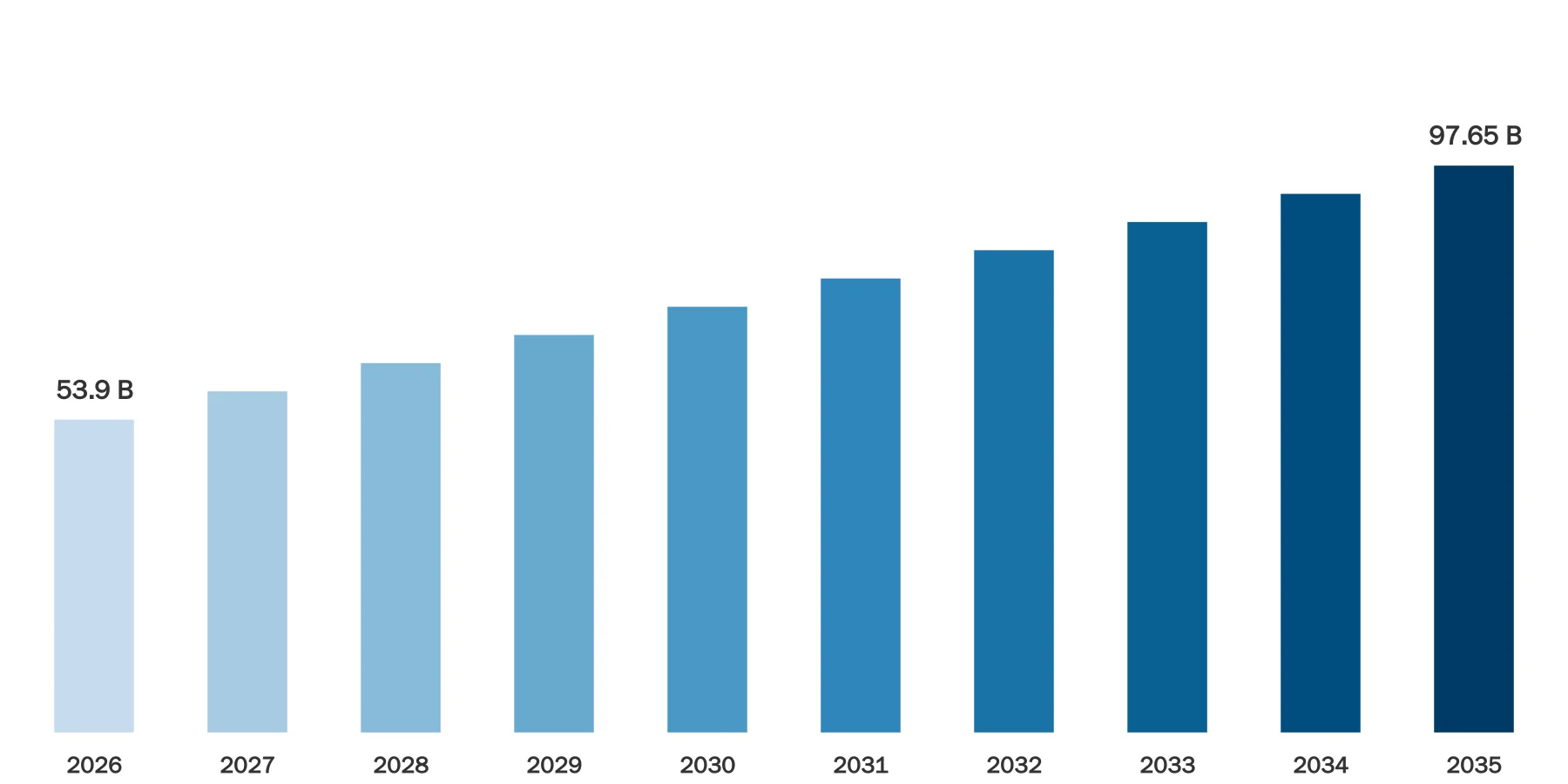
Source: Econ Market Research
The genset market report highlights that more than 25 million generator sets are operational globally across residential, commercial, and industrial sectors, with over 6 million units installed annually. Diesel gensets account for nearly 70% of total installed capacity, while gas gensets contribute approximately 20%, and alternative fuel gensets represent around 10%. Industrial facilities consume over 45% of genset output, followed by commercial infrastructure at 30% and residential applications at 25%. Power outages exceeding 10 hours per year in developing regions drive adoption, while grid reliability exceeding 99.9% uptime in developed regions still supports standby genset demand in critical sectors.
In the USA genset market analysis, over 4.5 million generators are deployed, with approximately 1.2 million standby units installed in residential properties. Diesel gensets represent about 60% of industrial backup systems, while natural gas gensets account for nearly 35% of new installations. Data centers alone account for over 15% of total genset demand, with hyperscale facilities deploying units above 2 MW capacity. Severe weather events averaging 15–20 major outages annually drive increased adoption, and commercial buildings maintain backup power compliance rates above 80% under local regulatory standards.
Market Latest Trends
The genset market trends indicate increasing deployment of hybrid generator systems, with hybrid gensets accounting for nearly 12% of new installations in 2025 compared to 5% in 2020. Integration with battery storage systems has grown by over 35% in unit installations, reducing fuel consumption by approximately 20–30% per cycle. Gas-powered gensets are witnessing rising adoption, particularly in urban regions, where emissions regulations have reduced diesel usage by nearly 10% over 5 years.
Digital monitoring systems are now integrated into over 65% of newly manufactured gensets, enabling predictive maintenance and reducing downtime by up to 25%. Remote monitoring platforms track performance metrics across more than 500 parameters per unit, including fuel efficiency, load capacity, and emission levels. In telecom infrastructure, genset penetration exceeds 90% of tower installations, supporting over 1.5 million telecom towers globally.
Additionally, portable gensets below 10 kVA capacity have seen a 40% increase in demand due to rising residential adoption. Industrial sectors are shifting toward high-capacity gensets above 750 kVA, which represent nearly 35% of industrial installations, particularly in mining, oil & gas, and manufacturing sectors requiring uninterrupted power supply exceeding 24 hours per day.
Market Dynamics
DRIVER
Increasing Demand for Uninterrupted Power Supply
The genset market growth is primarily driven by increasing demand for uninterrupted power supply across critical sectors, with over 70% of hospitals globally relying on gensets for backup power systems. Data centers require uptime exceeding 99.99%, resulting in deployment of multiple redundant gensets per facility, often ranging between 2–10 units per site. Industrial plants experience productivity losses exceeding 15% during outages, prompting installation of gensets with capacities above 500 kVA. Urbanization has led to over 55% of the global population living in cities, increasing electricity consumption by more than 30% over the last decade, thereby intensifying reliance on backup power systems.
RESTRAINT
Environmental Regulations and Emission Standards
Stringent emission regulations have reduced diesel genset adoption in several regions, with nitrogen oxide (NOx) emission limits reduced by nearly 40% under recent regulatory frameworks. Compliance costs have increased by approximately 15–20% per unit, particularly for gensets above 300 kVA capacity. Noise pollution restrictions limit genset operation to below 75 dB in residential areas, requiring additional soundproofing investments. Furthermore, urban areas have seen a 12% decline in diesel genset installations due to environmental restrictions, while alternative energy solutions such as solar and battery storage systems have grown by over 25% in adoption rates.
OPPORTUNITY
Expansion of Data Centers and Infrastructure Projects
Global Data Center capacity has exceeded 9000 facilities, each requiring backup power systems capable of supporting loads above 1 MW, creating strong demand for high-capacity gensets. Infrastructure projects such as highways, railways, and smart cities involve over 50% reliance on temporary power solutions, driving genset demand in construction activities. Renewable energy integration also creates opportunities, as hybrid gensets reduce fuel usage by 25% and extend operational life by over 30%. Emerging markets in Asia and Africa account for over 60% of new infrastructure investments, significantly boosting genset deployment.
CHALLENGES
Rising Fuel Costs and Operational Expenses
Fuel costs account for nearly 60–70% of total genset operating expenses, with diesel price fluctuations exceeding 20% annually in several regions. Maintenance costs average around 5–10% of equipment cost per year, particularly for units operating more than 3000 hours annually. Additionally, fuel storage and logistics require compliance with safety regulations, increasing operational complexity by approximately 15%. In remote areas, fuel transportation costs can increase operational expenses by over 25%, limiting the feasibility of genset deployment compared to renewable alternatives.
SWOT Analysis
Strengths
High reliability with uptime exceeding 99% in standby operations
Wide capacity range from 1 kVA to above 3000 kVA
Rapid response time under 10 seconds for backup activation
Installed base exceeding 25 million units globally
Weaknesses
Fuel dependency exceeding 70% on fossil fuels
Emissions contributing to over 15% of localized pollution in urban zones
Maintenance intervals required every 250–500 hours
Noise levels ranging between 70–100 dB
Opportunities
Hybrid genset adoption growing by over 35% in installations
Expansion of telecom towers exceeding 1.5 million units globally
Infrastructure projects increasing by over 50% in developing regions
Demand for gas gensets rising by 20% in urban markets
Threats
Renewable energy adoption increasing by over 25% annually
Regulatory restrictions reducing diesel genset usage by 10–15%
Battery storage costs declining by over 30% in 5 years
Grid reliability improvements exceeding 99.9% uptime in developed markets
Segmentation Analysis
The genset market segmentation includes multiple fuel types and applications, with diesel gensets dominating approximately 70% market share, followed by gas at 20%, and others at 10%. By application, standby gensets account for nearly 50% of installations, prime and continuous gensets represent 35%, and peak shaving applications contribute around 15%.
By Type
Diesel
Diesel gensets dominate the genset market share with approximately 70% of installations globally, due to their durability and ability to operate continuously for over 24 hours. Units above 500 kVA are widely used in industrial sectors, accounting for nearly 60% of diesel genset demand. Fuel efficiency improvements have reduced consumption by 10–15% per kWh, while maintenance cycles occur every 250–300 hours.
Gas
Gas gensets account for around 20% market share, with increasing adoption in urban areas due to emissions compliance. Natural gas gensets emit nearly 25% less CO2 compared to diesel units and operate at noise levels below 70 dB. Industrial facilities utilize gas gensets for continuous operations exceeding 5000 hours annually, especially in regions with pipeline gas availability.
Biofuels
Biofuel gensets represent approximately 3–5% of the market, with growing interest in sustainable energy solutions. These gensets reduce carbon emissions by nearly 40% compared to diesel, and are used in sectors aiming for carbon neutrality. Adoption has increased by over 15% annually in agricultural and remote applications.
Gasoline
Gasoline gensets contribute about 3–4% market share, primarily in portable applications below 10 kVA capacity. Residential users account for over 60% of gasoline genset demand, with average runtime below 8 hours per day.
Fuel Cell
Fuel cell gensets hold less than 2% market share, but adoption is increasing in telecom and data center applications. These systems offer efficiency levels above 60%, compared to 30–40% for traditional gensets.
Producer Gas
Producer gas gensets account for nearly 2–3% market share, primarily used in rural and Biomass-rich regions. These systems convert agricultural waste into fuel, supporting over 5000 installations globally.
Others
Other genset types, including solar hybrid systems, represent approximately 3% of installations, with integration increasing by over 20% annually.
By Application
Standby
Standby gensets dominate with nearly 50% market share, used in hospitals, data centers, and residential buildings. Activation time is typically below 10 seconds, ensuring uninterrupted power during outages lasting more than 1 hour.
Prime & Continuous
Prime and continuous gensets account for around 35% of installations, operating for more than 8–24 hours daily in off-grid locations. Mining and construction sectors contribute over 40% of this segment’s demand.
Peak Shaving
Peak shaving applications represent approximately 15% of the market, used to reduce electricity costs during high-demand periods exceeding 4–6 hours daily. Commercial facilities utilize gensets to manage load above 500 kW demand thresholds.
Regional Analysis
The genset market outlook shows strong regional variation, with Asia-Pacific accounting for over 40% of global installations, North America at 25%, Europe at 20%, and Middle East & Africa at 15%.
North America
North America holds approximately 25% market share, with over 5 million installed gensets. The USA accounts for nearly 80% of regional demand, driven by data centers exceeding 2000 facilities. Residential standby genset installations have increased by 30% in 5 years, with over 1 million homes equipped. Industrial sectors utilize gensets above 500 kVA, representing nearly 60% of installations.
Europe
Europe contributes around 20% market share, with strong adoption of gas gensets accounting for nearly 40% of new installations. Regulatory compliance has reduced diesel genset usage by approximately 15%, while hybrid systems have increased by over 25%. Countries such as Germany and the UK maintain backup power compliance rates above 85% in commercial buildings.
Asia-Pacific
Asia-Pacific dominates with over 40% market share, supported by rapid urbanization exceeding 50% population growth in cities. India and China collectively account for more than 60% of regional demand, with over 10 million gensets installed. Power outages exceeding 20 hours annually in certain regions drive adoption, while industrial expansion contributes to over 45% of genset demand.
Middle East & Africa
Middle East & Africa hold approximately 15% market share, with diesel gensets accounting for over 75% of installations. Power shortages exceeding 50 hours annually in some regions drive demand. Oil & gas sectors utilize gensets above 1 MW capacity, representing nearly 35% of regional demand.
Competitive Landscape
The genset market analysis shows a competitive landscape dominated by global manufacturers, with the top 5 companies controlling over 50% market share. Leading players offer gensets ranging from 1 kVA to 3000 kVA, catering to diverse applications. Production capacities exceed 500,000 units annually for major manufacturers, with global distribution networks spanning over 150 countries. Research and development investments account for approximately 5–8% of operational budgets, focusing on fuel efficiency improvements of up to 15% and emission reductions of nearly 20%.
Strategic partnerships and acquisitions have increased by over 25% in the last 3 years, enabling companies to expand product portfolios and geographic presence. Digital integration has become a key differentiator, with over 60% of new gensets equipped with IoT-enabled monitoring systems. Aftermarket services contribute significantly, with maintenance contracts covering over 70% of installed base units.
List of Top Genset Companies
Caterpillar Inc.
Cummins Inc.
Generac Power Systems, Inc.
Discovery Energy, LLC
Rolls-Royce plc
Doosan Group
Atlas Copco
Himoinsa S.L. (HIMOINSA)
Briggs & Stratton Corporation
Aksa Power Generation
Top Two Companies with the Highest Market Share
Caterpillar – holds approximately 15–18% market share, with production exceeding 200,000 units annually and presence in over 180 countries.
Cummins Inc – accounts for around 12–15% market share, offering gensets across 50+ product categories with installed base exceeding 1 million units globally.
Market Investment Outlook
The genset market opportunities are expanding with infrastructure investments exceeding 50% growth in developing regions, particularly in Asia-Pacific and Africa. Data center investments have increased by over 30% annually, requiring backup power systems above 1 MW capacity per facility. Renewable hybrid systems are attracting investments, with integration projects increasing by 35% globally.
Manufacturing facilities are expanding production capacities by over 20%, with new plants capable of producing more than 100,000 units annually. Investments in gas gensets have increased by nearly 25%, driven by lower emissions and regulatory compliance. Government initiatives supporting rural electrification involve deployment of over 500,000 gensets in off-grid areas.
Private sector investments in telecom infrastructure exceed $50 billion equivalent annually, with gensets supporting more than 90% of tower installations. Additionally, mining and oil & gas projects require gensets above 500 kVA, accounting for nearly 40% of industrial investments.
New Product Development
New product development in the genset market focuses on efficiency, digitalization, and sustainability, with over 60% of manufacturers introducing smart gensets equipped with IoT connectivity. Advanced gensets achieve fuel efficiency improvements of 10–20%, while emission reductions reach nearly 25% through improved combustion technologies.
Hybrid gensets combining solar and battery storage systems have increased by over 30% in new product launches, enabling fuel savings of up to 40%. Portable gensets below 10 kVA have been redesigned with weight reductions of 15% and noise levels below 65 dB. High-capacity gensets above 1000 kVA now feature modular designs, allowing scalability by adding multiple units.
Additionally, hydrogen-based gensets are being tested, with pilot projects achieving efficiency levels above 50% and emission reductions close to 90%. Digital platforms enable real-time monitoring of over 500 performance parameters, improving maintenance efficiency by 20%.
Recent Developments
In 2023, a major manufacturer launched a 2000 kVA hybrid genset, reducing fuel consumption by 30%.
In 2024, a leading company deployed over 10,000 smart gensets with IoT monitoring systems across multiple regions.
In 2023, a new gas genset series achieved emission reductions of 25% compared to previous models.
In 2025, a manufacturer expanded production capacity by 50,000 units annually through a new facility.
In 2024, hydrogen-powered genset prototypes demonstrated efficiency above 50% and reduced emissions by nearly 90%.
Genset Market Report Scope & Segmentation
| Attributes | Details |
|---|---|
Market Size (Current) | US$ 53.9 Billion in 2026 |
Market Size (Forecast) | US$ 97.65 Billion in 2035 |
Growth Rate | CAGR of 6.0% from 2026 to 2035 |
Forecast Period | 2026 – 2035 |
Base Year | 2025 |
Historical Data Available | Yes |
Regional Scope | Global |
Segments Covered | By Fuel
By End Use
By Application
By Portability
By Power Rating
|
Frequently Asked Questions
Common questions about this report
The study period covers historical insights and forecast projections for the period 2026-2035.
About the Author
Market research expert with years of industry experience

Related Reports
Explore more market insights from the same category