

Gas Leak Detector Market
Gas Leak Detector Market Size, Share, Trends, Growth, and Industry Analysis, By Product Type (Portable Gas Leak Detectors, Fixed Gas Leak Detectors), By Technology (Electrochemical, Infrared, Semiconductor/MOS, Ultrasonic), By Application (Industrial, Commercial, Residential), Regional Analysis and Forecast Period 2026-2035
Market Overview
As per Econ Market Research analysis, Global Gas Leak Detector Market size stood at US$ 3.24 Billion in 2026 and is projected to reach US$ 4.08 Billion by 2035, growing at a CAGR of 2.6% over the forecast period 2026–2035. 2025 is taken as the base year.
Gas Leak Detector Market Size 2025-2035 (USD Billion)

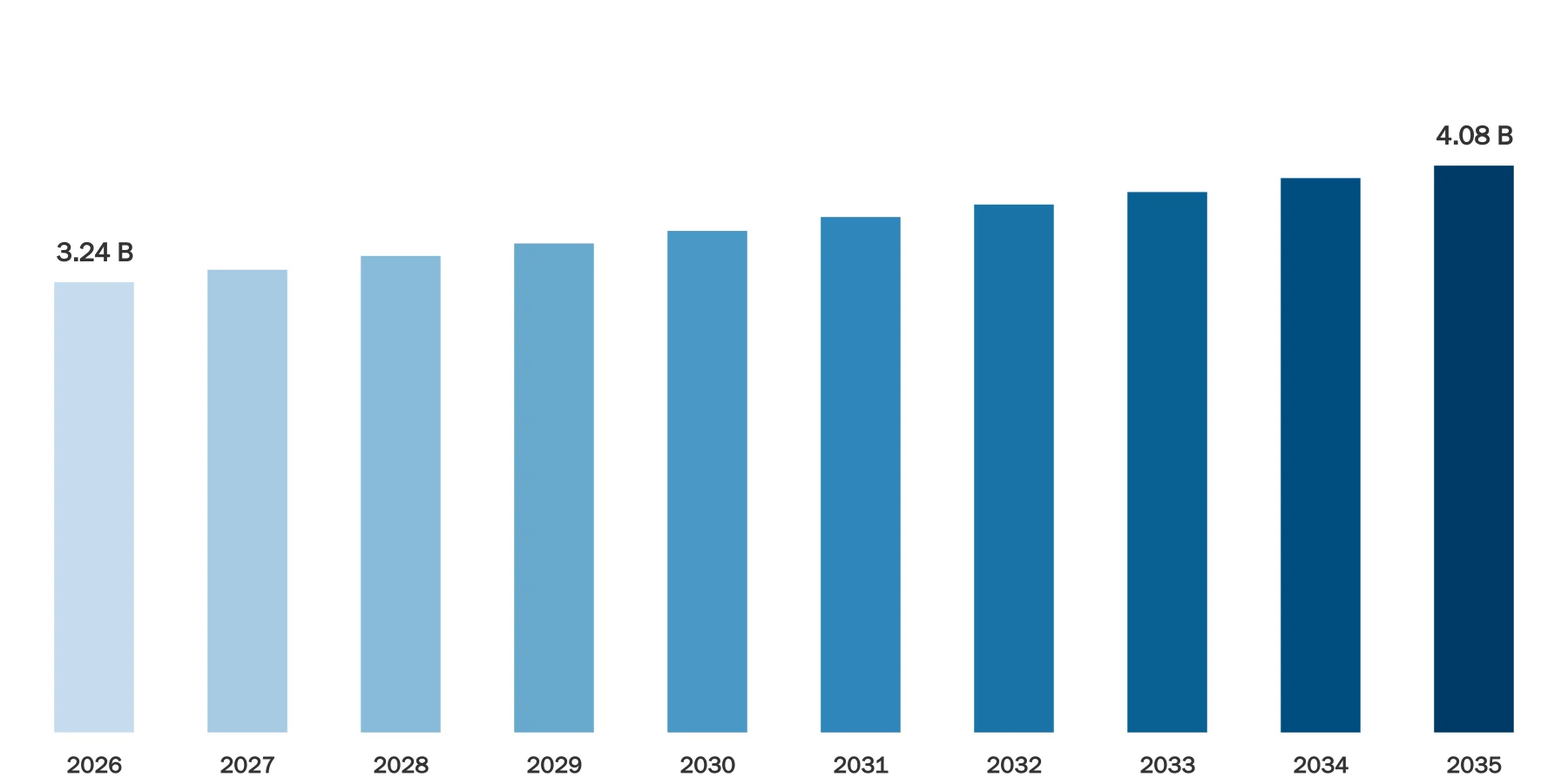
Source: Econ Market Research
Devices known as gas leak detectors are made to detect and notify people or systems when dangerous gases are present in the surrounding air. Because they quickly identify and contain gas leaks, these detectors are essential to maintaining the security of employees, buildings, and the neighbourhood. There are many different types of detection technologies available on the market, such as Semiconductor, infrared, ultrasonic, and electrochemical sensors, each designed to identify a particular kind of gas.
Gas Leak Detector Dynamics
Stringent safety regulations imposed by governments and regulatory bodies worldwide are a primary driver, compelling industries to invest in sophisticated gas detection systems to safeguard personnel, assets, and the environment. The increasing frequency of industrial accidents and the rising awareness of the potential catastrophic consequences of gas leaks have heightened the demand for reliable detection solutions.
The dynamics of the market are being significantly shaped by technological advancements. Gas leak detection systems have been completely transformed by the incorporation of smart technologies, including wireless networking, Data Analytics, and Internet of Things-enabled sensors. These developments improve gas detection',s overall efficacy and efficiency by providing real-time monitoring, prompt alerts, and predictive analysis. Furthermore, the market is witnessing a shift towards portable and handheld gas detectors, providing flexibility and ease of use in various applications, from confined spaces to outdoor environments.
Gas Leak Detector Drivers
Stringent Regulatory Standards
The implementation of stringent safety regulations and standards by governments and regulatory bodies is a key driver for the gas leak detector market. Industries, particularly in sectors such as oil and gas, petrochemicals, and manufacturing, are mandated to adhere to strict safety protocols to mitigate the risks associated with gas leaks. Compliance with these regulations drives the adoption of advanced gas detection systems, fostering market growth. As governments worldwide continue to prioritize workplace safety and environmental protection, the demand for gas leak detectors is expected to rise, creating a conducive environment for market expansion.
Technological Advancements
Rapid advancements in technology, including the integration of IoT, wireless connectivity, and data analytics, are driving innovation in gas leak detection systems. Smart sensors and connected devices enable real-time monitoring, immediate alerts, and predictive maintenance, enhancing the overall efficiency of gas detection solutions. The development of portable and handheld detectors with improved sensitivity and accuracy further augments the market. As technology continues to evolve, market players are investing in research and development to stay at the forefront of innovation, meeting the growing demand for sophisticated and reliable gas leak detection solutions across diverse industries.
Restraints:
The high upfront costs of installing and implementing sophisticated detection systems are a major barrier to the market for gas leak detectors. The initial outlay covers staff training, installation costs, and the acquisition of specialised equipment. This cost factor may limit the widespread adoption of gas leak detectors for smaller businesses or industries with tighter budgets. To address this challenge, manufacturers and service providers should investigate financially viable solutions or provide flexible financing options in order to increase the accessibility of these vital safety technologies.
Lack of Skilled Workforce
The effective operation and maintenance of gas leak detection systems require a skilled workforce capable of understanding the complexities of these advanced technologies. The shortage of trained professionals in the field of gas detection can impede the proper utilization of these systems, limiting their effectiveness. To overcome this restraint, industry stakeholders need to invest in training programs and educational initiatives to develop a skilled workforce capable of deploying, managing, and maintaining gas leak detection systems, ensuring their optimal performance.
Opportunities:
Growing Adoption of Natural Gas
The demand for clean and sustainable energy sources, especially natural gas, is growing globally, which offers the gas leak detector market a sizable window of opportunity. The need for detectors made expressly to find leaks in natural gas pipelines and facilities is growing as the use of natural gas spreads across a range of industries, including transportation and power generation. To meet the changing needs of the energy sector, market participants can take advantage of this opportunity by creating specialised detectors for methane and other gases connected to natural gas infrastructure.
Segment Overview
By Product Type
Gas leak detectors are categorized into various product types, each employing distinct technologies to identify and measure the presence of gases in different environments. The electrochemical segment utilizes chemical reactions to generate electrical currents, particularly effective for detecting toxic gases. Photo-ionization detectors employ ultraviolet light to ionize gas molecules, offering sensitivity to a wide range of volatile organic compounds. Infrared point detectors utilize infrared sensors to identify specific gas types based on their absorption of infrared radiation. Optical detectors rely on light beams to detect gas concentrations, while ultrasonic detectors use sound waves to identify leaks by detecting changes in the frequency of transmitted signals.
By Installation
Gas leak detectors are categorised in the installation section according to how they are installed, with fixed and portable installations being distinguished. In certain places, like manufacturing plants, industrial facilities, or vital infrastructure, fixed detectors are installed permanently. These systems provide round-the-clock surveillance and prompt alerts by continuously scanning specified areas for possible gas leaks.
Conversely, portable detectors provide users with flexibility by enabling them to move the device to various locations for real-time gas detection. These portable gadgets are especially helpful in emergency response scenarios, regular inspections, and cramped areas. The type of application, the amount of mobility needed, and the degree of continuous monitoring required for efficient gas leak detection all influence the decision between fixed and portable installations.
By Application
Applications for gas leak detectors are varied, and the division of applications shows the range of contexts in which these tools are essential. Gas leak detectors are used in the residential sector to improve home safety by keeping an eye out for possible natural gas or other hazardous gas leaks. These detectors are essential to the commercial and industrial sectors for guaranteeing the security of employees, buildings, and neighbouring communities.
Gas leak detection systems are used by the oil and gas, manufacturing, and chemical processing industries to avoid mishaps, adhere to safety rules, and safeguard important resources. The differentiation based on application emphasises how versatile gas leak detectors are in various contexts and how crucial they are for protecting people and property in both residential and commercial settings.
Gas Leak Detector Overview by Region
North America, with its stringent safety regulations and a strong emphasis on workplace safety, is a key player in the market. The region experiences significant demand for gas leak detectors, especially in industries like oil and gas, where the detection of hydrocarbon gases is paramount. Europe follows suit, with a mature industrial landscape and a proactive approach toward implementing advanced safety measures. Both North America and Europe witness a notable presence of established market players investing in research and development to stay ahead in technological innovation.
In the Asia-Pacific region, rapid industrialization, coupled with increasing awareness of safety standards, is driving the demand for gas leak detectors. Growing economies, such as China and India, contribute substantially to the market, given the expansion of manufacturing and infrastructure development. The Asia-Pacific market is characterized by a mix of established global players and emerging local manufacturers catering to the diverse needs of industries in the region.
Gas Leak Detector Market Competitive Landscape
Leading companies, such as ABB Ltd., Bacharach, Emerson Electric and General Electric maintain a strong market presence with extensive product portfolios that encompass various detection technologies. These industry giants leverage their global reach, brand recognition, and comprehensive service offerings to cater to a diverse range of industries, including oil and gas, manufacturing, and residential applications. Strategic collaborations, mergers, and acquisitions are common strategies employed by these key players to expand their product offerings, enhance technological capabilities, and strengthen their market positions.
The market is seeing the rise of creative start-ups and niche players that focus on particular detection technologies or application areas in addition to well-established players. These businesses frequently concentrate on offering affordable solutions, taking advantage of developments in sensor technologies, and focusing on niche markets with particular needs. The competitive environment is ever-changing as new players consistently enter the market and bring cutting-edge technologies like IoT integration and wireless connectivity to satisfy the growing need for smarter and more effective gas leak detection systems.
Gas Leak Detector Market Leading Companies:
MSA Safety Inc.
3M Co.
Danfoss A/S
Honeywell International Inc.
Drä,gerwerk AG &, Co. KGaA
Emerson Electric Co.
Yokogawa Electric Corporation
RAE Systems (a subsidiary of Honeywell)
Scott Safety (a subsidiary of 3M)
Gas Leak Detector Recent Developments
May 2023, ION Science has recently introduced the Panther gas leak detector, featuring advanced capabilities and double the sensitivity of its forerunner, the GasCheck G. This enhanced sensitivity equips the Panther to offer superior versatility and precision in the gas leak detection sector.
Oct 2023, Sensata Technologies unveiled the Sensata ResonixTM RGD sensor today, marking the introduction of the first leak detection sensor to attain UL certification for various A2L refrigerant gases employed in heating, ventilation, and air conditioning (HVAC) systems. These innovative leak detection sensors assist HVAC manufacturers in shifting to refrigerants that have a reduced impact on global warming.
Gas Leak Detector Report Segmentation
Gas Leak Detector Market Report Scope & Segmentation
| Attributes | Details |
|---|---|
Market Size (Current) | US$ 3.24 Billion in 2026 |
Market Size (Forecast) | US$ 4.08 Billion in 2035 |
Growth Rate | CAGR of 2.6% from 2026 to 2035 |
Forecast Period | 2026 – 2035 |
Base Year | 2025 |
Historical Data Available | Yes |
Regional Scope | Global |
Segments Covered | By Product Type
By Technology
By Application
|
Frequently Asked Questions
Common questions about this report
The study period covers historical insights and forecast projections for the period 2026-2035.
About the Author
Market research expert with years of industry experience

Dipali Bhingare serves as the Market Research Director at Econ Market Research. With a focus on translating complex global economic shifts into actionable business intelligence, she oversees the strategic direction of comprehensive market studies. Her work empowers organizations to navigate volatile industries through data-driven forecasting and deep-dive competitive analysis.
Related Reports
Explore more market insights from the same category