

Freight Forwarding Market
Freight Forwarding Market Size, Share, Trends, Growth, and Industry Analysis, By Mode of Transport (Air Freight, Ocean Freight, Road Freight, Rail Freight), By Customer Type (B2B, B2C), By Service (Transportation andamp; Warehousing, Packaging andamp; Documentation, Value-added Services), Regional Analysis and Forecast Period 2026-2035
Freight Forwarding Market Overview
As per Econ Market Research analysis, the Global Freight Forwarding Market generated revenue of US$ 217.71 Billion in 2026 and is forecast to achieve US$ 342.31 Billion by 2035, at a CAGR of 5.1% during the study period 2026–2035. The base year considered is 2025.
Freight Forwarding Market Size 2025-2035 (USD Billion)

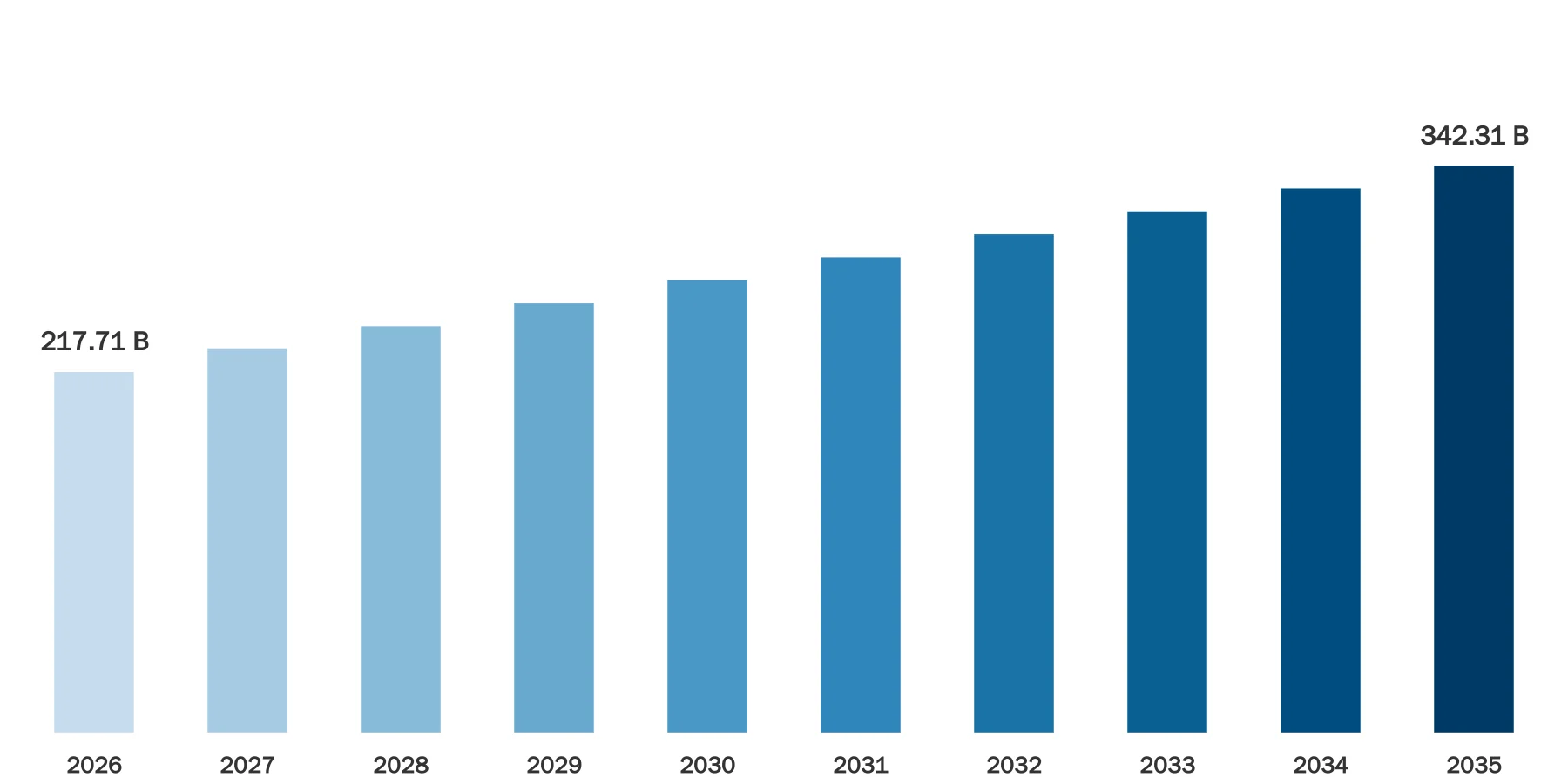
Source: Econ Market Research
The market for freight forwarding is essential to international trade because it acts as a bridge that makes it easier for goods to go across borders and continents. It acts as the conductor, overseeing the complex logistics necessary for the safe and effective transportation of cargo. The architects of this process are freight forwarders, who use their knowledge to manage paperwork, choose the best carriers, optimize routes, and negotiate the intricacies of customs laws.
The market has experienced significant expansion in recent times, driven by the expansion of global trade, technology breakthroughs, and changing customer needs. In order to improve consumer experiences and streamline operations, businesses in this industry are constantly innovating and integrating digital solutions, AI-driven analytics, and sustainable practices. The dynamic competitive scene, which has both well-established companies and up-and-coming entrepreneurs fighting for market share, encourages innovation and teamwork. With globalization still on the rise and supply chain dynamics always changing, freight forwarding appears to be set for continued growth.
Market Dynamics
One of the main forces driving the need for effective cross-border commodities transportation is still globalization. The industry is still undergoing a technological revolution, with digitalization being a major factor. Process optimization, increased transparency, and risk mitigation are being achieved in supply chains through automation, AI-driven analytics, and blockchain solutions. Further driving the demand for increased flexibility, speed, and sustainability in freight operations are shifting consumer expectations and habits.
The industry changes to meet the needs of accelerated shipping and last-mile delivery difficulties as e-commerce grows. Trade patterns, carrier capabilities, and price structures are impacted by market forces such as geopolitical conflicts, economic volatility, and regulatory changes. Environmental concerns also encourage the adoption of greener technologies and sustainable logistical systems by driving a move toward eco-friendly activities. The mix of well-established freight forwarding behemoths, nimble, tech-driven startups, and niche competitors in the market drives competition and fosters innovation. To flourish in a constantly changing environment, firms must possess technological capability, agility, and a clear awareness of current market trends to navigate these dynamics successfully.
Market Drivers
Globalization and International Trade Expansion
The promotion of interconnection among economies through globalization results in a rise in cross-border trade activities. Efficient freight forwarding services are in high demand as firms venture into markets outside of their home country. This factor increases the demand for efficient logistics solutions that enable the transportation of commodities across various geographical locations. This effect is amplified by the increase of international trade, which is driven by rising economies and the digital economy.
Trade patterns have been completely transformed by the rise of e-commerce in particular, necessitating the development of flexible and responsive logistics networks that can manage the intricacies of international supply chains. Free trade agreements and international cooperation have also increased trade volume, which calls for advanced freight forwarding techniques to manage various regulatory environments and maximize shipping lanes. In addition to increasing demand for freight services, globalization and rising international trade also serve as catalysts for industry innovation, promoting the incorporation of sustainable practices and technology to satisfy the changing demands of a globally interconnected economy.
Changing Consumer Expectations and E-commerce Boom
Consumer preferences which are defined by a need for speed, transparency, and convenience&mdash,have been significantly impacted by the growth of e-commerce. Online retail',s rise has changed consumer behavior, which has led to an increase in tiny package shipments and put tremendous pressure on logistics networks to deliver goods reliably, quickly, and frequently with free or expedited shipping. This change has forced freight forwarders to innovate and adapt, rethinking conventional supply chain models to meet the demands of direct-to-consumer shipments and the difficulties associated with last-mile delivery.
Additionally, there is a growing need for cross-border shipping due to the expansion of online marketplaces and the globalization of retail, which calls for flexible freight solutions that can handle global logistics with ease. Meeting the changing expectations established by the e-commerce sector requires adaptable, tech-driven logistics systems that cater to individual consumers and provide real-time tracking and customizable delivery alternatives. In order to satisfy the ever-increasing demands of online consumers, this driver not only modifies operational tactics but also encourages the integration of cutting-edge technologies.
Restraints:
Cyber Security and Data Privacy Concerns
Due to its growing reliance on cloud-based software, digital platforms, and network connectivity, the industry is more susceptible to data breaches and cyberattacks. Sensitive data, such as cargo details, customer information, financial transactions, and supply chain operations, are exchanged during freight forwarding. Businesses in this industry risk serious interruptions, monetary losses, and harm to their reputations in the event of a cybersecurity breach. Furthermore, the industry is more complex and vulnerable to cyberattacks because of its linked nature, which involves several parties and cross-border activities.
Stricter data privacy regulatory frameworks, like GDPR, and changing data protection laws around the world make compliance more difficult and need for strict data management procedures and strong security measures. Operating budgets are further strained by the cost of putting advanced cybersecurity measures into place and keeping them up to date, especially for smaller freight forwarding companies.
Infrastructure Limitations and Congestion
The seamless movement of commodities is hampered by inadequate transportation infrastructure, which includes ports, highways, and rail networks, leading to bottlenecks and delays. Due to obsolete infrastructure or insufficient capacity, ports which are vital nodes in the supply chain&mdash,frequently experience congestion, which causes vessel lineups and longer dwell periods for goods. Freight forwarders and their clients suffer operating disruptions, increased costs, and longer lead times as a result of these inefficiencies. Moreover, antiquated or insufficient transportation networks worsen traffic, particularly in cities or important transit corridors, which affects the timely transfer of products between different modes of transportation.
Due to longer wait times and less effective routes, these restrictions not only reduce operating efficiency but also raise carbon emissions, which is concerning for the environment. To overcome these limitations, large sums of money must be spent on infrastructure development, modernization, and strategic planning in order to reduce traffic jams, increase capacity, and improve transportation systems. Governments, businesses, and other logistics players must work together to overcome these obstacles and guarantee a more efficient and seamless movement of commodities in the freight forwarding industry.
Opportunities:
E-commerce and Last-Mile Delivery Solutions
Last-mile delivery services that are both flexible and efficient are in high demand as more and more customers choose to purchase online. This demand goes beyond simple package delivery, it calls for customized solutions that negotiate the intricacies of city settings, expedite package delivery, and satisfy a range of client demands, such as time-sensitive delivery or different drop-off locations. By reinventing conventional delivery methods and utilizing cutting-edge technology like automated warehouses, drone or Autonomous Vehicle deliveries, and route optimization algorithms, freight forwarders can take advantage of this special opportunity.
The delivery experience is elevated when real-time tracking and customer communication tools are integrated because they improve engagement and transparency. Through partnerships and collaborations with local merchants, logistics providers, and technology companies, freight forwarders can develop last-mile solutions that are environmentally sensitive, economical, and nimble. This paradigm change toward quick, tailored last-mile delivery not only meets customer needs but also encourages innovation and competitive differentiation, putting progressive businesses at the forefront of the rapidly changing e-commerce industry.
Technology Integration and Digital Transformation
Operational effectiveness, supply chain visibility, and consumer experiences may all be revolutionized by embracing cutting edge technologies like AI, IoT, blockchain, and Data Analytics. Thanks to these advancements, freight forwarders may plan routes more efficiently, handle inventories more effectively, and simplify complicated procedures. Demand patterns can be predicted using AI-driven predictive analytics, enabling proactive resource allocation and modifications. Furthermore, real-time cargo tracking is made possible by IoT devices, increasing security and transparency across the transportation chain.
Blockchain technology streamlines paperwork and lowers the possibility of fraud by enabling safe and unchangeable record-keeping. Furthermore, cloud-based solutions and digital platforms facilitate information-sharing and cooperation among stakeholders, promoting smooth communication and data-driven decision-making. Adopting this digital revolution improves operational agility and creates opportunities for value-added services like individualized client solutions and supply chain optimization consulting.
Segment Overview
By Service
Based on service, the global freight forwarding market is divided into transportation and warehousing, packaging and documentation, value-added services. The transportation and warehousing category dominates the market with the largest revenue share in 2023. This segment involves the physical movement of goods via various modes such as air, sea, road, and rail. Freight forwarders coordinate and optimize transportation routes, select carriers, manage cargo handling, and oversee the efficient movement of goods from origin to destination. Warehousing services encompass storage, inventory management, and distribution. Freight forwarders often maintain or partner with warehouses strategically located along supply chain routes to facilitate efficient storage, order fulfillment, and distribution as part of their logistics solutions.
Freight forwarders may provide or manage packaging solutions, ensuring that goods are appropriately packaged for safe transportation, considering factors like fragility, size, and mode of transport. Managing the extensive paperwork involved in international trade is critical. This includes handling customs documentation, bills of lading, insurance forms, and compliance with regulations. Freight forwarders assist in preparing, managing, and processing these documents to ensure smooth and compliant transportation of goods.
By Mode of Transport
Based on the mode of transport, the global freight forwarding market is categorized into land freight forwarding, sea freight forwarding, air freight forwarding. The land freight forwarding category leads the global freight forwarding market with the largest revenue share in 2023. Land-based transportation via trucks or trailers for domestic or short-haul international shipments. Road freight forwarding is ideal for goods requiring flexible and direct delivery to specific locations within a country or region. Utilizing trains for transporting goods overland, offering cost-effective and efficient transportation for bulk cargo or long-distance shipments within and between countries.
Involves shipping goods via container ships or bulk carriers across oceans and seas. Sea freight forwarding is ideal for transporting large volumes of goods over long distances, offering cost-effectiveness for international trade, especially for bulky or non-perishable items. Transportation of goods by aircraft, providing fast and efficient delivery for time-sensitive or high-value shipments. Air freight forwarding is crucial for perishable goods, urgent deliveries, or goods requiring global distribution within shorter timeframes.
By Customer Type
Based on customer type, the global freight forwarding market is segmented into B2B, B2C. The B2B segment dominates the freight forwarding market. B2B freight forwarding primarily serves businesses engaged in commercial trade, encompassing manufacturers, wholesalers, retailers, and other enterprises involved in supply chains. Services catered to B2B clients often involve large-scale shipments, bulk cargo, or containerized goods moved between businesses, factories, distribution centers, or across international borders. B2C freight forwarding serves retail businesses involved in direct sales to individual consumers. This includes e-commerce platforms, online retailers, and businesses offering home delivery services. Services for B2C clients often entail smaller shipments, individual parcels, and delivery to residential addresses, fulfilling orders placed by end consumers.
By End-Use Industry
Based on end-use industry, the global freight forwarding market is divided into retail and e-commerce, manufacturing, healthcare, automotive, others. The retail and e-commerce category dominates the market with the largest revenue share in 2023. This segment focuses on fulfilling the logistics needs of online retailers, ensuring efficient last-mile delivery, order fulfillment, and managing returns for individual consumers. Involves logistics services for traditional brick-and-mortar retail businesses, managing inventory, distribution, and transportation of goods to stores or warehouses.
Catering to the needs of manufacturing industries, including raw material sourcing, inventory management, and distribution of finished goods to wholesalers or retailers. Providing time-sensitive logistics solutions to ensure components or materials arrive precisely when needed in the manufacturing process. Handling the transportation and storage of pharmaceutical products, medical equipment, and healthcare supplies, often requiring specialized temperature-controlled environments and strict regulatory compliance. Managing the transportation of vehicle parts, components, and finished vehicles, optimizing supply chains for automotive manufacturing and distribution.
Market Overview by Region
The global freight forwarding market is categorized into North America, Europe, Asia-Pacific, and the Rest of the World. Asia-Pacific emerged as the leading region, capturing the largest market share in 2023. Its manufacturing strength and expanding commerce have contributed to its rapid economic expansion, which has elevated it to the forefront of global logistics. Not only have nations like China, India, Japan, and South Korea become as important consumer markets, but they have also emerged as manufacturing hubs. The region',s importance is increased by its dual role, which promotes strong inbound and outgoing freight activities. Furthermore, the region',s advantageous geographic location supports numerous transcontinental trade routes by acting as a gateway for trade between the East and the West.
Additionally, the Asia-Pacific region',s digital transformation has sped up the adoption of cutting-edge logistics technologies, improving the visibility and efficiency of the supply chain. This region has seen a meteoric rise in e-commerce, which has increased need for dependable and flexible logistics solutions, especially when it comes to last-mile deliveries. The region',s significance has been further spurred by government policies that support infrastructure development, trade liberalization, and free trade agreements. Investments in updating transportation infrastructure, like as ports and railroads, have greatly increased capacity and connectivity, which has helped the area dominate the world',s freight forwarding market.
Competitive Landscape
In the global freight forwarding market, a few major players exert significant market dominance and have established a strong regional presence. These leading companies remain committed to continuous research and development endeavors and actively engage in strategic growth initiatives, including product development, launches, joint ventures, and partnerships. By pursuing these strategies, these companies aim to strengthen their market position, expand their customer base, and capture a substantial share of the market.
Key Players
Kuehne+Nagel International AG
Deutsche Post AG (DHL Global Forwarding)
DB Schenker
Expeditors International of Washington, Inc.
CEVA Logistics
DSV A/S
FedEx Corporation
United Parcel Service, Inc.
Nippon Express Holdings, Inc.
Sinotrans Limited
C.H. Robinson Worldwide, Inc.
Kintetsu World Express, Inc.
Bolloré Logistics
GEODIS
DACHSER SE
Recent Developments
In June 2023, Kuehne+Nagel has reached an agreement to acquire Morgan Cargo, a freight forwarding company with experience in managing and transporting perishable commodities, and locations in Kenya, the UK, and South Africa. Customers going to and from South Africa, the UK, and Kenya will have stronger links thanks to this purchase, which also expands Kuehne+Nagel',s offering in perishable freight forwarding and gives them access to cutting-edge cold chain facilities.
Freight Forwarding Market Report Scope & Segmentation
| Attributes | Details |
|---|---|
Market Size (Current) | US$ 217.71 Billion in 2026 |
Market Size (Forecast) | US$ 342.31 Billion in 2035 |
Growth Rate | CAGR of 5.1% from 2026 to 2035 |
Forecast Period | 2026 – 2035 |
Base Year | 2025 |
Historical Data Available | Yes |
Regional Scope | Global |
Segments Covered | By Mode of Transport
By Customer Type
By Service
|
Frequently Asked Questions
Common questions about this report
The study period covers historical insights and forecast projections for the period 2026-2035.
About the Author
Market research expert with years of industry experience

Dipali Bhingare serves as the Market Research Director at Econ Market Research. With a focus on translating complex global economic shifts into actionable business intelligence, she oversees the strategic direction of comprehensive market studies. Her work empowers organizations to navigate volatile industries through data-driven forecasting and deep-dive competitive analysis.
Related Reports
Explore more market insights from the same category