

Fitness and Recreational Sports Centers Market Overview
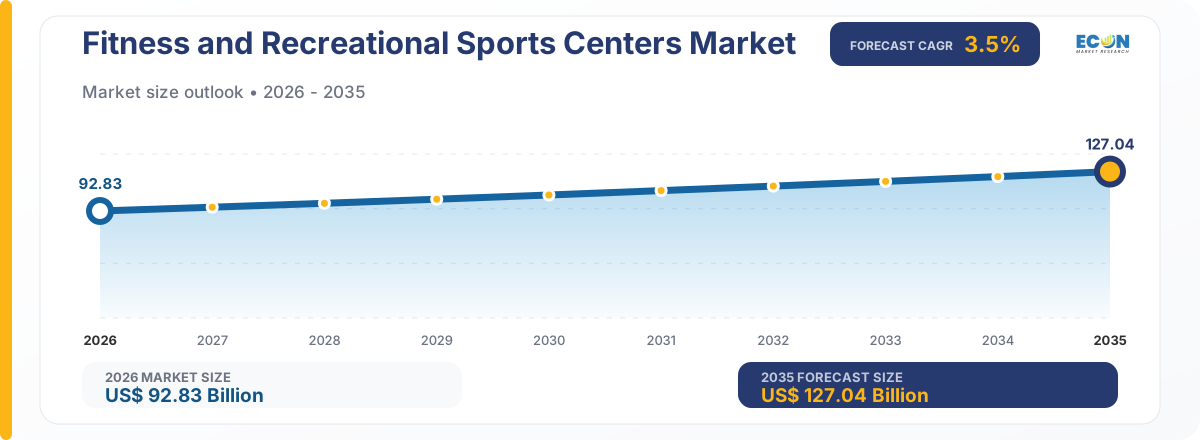
As per Econ Market Research analysis, the Global Fitness and Recreational Sports Centers Market was estimated at US$ 92.83 Billion in 2026 and is forecast to attain US$ 127.04 Billion by 2035, expanding at a CAGR of 3.5% between 2026 and 2035. The base year for the study is 2025.
Fitness and recreational sports centers range from gyms, health clubs, yoga studios, to sports complexes that offer comprehensive fitness programs, equipment, and sports. Membership- as well as pay-per-use business models cut across the market to meet consumers who are seeking to acquire and sustain a healthy body and mind. It is largely driven by higher awareness of a healthy lifestyle, increased disposable income, and growing attention to the mental well-being of people through physical activities. Additionally, the expansion of more fitness trends - such as group classes, personalized training, and virtual fitness solutions - has propelled the growth of the market.
The demand for more diversified services, such as wellness services, nutritional guidance, and recovery treatments, is pushing the market to adapt to increased demand, and technology also further provides market benefits, such as the adoption of digital tools by fitness centers that can increase the fitness experiences through mobile apps and fitness trackers. The changing lifestyle of the world towards healthier and more active lifestyles will ensure that fitness and recreational sports centers become an important part of a global health and wellness arena, which is likely to remain on the boomers', lists.
Dynamic Insights
Major drivers include rising health consciousness since people are focusing on getting fit to curb lifestyle diseases such as obesity, diabetes, and heart diseases. Increased health consciousness has driven up the memberships in the gyms, enrollments in fitness classes, and broader demand for physical activities. Disposable incomes have increased significantly, particularly in the emerging economies, thereby making fitness more accessible to more people because it has become cheaper and easier to reach. Another key driver is the adoption of customized and digital fitness products. Because of technology, the gyms start to offer virtual classes and personal training programs with compatible fitness-tracking devices.
This means that people can access the programs from their home digital environment, making the experience even more convenient and flexible. In addition, wellness and holistic health services, including yoga, meditation, and recovery treatments, are very popular these days, and these are offered by most gyms. On the other hand, market competition among the major players is becoming stiff, thereby introducing new strategies like flexible membership models, multi-service offerings, and improved customer experiences. However, there are challenges facing the same, such as high operational costs, seasonal fluctuations in demand, and potential market saturation in certain regions, which can dampen overall growth.
Drivers Insights
Rising Health Consciousness:
With growing awareness of the many health risks associated with a sedentary lifestyle, interest in fitness and recreational sport centers has grown rapidly. Consumers have become more proactive about preventing such chronic diseases as obesity, diabetes, and heart ailments by regularizing their exercises. Membership in gyms, fitness clubs, and participation in wellness programs has risen. Fitness is therefore now a part of an overall, holistic approach to mental well-being. It is proven to decrease stress and improve the mood. Greater health consciousness among the young and old is sure to fuel long-term growth of the market as persons pursue facilities which would meet their fitness and wellness goals.
Technological Integration in Fitness Services:
Advancements in fitness technology have altered the landscape of the market because it enhances experience for a consumer. Most fitness centers offer digital tools like fitness apps, virtual workout classes, and wearable technology that monitor people',s performance. This has enabled fitness centers to extend their services from being location-based physical services that folks enjoy while at home or when on the go.
The emerging trend of integrating Data Analytics and Artificial Intelligence with personalized fitness plans also gains market growth in terms of individual fitness goals. Member engagement is enhanced and even offers various optimisations by the providers of fitness regarding the provision of services and overall customer satisfaction with the services.
Restraints Insights
High Operational Costs:
Running a fitness and recreational sport center is capital intensive since it incurs large operational costs like rental or property costs, maintenance of equipment, and salaries for the workers. Moreover, fitness centers need to continuously upgrade their equipment and introduce new technologies to stay ahead of the competition, which can add to costs. Thus, such high operational costs can be a barrier to new entrants and small players in the market. This further manifests the issues of financial management since some of these centers cannot break even, and this is more challenging in the areas where membership rates are pretty low or where demand is low and cannot be guaranteed.
Market Saturation in Developed Regions:
In many developed markets, especially in urban areas, there is already a high concentration of fitness centers. With intense competition, customer acquisition costs have risen, and businesses face the challenge of differentiating themselves. Market saturation limits the growth potential for new and existing fitness centers in these regions. As the market becomes more crowded, achieving profitability becomes increasingly difficult without offering unique services or highly targeted niche offerings, which may not be feasible for all players in the industry.
Opportunities Insights
Expansion of Fitness Services Beyond Traditional Gyms:
Fitness and recreational sports centers may offer the opportunity for expanding services beyond a traditional facility. Wellness services that are gaining popularity include yoga, pilates, Mental Health programs, nutrition counseling, and spa or recovery treatments. Fitness centers offering a holistic approach to health and wellness will be at the forefront of this market as consumers increasingly seek a more holistic approach to health and wellness. These centers can reach a new segment of customers and increase the revenue market by meeting the emerging demand for wellness and mindfulness practice.
Segment Analysis
The By Type segment of the global fitness and recreational sports centers market includes various physical activities, catering to diverse fitness preferences and needs. Gymnasiums are the most common and versatile type of fitness center with all levels of fitness equipment and various options for strength training. Yoga centers focus primarily on mental and physical wellness, which attracts people looking for relief from stress, flexibility, and mindfulness. One practice which has become quite popular and for its cardiovascular benefits is favoured by all who prefer this activity.
Some examples include classes of aerobic dance such as Zumba or step aerobics. Another is handball, with its variant racquet sports: tennis or squash for competitive sport and leisure fitness activities. Facilities like skating, including both ice skating and roller skating rinks, offer a fun way to engage in aerobic exercise. Swimming pools provide a full-body exercise with low impact on the joint making it perfect for everyone. The by Age Group segment gives out the diversity of fitness center users according to the availability of age demographics.
The group ",35 and Younger", typically includes individuals from late teens to early thirties, an age that is generally aligned with achieving strength, endurance, and body physique through intense exercise or other common fitness-related activities like HIIT, CrossFit, or even yoga. The ",35-54", age group typically includes people during the middle career stage, balancing work, family, and health, and most people in this age group like fitness programs that are convenient, such as gym memberships, participation in group classes, or low-impact fitness programs of swimming and cycling.
The ",55 and Older", age group refers to older adults who are very active, now more than ever in fitness activities for mobility and maintaining strength and good health. This segment generally prefers low-impact activities like swimming, walking, or yoga in order to keep fit and active under the treatment of the age-defying diseases like arthritis or joint pain. The segment By End-user depicts the tendency among males and females within the fitness market. Strength training or bodybuilding activities and sport activities in race sports/ gym workouts are preferred mostly by males.
Many males are drawn to weightlifting and high-intensity training sessions because these activities will contribute to muscle-building and athletic performance enhancement. Men-oriented gyms will emphasize tailor-made equipment for strength training plus dedicated places for fitness challenges. Generally, women find it more attractive in exercises that improve flexibility, tone, and weight control.
In addition to yoga and Pilates, aerobic dance and group classes like Zumba have remained consistently in vogue with women. Many gyms are now aimed specifically at a women',s demographic, with all support and emphasis placed on holistic wellness: nutrition counseling, body positivity programs, and fitness regimens tailored to their health and lifestyle goals. Thus, despite the overlaps in the market, the distinction based on gender becomes a significant catalyst in designing the products and marketing mix of the fitness centers.
Regional Analysis
The North America market is mature and highly competitive, with a very strong culture of fitness, high disposable incomes, and a very wide range of fitness offerings. Specifically, the United States moved ahead with a significant number of gyms, health clubs, and fitness services, now with a growing focus on wellness programs, digital fitness, and more specialized services, such as yoga and Pilates.
The demand for fitness services remains strong throughout all age groups, though recently there is a trend in high-intensity workouts and strength training among the young, where as for the aged lot, they are exercising in low-impact fitness programs. The European market focuses on holistic health and wellness. Germany, UK, and France are the largest countries with the highest interest in traditional fitness clubs and newer forms of exercise, like group classes and wellness retreats. The European market also tends towards sustainable and eco-friendly fitness services, many centers have taken up green practices and selected green equipment.
Asia-Pacific is growing at a rapid pace, mainly in China, India, and Japan. It is due to rising middle-class incomes along with lifestyle changes through increased urbanization and growing interest in fitness, thereby creating demand for recreational sports centers in that region. Boutique fitness studios and wellness centers for the millennial population are also on the rise in this region because a health-conscious lifestyle is gaining popularity. Latin America and Middle East &, Africa: Fitness and recreational sports centers are also building in these regions, but at a more modest rate. Urban expansion continues quickly in countries like Brazil and in the UAE, though demand has not yet been fully established due to differences in both awareness of fitness and economic conditions in each area.
Competitive Landscape
Large international chains, regional fitness centers, boutique studios, and specialized wellness brands are major market players highly in competition to each other because of their market share diversification into diverse segments. Large multinational chains such as Planet Fitness, 24 Hour Fitness, Gold',s Gym, and Anytime Fitness lead the market because of broad memberships, extended locations, and varieties of services offered such as gym facilities, group classes, and personal training. These companies also enjoy brand recognition, economies of scale, and wide accessibility. Most of these global brands also focus on increasing their digital environments and integrating technology in their exercise services, like virtual training, mobile apps, and online classes, which increasingly take a significant role in attracting the always-connected consumer.
There are also boutique fitness studios and specialized fitness centers that have become famous for their niche services targeting specific market segments. For example, it is possible to see lots of SoulCycle, Orangetheory Fitness, and Barry',s Bootcamp building specific customer bases, as these studios really offer targeted services like cycling, HIIT, and more. These studios most often focus on exclusive experiences, community, and best services, this is the explanation as to why they have been able to retain many customers with higher membership prices. Furthermore, with the interest in wellness and holistic health, there has been a growing improvement of wellness-oriented fitness centers that operate services such as yoga, Pilates, meditation, and spas.
List of Key Players:
Planet Fitness Franchising, LLC
Town Sports International
24 Hour Fitness USA, LLC
Fitness First (U.K.)
Life Time, Inc.
David Lloyd Leisure Ltd
Virgin Active
Fitness First India Pvt Ltd
KONAMI
CrossFit, LLC
GOLD',S GYM
RSG Group
Fitness and Recreational Sports Centers Report Segmentation
Fitness and Recreational Sports Centers Market Report Scope & Segmentation
| Attributes | Details |
|---|---|
Market Size (Current) | US$ 92.83 Billion in 2026 |
Market Size (Forecast) | US$ 127.04 Billion in 2035 |
Growth Rate | CAGR of 3.5% from 2026 to 2035 |
Forecast Period | 2026 – 2035 |
Base Year | 2025 |
Historical Data Available | Yes |
Regional Scope | Global |
Segments Covered | By Type
By Age Group
|
Frequently Asked Questions
Common questions about this report
The study period covers historical insights and forecast projections for the period 2026-2035.
About the Author
Market research expert with years of industry experience

Related Reports
Explore more market insights from the same category