

Fishing Equipment Market
Fishing Equipment Market Size, Share, Trends, Growth, and Industry Analysis, By Type (Hooks, Reels, Rods, Sinkers and Floats), By Application (Freshwater Fishing, Saltwater Fishing), By Distribution Channel (Offline Stores, Online Retail), Regional Analysis and Forecast Period 2026-2035
Market Overview
As per Econ Market Research analysis, the Global Fishing Equipment Market was recorded at US$ 16.34 Billion in 2026 and is projected to expand to US$ 22.51 Billion by 2035, registering a CAGR of 3.59% over the forecast period. The base year used is 2025.
Fishing Equipment Market Size 2025-2035 (USD Billion)

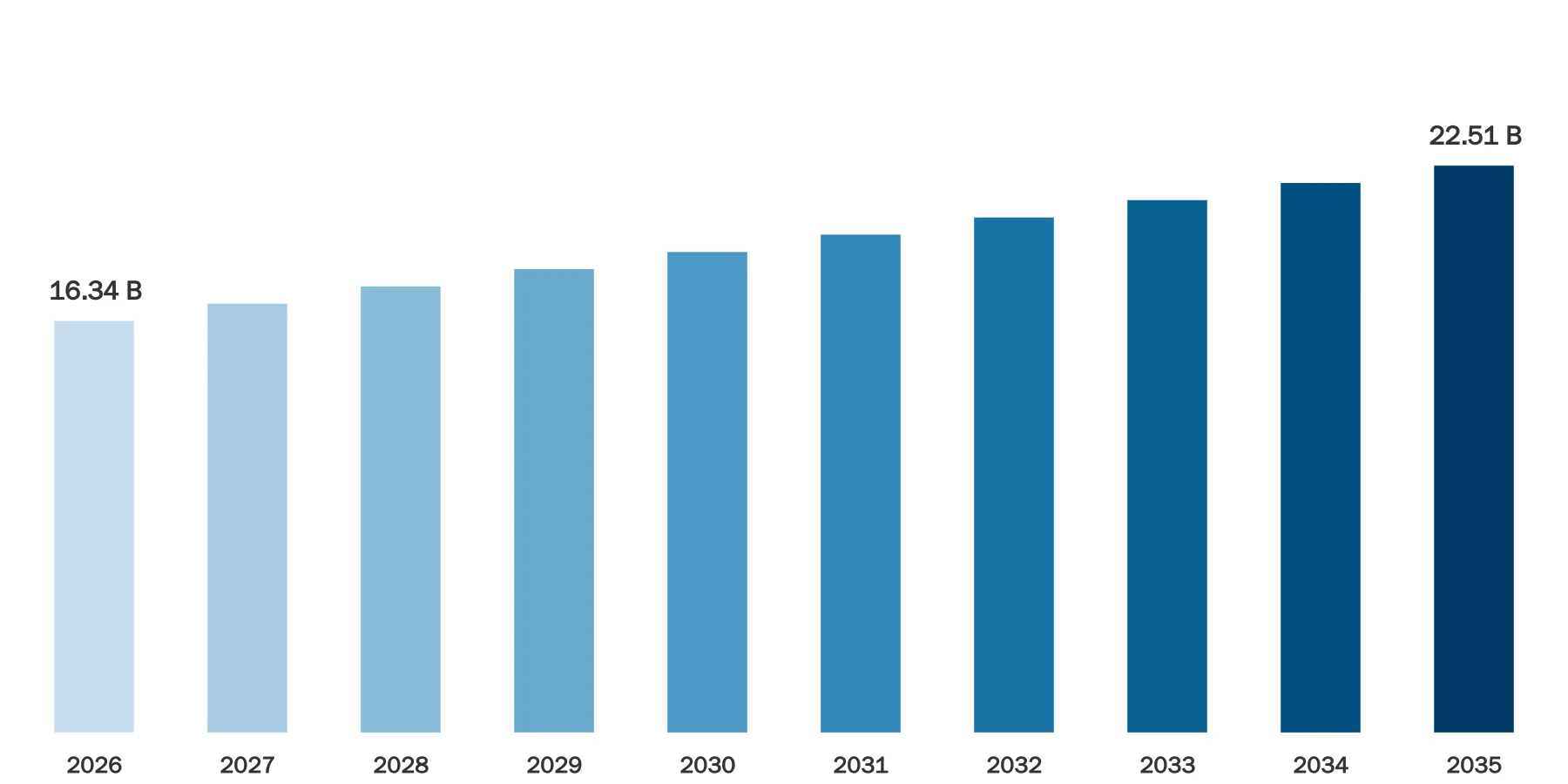
Source: Econ Market Research
The market for fishing equipment is vast, with a variety of tools and gear suitable for anglers with different preferences and ability levels. This sector provides fishing aficionados all over the world with everything from rods and reels to tackle boxes full of hooks, lines, and lures. As a crucial component of both recreational and commercial fishing, the industry is always changing to include new designs, eco-friendly materials, and technology improvements. The market offers a wide range of solutions to improve the fishing experience, whether it be for freshwater or saltwater, taking into account different species, habitats, and techniques.
Fishing Equipment Dynamics
Economic conditions, consumer tastes, environmental concerns, and technology improvements are some of the elements that impact the dynamics of the fishing equipment industry. Competition among industry participants is fueled by innovations in materials, manufacturing techniques, and product designs, which results in ongoing product improvement and differentiation. Due to consumer demand, manufacturers are now creating fishing gear that has as little of an impact on the environment as possible. Global events and changes in the economy can have an impact on consumer purchasing trends and market expansion. Market patterns are also influenced by laws and policies pertaining to conservation and fishing activities.
Fishing Equipment Drivers
Growing Participation in Recreational Fishing
The market for fishing equipment is significantly influenced by the rising number of people engaging in recreational fishing. The need for fishing equipment rises in tandem with the number of individuals engaging in outdoor recreational activities for fun and relaxation. Urbanization, stress alleviation, and the need for immersive outdoor experiences are some of the causes driving this trend. As a result, producers and merchants can benefit from this trend by providing a wide selection of fishing gear that is suited to recreational fishermen', requirements and tastes.
Awareness of Outdoor Activities
People are drawn to outdoor hobbies like fishing as they become more aware of the advantages it offers, including improved physical and Mental Health and a stronger sense of connection to the natural world. As a result of this increased awareness, fishing gear is becoming more and more popular as enthusiasts realize how important it is to have it for outdoor activities. In order to meet the needs of outdoor lovers, manufacturers should take advantage of this trend by providing cutting-edge and environmentally friendly fishing equipment.
Restraints:
Seasonal Variability and Weather Conditions
Weather-related events, such as storms, droughts, and extremely high or low temperatures, can cause disruptions to fishing operations and discourage anglers from going outside. The demand for fishing gear is unpredictable, which affects sales and inventory control for producers and dealers. In addition, unfavorable weather can make anglers more reluctant to purchase new gear by raising questions about their safety. As a result of these weather-related issues, the market goes through times of limited growth and stagnation.
Limited Access to Fishing Locations
Access restrictions imposed by private property, conservation zones, or urbanization make it more difficult for fishermen to get to popular fishing locations. This restriction affects sales for manufacturers and retailers by lowering the market for specialist gear made for particular fishing locations and species. Further, limiting access makes fishing less appealing to fishermen overall, which lowers participation rates and reduces the pool of potential customers for fishing equipment manufacturers.
Opportunities:
Innovation in Sustainable Fishing Gear
Anglers are becoming more and more interested in eco-friendly choices as environmental worries develop. Manufacturers can profit from this trend by creating cutting-edge fishing gear composed of biodegradable, repurposed, or sustainably derived materials. Businesses may stand out from the competition, draw in eco-aware customers, and support conservation initiatives by providing ecologically friendly products. This promotes customer loyalty and increases revenue.
E-commerce and Direct-to-Consumer Channels
Manufacturers and retailers no longer require physical locations to reach a wider audience, especially remote or niche areas, thanks to the growing popularity of online purchasing. Businesses may provide a greater range of products, tailored recommendations, and easy online shopping experiences by utilizing e-commerce platforms. In the cutthroat fishing equipment industry, direct-to-consumer sales also give businesses more control over branding, price, and customer relations, which promotes brand loyalty and boosts revenue growth.
Segment Overview
By Nature
Based on nature, the global fishing equipment market is divided into fresh water, salt water, and fly fishing. The fresh water category dominates the market with the largest revenue share in 2023. The purpose of freshwater fishing equipment is to fish in freshwater bodies of water including lakes, rivers, and ponds. Typically, this gear consists of fishing rods, reels, lines, hooks, and lures designed to catch panfish, pike, bass, and trout. Seas, oceans, and coastal regions are among the aquatic habitats where saltwater fishing gear is most useful. For this equipment to survive the corrosive effects of saltwater, it is usually more strong and lasting. Unlike typical bait or lures, fly fishing gear is unique in that it uses lightweight flies composed of feathers, fur, and synthetic materials.
By Type
Based on the type, the global fishing equipment market is categorized into hooks, lines, sinkers &, floats, rods, reels, nets &, traps, spear &, gaffs, baits &, lures, and others. The hooks category leads the global fishing equipment market with the largest revenue share in 2023. Hooks are necessary tools for penetrating the mouths or bodies of fish to catch them. They are made of varied materials, sizes, and forms, and each is appropriate for a certain target species and fishing method. The device that connects the angler and the fish and transfers the force required to reel in a catch is called a fishing line.
Usually, they are constructed from materials with varying strengths, flexibility, and visibility, such as fluorocarbon, braided lines, or monofilament. While floats, or bobbers, assist fishermen in identifying bites by signaling when a fish is nibbling on the bait, sinkers, often referred to as weights, are used to sink fishing lines to desired depths. Long, flexible fishing rods are used to cast lures or bait and reel in fish.
By End User
Based on end user, the global fishing equipment market is segmented into individual consumers, clubs, and sports organizers. The individual consumers segment dominates the fishing equipment market. Individual consumers are regular fishermen who buy gear for their own usage. They comprise hobbyists, enthusiasts, and recreational fishers who fish for fun, amusement, or fitness. Organizations called fishing clubs are made up of groups of fishermen who have a common interest in fishing. These groups could concentrate on particular fishing techniques or target species.
Fishing-related activities, tournaments, and social gatherings are frequently attended by members of fishing clubs. Organizations that arrange larger-scale competitions, events, and fishing tournaments are considered sports organizers. These organizers could be anything from fishing associations and professional tournament circuits to small-town community organizations.
Fishing Equipment Overview by Region
The global fishing equipment market is categorized into North America, Europe, Asia-Pacific, and the Rest of the World. North America emerged as the leading region, capturing the largest market share in 2023. Millions of fishermen have enjoyed the sport of recreational fishing throughout the region',s extensive network of lakes, rivers, and beaches. Fishing gear is in high demand due to a society that values outdoor activity and high levels of disposable income. Furthermore, there is a robust fishing industry in North America, with many merchants, manufacturers, and fishing-related businesses meeting the demands of fishermen.
Numerous causes, such as the region',s dense population, growing disposable incomes, and growing interest in outdoor pursuits like fishing, are responsible for this increase. Aside from its varied fishing environments which range from vast coastlines to inland rivers Asia-Pacific offers plenty of options for fishermen. Additionally, the demand for outdoor activities is being fueled by changing lifestyles and expanding urbanization, which is propelling the adoption of fishing gear.
Fishing Equipment Competitive Landscape
In the global fishing equipment market, a few major players exert significant market dominance and have established a strong regional presence. These leading companies remain committed to continuous research and development endeavors and actively engage in strategic growth initiatives, including product development, launches, joint ventures, and partnerships. By pursuing these strategies, these companies aim to strengthen their market position, expand their customer base, and capture a substantial share of the market.
Fishing Equipment Market Leading Companies:
Rome Specialty Company, Inc
Pure Fishing, Inc.
Sea Master Enterprise Co., Ltd.
PRADCO Outdoor Brands
Maver UK Ltd.
Johnson Outdoors Inc.
GLOBERIDE, Inc., and various others.
Fishing Equipment Recent Developments
In February 2024, The largest fishing tackle firm in the world, Pure Fishing Inc., has announced that it has acquired Svendsen Sport, a major European provider of fishing tackle and the owner of well-known brands like Savage Gear, Prologic, MadCat, WaterWolf, and DAM.
In August 2022, The parent company of 41 well-known brands that create, produce, and sell sporting and outdoor goods to customers worldwide, Vista Outdoor Inc., announced the completion of its $192.5 million acquisition of Simms Fishing Products, based in Bozeman, Mont. The purchase price includes a net present value of approximately $20 million in potential future tax benefits.
Fishing Equipment Market Report Segmentation
Fishing Equipment Market Report Scope & Segmentation
| Attributes | Details |
|---|---|
Market Size (Current) | US$ 16.34 Billion in 2026 |
Market Size (Forecast) | US$ 22.51 Billion in 2035 |
Growth Rate | CAGR of 3.59% from 2026 to 2035 |
Forecast Period | 2026 – 2035 |
Base Year | 2025 |
Historical Data Available | Yes |
Regional Scope | Global |
Segments Covered | By Type
By Application
By Distribution Channel
|
Frequently Asked Questions
Common questions about this report
The study period covers historical insights and forecast projections for the period 2026-2035.
About the Author
Market research expert with years of industry experience

Dipali Bhingare serves as the Market Research Director at Econ Market Research. With a focus on translating complex global economic shifts into actionable business intelligence, she oversees the strategic direction of comprehensive market studies. Her work empowers organizations to navigate volatile industries through data-driven forecasting and deep-dive competitive analysis.
Related Reports
Explore more market insights from the same category