

Financial Aid Management Software Market
Financial Aid Management Software Market Size, Share, Trends, Growth, and Industry Analysis, By Deployment (Cloud-based, On-Premise), By Application (Colleges andamp; Universities, K-12 Schools, Private Schools, Others), Regional Analysis and Forecast Period 2026-2035
Financial Aid Management Software Market Overview
As per Econ Market Research analysis, the Global Financial Aid Management Software Market valuation stood at US$ 0.91 Billion in 2026 and is expected to reach US$ 1.55 Billion by 2035, growing at a steady CAGR of 6.1% from 2026 to 2035. 2025 serves as the base year.
Financial Aid Management Software Market Size 2025-2035 (USD Billion)

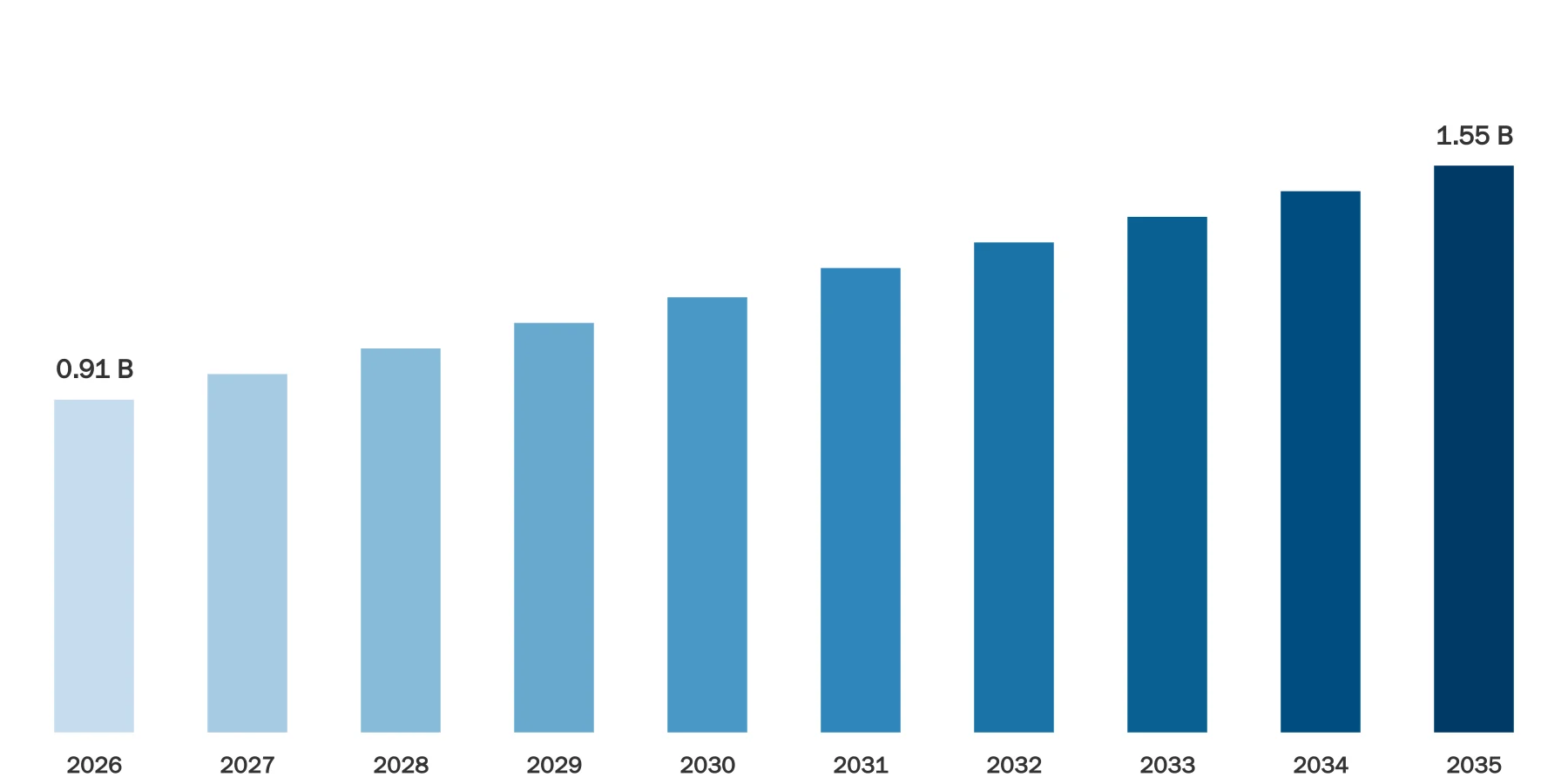
Source: Econ Market Research
Financial Aid Management software systems assist in automating tasks related to financial aid application, verification, disbursement, and reporting, aiming to improve efficiency and accuracy while reducing administrative burdens for educational institutions and students alike. With the rise in regulatory changes, student numbers, and competition among educational institutions, the need for Financial Aid Management Software has skyrocketed. This software, including options like student information systems, financial aid management systems, and scholarship management systems, helps institutions cope with the intricacies of financial aid processes.
By tailored solutions for different educational needs, these systems assist institutions in streamlining their financial aid management. Key players in this market are continuously innovating to offer advanced features such as mobile accessibility, data analytics, and integration with other campus management systems, thereby enabling institutions to make data-driven decisions and provide better support to students throughout their financial aid journey.
Financial Aid Management Software Dynamics
The advancements in technology are leading to a more digital education system. As a result, schools need to find good software to help them manage financial aid. The government',s changing rules and the need to follow them also make software platforms that can change with the times and make administrative tasks easier more important. Furthermore, as more students enrol in schools worldwide and financial aid programs become more complex, there is a need for sophisticated software systems that can handle a lot of data and give students personalized help.
The COVID-19 pandemic has accelerated the adoption of digital solutions in education, including Financial Aid Management Software, as institutions seek remote-friendly tools to manage operations and support students during times of disruption. On the supply side, market players compete by offering innovative features, such as AI-driven analytics and mobile accessibility, to differentiate their products and cater to the diverse needs of educational institutions. Partnerships and collaborations between software vendors and educational organizations also play a crucial role in driving market growth, facilitating the integration of financial aid management software with existing campus systems and ensuring seamless user experiences.
Financial Aid Management Software Drivers
Increasing Digitization of Education
The increasing digitalization of education is a major factor driving growth in the Financial Aid Management Software market. Around the world, educational institutions are embracing digital tools to make administrative tasks more efficient and boost operational effectiveness. With the shift to online learning and remote education, there is a growing need for software systems that can automate financial aid processes, such as submitting applications, verifying eligibility, and disbursing funds. This trend is further fuelled by the need for institutions to improve accessibility and provide seamless experiences for students, faculty, and staff. As a result, the demand for Financial Aid Management Software is expected to continue rising as educational institutions prioritize digital transformation initiatives to stay competitive in the evolving landscape of higher education.
Evolving Regulatory Landscape
The constantly changing rules and regulations in education push schools to use Financial Aid Management Software. Schools have to follow many different federal, state, and school rules about financial aid programs. These rules include who can get aid, how to report on it, and how to stop fraud. As these rules change and get more complicated, schools are looking for software that can quickly change to help them follow the rules.
Financial Aid Management Software has features like automatic compliance checks, reports that update in real-time, and audit trails. These features make it easier for schools to deal with changes in regulations and reduce the amount of time and effort needed to make sure they',re following the rules. Consequently, the demand for flexible and scalable software platforms capable of addressing regulatory challenges is expected to drive market growth as institutions prioritize regulatory compliance and risk management in their financial aid operations.
Restraints:
Budget Constraints in Educational Institutions
Many educational institutions struggle to invest in Financial Aid Management Software due to limited funding. Even though these software solutions are becoming more popular for streamlining financial aid processes, schools must prioritize other expenses like updating facilities, paying teachers, and supporting students. This lack of funding can particularly affect smaller or less-developed institutions, limiting the adoption of advanced software and slowing down the overall market growth for Financial Aid Management Software in some areas of the education sector.
Data Security and Privacy Concerns
Data security and privacy concerns present another restraint for the Financial Aid Management Software market. Educational institutions handle sensitive personal and financial information of students and their families, making them potential targets for cyberattacks and data breaches. Any compromise in the security of financial aid data can lead to serious consequences, including identity theft, fraud, and reputational damage for institutions. Consequently, institutions prioritize data security and compliance with privacy regulations such as GDPR and CCPA when selecting Financial Aid Management Software solutions.
However, concerns about data security and privacy may create barriers to adoption for certain institutions, particularly those with stringent security requirements or limited resources to invest in robust Cyber Security measures. As a result, software vendors must address these concerns by implementing strong security protocols, encryption techniques, and compliance frameworks to gain the trust of educational institutions and mitigate risks associated with data breaches.
Opportunities:
Integration with Student Information Systems (SIS)
A major opportunity in the Financial Aid Management Software market lies in integrating with Student Information Systems (SIS). SIS stores vital student data, such as personal details, academic history, and financial aid status. Connecting Financial Aid Management Software to SIS allows institutions to share data smoothly and maintain uniformity across multiple systems. This streamlines financial aid procedures, enhancing the student experience. The integration fosters seamless communication between admissions, financial aid, and academic departments. This supports informed decisions and tailored assistance for students at every stage of their education.
Segment Overview
By Product
The Financial Aid Management Software market is segmented by product into two main categories: web-based and cloud-based solutions. Web-based software is typically accessed through a web browser and hosted on a centralized server, allowing users to access the application from any internet-enabled device without the need for installation or maintenance. These solutions offer flexibility and accessibility, making them suitable for institutions of all sizes, including small colleges, universities, and K-12 private schools.
On the other hand, cloud-based software leverages Cloud Computing technology to deliver scalable and secure financial aid management solutions over the internet. Cloud-based solutions offer advantages such as automatic updates, scalable infrastructure, and enhanced data security, making them increasingly popular among educational institutions seeking cost-effective and efficient software solutions. Both web-based and cloud-based Financial Aid Management Software play a crucial role in streamlining financial aid processes, improving transparency, and enhancing the overall efficiency of educational institutions.
By Application
The Financial Aid Management Software market targets specific sectors, including colleges and universities, and private K-12 schools. Colleges and universities hold the largest share due to increasingly intricate financial aid programs and the need to efficiently handle vast student data. Software solutions designed for colleges and universities provide features that automate application processing, generate real-time reports, and seamlessly integrate with student information systems. These features help institutions streamline financial aid operations and enhance student support.
Additionally, K-12 private schools represent a niche but growing segment within the market, characterized by unique requirements such as scholarship management, tuition assistance, and donor management. Financial Aid Management Software solutions for K-12 private schools cater to the specific needs of these institutions, offering features such as customizable workflows, parent portals, and fundraising tools to simplify financial aid administration and improve the affordability of education.
Financial Aid Management Software Overview by Region
North America leads the education technology market due to widespread use of technology in educational institutions at all levels. The region has a solid regulatory infrastructure, government programs supporting higher education, and substantial investment in digital infrastructure. Europe follows suit due to comparable elements including increased digitization, greater enrolment, and emphasis on adhering to data protection laws.
Asia-Pacific emerges as a lucrative market opportunity, propelled by rapid urbanization, growing middle-class population, and increasing investments in education across countries like China, India, and Japan. Moreover, the region',s expanding e-learning market, coupled with government initiatives to improve access to education, further stimulates demand for Financial Aid Management Software solutions.
Latin America and the Middle East &, Africa regions also present untapped potential, characterized by a growing demand for quality education, rising internet penetration, and initiatives to address affordability challenges in education. However, market growth in these regions may be constrained by factors such as economic volatility, political instability, and infrastructure limitations.
Financial Aid Management Software Market Competitive Landscape
Key players in the market include established software vendors, such as Ellucian Company L.P., CampusLogic, Blackbaud, Inc., and Oracle Corporation, who offer comprehensive suites of financial aid management solutions tailored to the needs of colleges, universities, and K-12 private schools. These companies focus on developing advanced features such as Artificial Intelligence (AI)-driven analytics, mobile accessibility, and integration with student information systems to differentiate their products and enhance value for customers.
Newcomers and start-ups are joining the educational software market with specialized solutions tailored to particular groups or needs, such as managing scholarships, raising funds, or automating compliance. These companies embrace flexible development practices, cloud services, and subscription fees to draw clients and expand their market presence. Partnerships and collaborations between software providers and educational institutions are key to fostering innovation and expanding the market.
Vendors collaborate with colleges, universities, and K-12 schools to co-develop tailored solutions, integrate with existing systems, and address industry-specific challenges. Moreover, mergers and acquisitions are common in the Financial Aid Management Software market as companies seek to expand their product portfolios, enter new markets, and consolidate their market positions.
Financial Aid Management Software Market Leading Companies:
Blackbaud
Workday
FAME
Ellucian
CampusLogic
Regent Education
Eduquette
Our Parish Record Systems
Community Brands
Campus Management
TADS
FACTS Management
Financial Aid Management Software Market Report Scope & Segmentation
| Attributes | Details |
|---|---|
Market Size (Current) | US$ 0.91 Billion in 2026 |
Market Size (Forecast) | US$ 1.55 Billion in 2035 |
Growth Rate | CAGR of 6.1% from 2026 to 2035 |
Forecast Period | 2026 – 2035 |
Base Year | 2025 |
Historical Data Available | Yes |
Regional Scope | Global |
Segments Covered | By Deployment
By Application
|
Frequently Asked Questions
Common questions about this report
The study period covers historical insights and forecast projections for the period 2026-2035.
About the Author
Market research expert with years of industry experience

Related Reports
Explore more market insights from the same category