

Europe Golf Simulator Market
Europe Golf Simulator Market Size, Share, Trends, Growth, and Industry Analysis, By Component (Hardware, Software), By Application (Commercial, Residential), By End-User (Golf Courses, Sports Complexes, Personal Use), Regional Analysis and Forecast Period 2026-2035
Europe Golf Simulator Market Overview
As per Econ Market Research analysis, the Europe Golf Simulator Market was valued at US$ 0.5 Billion in 2026 and is expected to register strong growth to US$ 1.28 Billion by 2035, with a CAGR of 9.8% throughout the forecast period. The base year considered is 2025.
Europe Golf Simulator Market Size 2025-2035 (USD Billion)

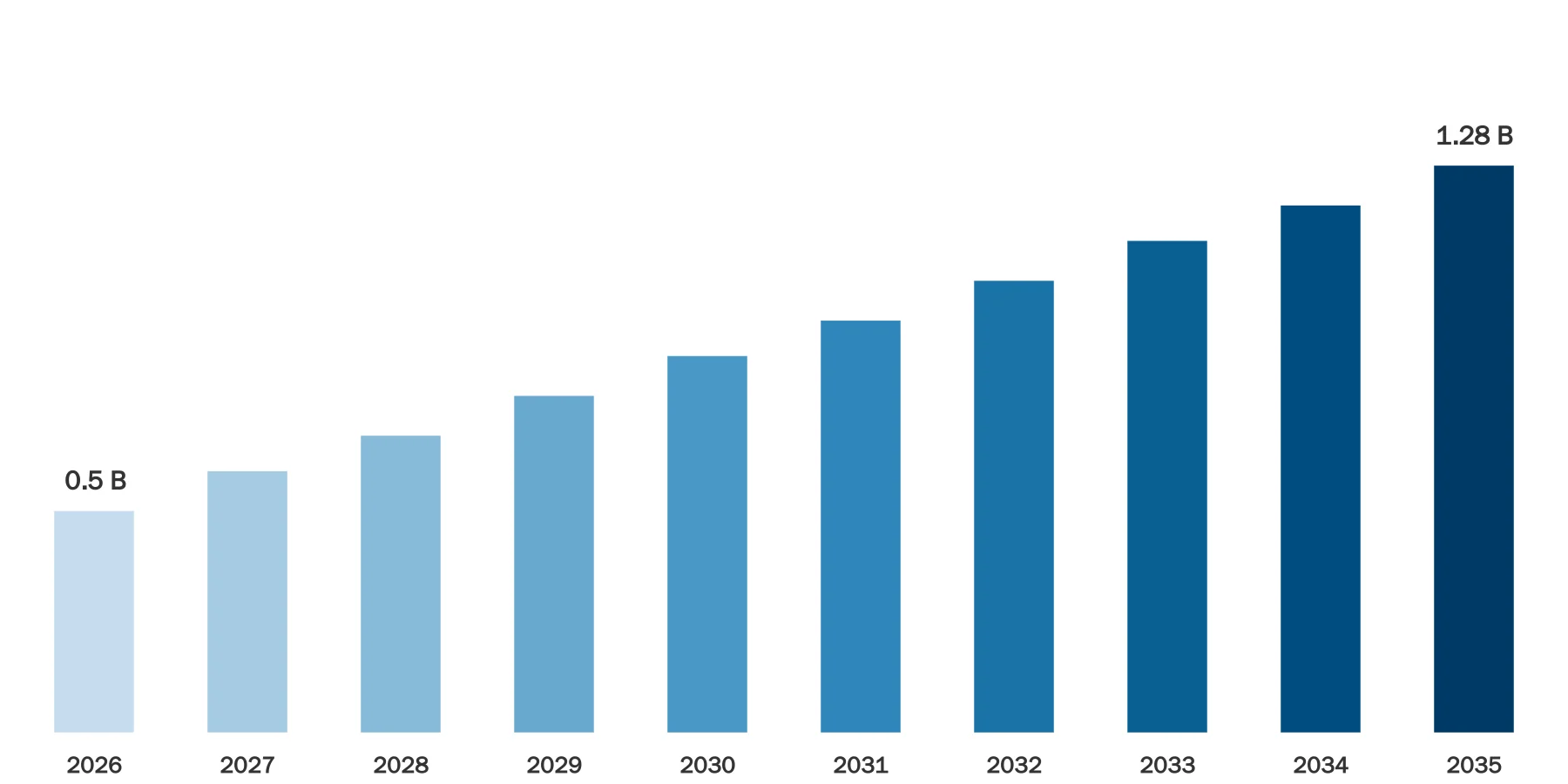
Source: Econ Market Research
Golf simulators recreate the experience of playing golf indoors, allowing enthusiasts to practice their swings and improve their skills without needing to go to a golf course. The market has witnessed significant growth in recent years due to factors such as technological advancements, increasing interest in golf among people of all ages, and the convenience offered by these simulators.
Key players in the market include manufacturers who produce the hardware components such as screens, sensors, and projectors, as well as software developers who design the virtual golf courses and provide realistic gameplay experiences. Additionally, there are companies offering installation services and maintenance for these systems. The market is highly competitive, with players constantly innovating to enhance the realism and accuracy of their simulators, as well as to offer new features and functionalities to attract customers.
Europe Golf Simulator Dynamics
One reason for the popularity of indoor golfing is that people are changing their lifestyles, more people are living in cities, and real golf courses are getting harder to find. Also, golf simulators are getting better thanks to better hardware and software. High-definition screens, better sensors, and realistic physics engines make the experience feel more real, which attracts both experienced golfers and beginners. Moreover, the COVID-19 pandemic has accelerated the market',s expansion as it prompted a surge in demand for home-based entertainment and fitness solutions, with golf simulators emerging as a viable option for individuals to maintain their interest in the sport while adhering to social distancing measures.
Furthermore, the market is witnessing growing investments in research and development activities aimed at improving the accuracy, realism, and customization options of golf simulators to cater to diverse consumer preferences. However, challenges such as high initial costs, limited space requirements, and concerns regarding the fidelity of simulation compared to real-world golfing experiences may hinder market growth to some extent.
Europe Golf Simulator Drivers
Increasing Adoption of Indoor Golfing Solutions
As more people favour indoor recreation, urbanization increases, and access to outdoor golf courses in crowded areas decreases, golf simulators are becoming more popular. These indoor setups let golfers practice their swings and improve their skills whenever they want, regardless of the weather or where they live. They also provide a more welcoming environment for beginners to learn the sport, helping the European golf simulator market grow. As more individuals recognize the benefits of indoor golfing, including accessibility, flexibility, and year-round availability, the demand for golf simulation systems is expected to continue rising.
Technological Advancements
Ongoing advancements in hardware and software components are revolutionizing the capabilities and realism of golf simulators, fuelling market growth. High-definition screens, advanced sensors, and sophisticated physics engines are enhancing the immersive experience, replicating the nuances of real-world golf courses with remarkable accuracy.
Additionally, innovations such as virtual reality (VR) integration and cloud-based multiplayer functionality are further elevating the appeal of golf simulators, attracting tech-savvy consumers and enhancing social interactions within the virtual golfing community. As manufacturers invest in research and development to push the boundaries of simulation technology, the Europe Golf Simulator market is poised to benefit from an influx of cutting-edge products that offer unparalleled realism and engagement.
Restraints:
The high cost of buying and setting up golf simulation systems can make it hard for consumers to buy them, which limits the growth of the market. Even though golf simulators offer benefits like being able to play indoors and being easy to reach, the large amount of money needed to buy them right now can scare off possible buyers, especially in places where people don',t have much extra money to spend or there are other fun things to do. Manufacturers and sellers need to find ways to make golf simulators cheaper and easier to get by offering different payment plans, financing options, or bundles that include everything.
Space Requirements and Installation Challenges
The Europe Golf Simulator market faces challenges related to space requirements and installation difficulties. Unlike golf courses, simulators need dedicated indoor areas with sufficient space for equipment and player movement. The installation process is complex and requires careful calibration of the screen, projector, and sensors. This technical challenge necessitates professional expertise.
These space and installation requirements may deter potential buyers, especially those residing in urban areas with limited room for dedicated recreational setups or individuals lacking the technical know-how to install and maintain the systems. Manufacturers and service providers need to address these challenges by offering streamlined installation processes, compact solutions for smaller spaces, and comprehensive support services to simplify the adoption of golf simulators and broaden their market appeal.
Opportunities:
Customization and Personalization
Another opportunity for the Europe Golf Simulator market lies in offering enhanced customization and personalization options to cater to individual preferences and skill levels. As consumers seek more immersive and tailored experiences, manufacturers can differentiate their products by providing a wide range of virtual golf courses, practice modes, and gameplay settings that cater to varying proficiency levels, playing styles, and aesthetic preferences. Additionally, leveraging data analytics and Artificial Intelligence (AI) algorithms, golf simulators can analyse players', performance metrics, identify areas for improvement, and offer personalized coaching tips and challenges to enhance skill development and engagement.
Segment Overview
By Offering
The Europe Golf Simulator market is categorized into three main segments based on offering: Simulator System, Simulator Services, and Simulator Software. The Simulator System segment encompasses the hardware components of golf simulation setups, including screens, sensors, projectors, and simulators themselves. Simulator Services involve installation, maintenance, and technical support provided by manufacturers or third-party service providers to ensure optimal functioning of the equipment. Simulator Software refers to the virtual golf courses, gameplay modes, and customization options that enhance the user experience and provide realistic simulation. These offerings collectively cater to the diverse needs and preferences of consumers, offering a comprehensive solution for indoor golfing enthusiasts across Europe.
By Product Type
The Europe Golf Simulator market offers two main product types: Portable and Built-in systems. Portable golf simulators are designed for flexibility and convenience, allowing users to set up and play virtually anywhere, whether at home, in a garage, or at an event venue. These systems typically feature lightweight components and easy assembly, making them suitable for users seeking a portable solution without the need for permanent installation. In contrast, Built-in golf simulators are integrated into dedicated indoor spaces, such as Home Entertainment rooms, golf lounges, or commercial facilities. These systems offer a seamless and immersive experience, with fixed installation providing stability and customization options tailored to the user',s preferences.
By Simulator Type
The Europe Golf Simulator market offers two main types of simulators: Full Swing Simulators and Virtual Reality (VR) Golf Simulators. Full Swing Simulators use high-speed cameras and advanced sensor technology to track the trajectory of the golf ball and replicate real-world ball flight dynamics with precision. These simulators offer a realistic gameplay experience, allowing users to practice their swings and analyse their performance with detailed metrics.
On the other hand, VR Golf Simulators utilize virtual reality headsets and motion tracking sensors to create immersive environments where users can interact with virtual golf courses and environments. These simulators offer a unique and engaging experience, blending physical and digital elements to provide a compelling alternative to traditional golfing.
By End-Use
The Europe Golf Simulator market serves various end-use segments, including Commercial Spaces, Corporate Events, Colleges and Universities, Amateurs, Professionals, and others. Commercial Spaces encompass golf clubs, indoor golf centers, and entertainment venues that offer golf simulation experiences to customers for leisure or training purposes. Corporate Events utilize golf simulators for team-building activities, client entertainment, and promotional events, providing a unique and engaging experience for participants.
Colleges and Universities integrate golf simulators into athletic programs, recreational facilities, or academic curricula to enhance student engagement and skill development. Amateurs and Professionals utilize golf simulators for practice, training, and performance analysis, enhancing their skills and maintaining their competitive edge. Other end-use segments may include fitness centers, resorts, residential complexes, and recreational facilities where golf simulators are used for leisure, entertainment, or wellness purposes.
Europe Golf Simulator Overview by Region
Western European countries such as the United Kingdom, Germany, and France have emerged as key markets for golf simulators, driven by a combination of factors including a strong golfing culture, high disposable incomes, and limited access to outdoor golf courses due to urbanization and space constraints. These countries boast a robust infrastructure for indoor recreational activities and entertainment, facilitating the widespread adoption of golf simulation technology among enthusiasts and leisure seekers.
In contrast, Eastern European countries such as Poland, Czech Republic, and Hungary are experiencing gradual but steady growth in the golf simulator market, fuelled by increasing awareness, rising incomes, and evolving lifestyle preferences. While the market penetration is relatively lower compared to Western Europe, there exists significant untapped potential in these regions, with manufacturers and vendors increasingly focusing on expanding their presence and distribution networks to capitalize on emerging opportunities.
Europe Golf Simulator Market Competitive Landscape
The competitive landscape of the Europe Golf Simulator market is characterized by a mix of established players and emerging contenders vying for market share and differentiation. Key players such as TrackMan A/S, Foresight Sports, Full Swing Golf, and HD Golf&trade, have solidified their positions through innovative product offerings, extensive distribution networks, and strong brand recognition.
These companies specialize in manufacturing high-quality hardware components, developing cutting-edge software solutions, and providing comprehensive service and support to cater to the diverse needs of consumers across the region. Additionally, strategic partnerships with golfing associations, professional athletes, and entertainment venues further bolster their market presence and credibility. However, the market also witnesses the emergence of new entrants and niche players seeking to carve out their niche by offering specialized features, targeting specific customer segments, or leveraging disruptive technologies such as virtual reality and Augmented Reality.
Europe Golf Simulator Market Leading Companies:
TrackMan Golf
Foresight Sports
GOLFZON
Full Swing Golf
SkyTrak
OptiShot Golf
TruGolf
Bogolf
Golftime
Screenzon
GREENIOY
Europe Golf Simulator Recent Developments
May 2023, Foresight Sports Europe has forged a partnership with the PGA, building on years of collaboration aimed at assisting PGA members in creating optimal environments for teaching, fitting, and boosting revenue throughout the year.
Sept 2023, Full Swing, a prominent figure in sports technology, has unveiled an exhilarating alliance with Good Good Golf, a pioneering omnichannel golf entertainment brand. This partnership will spotlight Full Swing as the Official Technology Partner at their recently established headquarters in close proximity to Frisco, TX. Additionally, it will be showcased on their social media platforms, offering a glimpse into the cutting-edge golf technology being utilized.
Europe Golf Simulator Report Segmentation
Europe Golf Simulator Market Report Scope & Segmentation
| Attributes | Details |
|---|---|
Market Size (Current) | US$ 0.5 Billion in 2026 |
Market Size (Forecast) | US$ 1.28 Billion in 2035 |
Growth Rate | CAGR of 9.8% from 2026 to 2035 |
Forecast Period | 2026 – 2035 |
Base Year | 2025 |
Historical Data Available | Yes |
Regional Scope | Global |
Segments Covered | By Component
By Application
By End-User
|
Frequently Asked Questions
Common questions about this report
The study period covers historical insights and forecast projections for the period 2026-2035.
About the Author
Market research expert with years of industry experience

Dipali Bhingare serves as the Market Research Director at Econ Market Research. With a focus on translating complex global economic shifts into actionable business intelligence, she oversees the strategic direction of comprehensive market studies. Her work empowers organizations to navigate volatile industries through data-driven forecasting and deep-dive competitive analysis.
Related Reports
Explore more market insights from the same category