

Enoki Mushroom Market
Enoki Mushroom Market Size, Share, Trends, Growth, and Industry Analysis, By Form (Fresh, Processed), By Distribution Channel (Supermarkets/Hypermarkets, Grocery Stores, Online Retailers, Others), Regional Analysis and Forecast Period 2026-2035
Market Overview
As per Econ Market Research analysis, the Global Enoki Mushroom Market size amounted to US$ 2.04 Billion in 2026 and is anticipated to grow to US$ 2.75 Billion by 2035, recording a CAGR of 3.34% during 2026–2035. The base year taken for analysis is 2025.
Enoki Mushroom Market Size 2025-2035 (USD Billion)

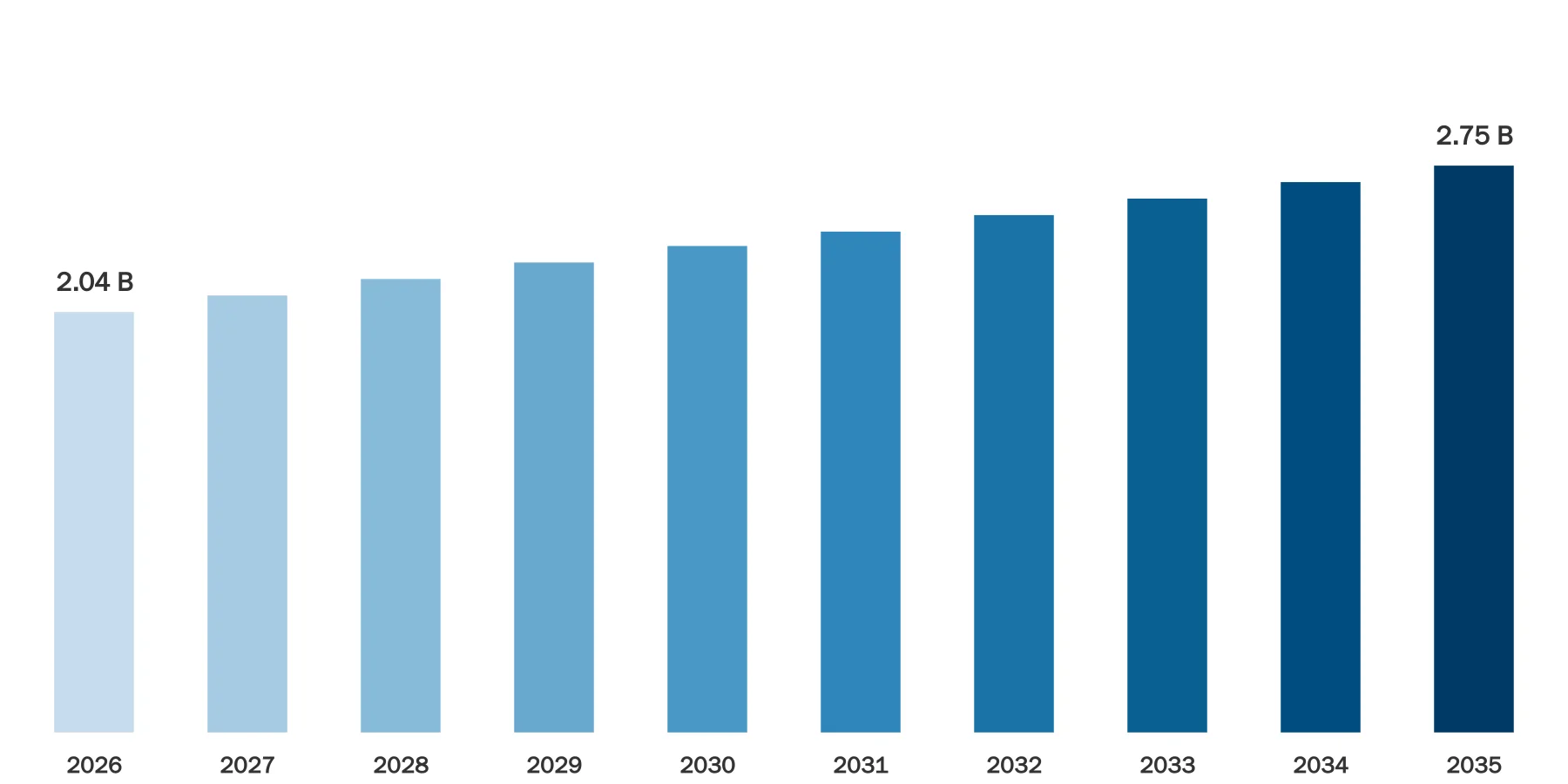
Source: Econ Market Research
The global Enoki Mushroom market is experiencing significant growth, driven by rising consumer awareness of its nutritional benefits and versatile culinary applications. Enoki mushrooms, also known as Flammulina velutipes, are a type of edible mushroom characterized by their long, slender stems and small caps. They are commonly cultivated in East Asia but have gained popularity worldwide due to their unique taste and texture.
The market is witnessing increasing demand for Enoki mushrooms in various cuisines, including soups, salads, stir-fries, and sushi, owing to their crunchy texture and mild flavor. Furthermore, the growing trend of healthy eating habits among consumers has fuelled the demand for Enoki mushrooms, as they are low in calories and rich in nutrients such as fiber, potassium, and antioxidants. Additionally, advancements in cultivation techniques and distribution channels have made Enoki mushrooms more accessible to consumers, further boosting market growth. However, challenges such as seasonal variations in production and limited shelf life remain significant concerns for market players.
Enoki Mushroom Dynamics
The market for enoki mushrooms is expanding due to consumer demand for unusual ingredients and healthier meal options. Furthermore, the industry has grown as a result of the growing popularity of vegetarian and vegan diets, as enoki mushrooms are a popular meat alternative because of their umami flavor and meaty texture. Technological advancements in farming practices, like Vertical Farming and controlled environment agriculture (CEA), have lowered production costs and raised production efficiency, which has fuelled market expansion.
Additionally, improvements in distribution and packaging technology have increased the shelf life of enoki mushrooms and made them more widely available in regular retail stores as well as online. On the supply side, factors such as weather conditions, disease outbreaks, and fluctuations in raw material prices can impact Enoki mushroom production and supply chain operations, leading to potential supply shortages or price volatility. Additionally, regulatory factors, including food safety standards and import/export regulations, can influence market dynamics by affecting production practices and trade flows.
Enoki Mushroom Drivers
Growing Consumer Awareness and Demand for Healthy Foods
The growing interest among consumers in health and wellness is one of the major factors propelling the enoki mushroom market. Because they are high in nutrients and low in calories, enoki mushrooms are a popular choice among consumers who are health-conscious. Demand for enoki mushrooms as a nutritious food option is predicted to increase as people become more aware of its advantages. In addition, the popularity of enoki mushrooms as a meat alternative is fuelled by the surge in vegetarian and vegan diets as well as the umami flavor and texture of the mushroom.
Technological Advancements in Cultivation and Distribution
Technology advancements in cultivation methods and delivery systems have been crucial in propelling the market for enoki mushrooms. Modern farming techniques like vertical farming and controlled environment agriculture (CEA) have raised yield and efficiency while lowering expenses. As a result, there is now a steadier and dependable supply of enoki mushrooms, satisfying the increasing demand from customers.
Moreover, the shelf life of enoki mushrooms has been increased by technological developments in packaging and distribution, which has made them more widely available and accessible in conventional retail establishments as well as online. In addition to increasing the quality and accessibility of enoki mushrooms, these technical developments have given market participants additional entry points.
Restraints:
Seasonal Variability and Production Challenges
Seasonal variations in Enoki mushroom production pose a significant restraint to the market. Enoki mushrooms have specific temperature and humidity requirements for optimal growth, making them susceptible to seasonal fluctuations in weather conditions. This can lead to disruptions in supply and affect the availability and pricing of Enoki mushrooms in the market. Additionally, challenges such as disease outbreaks and pests can further impact production, leading to supply shortages and increased production costs for growers.
Limited Shelf Life and Perishability
The limited shelf life and perishability of Enoki mushrooms present challenges for market players. Unlike some other mushrooms that have a longer shelf life, Enoki mushrooms have a relatively short shelf life and require proper storage and handling to maintain freshness. This can result in higher transportation and storage costs for suppliers and retailers and may lead to waste if not managed effectively. Moreover, the perishability of Enoki mushrooms limits their export potential, as they may not withstand long-distance transportation without compromising quality, thus restricting market growth opportunities.
Opportunities:
Product Innovation and Diversification
Product innovation and diversification present opportunities for market players to differentiate their offerings and capture new consumer segments. There is potential for the development of value-added products such as Enoki mushroom-based snacks, ready-to-eat meals, and culinary ingredients. Additionally, exploring new varieties of Enoki mushrooms or introducing organic and premium-grade options could cater to discerning consumers willing to pay a premium for high-quality products. By continuously innovating and diversifying their product portfolios, companies can stay ahead of market trends and capitalize on emerging opportunities in the Enoki Mushroom market.
Segment Overview
By Product Type
By product type, Enoki mushrooms are classified into two main categories: wild type and cultivated type. Wild type Enoki mushrooms are typically harvested from natural environments, such as forests or woodlands, and are characterized by their smaller size and more irregular shape. On the other hand, cultivated type Enoki mushrooms are grown under controlled conditions in mushroom farms or indoor cultivation facilities. Cultivated Enoki mushrooms are usually larger in size, with a more uniform appearance, and are produced in larger quantities to meet the growing demand from consumers.
By Application
In terms of application, Enoki mushrooms are utilized in various forms, including fresh, dried, and in the food processing industry. Fresh Enoki mushrooms are commonly consumed raw or cooked in a variety of dishes, including soups, stir-fries, salads, and sushi. Their delicate texture and mild flavor make them a popular choice in both Asian and Western cuisines.
Dried Enoki mushrooms are processed and dehydrated to extend their shelf life and are often rehydrated before use in cooking. Dried Enoki mushrooms are particularly favored for their concentrated flavor and versatility in culinary applications. Additionally, Enoki mushrooms are widely used in the food processing industry as ingredients in packaged foods, sauces, seasonings, and snacks. Their unique taste and nutritional profile make them a desirable component for enhancing the flavor and nutritional value of processed food products.
Enoki Mushroom Overview by Region
In East Asia, particularly in countries like China, Japan, and South Korea, Enoki mushrooms hold deep cultural significance and are an integral part of traditional cuisines. These countries are among the largest producers and consumers of Enoki mushrooms globally, with a well-established supply chain and distribution network. North America and Europe are emerging markets for Enoki mushrooms, driven by increasing consumer interest in exotic and healthy foods. While domestic production is growing in these regions, a significant portion of Enoki mushrooms is still imported from East Asia to meet demand.
In Australia and New Zealand, the Enoki Mushroom market is witnessing steady growth, supported by changing dietary preferences and the proliferation of gourmet food trends. Overall, the regional overview of the Enoki Mushroom market reflects a mix of mature markets with established consumption habits and emerging markets with growing demand and evolving consumer preferences. Strategic market entry and distribution strategies tailored to each region',s unique characteristics are essential for businesses seeking to capitalize on the opportunities presented by the global Enoki Mushroom market.
Enoki Mushroom Market Competitive Landscape
In East Asia, where Enoki mushrooms have a long-standing cultural and culinary tradition, established companies dominate the market, leveraging their expertise in cultivation techniques and strong distribution networks. These companies often operate vertically integrated supply chains, controlling various stages of production from cultivation to packaging and distribution. In North America and Europe, the market is more fragmented, with a mix of domestic producers and importers catering to the growing demand for Enoki mushrooms.
Additionally, the market landscape is evolving with the entry of new players, particularly startups and agri-tech companies, leveraging innovative cultivation methods such as vertical farming and hydroponics to disrupt traditional production practices. As consumer demand for organic and sustainably produced foods continues to rise, companies are increasingly focusing on certifications and eco-friendly practices to differentiate their offerings and gain a competitive edge. Strategic partnerships, mergers, and acquisitions are also prevalent in the Enoki Mushroom market as companies seek to expand their market presence and enhance their product portfolios.
Enoki Mushroom Market Leading Companies:
Shanghai Xuerong Biotechnology Co., Ltd. (China)
Greenpeace Green Co. (Greenco.) (Japan)
Tianshui Zhongxing Bio-technology Co., Ltd. (China)
Hokto Kinoko Company (Japan)
Fungi Perfecti (U.S.)
Yukiguni Maitake Co. (Japan)
Guangdong Xinghe Biotechnology Company Limited (China)
Hampyeong Chon Ji Mushroom Agricultural Union Corporation (HCMA) (South Korea)
Guan',s Mushroom (China)
Shanghai Finc Bio-Tech Inc. (China)
Enoki Mushroom Recent Developments
Oct 2023, Utopia Foods Inc., headquartered in Glendale, N.Y., made an announcement regarding the recall of all batches within expiry of Qilu Enterprise-branded, 200-gram (7-ounce) packages of enoki mushrooms. The reason for this recall is the potential contamination with Listeria monocytogenes, a bacterium known to cause serious and sometimes fatal infections, especially among young children, elderly individuals, and those with weakened immune systems.
Enoki Mushroom Report Segmentation
Enoki Mushroom Market Report Scope & Segmentation
| Attributes | Details |
|---|---|
Market Size (Current) | US$ 2.04 Billion in 2026 |
Market Size (Forecast) | US$ 2.75 Billion in 2035 |
Growth Rate | CAGR of 3.34% from 2026 to 2035 |
Forecast Period | 2026 – 2035 |
Base Year | 2025 |
Historical Data Available | Yes |
Regional Scope | Global |
Segments Covered | By Form
By Distribution Channel
|
Frequently Asked Questions
Common questions about this report
The study period covers historical insights and forecast projections for the period 2026-2035.
About the Author
Market research expert with years of industry experience

Dipali Bhingare serves as the Market Research Director at Econ Market Research. With a focus on translating complex global economic shifts into actionable business intelligence, she oversees the strategic direction of comprehensive market studies. Her work empowers organizations to navigate volatile industries through data-driven forecasting and deep-dive competitive analysis.
Related Reports
Explore more market insights from the same category