Energy as a Service Market Overview
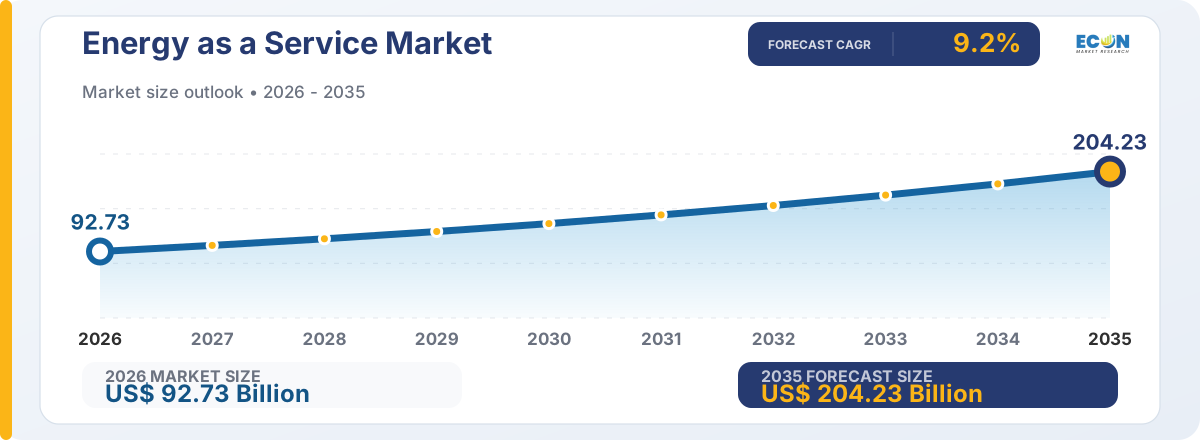
As per Econ Market Research analysis, the Global Energy as a Service Market accounted for US$ 92.73 Billion in 2026 and is expected to surpass US$ 204.23 Billion by 2035, witnessing a CAGR of 9.2% throughout 2026–2035. The analysis is based on 2025 as the base year.
EaaS providers deliver a range of services including energy procurement, infrastructure development, energy efficiency improvements, and renewable energy integration on a subscription or pay-per-use basis. This model allows organizations to outsource their energy needs to specialized firms, thereby reducing operational complexity and capital expenses while enhancing sustainability efforts.
The EaaS market is driven by factors such as increasing awareness of environmental sustainability, stringent government regulations on carbon emissions, and the growing demand for reliable and cost-effective energy solutions across various industries. With the rise of digitalization and IoT technologies, EaaS providers leverage advanced analytics and monitoring tools to optimize energy consumption, minimize wastage, and maximize efficiency for their clients. As the energy landscape continues to evolve, the EaaS market is poised for significant growth, offering a flexible and scalable approach to energy management that aligns with the evolving needs of businesses and communities worldwide.
Energy as a Service (EaaS) Dynamics
One key dynamic is the increasing emphasis on sustainability and carbon reduction goals, prompting organizations to seek more efficient and environmentally friendly energy solutions. This drive towards sustainability is fueled by regulatory pressures, consumer preferences, and corporate sustainability initiatives, which are accelerating the adoption of EaaS models that offer renewable energy integration, energy efficiency improvements, and emissions reduction strategies. Moreover, the dynamics of the EaaS market are significantly shaped by technological advancements.
The emergence of digitalization, Internet of Things (IoT) technologies, and Data Analytics allows EaaS providers to provide their customers with more advanced and customised solutions. By enabling real-time monitoring, predictive maintenance, and energy system optimisation, these technologies help businesses optimise their energy use, cut expenses, and raise overall operational effectiveness.
Furthermore, the competitive landscape of the EaaS market is characterized by a diverse ecosystem of traditional energy service companies, technology firms, startups, and renewable energy developers vying for market share. This competition fosters innovation and drives continuous improvement in EaaS offerings, leading to greater customization, scalability, and affordability for customers. As the market matures and evolves, partnerships and collaborations between EaaS providers and other stakeholders such as utilities, financial institutions, and government agencies are expected to deepen, further shaping the dynamics of the EaaS market and driving its expansion into new regions and sectors.
Energy as a Service (EaaS) Drivers
Rising Demand for Sustainable Energy Solutions:
The global shift towards sustainability and the urgent need to mitigate climate change are significant drivers for the Energy as a Service (EaaS) market. Governments worldwide are implementing stringent regulations to reduce carbon emissions, incentivizing businesses to adopt renewable energy sources and energy-efficient practices. EaaS provides an accessible avenue for organizations to transition to sustainable energy solutions without the upfront capital investment required for infrastructure development. This demand is further propelled by consumer preferences for environmentally responsible products and services, creating a conducive environment for the growth of the EaaS market.
Advancements in Digital Technologies:
The EaaS market is growing as a result of technological advancements like big data analytics, Artificial Intelligence (AI), and the Internet of Things (IoT). These technologies allow EaaS providers to provide their clients with more advanced and effective solutions by enabling real-time monitoring, predictive maintenance, and energy system optimisation.
IoT sensors gather information on equipment performance, environmental factors, and patterns of energy consumption, enabling businesses to find areas for operational and energy-saving improvements. The incorporation of cutting-edge technologies into EaaS offerings will improve the scalability, dependability, and affordability of energy management solutions, spurring additional adoption and market expansion as digitalization continues to permeate various industries.
Restraints:
Despite the long-term benefits, the initial investment required to implement Energy as a Service solutions can act as a significant barrier for some organizations, particularly small and medium-sized enterprises (SMEs). The installation of renewable energy systems, energy-efficient infrastructure, and digital monitoring technologies often entails substantial upfront costs, which may deter potential clients from adopting EaaS models. Moreover, uncertainty surrounding the return on investment and financial constraints may hinder decision-making and slow the pace of adoption, especially in industries with tight profit margins or limited access to capital.
Data Privacy and Security Concerns:
Due to the heavy reliance of EaaS solutions on data collection, analysis, and connectivity, worries about Cyber Security and data privacy significantly impede market expansion. Businesses entrust EaaS providers with sensitive data about their infrastructure, operational procedures, and energy usage, which raises concerns about data breaches, unauthorised access, and possible disruptions to business operations.
Strong security measures and compliance frameworks are also required by regulatory compliance requirements, such as the General Data Protection Regulation (GDPR) in the European Union, which impose strict standards for data protection and privacy. In order to address these issues, EaaS providers hoping to win over their clients', trust and confidence may find it difficult to invest in cybersecurity infrastructure, train their staff, and follow industry best practices.
Opportunities:
Integration of Distributed Energy Resources:
The proliferation of distributed energy resources (DERs), including solar photovoltaic (PV) systems, battery storage, microgrids, and demand response technologies, presents a compelling opportunity for the Energy as a Service market. DERs enable organizations to generate, store, and manage energy locally, reducing reliance on centralized power grids and enhancing energy resilience and reliability.
EaaS providers can capitalize on the trend towards decentralization and grid modernization by offering integrated solutions that optimize the deployment and operation of DERs, maximize energy efficiency, and enable seamless integration with existing infrastructure. By harnessing the potential of DERs, EaaS providers can unlock new revenue streams, improve energy affordability, and foster greater energy independence for their clients, driving continued growth and innovation in the market.
Segment Overview
By Type
In the Energy as a Service (EaaS) market, the type segments encompass Energy Supply Services, Operational &, Maintenance Services, and Energy Efficiency &, Optimization Services. Energy Supply Services facilitate access to renewable energy sources such as solar, wind, and hydroelectric power, enabling organizations to reduce carbon emissions and dependency on fossil fuels.
Operational &, Maintenance Services involve the management, monitoring, and upkeep of energy infrastructure, including preventive maintenance, repair, and asset management, to ensure reliable operation and optimize performance. Energy Efficiency &, Optimization Services focus on improving energy performance through audits, retro-commissioning, and demand-side management solutions, helping organizations minimize waste and lower operational costs.
By End-Use
The end-use segments of the EaaS market target Commercial and Industrial sectors. Commercial establishments such as office buildings, retail spaces, and hotels benefit from tailored EaaS solutions designed to address fluctuating energy demand, occupancy patterns, and regulatory compliance requirements, enhancing operational efficiency and occupant satisfaction.
In contrast, the Industrial sector, which includes manufacturing plants and warehouses, relies on EaaS offerings to optimize production processes, mitigate risks, and improve competitiveness by streamlining energy management, reducing waste, and increasing resource efficiency. These segments collectively represent the diverse applications and opportunities within the EaaS market, catering to the distinct needs and challenges of various industries and end-users.
Energy as a Service (EaaS) Overview by Region
North America dominates the EaaS market, driven by stringent environmental regulations, favorable government incentives, and a robust ecosystem of technology providers and energy service companies. The region',s focus on sustainability and energy efficiency, coupled with the widespread adoption of renewable energy technologies, positions North America as a key market for EaaS solutions, particularly in commercial and industrial sectors. Europe follows closely, propelled by ambitious renewable energy targets, supportive policies, and growing investments in clean energy infrastructure.
Countries such as Germany, the United Kingdom, and France lead the adoption of EaaS models, leveraging advanced technologies and innovative financing mechanisms to accelerate the transition towards a low-carbon economy. In the Asia-Pacific region, rapid urbanization, industrialization, and increasing energy demand drive the demand for EaaS solutions, particularly in emerging economies such as China, India, and Southeast Asian countries. These markets present immense growth opportunities for EaaS providers, fueled by government initiatives, energy market liberalization, and the rising awareness of sustainability among businesses and consumers.
Meanwhile, Latin America and the Middle East &, Africa regions exhibit nascent but promising developments in the EaaS market, driven by growing investments in renewable energy, infrastructure modernization, and efforts to diversify energy sources. Despite challenges related to regulatory uncertainty and economic instability, these regions hold significant potential for EaaS adoption, driven by the need to enhance energy access, reliability, and affordability while addressing environmental concerns.
Energy as a Service (EaaS) Market Competitive Landscape
Key players in the market include multinational corporations such as Siemens AG, Schneider Electric SE, and Johnson Controls International plc, which offer comprehensive EaaS solutions encompassing energy supply, operational services, and energy efficiency optimization. These companies leverage their extensive industry expertise, global presence, and technological capabilities to deliver integrated solutions tailored to the needs of commercial, industrial, and institutional clients.
In addition to established players, the EaaS market is witnessing a proliferation of innovative startups and niche players specializing in renewable energy, energy management software, and smart grid technologies. Companies like ENGIE Impact, Ameresco, and SmartWatt are at the forefront of delivering cutting-edge EaaS offerings focused on sustainability, cost-effectiveness, and operational excellence. These agile players leverage disruptive technologies such as artificial intelligence, Internet of Things (IoT), and blockchain to drive innovation and differentiate their solutions in a highly competitive market landscape.
Moreover, partnerships, collaborations, and strategic alliances are reshaping the competitive dynamics of the EaaS market, as players seek to expand their market reach, enhance service offerings, and capitalize on emerging opportunities. Utilities, financial institutions, and technology providers are increasingly forging partnerships with EaaS companies to accelerate the adoption of sustainable energy solutions, unlock new revenue streams, and address evolving customer demands.
Energy as a Service (EaaS) Market Leading Companies:
Schneider Electric
Siemens
Engie
Honeywell International Inc.
Veolia
EDF (Electricité, de France)
Johnson Controls
Bernhard
Enel SpA
NORESCO, LLC
Centrica plc
Wendel Group
Energy as a Service (EaaS) Recent Developments
Aug 2023, Hitachi Energy, a prominent force in advancing sustainable energy solutions worldwide, has forged a strategic partnership with Google Cloud. Together, they aim to develop and innovate various cloud-based software products and services to drive the global energy transition forward. As an initial testament to this collaboration, Hitachi Energy',s Velocity Suite Power Prices is now accessible on the Google Cloud Marketplace, showcasing the collective value derived from their alliance.
In May 2022, GE Digital completed the acquisition of Opus One Solutions with the aim of bolstering the energy transition. Opus One DERMS, an end-to-end modular Distributed Energy Resource Management System (DERMS), is tailored to assist utilities in navigating their Distributed Energy Resources (DERs) journey, ensuring grid safety, security, and resilience. It also facilitates energy affordability and encourages customer participation in power generation.
In August 2021, ENGIE and Google inked a carbon-free energy supply agreement in Germany, spanning 24/7 operations. This three-year commitment aligns with Google',s 2030 Carbon-Free Energy (CFE) objective for its global data centers, cloud regions, and offices. ENGIE will curate and manage a renewable energy portfolio, primarily sourced from solar and wind, to propel Google',s German operations toward nearly 80% carbon-free status by 2022.
Global Energy as a Service (EaaS) Report Segmentation
Energy as a Service Market Report Scope & Segmentation
| Attributes | Details |
|---|---|
| Market Size (Current)Current market valuation | US$ 92.73 Billion in 2026 |
| Market Size (Forecast)Projected market valuation | US$ 204.23 Billion in 2035 |
| Growth RateCompound Annual Growth Rate | CAGR of 9.2% from 2026 to 2035 |
| Forecast PeriodAnalysis timeline | 2026 – 2035 |
| Base YearReference year for analysis | 2025 |
| Historical Data AvailablePast market data availability | Yes |
| Regional ScopeGeographical coverage | Global |
| Segments CoveredMarket segments analyzed | By Type
By End-User
|
Leading companies covered in this report
- Schneider Electric
- Engie
- Siemens
- Honeywell
- Johnson Controls
- Ameresco
- Enel X
Frequently Asked Questions
Common questions about this report
The study period covers historical insights and forecast projections for the period 2026-2035.
About the Author
Market research expert with years of industry experience

Dipali Bhingare serves as the Market Research Director at Econ Market Research. With a focus on translating complex global economic shifts into actionable business intelligence, she oversees the strategic direction of comprehensive market studies. Her work empowers organizations to navigate volatile industries through data-driven forecasting and deep-dive competitive analysis.