

Electronic Toll Collection Market
Electronic Toll Collection Market Size, Share, Trends, Growth, and Industry Analysis, By Technology (RFID, DSRC, GPS/GNSS, Video Analytics), By Application (Highways, Urban Areas), By Offering (Hardware, Back-office and Other Services), Regional Analysis and Forecast Period 2026-2035
Market Overview
As per Econ Market Research analysis, the Global Electronic Toll Collection Market was valued at US$ 11.85 Billion in 2026 and is expected to reach US$ 24.37 Billion by 2035, registering a CAGR of 8.34% during the forecast period 2026–2035. The base year considered is 2025.
Electronic Toll Collection Market Size 2025-2035 (USD Billion)

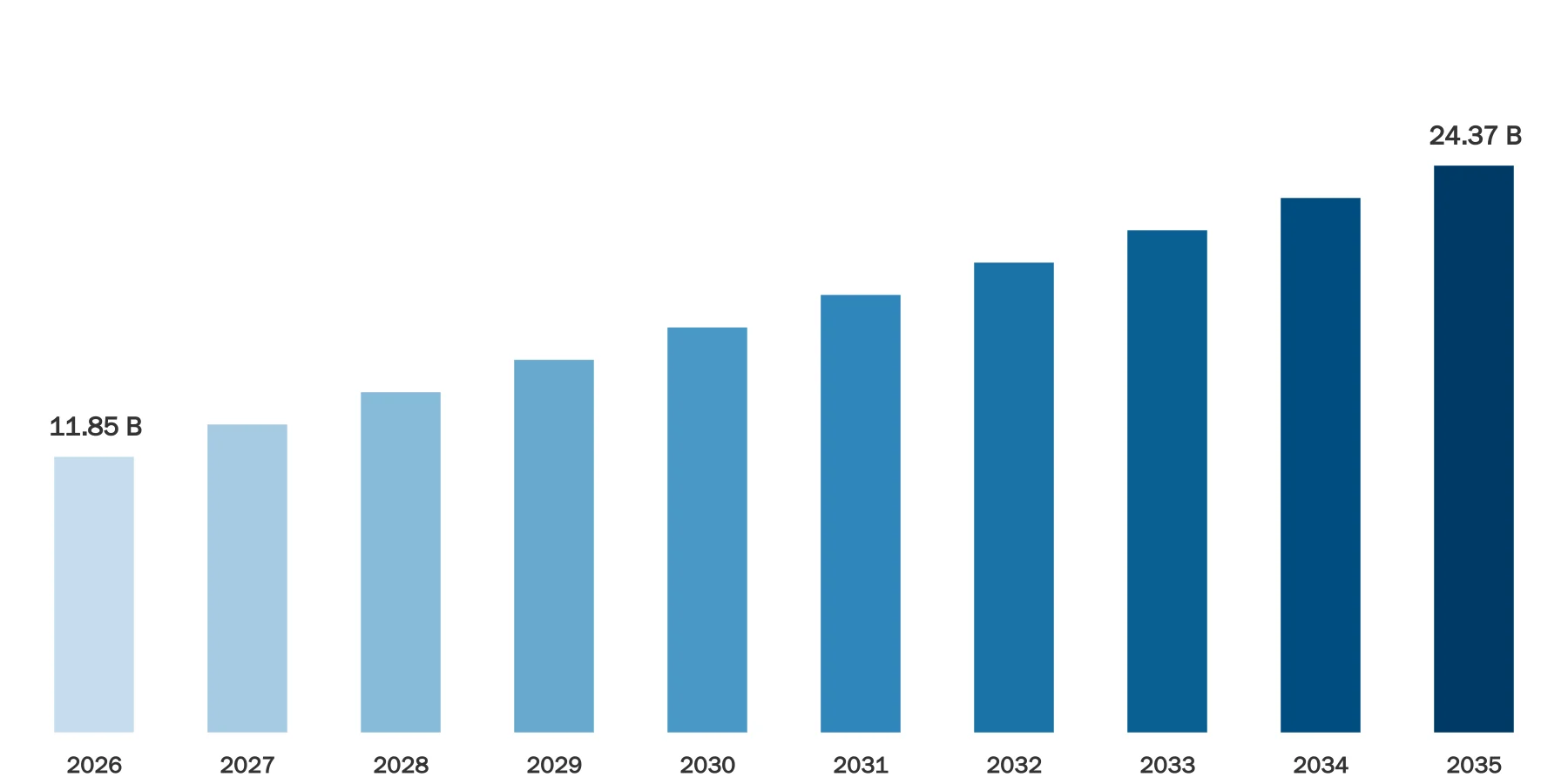
Source: Econ Market Research
Electronic toll collection (ETC) refers to a system that enables vehicles to pay tolls electronically, eliminating the need for manual toll collection processes. This technology utilizes various methods such as RFID, GPS, and DSRC to facilitate seamless transactions between vehicles and toll booths, thereby reducing congestion and enhancing overall transportation efficiency.
The market is propelled by factors such as the growing adoption of smart transportation solutions, government initiatives to modernize transportation infrastructure, and the rising need for reducing traffic congestion and carbon emissions. Key players in the ETC market are continuously investing in research and development to innovate new solutions and expand their product offerings to cater to the evolving needs of transportation authorities and commuters. With the increasing focus on smart cities and sustainable mobility solutions, the global ETC market is poised for further growth in the coming years.
Electronic Toll Collection Dynamics
Technological advancements play a pivotal role, as innovations in RFID, GPS, and DSRC technologies drive the evolution of ETC systems, enabling faster and more secure transactions. The market dynamics are further fuelled by government initiatives aimed at modernizing transportation infrastructure and promoting smart city development. Regulatory mandates mandating the implementation of ETC systems to reduce traffic congestion and carbon emissions also contribute significantly to market expansion.
Moreover, the increasing adoption of connected vehicles and the Internet of Things (IoT) ecosystem bolster the demand for integrated ETC solutions that offer seamless connectivity and interoperability across diverse transportation networks. Shifting consumer preferences and behaviour patterns also impact market dynamics, as commuters look for easier and more convenient ways to pay for tolls. In addition, the rise of alternative payment methods, like contactless and mobile wallets, is changing the way that toll collection systems operate and encouraging market players to compete and innovate.
The market dynamics are significantly impacted by economic factors, such as transportation budgets, infrastructure investments, and regulatory frameworks. These factors also affect the global pace and scope of ETC deployment. Key market players constantly work to improve their product offerings, broaden their geographic reach, and establish strategic alliances in the face of these dynamic forces in order to take advantage of new opportunities and obtain a competitive edge in the quickly changing Electronic Toll Collection market landscape.
Electronic Toll Collection Drivers
Government Initiatives and Regulations:
The government',s initiatives to update the transportation system and ease traffic are major factors propelling the market for electronic toll collection (ETC). As part of larger initiatives to modernise transport and create smart cities, more and more governments around the world are requiring the adoption of ETC systems. These programmes encourage more investment in electronic tolling technologies and establish a regulatory environment that is favourable to ETC solution providers. Furthermore, regulatory mandates frequently offer a precise implementation roadmap for ETC systems, promoting market expansion and adoption rates.
Technological Advancements:
Innovation in Electronic Toll Collection systems is being propelled by the swift progress of technology, specifically in the areas of RFID, GPS, and DSRC technologies. These developments improve commuters', user experiences, facilitate faster and more secure transactions, and increase interoperability. Moreover, integrated ETC solutions that provide seamless connectivity and interoperability across various transportation networks have been developed as a result of technological advancements. Because of this, infrastructure owners and transportation authorities are spending more money on sophisticated ETC systems in an effort to increase the effectiveness of traffic management overall, lower operating expenses, and streamline toll collection procedures.
Restraints:
One of the primary restraints hindering the widespread adoption of Electronic Toll Collection systems is the high initial investment costs associated with infrastructure deployment and technology implementation. Setting up ETC infrastructure, including toll gantries, RFID readers, and backend systems, requires significant capital expenditure, which can pose financial challenges for transportation authorities and infrastructure operators, particularly in emerging economies. Moreover, the need for periodic maintenance, software upgrades, and system integration further adds to the total cost of ownership, making it difficult for some stakeholders to justify the investment in ETC systems.
Privacy and Security Concerns
Concerns about security and privacy are yet another major barrier to the market for electronic toll collection. ETC systems inherently carry the risk of data breaches, identity theft, and unauthorised access because they gather and retain sensitive user data, such as travel habits and vehicle identification information. Concerns over the privacy implications of ETC systems are growing among consumers and regulatory bodies, which has led to calls for strict security protocols, robust data protection measures, and open Data Governance frameworks. In order to increase consumer trust and confidence in ETC systems and encourage wider adoption across a variety of demographic segments, it is imperative that these privacy and security concerns are addressed.
Opportunities:
Integration with Smart Mobility Solutions
One major avenue for market expansion is the combination of smart mobility solutions and electronic toll collection systems. Through the utilisation of cutting-edge technologies like artificial intelligence, machine learning, and predictive analytics, ETC providers are able to provide value-added services like dynamic pricing, real-time traffic management, and customised travel suggestions. ETC solutions that are seamlessly integrated with other smart city projects, like linked vehicle platforms and intelligent transportation systems, can improve commuter experiences, lower congestion, and increase overall transportation efficiency.
Segment Overview
By Type
Electronic toll collection systems are categorised by type, taking into account their main purposes. Smooth toll payment transactions are made possible by Automatic Vehicle Identification Systems, which allow cars to approach toll booths and be automatically recognised. Dynamic toll pricing and traffic management are made possible by Automatic Vehicle Classification Systems, which classify vehicles according to size, weight, and other factors using cutting-edge technologies. To ensure that toll laws are followed, Violation Enforcement Systems are made to detect and punish cars that try to avoid paying the toll. Innovative solutions catered to particular operational needs and user requirements, like mobile payment apps or hybrid tolling systems, may be found in other types of ETC systems.
By Technology:
The segmentation by technology includes technological platforms utilized in Electronic Toll Collection systems. Dedicated Short Range Communication (DSRC) technology enables high-speed data transmission between toll booths and vehicles equipped with DSRC transponders, facilitating rapid toll payment processing. Radio Frequency Identification (RFID) technology utilizes radio waves to identify and track vehicles as they pass through tolling points, offering a cost-effective and efficient toll collection solution.
Global Positioning System (GPS) and Global Navigation Satellite System (GNSS) technologies leverage satellite-based positioning to enable accurate vehicle tracking and location-based tolling. Other emerging technologies, such as mobile payment solutions or cloud-based tolling platforms, continue to reshape the landscape of ETC systems, offering enhanced flexibility and convenience for users.
By Offering:
The segmentation by offering delineates the various components and services comprising Electronic Toll Collection solutions. Hardware components include toll gantries, RFID readers, transponders, and other physical infrastructure required for toll collection operations. Back-office systems encompass backend software platforms, data management systems, and toll administration interfaces, enabling efficient management and processing of toll transactions. Other services may include consulting, maintenance, and support services provided by ETC solution providers to optimize system performance and ensure regulatory compliance.
By End-user:
The segmentation by end-user identifies the primary user segments served by Electronic Toll Collection systems. Highway authorities and operators represent key end-users of ETC solutions deployed on toll roads and expressways, aiming to streamline toll collection processes, alleviate traffic congestion, and generate revenue for infrastructure maintenance and development. Urban areas, including cities and metropolitan regions, deploy ETC systems to manage congestion in toll zones, enforce access restrictions, and promote sustainable transportation modes. The segmentation by end-user reflects the diverse applications and operational contexts in which Electronic Toll Collection systems are deployed to address specific transportation challenges and enhance overall mobility experiences.
Electronic Toll Collection Overview by Region
North America stands as a prominent market for ETC systems, driven by robust transportation infrastructure, government investments in smart mobility initiatives, and a high degree of technological sophistication. The region witnesses significant adoption of advanced ETC technologies such as DSRC and RFID, coupled with stringent regulatory mandates aimed at improving traffic management and reducing environmental impacts. In Europe, the ETC market is characterized by a dense network of toll roads, bridges, and tunnels, supported by well-established regulatory frameworks and interoperable tolling systems across various countries.
The European market showcases a strong emphasis on interoperability and seamless cross-border travel, driving investments in standardized ETC solutions and interagency collaboration. Additionally, the region',s focus on sustainable transportation and smart city development further propels the adoption of ETC technologies as part of integrated urban mobility strategies. Driven by increasing urbanisation, growing transportation networks, and government initiatives to reduce traffic congestion and enhance transportation efficiency, the Asia Pacific region is emerging as a rapidly growing market for ETC systems.
Adopters of ETC technologies include China, India, and Japan, which modernise toll collection infrastructure and improve commuter experiences by utilising advances in RFID, GPS, and mobile payment solutions. Additionally, deliberate investments in digital infrastructure and smart transportation projects support sustainable urban development objectives by fostering the growth of ETC systems throughout the region and meeting the changing needs of urban populations.
Electronic Toll Collection Market Competitive Landscape
Leading companies such as Kapsch TrafficCom, Thales Group, and Conduent, Inc., among others, dominate the global ETC market through a combination of product innovation, strategic partnerships, and extensive geographical presence. These market players offer a comprehensive portfolio of ETC solutions encompassing hardware components, backend systems, and value-added services tailored to the diverse needs of transportation authorities and infrastructure operators worldwide. Moreover, these companies leverage their R&,D capabilities to develop cutting-edge technologies, including RFID, DSRC, and GPS/GNSS systems, to enhance the performance, reliability, and security of ETC systems.
The competitive landscape is further shaped by mergers, acquisitions, and partnerships aimed at expanding market reach, diversifying product offerings, and gaining a competitive edge. Market consolidation and strategic alliances enable companies to strengthen their market position, accelerate innovation cycles, and capitalize on emerging opportunities in the evolving transportation ecosystem. Additionally, emerging players and start-ups are disrupting the ETC market with innovative solutions such as mobile-based tolling apps, cloud-based tolling platforms, and blockchain-based payment systems, challenging traditional incumbents and driving industry-wide innovation.
Electronic Toll Collection Market Leading Companies:
Kapsch TrafficCom AG
Conduent, Inc.
TransCore
Thales Group
Cubic Corporation
Siemens AG
EFKON GmbH
Neology, Inc.
Q-Free ASA
Mitsubishi Heavy Industries, Ltd.
Global Electronic Toll Collection Report Segmentation
Electronic Toll Collection Market Report Scope & Segmentation
| Attributes | Details |
|---|---|
Market Size (Current) | US$ 11.85 Billion in 2026 |
Market Size (Forecast) | US$ 24.37 Billion in 2035 |
Growth Rate | CAGR of 8.34% from 2026 to 2035 |
Forecast Period | 2026 – 2035 |
Base Year | 2025 |
Historical Data Available | Yes |
Regional Scope | Global |
Segments Covered | By Technology
By Application
By Offering
|
Frequently Asked Questions
Common questions about this report
The study period covers historical insights and forecast projections for the period 2026-2035.
About the Author
Market research expert with years of industry experience

Related Reports
Explore more market insights from the same category