

E-Ticketing System Market
E-Ticketing System Market Size, Share, Trends, Growth, and Industry Analysis, By Component (Hardware, Software, Services), By Deployment Mode (On-Premise, Cloud), By Application (Transportation, Entertainment, Sports, Healthcare), Regional Analysis and Forecast Period 2026-2035
Market Overview
As per Econ Market Research analysis, the Global E-Ticketing System Market generated revenue of US$ 28.1 Billion in 2026 and is forecast to achieve US$ 78.2 Billion by 2035, at a CAGR of 12.04% during the study period 2026–2035. The base year considered is 2025.
E-Ticketing System Market Size 2025-2035 (USD Billion)

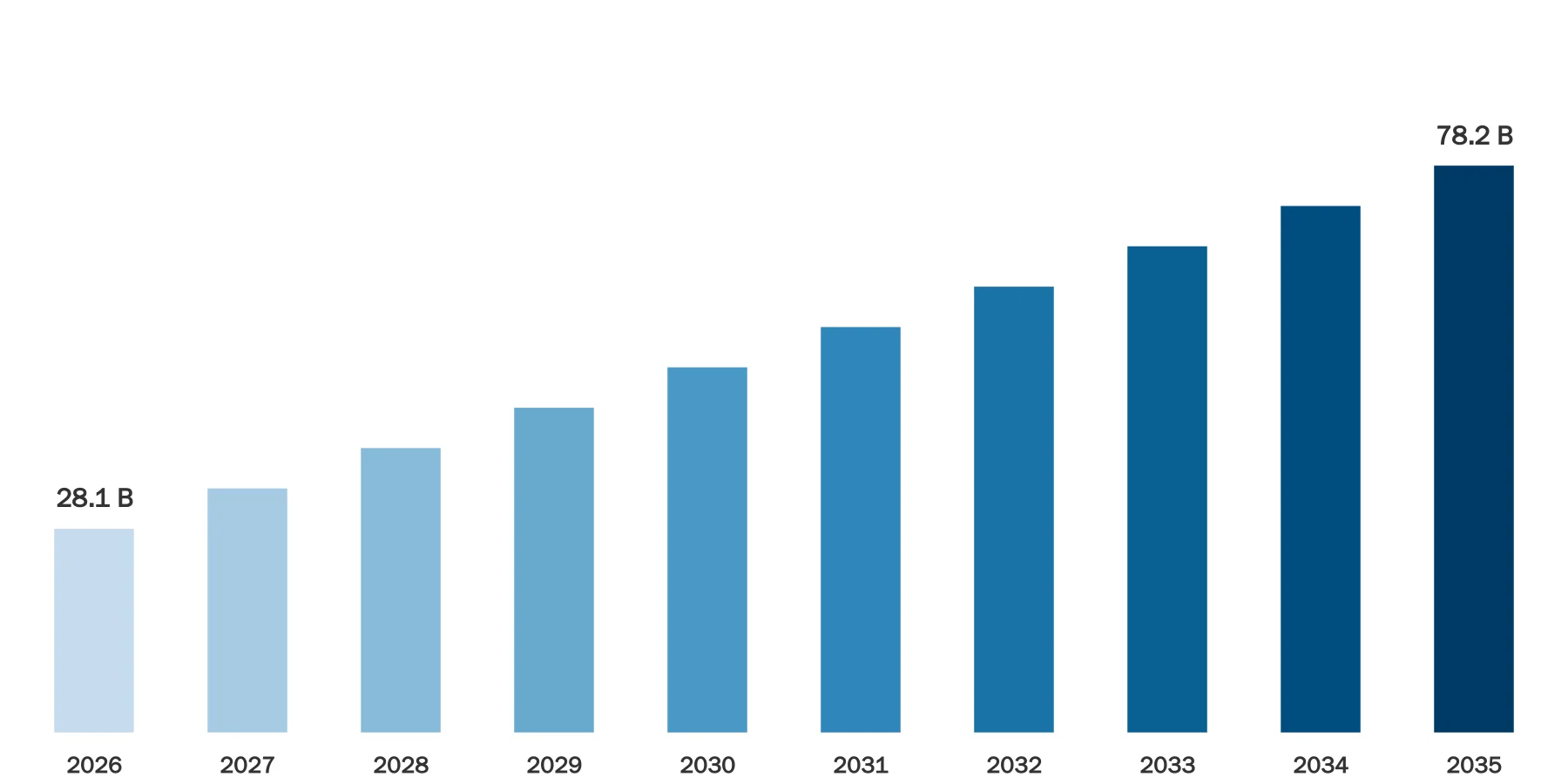
Source: Econ Market Research
In the field of event management and ticketing, the e-ticketing system market has become a revolutionary force. E-ticketing simplifies the buying, distribution, and validation of tickets by utilizing digital technology. This creative idea gives consumers more convenience while also giving event planners effective tools for smoothly managing access and attendance tracking. In today',s dynamic and digitalized world, the e-ticketing system has revolutionized the way tickets are bought and managed. Its capabilities to reduce paper waste, improve accessibility, and provide real-time updates have made it an indispensable component across a wide range of industries, including entertainment, transportation, and sports.
E-Ticketing System Market Dynamics
The market for e-ticketing systems is constantly changing as a result of advancing technology and changing consumer demands. Market expansion is driven by rising levels of digitalization, mobile connection, and contactless transactions. The introduction of e-ticketing as a safer alternative has been expedited by the COVID-19 epidemic. The market is being shaped by innovations like blockchain for safe transactions and AI-driven analytics for individualized experiences. The industry is expanding due in part to increased internet events and regulatory assistance. But issues like Cyber Security worries and interoperability requirements still exist, necessitating constant adjustment to deal with the ever-changing e-ticketing system industry.
E-Ticketing System Market Drivers
Digital Transformation
In order to improve client experiences, streamline operations, and promote agility, this strategic makeover integrates cutting-edge technology such as artificial intelligence and cloud computing. Streamlining processes, utilizing data-driven insights, and quickly responding to market shifts give businesses that adopt digital transformation a competitive edge. It sparks a culture revolution that encourages tech-savvy thinking at all levels and puts companies in a position to prosper in the rapidly changing digital economy. This ensures their relevance and resilience in a time when success is determined by technical advancement.
Rise of Online Events
Advances in technology and evolving societal trends are driving the growth of online events. Online events offer a scalable and convenient means of worldwide participation, made possible by strong internet connectivity and digital platforms. The necessity for virtual alternatives has been highlighted by factors like the COVID-19 pandemic, which have expedited this trend. It is appealing since it is affordable, has less logistical restrictions, and can reach a variety of groups. The power of digital communication tools to provide immersive and interactive experiences is driving the growth of online events, transforming global information sharing, collaboration, and engagement for both individuals and companies.
Restraints:
Cybersecurity Concerns
The widespread use of digital technologies is severely hampered by cybersecurity concerns. The rising frequency and complexity of cyberattacks make consumers and businesses nervous, which makes it more difficult to integrate cutting-edge systems smoothly. User confidence in digital platforms is negatively impacted by high-profile data breaches and privacy violations that undermine trust. Implementing technology becomes more complex and expensive due to the ongoing requirement for strong security measures. Making large expenditures in cybersecurity infrastructure and awareness campaigns is necessary to address these worries.
Dependency on Internet Connectivity
Reliance on online services, such as e-ticketing and other digital transactions, becomes difficult in places with spotty or limited internet connectivity. This restriction impedes smooth user experiences, restricts accessibility, and might keep out populations with insufficient connectivity. The necessity for alternative methods to guarantee continuous functionality is highlighted by the dependability of critical services linked to internet access and the possibility of service interruptions. To overcome this limitation, new strategies and infrastructure development are needed to improve connectivity and lessen reliance on dependable internet access.
Opportunities:
Mobile App Expansion
Businesses have a great chance to capitalize on the growing use of smartphones through mobile app expansion, which promotes individualized and direct consumer contact. Creating or growing a Mobile Application gives you an easy way to offer services, improve user experiences, and reach more people. Businesses may take advantage of this global boom in mobile device usage to build customer loyalty, provide frictionless transactions, and utilize mobile-specific capabilities. Due to the widespread use of smartphones, real-time communication, focused advertising, and data-driven insights are made possible, making the expansion of mobile apps a viable strategy to adapt to changing customer demands and spur company expansion.
Rise of Hybrid Event Models
Expanded inclusivity and reach are made possible by combining virtual and in-person components. A worldwide audience is fostered by hybrid events, which provide attendees with the option to participate online or in person. Companies can take advantage of this to streamline event planning, cut expenses, and raise participation through interactive digital experiences. Adopting hybrid models provides a strategic path for innovation and growth, enabling adaptability and resilience in the dynamic landscape of events. It also fits with changing technical and societal trends.
Segment Overview
By Type
Based on type, the global e-ticketing system market is divided into email ticketing systems and web-based ticketing systems. The web-based ticketing systems category dominates the market with the largest revenue share in 2023. Users get access to a centralized, interactive platform through web-based ticketing systems. In addition, they frequently provide secure payment methods, real-time event information, and seat selection. These systems are flexible enough to accommodate multiple sectors and offer a wider variety of functionalities. Because email is so widely used for communication, email ticketing systems are incredibly comfortable and easy to use. Users with basic internet connectivity can access them, and they provide a simple way of ticket delivery.
By Application
Based on the application, the global e-ticketing system market is categorized into aviation, railway, scenic spot, and others. The railway category leads the global e-ticketing system market with the largest revenue share in 2023. Train ticket management and issuing are handled electronically by railway e-ticketing systems. Rail travel is made more convenient and efficient for passengers by the availability of online ticket purchases, digital confirmations, and electronic tickets for boarding.
E-ticketing systems in the aviation industry simplify the computerized booking and management of airline tickets. To enable quick check-in and boarding, passengers receive digital tickets, which are frequently in the form of barcodes or QR codes. The category of scenic spots includes travel destinations, theme parks, and other leisure spaces that use electronic ticketing. Long lines can be avoided by purchasing digital tickets in advance. These passes allow visitors to enter the picturesque location.
E-Ticketing System Market Overview by Region
The global e-ticketing system market is categorized into North America, Europe, Asia-Pacific, and the Rest of the World. North America emerged as the leading region, capturing the largest market share in 2023. The success of e-ticketing solutions is partly attributed to the region',s high internet penetration rate, sophisticated technological infrastructure, and extensive digital usage. Digital ticketing platforms are widely used by major industries like entertainment, railroads, and airlines, which propels market expansion. Further solidifying North America',s position are the existence of significant market participants, continuous technical advancements, and a proactive stance toward digital transformation.
Furthermore, the region is ideal for the successful deployment and broad acceptance of e-ticketing systems due to its tech-savvy populace and early technological adoption culture. Throughout the forecast period, Asia-Pacific is anticipated to post a significant CAGR. This is explained by the region',s quickening pace of technical development, growing digital infrastructure, and growing industry acceptance of e-ticketing systems. Growing middle-class consumer demand, population growth, and an increase in mobile device usage all contribute to the increased need for easy-to-use digital ticketing experiences. The industry is growing because of government programs that support digitalization and smart city developments.
E-Ticketing System Market Competitive Landscape
In the global e-ticketing system market, a few major players exert significant market dominance and have established a strong regional presence. These leading companies remain committed to continuous research and development endeavors and actively engage in strategic growth initiatives, including product development, launches, joint ventures, and partnerships. By pursuing these strategies, these companies aim to strengthen their market position, expand their customer base, and capture a substantial share of the market.
E-Ticketing System Market Leading Companies:
Sdawn Intelligent
Chengdu Monkey Software
ETICKETS.HK
Laravel
Jayam Solutions
ZEBRA Consultants
FELA Management
Weezevent
Acer
Archimede Informatica, and various others.
E-Ticketing System Market Recent Developments
In January 2024, Indian Railways, the country',s largest transportation company, is creating a super app that would combine the ticketing, train tracking, and other services it already offers through more than a dozen mobile apps.
In September 2023, The Tripura Road Transport Corporation implemented an e-ticketing system to enhance passenger convenience. TRTC and Clear Trip Pvt Ltd have partnered to provide ticketing services for a variety of domestic and international flights. Travelers can now more easily arrange their trips, both domestically and internationally, with the availability of these services directly from TRTC counters for TRTC subscribers.
E-Ticketing System Market Report Segmentation
E-Ticketing System Market Report Scope & Segmentation
| Attributes | Details |
|---|---|
Market Size (Current) | US$ 28.1 Billion in 2026 |
Market Size (Forecast) | US$ 78.2 Billion in 2035 |
Growth Rate | CAGR of 12.04% from 2026 to 2035 |
Forecast Period | 2026 – 2035 |
Base Year | 2025 |
Historical Data Available | Yes |
Regional Scope | Global |
Segments Covered | By Component
By Deployment Mode
By Application
|
Frequently Asked Questions
Common questions about this report
The study period covers historical insights and forecast projections for the period 2026-2035.
About the Author
Market research expert with years of industry experience

Related Reports
Explore more market insights from the same category