

E-Commerce Software Market
E-Commerce Software Market Size, Share, Trends, Growth, and Industry Analysis, By Deployment (SaaS, On-Premise), By Business Model (B2B, B2C), By End-User (Apparel andamp; Fashion, Electronics, Food andamp; Beverage, Healthcare, Others), Regional Analysis and Forecast Period 2026-2035
E-Commerce Software Market Overview
As per Econ Market Research analysis, the Global E-Commerce Software Market valuation stood at US$ 9.14 Billion in 2026 and is expected to reach US$ 24.26 Billion by 2035, growing at a steady CAGR of 12.98% from 2026 to 2035. 2025 serves as the base year.
E-Commerce Software Market Size 2025-2035 (USD Billion)

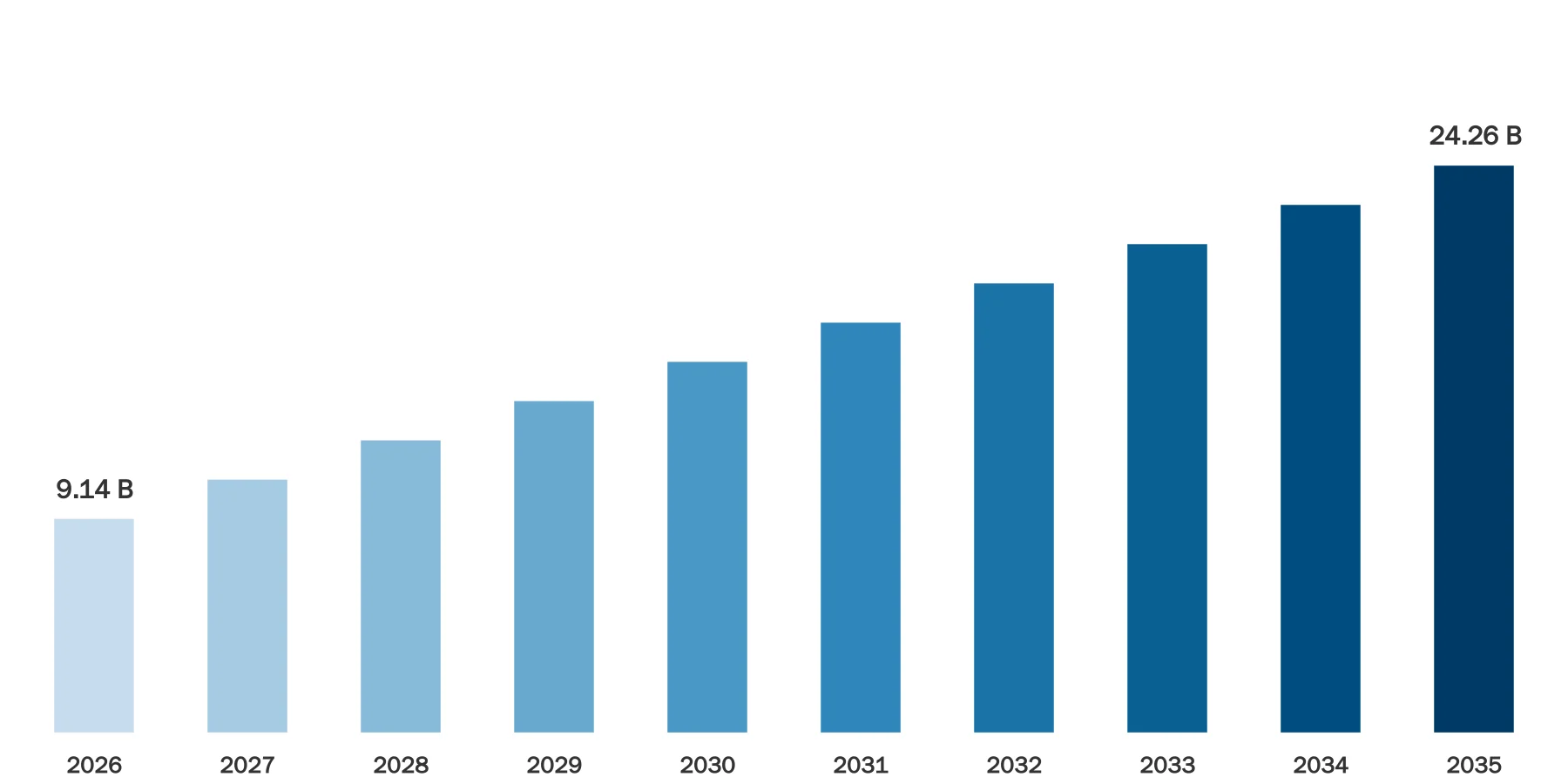
Source: Econ Market Research
The rise in online retail around the globe has created a dynamic and competitive environment in the e-commerce software business. For companies of all sizes, this software makes digital transactions, inventory control, and customer relationship management simple. Various solutions are provided by major businesses, such as payment gateways, analytics tools, and configurable platforms. Robust e-commerce software is becoming more and more necessary as organizations embrace digital transformation. Innovation is prevalent in the business, and developments in mobile and Artificial Intelligence will influence how online shopping is done in the future. E-commerce software companies work hard to satisfy the changing demands of contemporary enterprises in the online marketplace with an emphasis on scalability and user experience.
E-COMMERCE SOFTWARE MARKET:
E-Commerce Software Market Dynamics
Technological innovations that propel speed, such as the integration of blockchain and artificial intelligence (AI), improve security and client experiences. The progress of the market is influenced by shifting consumer tastes and the growth of mobile commerce. Key elements impacting vendor distinction are affordable prices, scalability, and intuitive user interfaces. The need for cross-border transaction capabilities and multi-currency support is increased by the continuous globalization of e-commerce. Furthermore, fluctuations in regulations and worries about Cyber Security affect market dynamics and necessitate ongoing adjustments.
E-Commerce Software Market Drivers
Technological Advancements
Cutting-edge solutions are made possible by ongoing advancements in advanced analytics, blockchain, and artificial intelligence. These technologies provide characteristics like rigorous security measures, effective supply chain management, and personalized recommendations, which improve the capabilities of e-commerce software. Leveraging these developments becomes essential for firms looking to meet changing consumer expectations and remain competitive. This leads to the emergence of e-commerce platforms, which offer improved user experiences, streamlined processes, and a safe environment for online transactions.
User Experience Enhancement
In the e-commerce software sector, user experience enhancement plays a pivotal role by highlighting the significance of providing online shoppers with smooth, easy-to-use, and fulfilling encounters. Businesses understand that they must optimize their e-commerce platforms as consumers place a greater value on efficient operations and user-friendly interfaces. Businesses engage in mobile design, user-friendly navigation, and tailored experiences to draw in and hold onto customers. Improved user experiences boost conversion rates and brand loyalty in addition to increasing consumer happiness.
Restraints:
High Upfront Costs
It can be difficult for businesses, especially smaller ones with tighter finances, to make large initial investments. For businesses looking to go online, these costs which include infrastructure, software licensing, and implementation costs create a barrier to entry. The financial burden could prevent some companies from adopting cutting-edge e-commerce solutions, which would limit their potential to take advantage of opportunities in digital commerce. It will take creative pricing schemes, affordable substitutes, and long-term value-proving tactics to overcome this barrier and open up e-commerce software to a wider range of businesses.
Integration Challenges
When integrating new e-commerce solutions with current systems and outside apps, businesses frequently run into difficulties. Operations disruptions and longer implementation times can result from compatibility problems, data migration obstacles, and the requirement for changes. These difficulties could deter businesses from implementing cutting-edge e-commerce platforms, particularly if they are concerned about possible alterations to their current procedures. To achieve a smooth transition and reduce operational disruptions, addressing integration limitations involves thorough compatibility studies, streamlined integration processes, and cooperative efforts between software vendors and enterprises.
Opportunities:
Rise of Mobile Commerce
E-commerce platforms that are built for seamless mobile experiences are in high demand as more and more customers shop online using mobile devices. Businesses can profit from this trend by creating mobile-friendly interfaces, and responsive designs, and utilizing technologies like Progressive Web Apps (PWAs). E-commerce software suppliers may open up new markets, improve client engagement, and maintain their competitive edge by catering to the demands of a customer base that is increasingly mobile-centric. This will promote higher sales and greater brand loyalty.
E-commerce Platform Customization
Businesses can adapt their online presence to particular industry requirements, brand aesthetics, and distinctive client experiences by offering fully configurable solutions. This adaptability improves branding coherence, operational effectiveness, and user happiness. Providing a variety of customization choices, like adjustable interfaces and modular features, enables companies to establish unique and competitive online stores. By offering flexible and adaptable platforms that meet the unique needs of companies, e-commerce software vendors can take advantage of this chance to build enduring client relationships and competitiveness in the market.
Segment Overview
By Deployment Mode
Based on deployment mode, the global e-commerce software market is divided into on-premises and cloud. The cloud category dominates the market with the largest revenue share in 2023. Cloud-based e-commerce software can be accessed online and runs on servers that are externally hosted by other companies. Companies pay for the features and resources they require when they subscribe to cloud services, and the provider takes care of security, upgrades, and server upkeep. When e-commerce software is deployed on-premises, it is set up and operated on servers that are housed inside the company',s actual location.
By Application
Based on the application, the global e-commerce software market is categorized into apparel &, fashion, home &, electronics, automotive, BFSI &, technology, food &, beverage, healthcare, and others. The apparel &, fashion category leads the global e-commerce software market with the largest revenue share in 2023. This category of e-commerce software serves companies in the fashion and apparel sector by offering online storefronts for the sale of apparel, accessories, and related goods.
E-commerce software is used by companies in the home and electronics industry to sell a variety of goods, including electronics, gadgets, appliances, and other related products. E-commerce systems that support the automotive sector and facilitate online sales of automobiles, Auto Parts, accessories, and associated services are included in the automotive category. This category of e-commerce software is designed specifically for companies in the food and beverage sector, enabling online ordering, meal delivery services, and the selling of associated goods.
E-Commerce Software Market Overview by Region
The global e-commerce software market is categorized into North America, Europe, Asia-Pacific, and the Rest of the World. North America emerged as the leading region, capturing the largest market share in 2023. Innovative enterprises and a tech-savvy consumer base power the region',s advanced e-commerce sector. North America',s supremacy is aided by major businesses, such as well-known technology providers and e-commerce platforms.
A wide range of businesses, including technology, retail, and finance, contribute to the need for advanced e-commerce solutions. Furthermore, North America has a culture of early technology adoption and advantageous legislative frameworks that position it as a leader in influencing the direction of the global e-commerce software business. Throughout the forecast period, Asia-Pacific is anticipated to post a significant CAGR.
Driven by an expanding middle class, swift adoption of digital technology, and a flourishing e-commerce sector, the area exhibits great promise. The strong CAGR is also attributed to growing mobile commerce, encouraging government programs, and technical innovation. Asia-Pacific is a major driver behind the adoption of e-commerce solutions by businesses in a variety of industries. This is due to the region',s dynamic digital environment, expanding consumer demand, and steady economic growth.
E-Commerce Software Market Competitive Landscape
In the global e-commerce software market, a few major players exert significant market dominance and have established a strong regional presence. These leading companies remain committed to continuous research and development endeavors and actively engage in strategic growth initiatives, including product development, launches, joint ventures, and partnerships. By pursuing these strategies, these companies aim to strengthen their market position, expand their customer base, and capture a substantial share of the market.
E-Commerce Software Market Leading Companies:
Adobe
BigCommerce Pty. Ltd.
HCL Technologies Limited
Intershop Communications AG
Oracle
Pitney Bowes Inc.
Salesforce.com, Inc.
SAP SE, and various others
E-Commerce Software Market Recent Developments
In June 2023, Open Network for Digital Commerce (ONDC) and Google cooperated. Google announced the establishment of an accelerator program for ONDC as part of this cooperation, which aims to provide businesses with a range of tools and resources to assist them in developing and evaluating their e-commerce operations.
In April 2023, Tira is an omni-channel beauty goods sale platform that Reliance sale launched. Tira provides users with a personalized and easy-to-use shopping experience. With its omnichannel retail approach, it serves as a destination for both domestic and foreign brands.
E-Commerce Software Market Report Segmentation
E-Commerce Software Market Report Scope & Segmentation
| Attributes | Details |
|---|---|
Market Size (Current) | US$ 9.14 Billion in 2026 |
Market Size (Forecast) | US$ 24.26 Billion in 2035 |
Growth Rate | CAGR of 12.98% from 2026 to 2035 |
Forecast Period | 2026 – 2035 |
Base Year | 2025 |
Historical Data Available | Yes |
Regional Scope | Global |
Segments Covered | By Deployment
By Business Model
By End-User
|
Frequently Asked Questions
Common questions about this report
The study period covers historical insights and forecast projections for the period 2026-2035.
About the Author
Market research expert with years of industry experience

Related Reports
Explore more market insights from the same category