

E-cigarette and Vape Market
E-cigarette and Vape Market Size, Share, Trends, Growth, and Industry Analysis, By Product (Disposable, Rechargeable, Modular Devices), By Battery Mode (Automatic, Manual), By Composition (Nicotine, Non-nicotine), By Distribution Channel (Online, Offline), Regional Analysis and Forecast Period 2026-2035
Market Overview
As per Econ Market Research analysis, the Global E-cigarette and Vape Market was recorded at US$ 48.18 Billion in 2026 and is projected to expand to US$ 260.59 Billion by 2035, registering a CAGR of 20.4% over the forecast period. The base year used is 2025.
E-cigarette and Vape Market Size 2025-2035 (USD Billion)

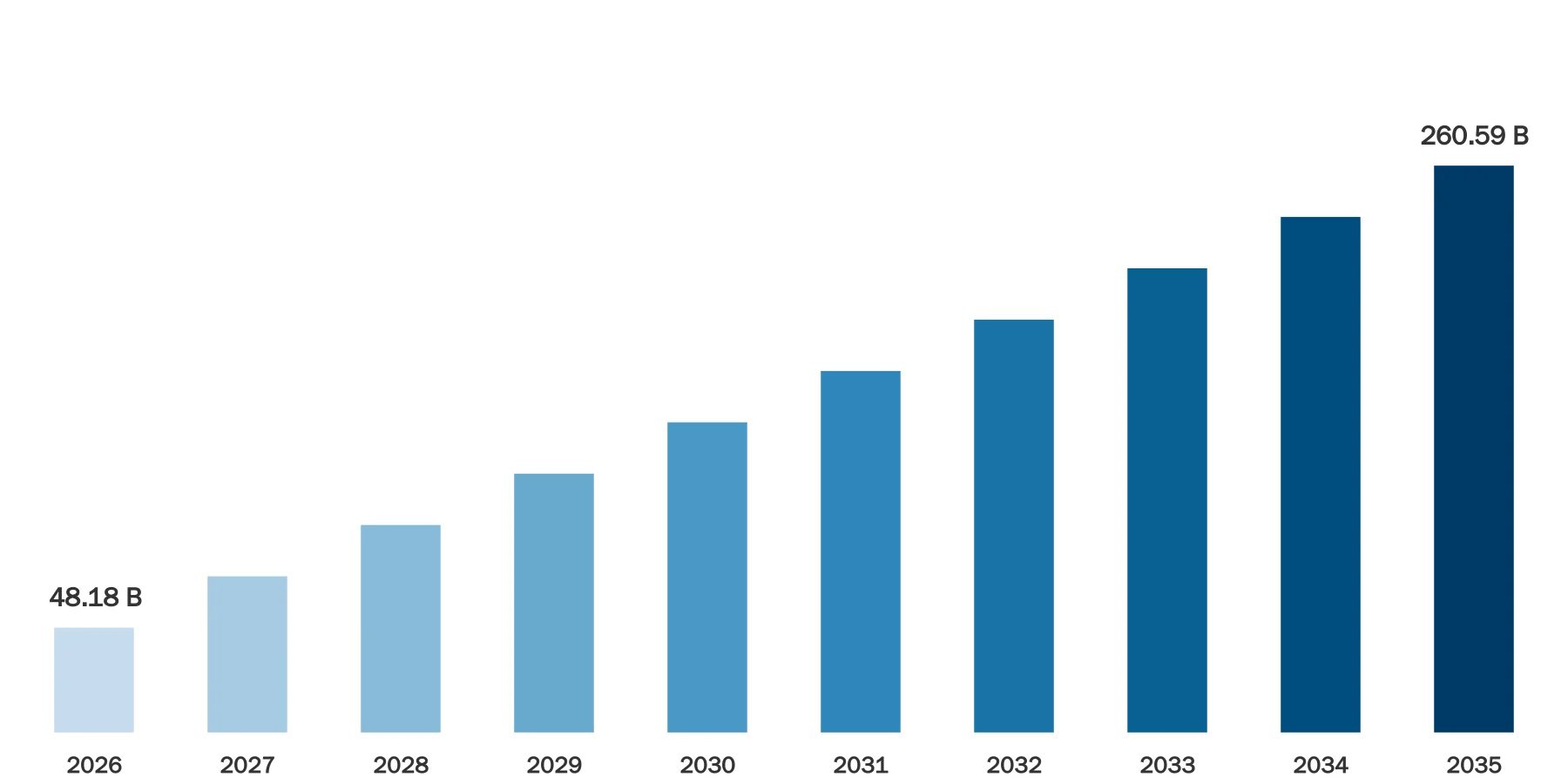
Source: Econ Market Research
Electronic cigarettes, often known as vapes, work by heating a liquid solution to produce an aerosol that users inhale. They are substitutes for conventional smoking, frequently with flavourings and nicotine. Research and discussion on their long-term health implications are still ongoing. E-cigarettes were first introduced as a possible substitute for traditional tobacco cigarettes, providing users a way to fulfil nicotine cravings without the negative effects of smoking tobacco. As time has passed, the market has grown extensively, offering a variety of products to suit various preferences and usage habits.
The e-cigarette and vape industry have seen significant growth in recent years due to factors like rising awareness of health risks tied to smoking, changing consumer preferences for smoke-free options, and advancements in technology leading to more innovative products. This growth has also brought about regulatory challenges as authorities aim to balance public health concerns with the promotion of harm reduction and innovation.
While some countries have adopted e-cigarettes as a tool for harm reduction and put in place supportive regulations, others have implemented stricter measures to address worries about youth starting to use them and possible long-term health effects. Although there are obstacles, the global e-cigarette and vape industry is projected to keep expanding, driven by constant product improvements, broader distribution networks, and changing consumer tastes. Yet, the market environment is always changing due to regulations, industry mergers, and shifts in consumer habits. This means it is important for individuals involved in the industry to stay updated and be ready to adjust to market changes.
E-cigarette and Vape Dynamics
The e-cigarette and vape market are influenced by various factors such as consumer preferences, regulations, technology, and public health issues. Consumers', changing preferences towards healthier choices and smoke-free options drive the demand for e-cigarettes and vapes. People also see e-cigarettes as safer alternatives to traditional smoking, which affects their purchasing decisions, especially for those trying to quit or cut down on tobacco.
However, government regulations present both opportunities and challenges for companies in the market. Regulations in certain regions have helped the market grow by setting clear rules and encouraging new ideas. But in other places, stricter rules are in place to prevent young people from starting and to reduce health risks. The different rules in different places make the market more complicated and can affect how products are made available and sold.
New technology influences how products are made and how they are used by consumers. Manufacturers are always coming up with new ideas to make their products better in terms of performance, safety, and user satisfaction. For example, some e-cigarettes and vapes now come with options to adjust nicotine levels, control temperature, and have modern designs to suit different tastes. Public health initiatives and research also play a role in shaping consumer opinions and government regulations regarding these products.
E-cigarette and Vape Drivers
Health Consciousness
The growing understanding of the health dangers linked to traditional tobacco smoking is a key factor propelling the e-cigarette and vape industry. With an increasing number of people prioritizing their health and looking for alternatives to smoking, the interest in e-cigarettes and vapes as potentially safer choices is on the rise. Consumers are attracted to the idea that e-cigarettes provide a smoke-free option, which could potentially decrease their exposure to harmful substances present in tobacco smoke. This trend is especially noticeable among smokers who are actively attempting to quit or cut back on their tobacco use, as well as among younger demographics worried about the potential long-term health effects of smoking.
Technological Innovation
Advancements in technology for e-cigarettes and vape devices are pushing market growth by constantly enhancing the performance, safety, and overall user experience. Manufacturers are actively investing in research and development to bring about new features like adjustable nicotine levels, temperature control, and stylish designs that cater to a wide range of consumers.
These improvements not only make e-cigarettes and vapes more appealing but also meet consumer demands for convenience and personalization. Additionally, progress in battery technology, heating components, and vaporization methods are leading to the creation of more effective and dependable devices, ultimately boosting consumer trust and usage.
Restraints:
Regulatory Uncertainty
Uncertainty in regulations is a major obstacle for the e-cigarette and vape market. Inconsistent rules in different areas can slow down growth and cause problems in the supply chain. Different methods of regulating e-cigarettes, from banning them altogether to placing strict restrictions on marketing and product standards, make it tough for manufacturers and distributors to meet all the requirements. Not knowing what future regulations look like also makes it hard for businesses to make investment choices and grow their markets, which can leave industry players feeling unsure.
Public Health Concerns
Concerns about public health related to the use of e-cigarettes and vapes, especially among young people, are a major obstacle for the market. Increasing numbers of young people starting to use these products and worries about becoming addicted to nicotine have LED to demands for stricter rules and more campaigns to raise awareness about the potential dangers of e-cigarette use.
Furthermore, ongoing discussions about the lasting impact of vaping on health and the safety of e-cigarette ingredients fuel consumer doubt and government scrutiny, possibly slowing down market expansion. Addressing these public health concerns requires concerted efforts from industry players, policymakers, and public health authorities to ensure responsible marketing practices and effective harm reduction strategies.
Opportunities:
Product Innovation and Diversification
The e-cigarette and vape industry present ample prospects for companies to set themselves apart and grow their market presence through ongoing innovation and expansion. By creating new flavours, designs, and technological advancements that align with changing consumer preferences, manufacturers can stay ahead of the curve and attract a wider consumer base.
Furthermore, introducing alternative nicotine delivery options like nicotine salts and pod-based systems not only gives customers more options but also helps build brand loyalty. By continuously pushing boundaries and adapting to market demands, businesses can secure their position in a competitive industry and attract more customers to their products.
Segment Overview
By Product
By Product market is segmented into, modular devices, disposable e-cigarettes, and rechargeable e-cigarettes. Modular devices, or vape mods, are customizable devices that let users adjust settings like voltage, wattage, and airflow for a personalized vaping experience. Disposable e-cigarettes are single-use devices filled with e-liquid and a built-in battery, offering convenience for users who want a hassle-free option. Rechargeable e-cigarettes are reusable devices that can be refilled with e-liquid and recharged via USB or other power sources, providing a more sustainable and cost-effective vaping solution.
By Distribution Channel
By Distribution Channel E-cigarettes and vapes are segmented by retail stores and online stores. Retail outlets include vape shops, convenience stores, gas stations, and tobacco retailers where one can buy e-cigarette products in person. Online platforms sell e-cigarettes and vaping supplies on websites, making it easy for customers who like to shop online. Both types of distribution are important for reaching customers and growing the market, each providing different benefits like product variety, convenience, and good customer service.
By Category
By Category market for e-cigarettes and vapes are segmented into closed system devices and open system devices. Closed system devices, also known as cig-a-likes or pod systems, come with pre-filled pods or cartridges that can be replaced when empty, making them easy and convenient for vaping. On the other hand, open system devices allow users to fill the device with their preferred e-liquid, giving them more flexibility and customization options. These two categories attract different customer segments, with closed systems being popular among beginners and casual users who value convenience, while open systems are favoured by experienced vapers who seek more control and customization.
E-cigarette and Vape Overview by Region
The market for e-cigarettes and vapes has different trends and dynamics in various regions globally. North America, especially the United States, is a major market for these products due to growing health awareness, a high smoking rate, and favourable regulations in some states. Europe also has a substantial market share, with countries like the UK and France leading in adoption rates and regulations that promote harm reduction strategies.
The Asia-Pacific region, including countries like China and Japan, presents both opportunities and challenges for the market, with a large consumer base and growing awareness of e-cigarettes', potential as smoking cessation aids, but also facing regulatory hurdles and cultural attitudes towards vaping. Additionally, regions such as Latin America and the Middle East are witnessing emerging markets for e-cigarettes and vapes, propelled by urbanization, changing lifestyles, and rising disposable incomes, albeit with regulatory landscapes that are still evolving.
E-cigarette and Vape Market Competitive Landscape
The competitive landscape of the e-cigarette and vape market is identified by a diverse array of players, ranging from established tobacco companies to independent vape manufacturers and startups. Leading tobacco companies such as Philip Morris International, British American Tobacco, and Japan Tobacco International have entered the market with their own e-cigarette brands, leveraging their extensive distribution networks and financial resources to compete for market share.
Independent vape manufacturers, including companies like JUUL Labs, NJOY, and blu, have also emerged as key players, drove innovation and capturing consumer interest with their sleek designs, advanced technology, and diverse flavour offerings. Additionally, the market features a multitude of smaller players and boutique brands, contributing to a competitive landscape marked by constant product innovation, marketing strategies, and regulatory compliance efforts. As the market continues to evolve and face regulatory challenges, competition intensifies as companies strive to differentiate themselves, expand their product portfolios, and capture market opportunities both domestically and globally.
E-cigarette and Vape Market Leading Companies:
Major Tobacco Companies:
Philip Morris International Inc. (PMI)
British American Tobacco (BAT)
Altria Group Inc.
Imperial Brands Plc
Japan Tobacco International (JTI)
Vape Technology Companies:
JUUL Labs Inc.
Shenzhen IVPS Technology Co., Ltd. (SMOK)
Shenzhen KangerTech Technology Co., Ltd.
Geekvape
Innokin Technology Ltd.
E-cigarette and Vape market Recent Developments
June 2023, Altria Group, Inc. revealed its acquisition of NJOY Holdings, Inc., a prominent vaping company. NJOY e-vapor products will now be marketed under NJOY, LLC (NJOY), a subsidiary of Altria. Additionally, the distribution of NJOY',s products will be handled by Altria Group Distribution Company.
June 2023, Imperial Brands plc announced its acquisition of nicotine pouches from TJP Labs, marking its entry into the U.S. oral market. This strategic move aims to expand ITG Brands', offerings, with 14 different product types set to be offered in a pouch format that performed well in consumer testing. The acquisition aligns with TJP Labs', commitment to developing products promoting global harm reduction, customer choice, and adaptability.
Oct 2022, Altria Group, Inc. unveiled a partnership with JT Group, a leading tobacco company, to launch a joint venture focusing on marketing and selling heated tobacco stick products in the U.S. This collaboration is geared towards expediting global harm reduction efforts by combining forces in product development and the global commercialization of smoke-free alternatives.
E-cigarette and Vape Report Segmentation
E-cigarette and Vape Market Report Scope & Segmentation
| Attributes | Details |
|---|---|
Market Size (Current) | US$ 48.18 Billion in 2026 |
Market Size (Forecast) | US$ 260.59 Billion in 2035 |
Growth Rate | CAGR of 20.4% from 2026 to 2035 |
Forecast Period | 2026 – 2035 |
Base Year | 2025 |
Historical Data Available | Yes |
Regional Scope | Global |
Segments Covered | By Product
By Battery Mode
By Composition
By Distribution Channel
|
Frequently Asked Questions
Common questions about this report
The study period covers historical insights and forecast projections for the period 2026-2035.
About the Author
Market research expert with years of industry experience

Dipali Bhingare serves as the Market Research Director at Econ Market Research. With a focus on translating complex global economic shifts into actionable business intelligence, she oversees the strategic direction of comprehensive market studies. Her work empowers organizations to navigate volatile industries through data-driven forecasting and deep-dive competitive analysis.
Related Reports
Explore more market insights from the same category