

Digital Textile Printing Market
Digital Textile Printing Market Size, Share, Trends, Growth, and Industry Analysis, By Printing Process (Direct To Garment, Dye-Sublimation), By Ink Type (Disperse, Reactive, Acid, Pigment), By Application (Clothing/Apparel, Home Textiles, Soft Signage, Others), Regional Analysis and Forecast Period 2026-2035
Market Overview
As per Econ Market Research analysis, the Global Digital Textile Printing Market was valued at approximately US$ 7.63 Billion in 2026 and is predicted to reach US$ 22.46 Billion by 2035, expanding at a CAGR of 12.75% over the forecast duration. The base year is 2025.
Digital Textile Printing Market Size 2025-2035 (USD Billion)

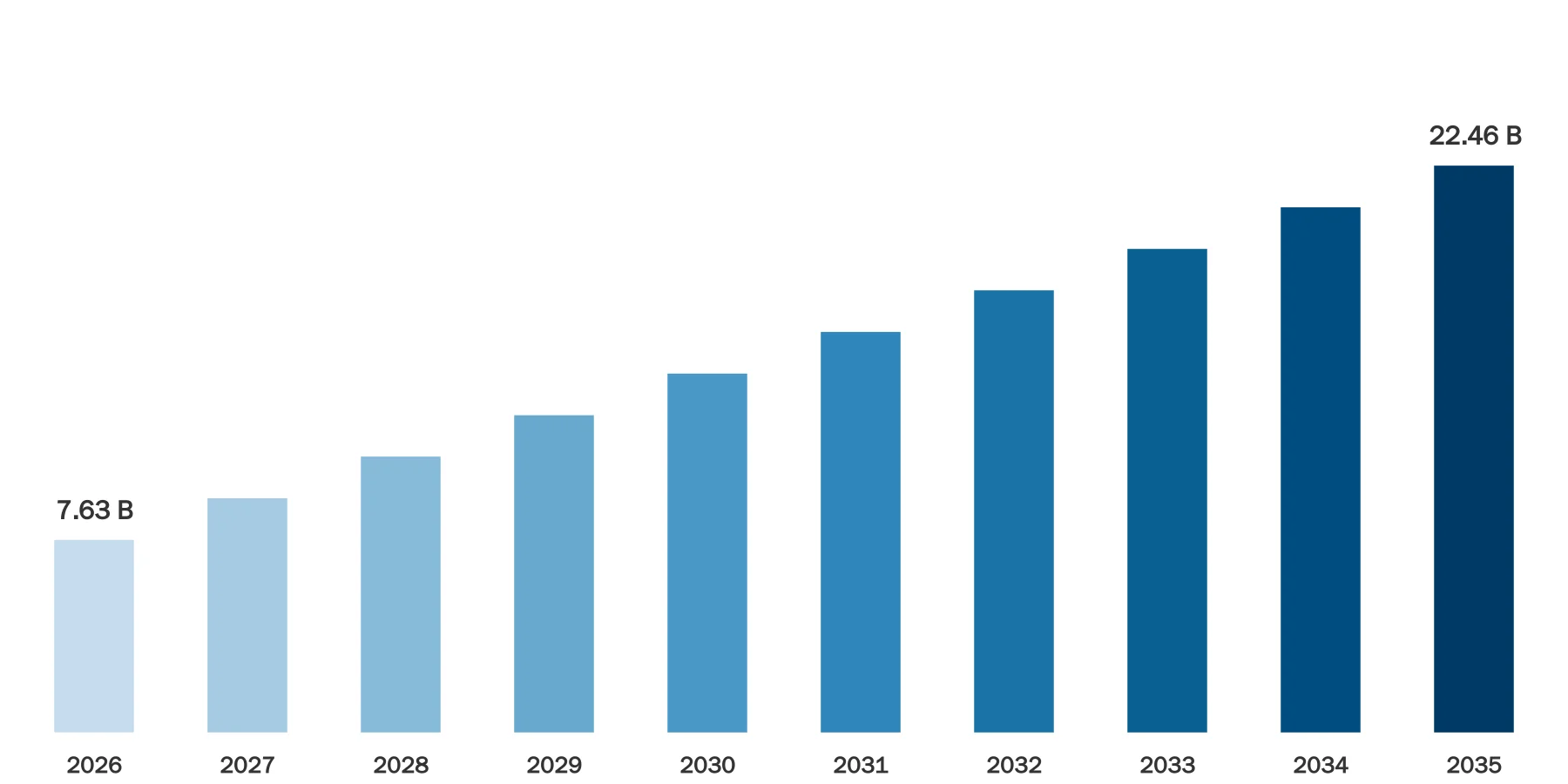
Source: Econ Market Research
In Textile Printing designs are directly printed onto fabrics using inkjet printers. Unlike traditional printing methods which involve lengthy setup processes and limited color options, digital textile printing offers quicker turnaround times, greater design flexibility, and a wider range of colors and patterns. This market has witnessed significant growth in recent years due to increasing demand for personalized and customized textiles across various industries including fashion, home dé,cor, and advertising.
Factors such as advancements in printing technologies, rising disposable incomes, and growing awareness regarding sustainability in textile production have also contributed to the expansion of the digital textile printing market globally. Digital printing has changed how fabrics are, made. It offers more options and is faster than old methods. Digital printing works for custom fashion pieces and big business jobs. It makes the textile, industry more creative. As technology improves and more places use digital printing, the market will grow more. This creates good chances for fabric makers, designers, and customers.
Digital Textile Printing Dynamics
Technological advancements play a crucial role, as continuous innovations in printing technologies enhance the efficiency, quality, and versatility of digital textile printing systems. Additionally, shifting consumer preferences towards personalized and customized textiles drive the demand for digital printing solutions, enabling manufacturers to offer a wide array of designs and patterns to cater to diverse tastes.
A major contributing factor is also the growing consciousness of sustainability in textile production, since digital printing is an environmentally beneficial alternative to traditional printing techniques because it uses less energy, water, and waste. Additionally, since consumers want for accessibility and convenience when buying custom-printed textiles, the market is developing due to the increasing adoption of e-commerce platforms and online retailing channels.
However, the high initial cost of digital printing equipment and the requirement for experienced people for system operation and maintenance are market hurdles. Furthermore, there are still questions about how long-lasting and color-fast digitally printed textiles are in comparison to traditional techniques, although these problems are being researched and developed.
Digital Textile Printing Drivers
Technological Advancements
The market for digital textile printing is expanding due to ongoing advancements in digital printing technology. Improved printheads, better ink formulations, and improved color management systems are examples of advancements that lead to increased print quality, quicker production times, and wider color gamuts. Thanks to these technological advancements, manufacturers can now develop sophisticated designs with finer details and a larger color spectrum, which makes digital textile printing more appealing. Furthermore, technological innovations have streamlined the design process and increased personalization and flexibility, which attracts to customers looking for one-of-a-kind and customized textile products.
Growing Demand for Sustainable Solutions
The increasing emphasis on sustainability in the textile industry acts as a significant driver for the digital textile printing market. Unlike traditional printing methods, digital printing significantly reduces water consumption, energy usage, and chemical waste, making it a more environmentally friendly option. As consumers become more conscious of the environmental impact of their purchases, there is a growing demand for sustainable textile production methods.
Digital textile printing aligns with this trend by offering a greener alternative that minimizes the industry',s carbon footprint. Additionally, digital printing allows for on-demand production, reducing excess inventory and waste associated with overproduction, further contributing to sustainability efforts. The combination of environmental benefits and consumer demand for eco-friendly products drives the adoption of digital textile printing as a sustainable solution for the textile industry.
Restraints:
The high initial cost of infrastructure and equipment is one of the main obstacles preventing digital textile printing from being widely used. It can be costly to buy and install digital printing equipment, particularly ones that can handle large-format and high-volume production. To efficiently manage and maintain the digital printing systems, producers may also need to invest in specialist software, finishing equipment, and human training. Small and medium-sized businesses (SMEs) and companies with limited resources may find it difficult to adopt digital textile printing technology due to these upfront expenditures.
Concerns About Durability and Color Fastness
Despite the technology advancements, the durability and colour fastness of digital printing on fabric is questioned with respect to traditional methods such as screen printing or dyeing. Some consumers doubt that digitally printed textiles will remain bright over time if washed many times or exposed to direct sunlight. The retention of colours in digital printed textiles is crucial for consumer confidence and satisfaction. To address these issues, there should be continuous research and development efforts aimed at improving ink formulations, pre-treatment processes and post-printing finishing techniques that would enhance the durability and colour fastness of digitally printed textiles.
Opportunities:
Rise of On-Demand and Customization Trends
The growing demand for on-demand production and customization presents lucrative opportunities for the digital textile printing market. Consumers today seek unique and personalized products that reflect their individual style preferences, leading to a rise in demand for customized textiles. Digital printing enables manufacturers to offer on-demand printing services, allowing for small-batch production runs with quick turnaround times and minimal setup costs. This capability aligns with the trend towards mass customization, where consumers can create bespoke textile products tailored to their exact specifications. Additionally, digital printing technology facilitates variable data printing, allowing for the incorporation of personalized text, graphics, or images into textile designs, further enhancing the customization options available to consumers.
Segment Overview
By Operation
Digital textile printing operations can be categorized into two main types: single pass and multi-pass. Single-pass printing involves a continuous movement of fabric under the printhead, allowing for high-speed printing with minimal ink drying time between passes. In contrast, multi-pass printing involves multiple passes of the printhead over the fabric, enabling greater precision and control over the printing process. Each operation type offers unique advantages and is suited to different production requirements and printing applications.
By Textile Material
Digital textile printing caters to a wide range of textile materials, including cotton, silk, polyester, and others. Each material has its unique characteristics and properties, influencing factors such as print quality, color vibrancy, and durability. Cotton is a popular choice due to its natural fibers and versatility, while silk offers a luxurious texture and sheen. Polyester is valued for its durability and wrinkle-resistant properties, making it suitable for a variety of applications. The choice of textile material depends on factors such as desired aesthetics, performance requirements, and end-use applications.
By Printing Process
Digital textile printing can be categorized based on the printing process, including direct-to-fabric and direct-to-garment printing. Direct-to-fabric printing involves applying ink directly onto the fabric substrate, while direct-to-garment printing involves printing directly onto finished garment pieces. Each printing process offers unique advantages in terms of print quality, production efficiency, and versatility, catering to different printing applications and market demands.
By Ink Type
Ink type is another crucial segment in digital textile printing, with options including sublimation, pigment, reactive, acid, and others. Each ink type has its specific properties and characteristics, influencing factors such as color fastness, washability, and compatibility with different textile materials. Sublimation inks are commonly used for polyester fabrics, offering vibrant colors and excellent durability. Pigment inks are versatile and suitable for a wide range of textile materials, while reactive and acid inks are used for natural fibers such as cotton and silk. The choice of ink type depends on factors such as substrate compatibility, desired print quality, and application requirements.
By Application
Digital textile printing finds applications across various industries, including clothing/apparel, home dé,cor, soft signage, and industrial applications. In the clothing and apparel sector, digital printing enables the production of custom-designed garments with intricate patterns and vibrant colors. In the home dé,cor segment, digital printing allows for the creation of personalized textiles for interior dé,cor applications such as upholstery, curtains, and bedding.
Soft signage applications include banners, flags, and displays, where digital printing offers high-quality graphics and quick turnaround times. Industrial applications encompass a wide range of specialized textiles used in sectors such as automotive, aerospace, and healthcare, where digital printing enables customization and innovation in product design and manufacturing processes.
Digital Textile Printing Overview by Region
North America and Europe are prominent markets, driven by a strong presence of fashion and home dé,cor industries, coupled with a high adoption rate of advanced printing technologies. These regions also prioritize sustainability, leading to increased demand for eco-friendly printing solutions. In Asia Pacific, particularly in countries like China, India, and Japan, rapid industrialization, urbanization, and a growing population contribute to the expansion of the digital textile printing market. Additionally, the region benefits from a large textile manufacturing base and a thriving e-commerce landscape, further boosting market growth.
Emerging economies in Latin America and the Middle East &, Africa are witnessing increasing investments in digital printing infrastructure, driven by rising disposable incomes, changing consumer preferences, and a growing awareness of the benefits of digital printing technology. However, factors such as infrastructure limitations and economic challenges may hinder market growth in these regions.
Digital Textile Printing Market Competitive Landscape
Major players in the market include Mimaki Engineering Co., Ltd., Kornit Digital Ltd., Roland DG Corporation, Seiko Epson Corporation, and Durst Group AG, among others. These companies focus on developing advanced digital printing technologies that offer superior print quality, faster production speeds, and greater versatility to meet the evolving demands of the textile industry.
Additionally, partnerships and collaborations with textile manufacturers, fashion designers, and technology providers are common strategies adopted by market players to enhance their market presence and expand their customer base. Moreover, investments in research and development activities aimed at improving ink formulations, printhead technologies, and software solutions further drive innovation and differentiation in the market. Regional players also play a significant role, particularly in emerging markets, catering to local preferences and requirements.
Digital Textile Printing Market Leading Companies:
Seiko Epson Corporation
Mimaki Engineering Co., Ltd.
Kornit Digital
D.Gen Inc.
Roland DG Corporation
Dover Corporation
Konica Minolta, Inc.
Aeoon Technologies GmbH
ATPColor Srl
Bordeaux Digital PrintInk Ltd.
Durst Phototechnik AG
Hollanders Printing Systems B.V.
SPGPrints B.V.
Brother International Corporation
ColorJet Group
Mutoh Holdings Co., Ltd.
Ricoh Company, Ltd.
Electronics For Imaging, Inc. (EFI)
Digital Textile Printing Recent Developments
Oct 2021, Roland DG Corporation, a prominent producer of wide-format inkjet printers and printer/cutters, unveiled D-BRIDGE. This support website offers a wealth of valuable insights on the advantages of digitalization and strategies for success, catering to individuals involved in various aspects of creation, particularly in printing or manufacturing.
Digital Textile Printing Report Segmentation
Digital Textile Printing Market Report Scope & Segmentation
| Attributes | Details |
|---|---|
Market Size (Current) | US$ 7.63 Billion in 2026 |
Market Size (Forecast) | US$ 22.46 Billion in 2035 |
Growth Rate | CAGR of 12.75% from 2026 to 2035 |
Forecast Period | 2026 – 2035 |
Base Year | 2025 |
Historical Data Available | Yes |
Regional Scope | Global |
Segments Covered | By Printing Process
By Ink Type
By Application
|
Frequently Asked Questions
Common questions about this report
The study period covers historical insights and forecast projections for the period 2026-2035.
About the Author
Market research expert with years of industry experience

Dipali Bhingare serves as the Market Research Director at Econ Market Research. With a focus on translating complex global economic shifts into actionable business intelligence, she oversees the strategic direction of comprehensive market studies. Her work empowers organizations to navigate volatile industries through data-driven forecasting and deep-dive competitive analysis.
Related Reports
Explore more market insights from the same category