

Digital Audio Workstation Market
Digital Audio Workstation Market Size, Share, Trends, Growth, and Industry Analysis, By Component (Software, Services), By OS Compatibility (Mac, Windows, Android, Others), By Deployment (On-Premise, Cloud), By End-User (Professional, Non-Professional), Regional Analysis and Forecast Period 2026-2035
Market Overview
As per Econ Market Research analysis, the Global Digital Audio Workstation Market was estimated at US$ 4.24 Billion in 2026 and is forecast to attain US$ 9.13 Billion by 2035, expanding at a CAGR of 8.9% between 2026 and 2035. The base year for the study is 2025.
Digital Audio Workstation Market Size 2025-2035 (USD Billion)

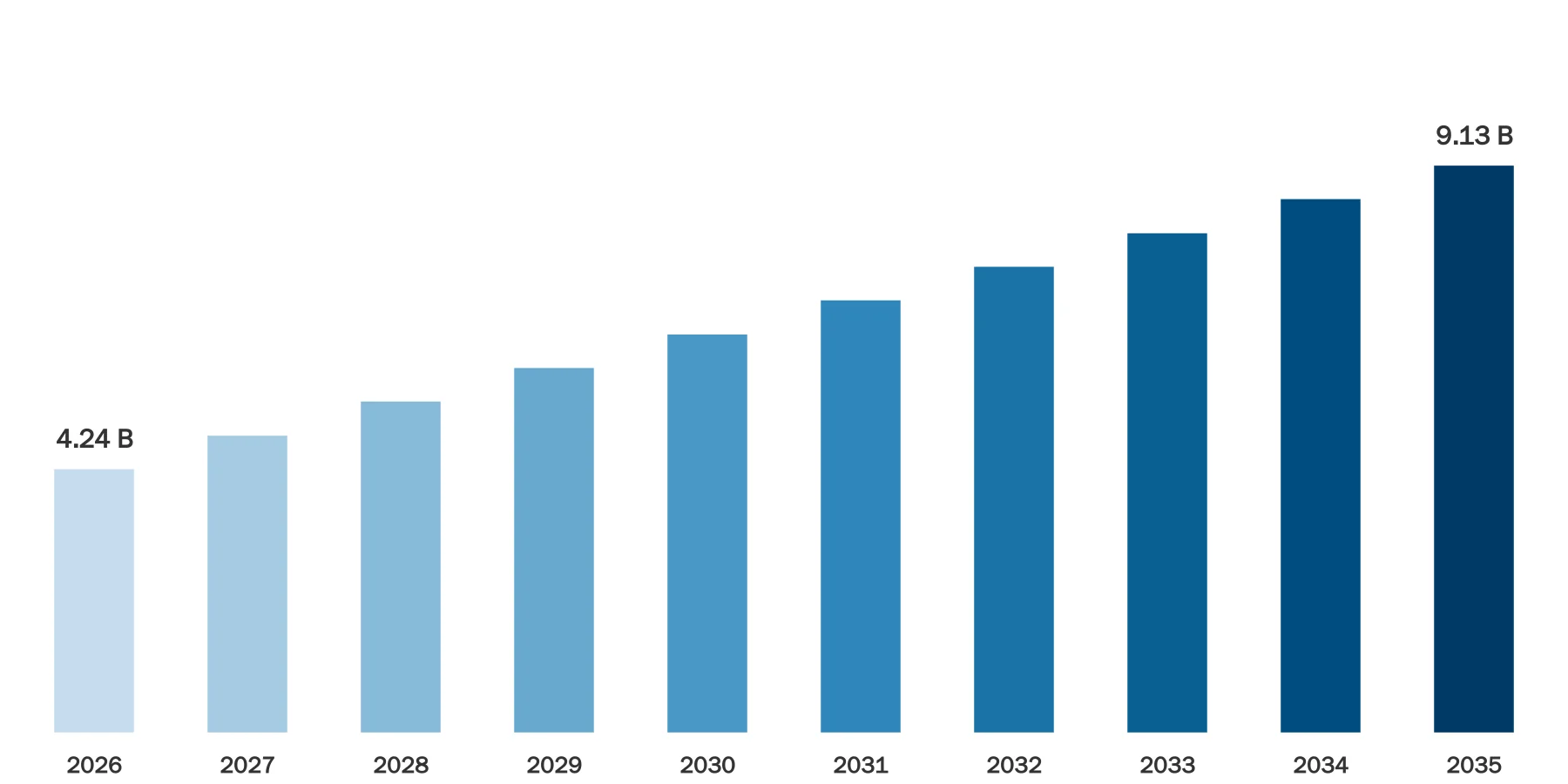
Source: Econ Market Research
The digital audio workstation (DAW) market includes software used to record, edit and produce audio content. From multi-track recording to virtual instrument integration, DAWs are designed for professionals and hobbyists alike, revolutionizing music production. Major players like Ableton Live, Pro Tools and FL Studio dominate the market, offering intuitive interfaces and robust features. With the proliferation of home studios and online collaboration, the DAW market continues to expand, bringing more innovation and accessibility to music creation.
Digital Audio Workstation Dynamics
The most important trends are the integration of Artificial Intelligence and machine learning to achieve advanced workflow automation and creative assistance. Subscription-based models are gaining more and more traction and offer flexibility and continuous updates. Mobile DAWs are expanding to serve musicians and producers on the go. Collaboration features are becoming increasingly important, enabling remote work and global connectivity. In addition, the market is highly competitive, with both incumbents and new entrants competing for market share through innovation, partnerships and user-centric design.
Digital Audio Workstation Drivers
Growing Demand in Entertainment Industry
The entertainment industry',s growing demand for quality audio production stems from consumers', growing expectations for immersive music, film, television and gaming. As content producers seek to wow audiences with rich soundscapes and dynamic soundtracks, the need for advanced digital audio workstations (DAWs) is growing. Professionals and amateurs are looking for powerful tools to create, edit and mix audio content, increasing the demand for DAW software that meets the evolving standards of the entertainment market.
Remote Collaboration Trends
Remote collaboration trends in the audio industry are driven by the global shift to remote work and distributed teams. With professionals and creators scattered across different locations, there is an urgent need for tools that enable seamless collaboration on audio projects. Digital audio workstations (DAWs) that offer real-time editing, cloud storage and remote access capabilities are essential. These features facilitate teamwork, allowing musicians, producers and engineers to collaborate effectively regardless of their physical location, promoting the adoption of remote collaboration tools in the industry.
Restraints:
High Cost of Entry
The high cost of entry for digital audio workstations (DAW) puts significant limits on beginning musicians, independent producers and small studios. The initial investment in DAW software licenses, high-end plug-ins and professional hardware can be prohibitive. In addition, the constant cost of software updates and equipment maintenance limits limited budgets. This financial barrier prevents many individuals and organizations from using the tools needed to produce quality audio, limiting their ability to compete and innovate in the industry.
Complexity and Learning Curve
Beginners often struggle to understand complex features and workflows, leading to frustration and discouragement. In addition, the time and resources required for training and skill development can be significant, preventing potential users from taking full advantage of the DAW software',s capabilities. This barrier prevents widespread adoption and limits the pool of skilled users who can effectively use DAWs for creative audio production.
Opportunities:
Cloud-Based Collaboration
Cloud-based collaboration offers a major opportunity for the digital audio workstation (DAW) market, revolutionizing remote work in audio production. Cloud-based DAWs allow musicians, producers and engineers to collaborate in real time anywhere in the world. It offers unprecedented flexibility and efficiency, as teams can seamlessly share projects, collaborate on stories and provide instant feedback. By facilitating remote collaboration, cloud-based DAWs enable greater creativity, productivity and connectivity for audio professionals, driving the adoption of cloud-based tools in the industry.
Integration with Virtual Reality (VR) and Augmented Reality (AR)
Integration with Virtual Reality (VR) and Augmented Reality (AR) offers a compelling opportunity for the digital audio workstation (DAW) market to expand into new frontiers of immersive audio experience. By integrating with VR/AR platforms, DAWs can enable creators to create interactive soundscapes and 3D sound environments. This opens up opportunities for innovative storytelling, game and multimedia content creation, increases demand for surround sound processing tools and DAW software with interactive music production capabilities, and fosters collaboration between audio and VR/AR developers.
Segment Overview
By Type
Based on type, the global digital audio workstation market is divided into recording, mixing, and editing. The editing category dominates the market with the largest revenue share in 2023. DAWs specializing in editing allow users to accurately and flexibly process and refine audio recordings. They offer a wide range of editing tools for tasks such as cutting, duplicating, pasting and time stretching audio clips. Mix-centric DAWs make it easy to mix and process recorded audio tracks to achieve a balanced and cohesive sound. DAWs for recording allow users to capture audio signals from external sources such as microphones, instruments and synthesizers.
By Component
Based on the components, the global digital audio workstation market is categorized into software and services. The software category leads the global digital audio workstation market with the largest revenue share in 2023. DAW software contains the main tools used to record, edit, mix and produce audio. These software programs are installed on computers or mobile devices and provide users with a wide range of features and functions to create music, podcasts, voice tracks and other audio content. The service segment of the DAW market includes a variety of offerings that complement or enhance the use of DAW software. These services may include training, technical support, consulting, customization and cloud-based collaboration platforms.
By End-User
Based on end-users, the global digital audio workstation market is segmented into professional audio engineers and mixers, electronic musicians, artists/performers, music studios, and others. The professional audio engineers and mixers segment dominates the digital audio workstation market. This segment consists of experienced professionals working in recording studios, post-production facilities, broadcast environments and live sound reinforcement. They require DAW software with advanced features for multi-track recording, precise editing, complex mixing and mastering.
Electronic musicians create music primarily with digital instruments, synthesizers, drum machines and samplers. They rely on DAW software to compose, arrange and produce electronic music genres such as EDM (Electronic Dance Music), Techno, House and Hip-Hop. Music studios, including commercial recording studios, project studios, and home studios, are another important segment of the DAW market.
By Deployment
Based on deployment, the global digital audio workstation market is divided into on-premise and cloud. The cloud category dominates the market with the largest revenue share in 2023. Cloud-based DAW solutions run on remote servers hosted by third-party service providers, allowing users to access software and collaborate on audio projects over the Internet. Users can access cloud-based DAW systems through web browsers or dedicated software clients, eliminating the need for local installation and reducing hardware requirements. On-premises DAW solutions include installing and running software directly for users, local computers or studio workstations. The software and associated data reside within the user and hardware infrastructure, providing full control and customization within the DAW environment.
Digital Audio Workstation Overview by Region
The global digital audio workstation market is categorized into North America, Europe, Asia-Pacific, and the Rest of the World. North America emerged as the leading region, capturing the largest market share in 2023. The region has a vibrant and diverse entertainment industry, including music, film, television, gaming and broadcasting, which increases the demand for quality audio production equipment. In addition, North America is home to many well-known recording studios, production houses and record labels that promote innovation and creativity in audio production.
In addition, the region benefits from a strong ecosystem of technology companies, developers and audio professionals that promote the development and adoption of the latest DAW software and services. This growth is due to several factors, including the region and the growing entertainment industry, the proliferation of digital music production technologies, and the increasing demand for multimedia content across sectors. In addition, rapid urbanization, technological advancements and increased Internet connectivity in the Asia-Pacific region have LED to the adoption of DAW software by musicians, producers and content creators. As a result, the region offers significant opportunities for DAW vendors and service providers to capitalize on this growth.
Digital Audio Workstation Competitive Landscape
In the global digital audio workstation market, a few major players exert significant market dominance and have established a strong regional presence. These leading companies remain committed to continuous research and development endeavors and actively engage in strategic growth initiatives, including product development, launches, joint ventures, and partnerships. By pursuing these strategies, these companies aim to strengthen their market position, expand their customer base, and capture a substantial share of the market.
Digital Audio Workstation Market Leading Companies:
Apple Inc.
Adobe Inc.
Avid Technology
Steinberg
Ableton
MOTU
Acoustica
Native Instruments
MAGIX
PreSonus, and various others.
Digital Audio Workstation Recent Developments
In January 2023, UVI, a leading software and content provider focused on the music and audio markets, announced the acquisition of FL Studio, an Image-Line software company best known for its digital audio workstation software. Drake Star acted as the exclusive financial advisor to UVI and its shareholders in this transaction.
In August 2022, Soundtrap, Spotify',s digital audio workstation (DAW) platform, adds new features for musicians, including real-time collaboration, automatic recording and annotation. The first two features are in optional beta, so senders must manually enable them. The company is introducing a comment feature so people working on a project can leave notes on different parts of the track for remote collaboration.
Digital Audio Workstation Market Report Segmentation
Digital Audio Workstation Market Report Scope & Segmentation
| Attributes | Details |
|---|---|
Market Size (Current) | US$ 4.24 Billion in 2026 |
Market Size (Forecast) | US$ 9.13 Billion in 2035 |
Growth Rate | CAGR of 8.9% from 2026 to 2035 |
Forecast Period | 2026 – 2035 |
Base Year | 2025 |
Historical Data Available | Yes |
Regional Scope | Global |
Segments Covered | By Component
By OS Compatibility
By Deployment
By End-User
|
Frequently Asked Questions
Common questions about this report
The study period covers historical insights and forecast projections for the period 2026-2035.
About the Author
Market research expert with years of industry experience

Dipali Bhingare serves as the Market Research Director at Econ Market Research. With a focus on translating complex global economic shifts into actionable business intelligence, she oversees the strategic direction of comprehensive market studies. Her work empowers organizations to navigate volatile industries through data-driven forecasting and deep-dive competitive analysis.
Related Reports
Explore more market insights from the same category