Dehydrated Fruits and Vegetables Market Overview
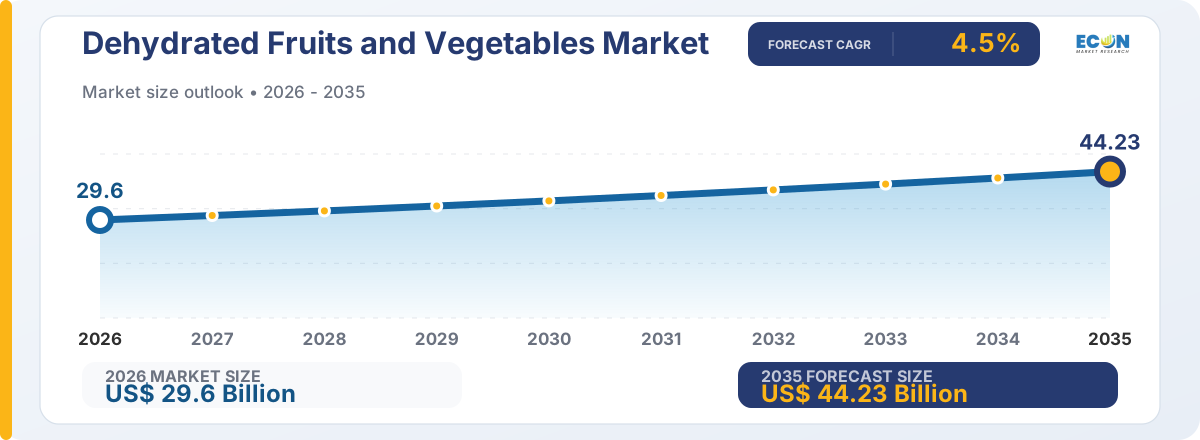
As per Econ Market Research analysis, the Global Dehydrated Fruits and Vegetables Market accounted for US$ 29.6 Billion in 2026 and is expected to surpass US$ 44.23 Billion by 2035, witnessing a CAGR of 4.5% throughout 2026–2035. The analysis is based on 2025 as the base year.
Dehydration removes moisture from fresh produce through various methods, including air drying, freeze drying, or vacuum drying, which will greatly extend shelf life without the need for refrigeration. Products are widely used as convenient snacks, ingredients in cooking, or in processed food products such as soups, sauces, and baked goods.
The market has grown in a significant way as consumer demands for healthy and ready-to-eat products constantly rise, especially from the two very primary markets of busy professionals and health-conscious consumers. Dried fruits such as apples, bananas, and berries are therefore popular for their portability and natural sweetness, while vegetables like Tomatoes, peas, and carrots find value in their use within versatile recipes. Dehydration has also been increased by the growing awareness of reducing food wastage and sustainable practices, as it allows surplus produce that would otherwise be wasted to be preserved. Further, quality and variety have improved due to advances in drying technologies.
The market is driven by the increasing adoption of plant-based diets, expanding food retail networks, and the growing popularity of organic and minimally processed foods. However, challenges like the high cost of production and competition from fresh and frozen products remain. North America, Europe, and Asia-Pacific are the key regions contributing to the market, with significant growth expected in emerging economies due to changing lifestyles and rising disposable incomes.
Dynamic Insights
The dehydrated fruits and vegetables market is primarily driven by the change in lifestyles of consumers, growing demand for healthy and convenient food options, and advancements in food preservation technologies. The rising awareness of the nutritional benefits of dehydrated produce, which retains essential vitamins and Minerals, has increased its adoption as a snack and ingredient in various cuisines. The demand is further supported by the increasing popularity of plant-based and minimally processed foods, which is in line with consumer trends toward health and sustainability.
Furthermore, the ability of dehydration to reduce food waste by preserving surplus produce has positioned it as a key contributor to global sustainability goals. Still, there are various challenges in the market. Such challenges include that the high prices of advanced drying technologies can lead to unaffordability for some clients. Fresh, frozen, and canned alternatives further intensify competition for dried products.
The raw materials for production exhibit seasonal fluctuations due to climatic changes that result in low agricultural yield. Despite these challenges, there are opportunities in terms of expanding food retail networks, surging disposable income in developing economies, and skyrocketing demand for organic and non-GMO dehydrated products. Companies are also investing in innovative packaging and clean-label products in order to provide offerings in response to changing preferences as it prepares for continued growth in the market.
Drivers Insights
Rising Demand for Healthy and Convenient Food Options
Consumers are increasingly adopting healthier lifestyles and looking for nutritious, on-the-go food solutions. Dehydrated fruits and vegetables are rich in vitamins, minerals, and natural flavors, making them a preferred choice for snacking or meal preparation. Their long shelf life and portability align with the needs of busy individuals, especially in urban areas where convenience is paramount. Additionally, the trend of clean eating and plant-based diets has significantly boosted the popularity of minimally processed foods like dehydrated produce. This demand is further amplified by the rise in health-conscious millennials and Gen Z consumers who actively seek natural and preservative-free products.
Food Waste Reduction and Sustainability Awareness
Dehydration is a sustainable solution to reduce food waste, as it extends the shelf life of fruits and vegetables that would otherwise spoil. Governments and organizations worldwide are emphasizing food preservation technologies to tackle the global food waste crisis. By utilizing surplus produce and preventing spoilage, dehydration supports circular economy models, which resonate with environmentally conscious consumers. This dynamic has not only driven demand but also encouraged businesses to innovate in drying methods to enhance product quality while maintaining environmental responsibility.
Restraints Insights
High Production Costs
The advanced technology required for processes like freeze-drying or vacuum drying significantly increases production costs. This makes dehydrated fruits and vegetables more expensive compared to fresh or frozen alternatives, limiting their accessibility for price-sensitive consumers. Additionally, the energy-intensive nature of some drying methods raises concerns about operational costs and carbon footprints, creating barriers for small and medium-sized producers to compete in the market.
Dependence on Raw Material Availability
The market heavily relies on the consistent supply of quality fruits and vegetables, which can be impacted by seasonal fluctuations, climate change, and natural disasters. Adverse weather conditions or crop diseases can disrupt production cycles and increase raw material costs, affecting supply chains and profitability. Such uncertainties pose significant challenges, particularly for manufacturers operating on tight margins or in regions with volatile agricultural outputs.
Opportunities Insights
Rising Popularity of Organic and Non-GMO Products
With consumers increasingly seeking transparency and quality in their food choices, organic and non-GMO dehydrated products represent a lucrative market segment. The demand for clean-label products, free from artificial additives, has created opportunities for producers to differentiate themselves. Offering certified organic and ethically sourced dehydrated fruits and vegetables can help companies tap into niche markets and premium pricing segments, fostering long-term growth and brand loyalty.
Segment Analysis
By Product Type
The market for dehydrated fruits and vegetables is categorized into two main product types: dehydrated fruits and dehydrated vegetables. Dehydrated fruits, such as apples, bananas, and berries, are widely consumed as convenient snacks and used in desserts, cereals, and bakery products due to their sweet taste and extended shelf life. On the other hand, dehydrated vegetables, including tomatoes, carrots, and peas, are popular ingredients in soups, ready meals, and sauces. The demand for these products is driven by their ability to retain nutritional value and their utility in reducing food waste. Additionally, their lightweight nature makes them ideal for packaged food and outdoor activities such as hiking and camping, further boosting their adoption globally.
By Form
Dehydrated products are available in various forms, including powder, flakes, granules, and slices, catering to diverse consumer and industrial needs. Powders are extensively used in food processing, such as seasoning blends and instant soups, while flakes and granules are preferred for their convenience in meal preparation. Slices are particularly popular in retail for direct consumption or as toppings for dishes like salads and desserts. Each form serves specific applications, providing versatility and adaptability to different end-users. Technological advancements in dehydration methods have enhanced the quality and texture of these forms, ensuring minimal nutrient loss and better rehydration properties.
By Application
Dehydrated fruits and vegetables are used across food &, beverages, Animal Feed, pharmaceuticals, and other industries. In food &, beverages, they are essential for producing snacks, bakery items, and ready meals. The animal feed sector benefits from dehydrated products for their long storage life and consistent nutrient profile. In pharmaceuticals, dehydrated ingredients are incorporated into dietary supplements and functional foods due to their concentrated nutrients. The versatility of these products also extends to other applications, such as cosmetics and bio-based packaging, expanding their market potential across diverse sectors.
By End-User
The market serves retail, foodservice, and industrial end-users. Retail, primarily through consumer packaged goods, drives significant demand for convenient, ready-to-eat dehydrated products targeted at households. Foodservice outlets, including restaurants and catering businesses, utilize dehydrated ingredients to ensure consistent quality and reduce preparation time. The industrial segment uses these products as raw materials for food processing, pharmaceutical formulations, and animal feed manufacturing. This varied end-user base highlights the importance of dehydrated fruits and vegetables in meeting both consumer and business needs, further fueling market growth.
By Distribution Channel
Distribution is segmented into online and offline channels, each playing a critical role in market expansion. Offline channels, including supermarkets, hypermarkets, and specialty stores, dominate the market due to their established infrastructure and consumer trust in physical shopping experiences. However, online channels are rapidly growing, driven by the convenience of home delivery, attractive discounts, and an expanding e-commerce ecosystem. The availability of dehydrated products on online platforms has broadened consumer access, particularly in remote areas, contributing to the global reach of the market.
Regional Analysis
North America is the most dominant region because of the large demand for convenient and healthy snacking options and the presence of food processing companies along with the advanced dehydration technologies. Clean-label and organic products are also an added focus for the region. Europe is in the second place, with increasing interest in sustainable and plant-based foods. The established market for dehydrated vegetables and fruits in the ready meals, soups, and bakery products in countries such as Germany, France, and the UK would be supported through established distribution.
The Asia-Pacific market is one that has been on a rapid growth scale, triggered by changes in lifestyles, increase in disposable incomes, and rapid urbanization within China, India, and Japan. Expansion in the food and beverage sector and packaged/processed food is driving the dehydrated produce demand within the region. The rising need to minimize food waste further increases the demand for dehydration technologies.
Latin America and the Middle East &, Africa are emerging markets with great potential because of their high agricultural output and growing awareness of food preservation methods. In these regions, dehydration can be used to overcome seasonal availability of produce and increase export opportunities.
Competitive Landscape
Key market participants include Olam International, Archer Daniels Midland Company, Symrise AG, Sensient Technologies Corporation, and Jain Irrigation Systems Ltd., among others. These firms focus on portfolio expansion and employing state-of-the-art dehydration technology, such as freeze-dried and vacuum dryers, so that the need of consumers toward high-quality minimally processed goods is met, while strategic cooperation, mergers, and acquisition also are seen to be usual in this category to enhance presence in the markets and enter other markets.
Regional players play an important role in meeting the demand of local products at relatively cheaper prices with region-specific dehydrated products. The market is also becoming increasingly competitive as emerging players enter the fray using e-commerce as a channel to reach more people. Furthermore, the organic and non-GMO products have seen increasing demand, therefore, several companies have begun to expand their product lines and invest in getting certifications to increase their market share. Innovations in packaging and clean-label products have further intensified competition as companies strive to differentiate themselves in a highly fragmented market.
List of Key Players:
FutureCeuticals
Saipro Biotech
Kanegrade
Activz
Paradise Fruits Solution
NutraDry
DMH Ingredients
Recent Developments:
In Jan 2024, NRGene Technologies Ltd. proudly announces the launch of Supree (Supree-Zanim), its newly formed FoodTech subsidiary. Supree focuses on developing innovative fruit and vegetable varieties that naturally self-dry on the vine, preserving their nutritional content and flavor.
Global Dehydrated Fruits &, Vegetables Report Segmentation
Dehydrated Fruits and Vegetables Market Report Scope & Segmentation
| Attributes | Details |
|---|---|
| Market Size (Current)Current market valuation | US$ 29.6 Billion in 2026 |
| Market Size (Forecast)Projected market valuation | US$ 44.23 Billion in 2035 |
| Growth RateCompound Annual Growth Rate | CAGR of 4.5% from 2026 to 2035 |
| Forecast PeriodAnalysis timeline | 2026 – 2035 |
| Base YearReference year for analysis | 2025 |
| Historical Data AvailablePast market data availability | Yes |
| Regional ScopeGeographical coverage | Global |
| Segments CoveredMarket segments analyzed | By Type
By Technology
By Application
|
Leading companies covered in this report
- Nestlé
- McCain Foods
- Olam Group
- Kraft Heinz
- Ingredion
- Lamb Weston
- J.R. Simplot Company
- Ajinomoto
- Asahi Group
Frequently Asked Questions
Common questions about this report
The study period covers historical insights and forecast projections for the period 2026-2035.
About the Author
Market research expert with years of industry experience

Dipali Bhingare serves as the Market Research Director at Econ Market Research. With a focus on translating complex global economic shifts into actionable business intelligence, she oversees the strategic direction of comprehensive market studies. Her work empowers organizations to navigate volatile industries through data-driven forecasting and deep-dive competitive analysis.