

Corporate Volunteering Platform Market
Corporate Volunteering Platform Market Size, Share, Trends, Growth, and Industry Analysis, By Deployment (Cloud, On-Premise), By Organization Size (SMEs, Large Enterprises), Regional Analysis and Forecast Period 2026-2035
Market Overview
As per Econ Market Research analysis, the Global Corporate Volunteering Platform Market generated revenue of US$ 1.25 Billion in 2026 and is forecast to achieve US$ 2.78 Billion by 2035, at a CAGR of 9.29% during the study period 2026–2035. The base year considered is 2025.
Corporate Volunteering Platform Market Size 2025-2035 (USD Billion)

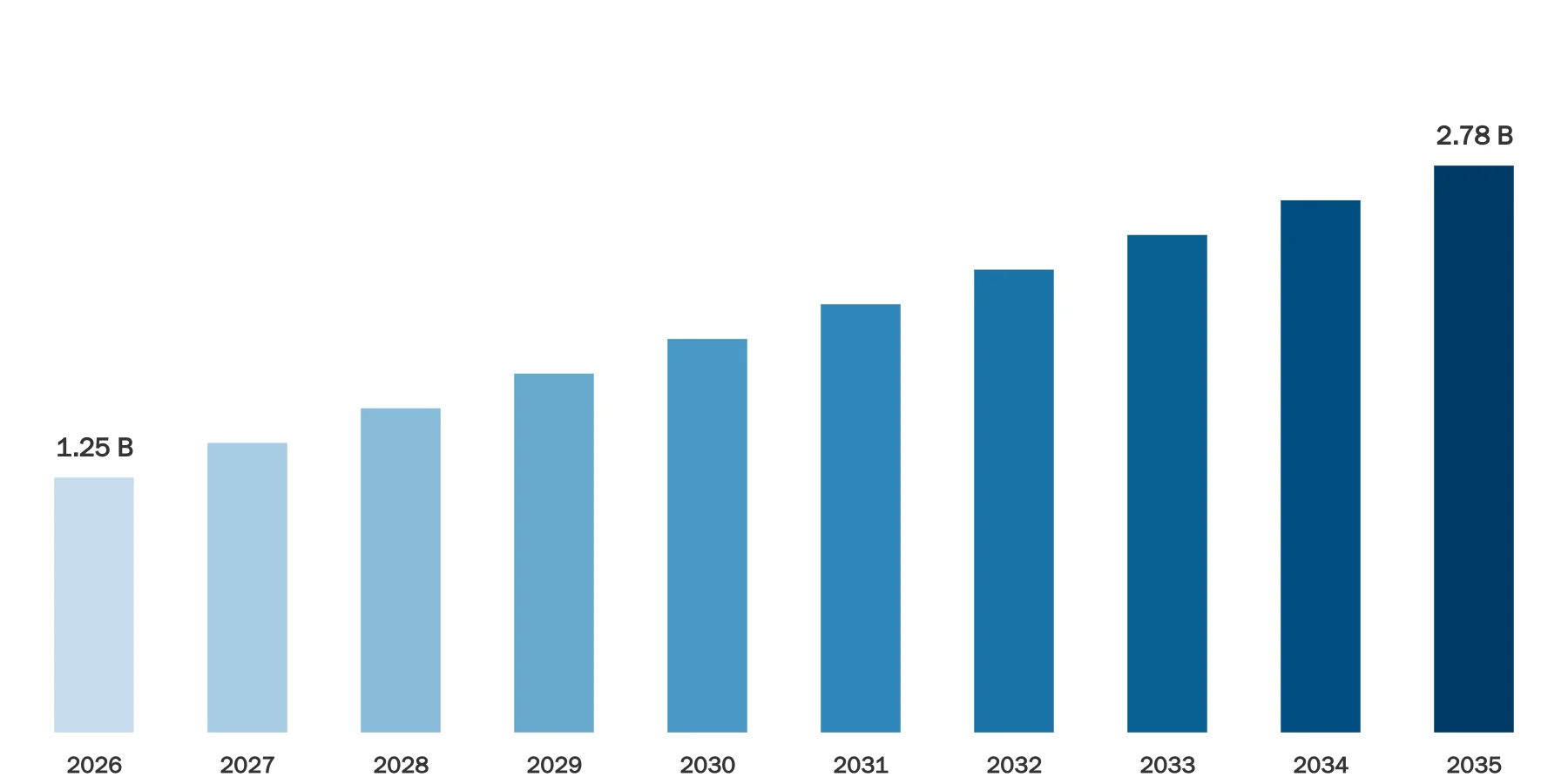
Source: Econ Market Research
A Global Corporate Volunteering Platform is like a digital town square where companies and their employees gather to give back to communities worldwide. It as a virtual hub buzzing with activity, where businesses can connect with charities, NGOs, and social causes, and employees can find meaningful opportunities to volunteer their time and skills. This platform serves as a bridge, linking corporate resources with societal needs, fostering a culture of corporate social responsibility and employee engagement. With features like project listings, skill matching, and impact tracking, this platform empowers businesses to leverage their human capital for the greater good while enhancing their brand reputation and employee satisfaction.
Corporate Volunteering Platform Dynamics
Businesses are becoming more socially responsible and are actively seeking ways to involve their employees in impactful volunteerism. This is driven by the desire to improve their brand reputation and cultivate a sense of purpose and satisfaction among their employees. At the same time, non-profits and NGOs are leveraging technology to connect with corporate partners and access a wider pool of skilled volunteers. With increasing societal challenges from environmental sustainability to social justice, there is a growing need for platforms that provide flexibility, scalability, and real-time impact tracking.
Moreover, with the proliferation of remote work and digital collaboration, there',s a growing appetite for virtual volunteering opportunities that transcend geographical boundaries. Against this backdrop, the market is witnessing a surge in innovation, with platforms integrating features such as gamification, peer-to-peer recognition, and personalized volunteering recommendations to drive engagement and retention. However, challenges persist, including the need for greater interoperability between platforms, ensuring data privacy and security, and addressing disparities in access to technology.
Corporate Volunteering Platform Drivers
Increasing Emphasis on Corporate Social Responsibility (CSR)
As society becomes increasingly concerned about environmental and social problems, businesses face growing pressure to show their commitment to social responsibility. To meet this demand, there has been a surge in Corporate Volunteering Platforms. These platforms give businesses a well-organized way to involve their employees in charitable activities. Companies can use these platforms to show their dedication to making a difference in society, which improves their reputation and strengthens their relationships with customers and the community.
Focus on Employee Engagement and Well-being
In today',s job market, companies need to make sure their employees are happy and engaged to succeed. Corporate Volunteering Platforms help with this by giving employees chances to work on projects they care about. These projects not only make employees feel more fulfilled and like they have a purpose, but they also help them work together better. Also, companies that make their employees', well-being a priority by offering volunteer opportunities often keep their employees longer and see more production because employees feel like they are valued and part of something bigger than just making money.
Restraints:
Lack of Awareness and Adoption
Although Corporate Volunteering Platforms are becoming increasingly significant, small to medium-sized businesses (SMEs) frequently remain unaware of their advantages or perceive them as challenging and resource-demanding to implement. Furthermore, some businesses could be hesitant to invest in these platforms due to worries about return on investment (ROI) or uncertainty about how to integrate volunteer activities into their current organizational culture and processes.
Technology and Infrastructure Challenges
The effectiveness of Corporate Volunteering Platforms relies heavily on robust technology infrastructure and seamless integration with existing systems. However, organizations may face challenges related to outdated technology, limited IT resources, or insufficient data privacy and security measures. These technological barriers can hinder the adoption and scalability of Corporate Volunteering Platforms, especially for companies operating in regions with limited access to digital infrastructure or facing regulatory hurdles related to data protection.
Opportunities:
Integration with Employee Development Programs
Employee development programs and corporate volunteering platforms can work together to improve employee skills and career growth. By offering volunteering opportunities that match employees', professional goals and personal interests, companies can help them develop in a more comprehensive way. Volunteering also gives employees a chance to develop important skills like communication, understanding, and adapting to different situations, which are crucial for succeeding in today',s ever-changing work environment. This can help companies keep employees and develop talent from within. By integrating volunteering into their talent management strategies, companies can cultivate a workforce that is not only skilled but also socially responsible and engaged.
Segment Overview
By Product Type
Corporate Volunteering Platforms come in two main product types: Cloud Based and Web Based. Cloud-based platforms offer the advantage of accessibility from anywhere with an internet connection, making them suitable for companies with remote or distributed workforces. These platforms typically leverage cloud computing technology to provide scalability, flexibility, and easy integration with other business applications.
On the other hand, Web-based platforms are accessed through web browsers and may require installation or configuration on company servers. While they may offer greater customization options for larger enterprises with specific security or compliance requirements, they may also require more upfront investment in terms of infrastructure and maintenance.
By Application
Corporate Volunteering Platforms cater to the needs of both Large Enterprises and Small and Medium Enterprises (SMEs). Large enterprises often have extensive CSR programs and resources dedicated to employee engagement initiatives. For these companies, Corporate Volunteering Platforms serve as centralized hubs for managing volunteer activities, tracking impact metrics, and fostering a culture of social responsibility among employees.
On the other hand, SMEs may have limited resources and infrastructure to support standalone volunteering programs. Corporate Volunteering Platforms offer scalable solutions tailored to the needs and budget constraints of SMEs, allowing them to participate in community initiatives, enhance brand reputation, and engage employees without the need for significant upfront investment in technology or personnel.
Corporate Volunteering Platform Overview by Region
In North America, companies are strongly encouraged to take on social responsibilities, leading many to adopt volunteering programs. The region',s advanced technology and skilled workforce make it easy to create and use innovative plataformas de voluntariado corporativo. In Europe, social responsibility is also valued, with an emphasis on sustainability and diversity. Companies choose programs that support the UN',s Sustainable Development Goals, which drives the need for Corporate Volunteering Platforms that help them monitor and measure their impact on the environment and society.
However, varying levels of technological maturity across countries pose challenges to widespread adoption, with some markets still in the nascent stages of embracing digital volunteering platforms. In regions such as Latin America and Africa, where socio-economic disparities are more pronounced, Corporate Volunteering Platforms have the potential to play a transformative role in addressing pressing social challenges. However, infrastructure limitations and access to digital resources remain significant barriers to adoption in these regions.
Corporate Volunteering Platform Market Competitive Landscape
Large technology companies like Microsoft, Salesforce, and IBM are now offering CSR solutions that include volunteering options as part of their business software. At the same time, newer companies like Benevity, VolunteerMatch, and YourCause have a specific focus on creating Corporate Volunteering Platforms. These platforms use modern development methods and are designed to meet the changing needs of businesses and their employees.
Additionally, traditional nonprofit organizations, such as United Way and Points of Light, have expanded their offerings to include digital volunteering platforms, leveraging their existing networks and brand recognition to attract corporate partners. Amidst this competition, differentiation often hinges on factors such as user experience, scalability, and integration capabilities.
Corporate Volunteering Platform Market Leading Companies:
Benevity, Inc.
Goodera
Neighbourly Limited
Galaxy Digital
Maximus Life LLC
Alaya SA
Bright Funds Inc.
Blackbaud, Inc.
Samaritan Technologies
Oracle Corporation
VolunteerMatch
Deed
Chezuba
Corporate Connect
Corporate Volunteering Platform Report Segmentation
Corporate Volunteering Platform Market Report Scope & Segmentation
| Attributes | Details |
|---|---|
Market Size (Current) | US$ 1.25 Billion in 2026 |
Market Size (Forecast) | US$ 2.78 Billion in 2035 |
Growth Rate | CAGR of 9.29% from 2026 to 2035 |
Forecast Period | 2026 – 2035 |
Base Year | 2025 |
Historical Data Available | Yes |
Regional Scope | Global |
Segments Covered | By Deployment
By Organization Size
|
Frequently Asked Questions
Common questions about this report
The study period covers historical insights and forecast projections for the period 2026-2035.
About the Author
Market research expert with years of industry experience

Related Reports
Explore more market insights from the same category