

Corporate Lending Platform Market
Corporate Lending Platform Market Size, Share, Trends, Growth, and Industry Analysis, By Deployment (Cloud-based, On-premise), By Business Size (Small andamp; Medium Businesses (SMBs), Large Enterprises), By Industry (Financial Services, Manufacturing, Retail, Government), By Functionality (Loan Origination, Credit Analysis, Risk Management, Loan Servicing, Reporting andamp; Analytics), Regional Analysis and Forecast Period 2026-2035
Market Overview
As per Econ Market Research analysis, the Global Corporate Lending Platform Market generated revenue of US$ 36.15 Billion in 2026 and is forecast to achieve US$ 561.14 Billion by 2035, at a CAGR of 31.55% during the study period 2026–2035. The base year considered is 2025.
Corporate Lending Platform Market Size 2025-2035 (USD Billion)

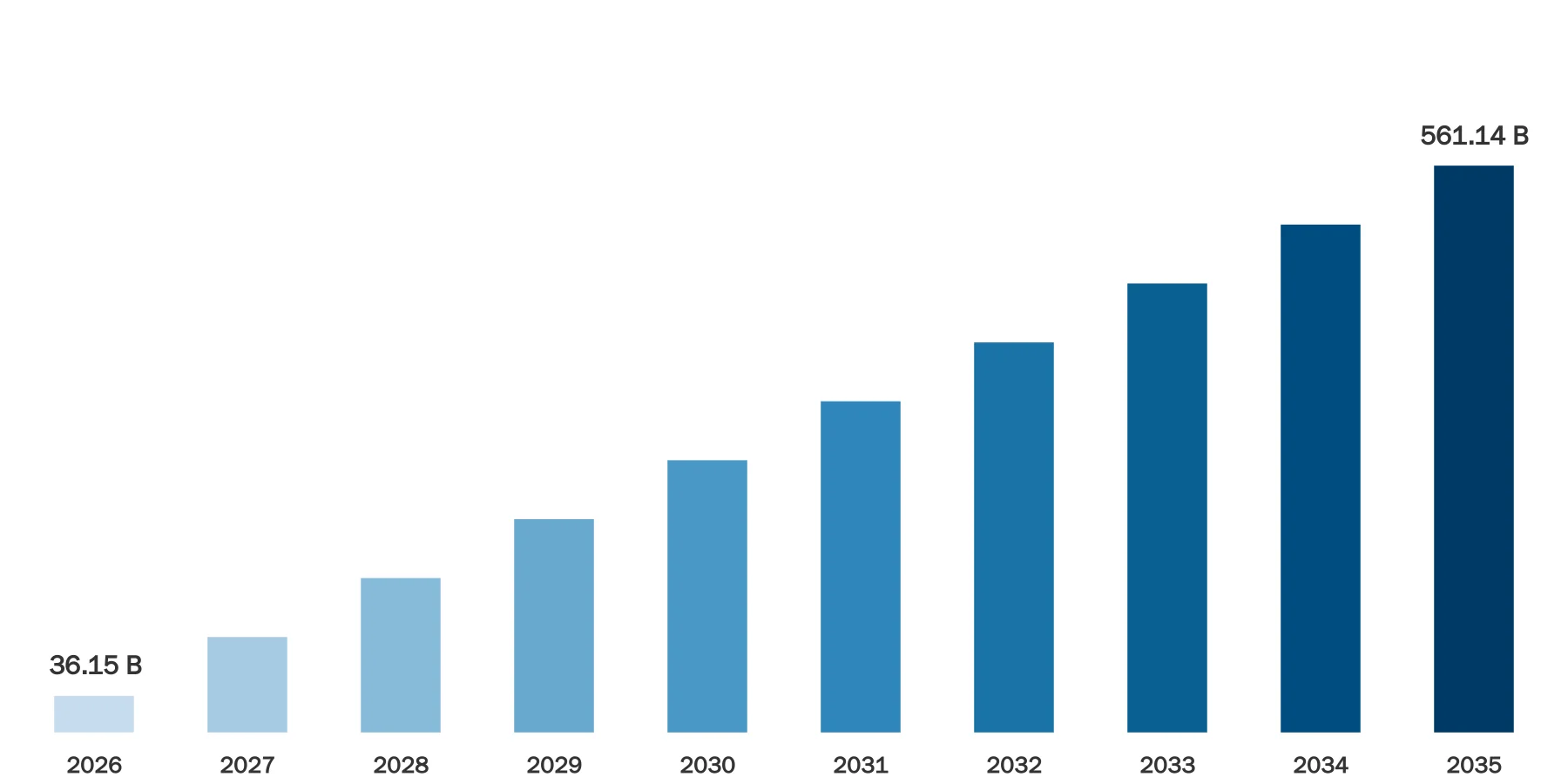
Source: Econ Market Research
A corporate lending platform refers to a digital framework or software ecosystem that enables financial institutions, banks, and lenders to manage, streamline, and automate various aspects of corporate lending operations. These platforms are characterized by their ability to enhance efficiency, reduce operational risks, and provide advanced analytics for decision-making in lending processes.
The corporate lending sector has been rapidly transforming in recent years, as more firms embrace digitization and automation for faster, more accurate, and transparent lending transactions. Manual processes are being phased out in favour of advanced lending platforms that utilize Data Analytics, Artificial Intelligence, and machine learning. These platforms not only streamline tasks like credit assessment and loan processing, but also provide robust dashboards and reporting tools for monitoring loan portfolios and mitigating risks.
Corporate Lending Platform Dynamics
One key dynamic is the increasing adoption of digital transformation strategies by financial institutions and corporate lenders, driven by the need to enhance operational efficiencies, reduce costs, and improve customer experiences. This trend is characterized by a growing reliance on cloud-based platforms, AI-driven analytics, and automation tools to streamline lending processes and mitigate risks.
One important factor to consider is how regulations are changing and influencing the way corporate lending platforms are being developed and implemented. As regulations around data privacy, risk management, and compliance become stricter, there is a growing need for more flexible and reliable lending solutions that can meet the requirements of complex regulatory frameworks in various regions.
Moreover, market dynamics are influenced by changing customer expectations and behaviors. Corporate borrowers increasingly expect seamless digital experiences, personalized services, and quicker loan approval processes. This has spurred innovation in user interface design, customer engagement strategies, and the integration of mobile technologies within corporate lending platforms.
Corporate Lending Platform Drivers
Increasing Demand for Digital Transformation
One key factor driving the corporate lending platform market is the increasing need for digital transformation among financial institutions and lenders. Traditional loan procedures are being replaced by advanced digital platforms that provide streamlined workflows, faster loan processing times, and enhanced risk management features. These platforms use AI and ML technologies to evaluate creditworthiness, automate underwriting procedures, and optimize loan management. The shift towards digitalization not only enhances operational efficiency but also improves customer experiences by offering faster loan approvals and seamless interactions through online portals or mobile apps.
Regulatory Compliance Requirements
Corporate lending platforms are increasingly prioritizing regulatory compliance in response to the strict regulations surrounding data privacy, anti-money laundering (AML), and Know Your Customer (KYC) procedures in the financial services industry. Robust compliance features on these platforms help institutions meet these requirements effectively by providing audit trails, data encryption, and secure document management functionalities. This allows lenders to manage compliance risks and maintain transparency in their lending practices. The demand for compliant lending solutions is expected to grow as regulations continue to evolve, driving the adoption of advanced corporate lending platforms.
Corporate Lending Platform Restraints:
Security and Data Privacy Concerns
Securing customer data in the corporate lending platform market is a major concern due to the increasing focus on security and privacy. As more financial information is being handled digitally, the risk of cyber-attacks and data breaches grows. To protect customer data and prevent unauthorized access, institutions must invest in robust Cyber Security measures. However, this requires significant technology and expertise investments, posing a challenge for smaller lenders with limited resources to implement these measures effectively.
Complex Integration with Legacy Systems
Many companies face difficulties when trying to adopt corporate lending platforms due to the integration with outdated legacy systems. This can lead to delays, increased expenses, and possible disruptions to daily operations. To address this issue, lenders must make use of middleware solutions and APIs to ensure seamless data exchange between old and new systems. Despite the obstacles, overcoming legacy integration challenges is essential for the wide-scale implementation of corporate lending platforms.
Corporate Lending Platform Opportunities:
Rise of Alternative Lending Models
The emergence of alternative lending models presents another significant opportunity for corporate lending platforms. Non-traditional lenders, such as peer-to-peer (P2P) lending platforms and crowd funding platforms, are gaining traction among borrowers seeking alternative financing options. Corporate lending platforms can capitalize on this trend by adapting their offerings to support these alternative lending models. By enabling seamless integration with P2P or crowd funding platforms, corporate lending platforms can cater to a broader spectrum of borrowers and expand their market reach. This presents an opportunity for platforms to diversify their portfolios and tap into the growing demand for flexible and innovative lending solutions.
Segment Overview
By Lending Type
The segmentation by lending type categorizes corporate lending platforms based on the nature of loans they facilitate. This includes platforms designed for Commercial Lending, which supports large-scale business financing, Microfinance Lending, catering to small-scale loans for individuals and entrepreneurs, SME Lending, focused on meeting the financing needs of small and medium-sized enterprises, Agriculture Lending, providing financing solutions to farmers and agricultural businesses, and other specialized lending categories tailored for specific industries or purposes.
By Organization Size
The organization size segment classifies corporate lending platforms according to the size of the businesses they serve. This includes platforms for Large Enterprises, addressing complex lending requirements of established corporations, SMEs, offering financing solutions to smaller businesses with less complex needs, and Startups, providing specialized lending support to early-stage ventures and entrepreneurial ventures.
By Deployment Mode
The deployment mode segmentation distinguishes how corporate lending platforms are hosted and accessed. Platforms can be deployed on the Cloud, offering scalability and accessibility from anywhere, or On-premises, providing more control over data but requiring local infrastructure and maintenance.
By Offering
The offering segment categorizes corporate lending platforms based on the types of products and services they provide. This includes Solutions, which encompass software for loan origination, credit assessment, and portfolio management, and Services, offering additional value such as consulting, training, maintenance, and support to enhance user experience and platform efficiency.
By End-User
The end-user segmentation identifies the primary users of corporate lending platforms. This includes Banks, utilizing platforms to streamline and digitize their lending operations, Credit Unions, offering lending services to members, Non-Banking Financial Corporations (NBFCs), diversifying their services with lending platforms, and other entities such as fintech firms, investment institutions, or government agencies involved in lending activities.
Corporate Lending Platform Overview by Region
North America leads the market, driven by advanced financial infrastructure and widespread adoption of digital technologies. The region benefits from a high concentration of established banks and financial institutions seeking to optimize lending processes through innovative platforms. Europe follows closely, with initiatives like Open Banking fostering collaboration between traditional lenders and fintech start-ups to enhance lending experiences.
Asia Pacific exhibits significant growth potential, fuelled by expanding economies, increasing SME activities, and a rising demand for accessible financing solutions. Countries like China and India are witnessing a surge in digital lending platforms, supported by government initiatives to promote financial inclusion. Latin America and the Middle East &, Africa regions are also experiencing gradual adoption of corporate lending platforms, propelled by improving internet connectivity and a shift towards digital banking services. However, challenges such as regulatory complexities and infrastructure limitations may hinder rapid market expansion in these regions.
Corporate Lending Platform Market Competitive Landscape
Key players such as Finastra, FIS, and Fiserv offer comprehensive lending solutions catering to diverse lending needs, leveraging their extensive industry experience and global presence. These companies focus on enhancing operational efficiency, risk management, and customer engagement through advanced digital platforms.
In addition to traditional players, disruptive fintech companies like Blend, nCino, and Mambu are reshaping the market with agile, cloud-based lending platforms that streamline loan origination, underwriting, and servicing processes. Their solutions emphasize flexibility, scalability, and user-friendly interfaces, attracting banks and credit unions looking to modernize their lending operations. Moreover, technology giants like Oracle and IBM are leveraging their expertise in data analytics and AI to develop sophisticated lending platforms that offer predictive insights and automation capabilities.
Corporate Lending Platform Market Leading Companies:
Servosys solutions
Relational FS
Moody',s Analytics
Nelito
Novac Technology Solutions
Newgen Software
Oracle
Origence
LenderKit
ICE Mortgage Technology
Intellect Design Arena
JurisTech
Finastra
FIS
Fiserv
Corporate Lending Platform Market Recent Developments
Jan 2023, Temenos (SIX: TEMN) unveiled its latest AI-powered Corporate Lending solution today, designed to assist banks in consolidating their global commercial loan portfolios and streamlining servicing within the Temenos banking platform. This solution aims to streamline the complexities of loan processing and lifecycle management across various lending sectors and geographic locations. It specifically caters to the requirements of both major tier one banks and regional institutions. Many of these banks face challenges in capitalizing on corporate lending growth due to disjointed systems and insufficient integration.
June 2021, Mahindra &, Mahindra Financial Services Limited (MMFSL), a prominent Non-Banking Finance Company within the Mahindra Group, has announced a strategic integrated partnership with Nucleus Software. This collaboration will leverage FinnOne NeoTM, Nucleus Software',s flagship product, to enhance scalability and reinforce the core infrastructure. FinnOne NeoTM, known for its plug and play features, possesses advanced technological capabilities to seamlessly integrate with partner ecosystems through various Fintech platforms.
Corporate Lending Platform Report Segmentation
Corporate Lending Platform Market Report Scope & Segmentation
| Attributes | Details |
|---|---|
Market Size (Current) | US$ 36.15 Billion in 2026 |
Market Size (Forecast) | US$ 561.14 Billion in 2035 |
Growth Rate | CAGR of 31.55% from 2026 to 2035 |
Forecast Period | 2026 – 2035 |
Base Year | 2025 |
Historical Data Available | Yes |
Regional Scope | Global |
Segments Covered | By Deployment
By Business Size
By Industry
By Functionality
|
Frequently Asked Questions
Common questions about this report
The study period covers historical insights and forecast projections for the period 2026-2035.
About the Author
Market research expert with years of industry experience

Related Reports
Explore more market insights from the same category