

Cordless Power Tools Market
Cordless Power Tools Market Size, Share, Trends, Growth, and Industry Analysis, By Motor Type (Brushed Motor, Brushless Motor), By Tool Type (Drills, Saws, Sanders, Grinders, Nail Guns), By Application (Industrial, Residential/DIY), Regional Analysis and Forecast Period 2026-2035
Market Overview
As per Econ Market Research analysis, the Global Cordless Power Tools Market was recorded at US$ 40.84 Billion in 2026 and is projected to expand to US$ 67.91 Billion by 2035, registering a CAGR of 5.8% over the forecast period. The base year used is 2025.
Cordless Power Tools Market Size 2025-2035 (USD Billion)

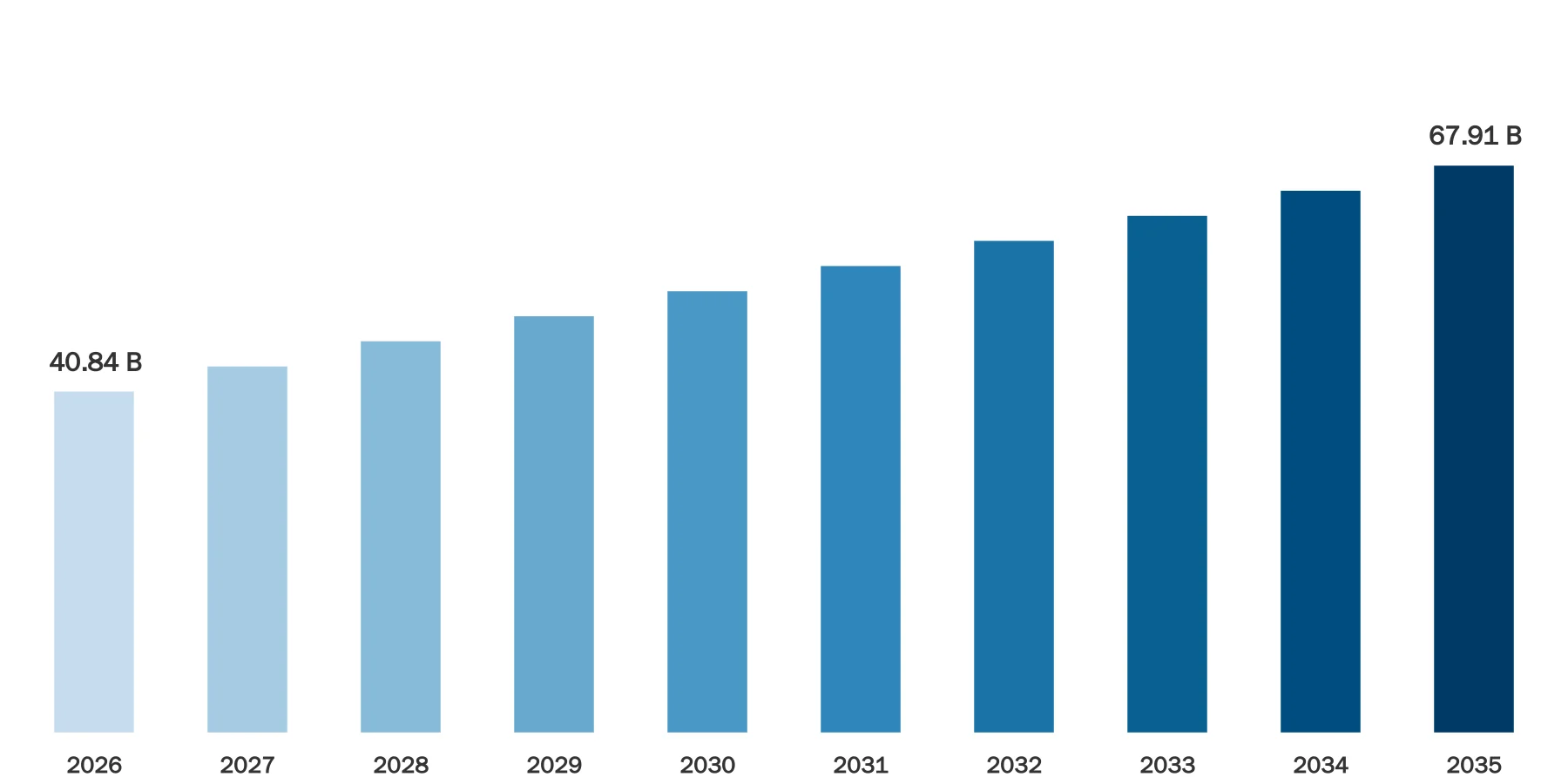
Source: Econ Market Research
Power tools that are cordless, like screwdrivers, sanders, and saws, are much more flexible and mobile than their corded counterparts, which is why professional and do-it-yourself users find them very appealing. Technology breakthroughs like lithium-ion batteries, which have longer run times and faster charging speeds, have propelled the market',s notable expansion. Furthermore, the transition to environmentally friendly and sustainable practices has accelerated the development of more energy-efficient cordless tools, which is driving the market',s growth. The cordless power tool market is dominated geographically by Asia Pacific because of the region',s fast industrialization, urbanisation, and growing infrastructure projects. But obstacles like high upfront costs and worries about battery life and performance continue to be important factors influencing market penetration and consumer adoption.
Cordless Power Tools Dynamics
Technological advancements play a crucial role, driving innovation in battery technology, motor efficiency, and tool design. Manufacturers constantly strive to enhance product performance, durability, and user experience to gain a competitive edge. Additionally, the increasing focus on sustainability and environmental consciousness has spurred the development of eco-friendly cordless tools with lower emissions and energy consumption.
Numerous end-user industries, including manufacturing, residential applications, automotive, and construction, have a significant impact on market demand. The increasing popularity of digitalization, automation, and smart tools is driving up demand for cordless power tools with cutting-edge features like Data Analytics and Internet of Things connectivity. Furthermore, the Do-It-Yourself (DIY) movement and the growth of online resources like tutorials and platforms have made cordless tool users more diverse than just professionals.
Cordless Power Tools Drivers
Technological Advancements
The market for cordless power tools is significantly influenced by ongoing advancements in battery technology, such as the creation of high-capacity lithium-ion batteries. These developments have produced tools that are lighter, more portable, and have longer run times&mdash,all of which increase user productivity and convenience. Additionally, advancements in brushless motor technology lead to increased durability, lower maintenance costs, and increased power efficiency, which encourages adoption by both professionals and do-it-yourselfers. Technological developments continue to be the main factor driving market expansion as manufacturers make R&,D investments to stay ahead of the curve.
Growing Demand for Portable Solutions
The increasing demand for portable and versatile power tools is another key driver propelling the cordless power tools market. Cordless tools offer greater mobility and flexibility compared to their corded counterparts, allowing users to work in remote locations or confined spaces without the need for a power outlet. This portability is particularly advantageous in sectors such as construction, where workers often operate in dynamic environments. Additionally, the rise of the DIY culture has fueled demand among homeowners seeking convenient and user-friendly tools for various projects around the house. As lifestyles become more fast-paced and dynamic, the demand for cordless power tools as portable solutions continues to surge, driving market expansion.
Restraints:
One significant restraint facing the cordless power tools market is the relatively high initial cost of entry compared to corded alternatives. Cordless tools typically require investment in rechargeable batteries and chargers, which can add to the overall purchase price. Additionally, premium features such as brushless motors or advanced ergonomic designs may further inflate costs. These higher upfront expenses may deter price-sensitive consumers or budget-conscious professionals, limiting market penetration, particularly in emerging economies where affordability is a critical consideration.
Concerns Regarding Battery Performance and Lifespan
Despite technological advancements, concerns regarding battery performance and lifespan remain a notable restraint for the cordless power tools market. Users often cite issues such as limited battery life, gradual capacity degradation over time, and the need for frequent recharging as key pain points. Furthermore, the environmental impact of lithium-ion batteries, including disposal and recycling challenges, raises sustainability concerns among environmentally conscious consumers. Addressing these concerns requires ongoing research and development efforts to improve battery technology, enhance energy efficiency, and extend product lifespan, thus mitigating barriers to adoption and ensuring long-term market growth.
Opportunities:
Expansion of Smart Tools and IoT Integration
The integration of smart technology and Internet of Things (IoT) capabilities presents a significant opportunity for the cordless power tools market. Manufacturers can leverage IoT connectivity to offer innovative features such as remote monitoring, diagnostics, and predictive maintenance, enhancing tool performance and user experience. Smart tools equipped with sensors and data analytics capabilities enable users to track usage metrics, optimize workflows, and even automate routine tasks, driving efficiency and productivity in various applications. As industries embrace digitalization and automation trends, the demand for IoT-enabled cordless tools is poised to surge, presenting lucrative growth opportunities for market players.
Segment Overview
By Motor Type
By motor type, the market is divided into brushed and brushless motors. Brushed motors, characterized by their traditional design with carbon brushes, offer cost-effective solutions suitable for various applications. However, they are typically less efficient and have shorter lifespans compared to brushless motors. On the other hand, brushless motors utilize advanced technology, offering higher efficiency, longer runtime, and reduced maintenance requirements. Although initially more expensive, brushless motors provide superior performance and durability, making them increasingly favoured by professionals and enthusiasts alike.
By Tool Type
In terms of tool types, cordless power tools encompass a wide range of products, including drills, saws, lawn mowers, and others. Drills are among the most commonly used cordless tools, offering versatility for drilling holes and driving screws in various materials. Saws, including circular saws, reciprocating saws, and jigsaws, provide efficient cutting solutions for woodworking, metalworking, and construction tasks.
Lawn mowers equipped with cordless technology offer convenient and environmentally friendly solutions for maintaining outdoor spaces. Additionally, the ",others", category encompasses a diverse array of cordless tools such as sanders, grinders, and impact drivers, catering to specific user requirements across different industries and applications.
By Application
Regarding application segments, cordless power tools find extensive usage in industrial, commercial, and residential settings. Industrial applications involve heavy-duty tasks in manufacturing, construction, and maintenance operations, where cordless tools offer mobility and flexibility for enhanced productivity. In commercial settings such as workshops, automotive repair shops, and retail stores, cordless tools provide convenient solutions for various tasks, ranging from assembly to maintenance. In residential environments, homeowners and DIY enthusiasts utilize cordless power tools for renovations, repairs, and hobby projects, appreciating the portability and ease of use offered by these tools.
Cordless Power Tools Overview by Region
Asia Pacific emerges as a key region, propelled by rapid industrialization, urbanization, and increasing construction activities. Countries like China, India, and Japan are significant contributors to market growth, supported by burgeoning manufacturing sectors and rising consumer spending. Additionally, the region benefits from government initiatives promoting infrastructure development and the adoption of advanced technologies.
North America and Europe are mature markets for cordless power tools, characterized by high levels of technological innovation and stringent safety regulations. These regions boast a strong presence of established manufacturers and a robust network of distribution channels. Furthermore, growing investments in renewable energy projects and sustainable construction practices drive demand for eco-friendly cordless tools in these markets.
In Latin America and the Middle East &, Africa, expanding construction and industrial sectors fuel market growth, albeit at a slower pace compared to other regions. These regions offer untapped opportunities for market players, supported by increasing urbanization, infrastructure development, and a growing DIY culture. However, challenges such as volatile economic conditions and political instability may impact market growth in these regions.
Cordless Power Tools Market Competitive Landscape
Established companies such as Makita Corporation, Stanley Black &, Decker, Inc., and Robert Bosch GmbH dominate the market with their extensive product portfolios, global presence, and strong brand recognition. These industry giants invest heavily in research and development to introduce technologically advanced cordless tools, enhancing performance, durability, and user experience. Moreover, strategic partnerships, mergers, and acquisitions are common strategies employed to expand market reach and consolidate market position.
Additionally, emerging players and regional manufacturers leverage niche offerings and competitive pricing to carve out a niche in specific market segments or geographical regions. Furthermore, the market witnesses intense competition from online retailers and direct-to-consumer channels, facilitating greater accessibility and convenience for consumers.
Cordless Power Tools Market Leading Companies:
DeWalt (Stanley Black &, Decker)
Milwaukee Tool (Techtronic Industries)
Makita
Bosch
Hilti
Stihl
Husqvarna Group
Techtronic Industries (TTI)
Ryobi
AEG
Cordless Power Tools Recent Developments
Oct 2023, Bosch Power Tools unveiled 17 fresh additions to its line-up, expanding the innovative CORE18V platform. Among these releases are advancements in oscillating multi-tool and grinder tool categories, aimed at providing professionals with heightened efficiency during tasks on-site.
Oct 2023, Bosch Power Tools intends to acquire close to 50 percent ownership of FerRobotics Compliant Robot Technology GmbH, a prominent worldwide supplier specializing in contact-sensitive automation. Headquartered in Linz, Austria, FerRobotics also maintains distribution outlets in the United States and China. Agreements formalizing this transaction were signed by both Bosch Power Tools and FerRobotics.
Global Cordless Power Tools Report Segmentation
Cordless Power Tools Market Report Scope & Segmentation
| Attributes | Details |
|---|---|
Market Size (Current) | US$ 40.84 Billion in 2026 |
Market Size (Forecast) | US$ 67.91 Billion in 2035 |
Growth Rate | CAGR of 5.8% from 2026 to 2035 |
Forecast Period | 2026 – 2035 |
Base Year | 2025 |
Historical Data Available | Yes |
Regional Scope | Global |
Segments Covered | By Motor Type
By Tool Type
By Application
|
Frequently Asked Questions
Common questions about this report
The study period covers historical insights and forecast projections for the period 2026-2035.
About the Author
Market research expert with years of industry experience

Related Reports
Explore more market insights from the same category