

Contact Center Software Market
Contact Center Software Market Research Report: Information Based on by Component (Solutions (Omnichannel Routing, Reporting & Analytics), Services), By Enterprise Type (Small & Medium Enterprises and Large Enterprises) By Deployment Mode (Cloud and On-Premise), By Vertical Type (BFSI, Telecommunications, & Retail & Consumer Goods), and Region (North America, Europe, Asia-Pacific, and Rest of the World) Global Industry Analysis, Size, Share, Growth, Trends, Regional Analysis, Competitor Analysis and Forecast
Market Overview
As per Econ Market Research analysis, the Global Contact Center Software Market size amounted to US$ 56.54 Billion in 2026 and is anticipated to grow to US$ 384 Billion by 2035, recording a CAGR of 21.12% during 2026–2035. The base year taken for analysis is 2025.
Contact Center Software Market Size 2025-2035 (USD Billion)

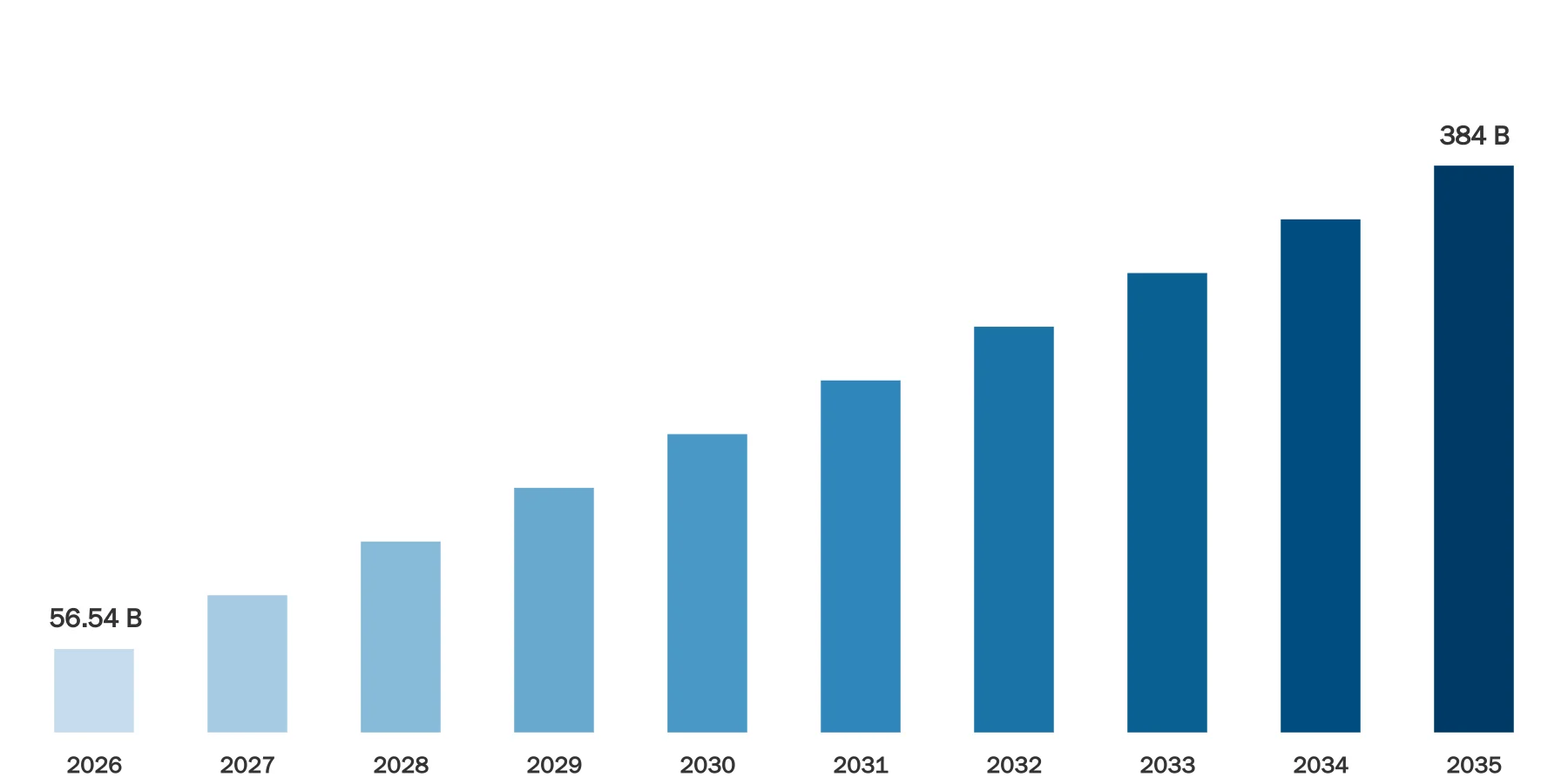
Source: Econ Market Research
The contact center software provides solutions and services aimed at enhancing customer interactions and improving overall customer experience for businesses. It encompasses various software components such as Automatic Call Distribution (ACD), Interactive Voice Response (IVR), Computer Telephony Integration (CTI), workforce management, and reporting/analytics modules.
The market caters to businesses across different sectors, including IT &, telecom, retail, consumer goods, and more. Contact center software enables companies to manage and integrate customer communication channels, such as voice, email, chat, and social media, to deliver seamless and consistent customer service and gain valuable insights from customer interactions.
Contact Center Software Market Dynamics
The contact center software market is driven by the increasing demand for enhanced customer experience, leading organizations to invest in solutions that streamline customer interactions and improve response times. The rise of omnichannel communication is propelling the adoption of contact center software, allowing businesses to manage and integrate various channels for a seamless customer experience. The growing focus on data analytics and AI-powered technologies is fueling the demand for advanced contact center software, enabling businesses to automate processes, gain valuable insights, and improve operational efficiency. However, challenges in software implementation and integration with existing systems act as restraints. The market exhibits a competitive landscape with key players vying for market share.
Contact Center Software Market Drivers
The increasing importance of social media in contact center operations is driving the market for modern contact center solutions. Organizations are realizing the significance of social media as a powerful platform to assess brand value, engage with customers, and manage their reputation. By leveraging social media capabilities, businesses can handle customer queries, identify influencers, monitor sentiments, and improve overall efficiency. Customers now expect companies to be present and responsive on social media, making it essential for contact centers to have a strong social media presence.
Contact center software plays a vital role in enabling businesses to effectively monitor and manage social media interactions, ensuring timely responses and excellent customer support. As social media continues to transform customer engagement, contact center solutions with social media capabilities will be in high demand, driving the growth of the market.
Restraints:
The adoption of contact center software can pose challenges for businesses due to various reasons. Technical complexities, organizational factors, and the need for seamless integration with existing systems can be significant restraints. Implementing contact center software involves multiple components, such as ACD, IVR, CTI, workforce management, and reporting/analytics modules, which must work harmoniously. Dealing with legacy systems or multiple vendors adds to the complexity and require dedicated IT resources and expertise. Integrating the software with existing systems like CRM, ERP, or ticketing systems can also be a major hurdle. Overcoming these challenges requires careful planning, expertise, and effective collaboration between IT teams and business stakeholders.
Opportunities:
The rising turnover rate and extended waiting times in contact centers create an opportunity for organizations to enhance customer satisfaction. By incorporating advanced technologies like AI, ML, and analytics, businesses can improve customer experiences through robust self-service bots. Especially after the surge in calls during and post the COVID-19 crisis, implementing self-service options becomes crucial. Customers today seek convenience and autonomy, valuing quick access to information without human intervention. By offering reliable self-service capabilities through contact center software, companies can meet customer expectations, enhance satisfaction, and reduce the dependence on human agents. Providing 24/7 self-service options also appeals to global customers across different time zones, promoting customer loyalty and improving overall experiences.
Segment Overview
By Component Type
The market for contact center software is segmented by component into: solutions and services. The solutions category includes various offerings such as omnichannel routing and reporting &, analytics. Omnichannel routing enables seamless customer interactions across multiple channels, ensuring a consistent and efficient experience. Reporting &, analytics solutions provide valuable insights and data-driven decision-making tools for businesses to enhance their customer support operations. On the other hand, the services category encompasses a range of professional services, including implementation, training, and support, to assist organizations in effectively deploying and utilizing contact center software for optimal performance.
By Enterprise Type
The contact center software market is segmented by enterprise type into Small &, Medium Enterprises (SMEs) and large enterprises. Small &, Medium Enterprises refer to businesses with a relatively smaller workforce and revenue compared to large enterprises. These organizations are increasingly adopting contact center software to enhance customer interactions, optimize resources, and improve overall efficiency. On the other hand, Large Enterprises are established organizations with a significant workforce and revenue. They invest in advanced contact center solutions to cater to a larger customer base and leverage features like AI-powered analytics and omnichannel communication to provide exceptional customer experiences.
By Deployment Mode
The contact center software market is further segmented by deployment type into Cloud and On-Premise solutions. Cloud-based deployment refers to the delivery of contact center software through the internet, allowing businesses to access and utilize the software from remote servers. Cloud-based solutions offer scalability, flexibility, and cost-effectiveness as they eliminate the need for on-site hardware and maintenance. On the other hand, on-premise deployment involves installing the contact center software on the organization',s local servers, providing complete control and customization over the system. Businesses choose On-Premise solutions for data security or compliance reasons, although it requires higher upfront costs and maintenance efforts.
By Vertical Type
The contact center software market is also segmented by vertical type, including BFSI (Banking, Financial Services, and Insurance), Telecommunications, and Retail &, Consumer Goods. In the BFSI sector, contact center software plays a vital role in managing customer inquiries, resolving issues, and providing personalized services to enhance customer satisfaction. In the telecommunications industry, the software enables efficient management of customer interactions, ensuring seamless communication and support services. In the retail &, consumer goods sector, contact center software aids in delivering exceptional customer experiences, allowing retailers to interact with customers and resolve support issues promptly. These verticals demonstrate diverse needs and requirements, driving the adoption of tailored contact center solutions.
Contact Center Software Market Overview by Region
North America
In North America, the contact center software market is expected to maintain its dominance during the forecast period. The region',s well-established and technologically advanced business landscape, coupled with a strong emphasis on delivering exceptional customer experiences, drives the high adoption of contact center solutions. North America houses several major players in the contact center software industry with extensive market reach. Furthermore, the region',s continuous focus on innovation and advancements in communication technologies further supports the growth of the contact center software market in North America.
Asia-Pacific
Asia Pacific is poised to lead as the fastest-growing regional market for contact center software during the forecast period. The region',s dynamic ITES and IT industry landscape contributes to the increasing adoption of contact center solutions by both large enterprises and small &, medium businesses. Supportive government initiatives promoting cloud-based systems and business process automation further fuel the market',s expansion. Additionally, Asia Pacific',s attractiveness as an investment destination attracts organizations worldwide, contributing to the region',s thriving contact center software market.
Contact Center Software Market Competitive Landscape
The competitive landscape of the contact center software market is highly dynamic and competitive. Numerous key players, including global technology giants and specialized software providers, strive to gain a significant market share. These companies continuously innovate their offerings to stay ahead in the market. Mergers, acquisitions, and strategic partnerships are common strategies employed to expand their product portfolios and market presence. Additionally, advancements in artificial intelligence and machine learning technologies have intensified the competition as companies aim to provide cutting-edge solutions.
Customer-centric approaches and delivering seamless customer experiences remain pivotal in the competitive landscape, driving companies to differentiate themselves through innovative features and functionalities.
Key Players
ALE International
Altivon
Amazon Web Services, Inc.
Ameyo
Amtelco
Aspect Software
Avaya Inc.
AVOXI
Cisco Systems, Inc.
Enghouse Interactive Inc.
Exotel Techcom Pvt. Ltd.
Five9, Inc.
Genesys
Microsoft Corporation
NEC Corporation
Contact Center Software Market Recent Developments
In May 2023, 8X8, Inc. revealed its plan to purchase Five9, Inc. for $1.7 billion. The acquisition aims to establish a dominant cloud-based contact center software provider, uniting a customer base of more than 100,000 businesses.
In June 2023, NICE announced the availability of its CXone platform as an EU sovereign cloud platform, enabling EU businesses to adhere to data protection regulations while leveraging cutting-edge contact center software technology.
Contact Center Software Market Report Scope & Segmentation
| Attributes | Details |
|---|---|
Market Size (Current) | US$ 56.54 Billion in 2026 |
Market Size (Forecast) | US$ 384 Billion in 2035 |
Growth Rate | CAGR of 21.12% from 2026 to 2035 |
Forecast Period | 2026 – 2035 |
Base Year | 2025 |
Historical Data Available | Yes |
Regional Scope | Global |
Segments Covered | By Component
By Deployment
By Enterprise Size
By Vertical
|
Frequently Asked Questions
Common questions about this report
The study period covers historical insights and forecast projections for the period 2026-2035.
About the Author
Market research expert with years of industry experience

Dipali Bhingare serves as the Market Research Director at Econ Market Research. With a focus on translating complex global economic shifts into actionable business intelligence, she oversees the strategic direction of comprehensive market studies. Her work empowers organizations to navigate volatile industries through data-driven forecasting and deep-dive competitive analysis.
Related Reports
Explore more market insights from the same category