

Commercial Massage Chair Market
Commercial Massage Chair Market Size, Share, Trends, Growth, and Industry Analysis, By Type (Upper Body Massage Chairs, Full Body Massage Chairs), By Application (Spa andamp; Salon, Hotels andamp; Resorts, Corporate Offices, Airports, Others), Regional Analysis and Forecast Period 2026-2035
Market Overview
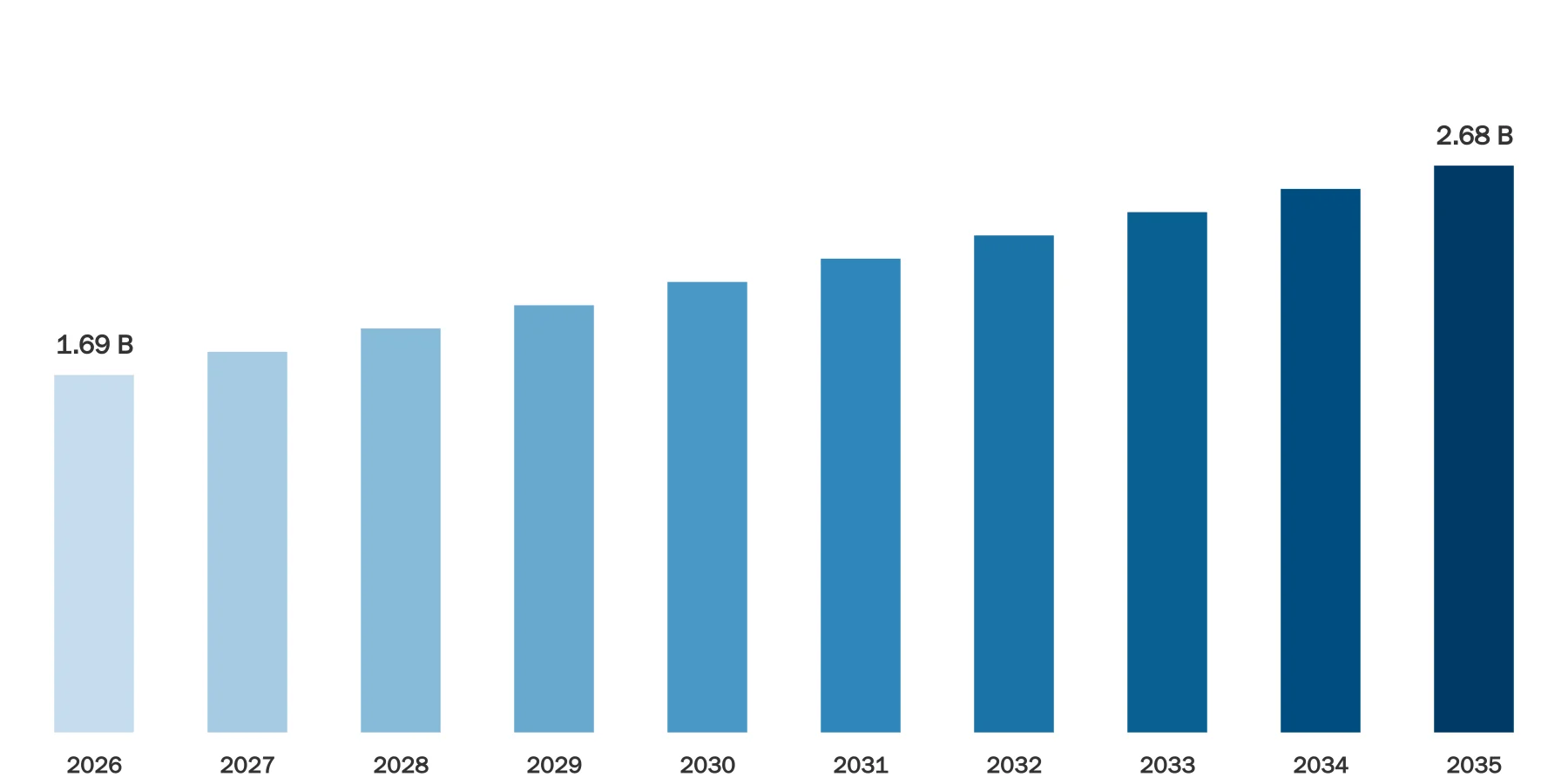
As per Econ Market Research analysis, the Global Commercial Massage Chair Market reached a valuation of US$ 1.69 Billion in 2026 and is anticipated to grow to US$ 2.68 Billion by 2035, at a CAGR of 5.2% during the forecast timeline 2026–2035. The base year considered is 2025.
Commercial Massage Chair Market Size 2025-2035 (USD Billion)

Source: Econ Market Research
Commercial massage chairs includes the trade of massage chairs specifically made for commercial purposes, like in spas, salons, hotels, and corporate offices. These chairs come with different massage techniques and features to offer relaxation and therapeutic advantages to users. The market includes the manufacturing, distribution, and use of these chairs globally, with manufacturers always creating new innovations to meet the changing needs of commercial businesses and customers.
The Global Commercial Massage Chair market has seen substantial growth recently due to various reasons. The increasing recognition of stress relief and relaxation as vital for overall health has boosted the demand for massage chairs in commercial settings. Furthermore, the use of massage chairs in corporate offices as part of wellness initiatives for employees has also played a role in driving market growth. The market has also expanded due to technological advancements, such as AI-driven massage programs and customizable features, which have improved the user experience. In addition, the increasing income in developing countries and the growth of the hospitality sector have opened up profitable probabilities for companies to enter fresh markets and customer groups.
Commercial Massage Chair Dynamics
The Global Commercial Massage Chair industry is influenced by a variety of factors that affect supply, demand, and pricing. A key factor is the ongoing innovation and technological progress in the industry. Manufacturers regularly introduce new features and enhancements to improve the functionality and efficiency of massage chairs, which drives consumer interest and demand. This competition driven by innovation also encourages product differentiation among industry participants, resulting in a wide range of options that cater to various customer preferences and budget constraints.
One important factor to consider is the changing trends in consumer lifestyle and wellness. With people becoming increasingly health-conscious and placing more emphasis on self-care, there is a rising need for products and services that support relaxation and stress reduction. Businesses like spas, salons, and offices are now incorporating massage chairs into their wellness options to enhance customer and employee satisfaction. The growth of e-commerce and online shopping has also made massage chairs more readily available to a global audience, extending the market beyond physical stores. Yet, changes in people',s available income and buying habits can also affect how markets operate, influencing what people choose to buy and how markets expand.
Commercial Massage Chair Drivers
Technological Advancements
The constant evolution of technology plays a crucial role in the Global Commercial Massage Chair market. Integrating AI-driven massage programs, virtual reality experiences, and personalized settings elevates the user experience, generating consumer interest and demand. These advancements not only enhance the effectiveness of massage therapy but also cater to individual preferences, resulting in a rise in the use of massage chairs in commercial environments such as spas, hotels, and offices. Furthermore, technological innovations promote competition among manufacturers, encouraging product diversity and fuelling market expansion.
Rising Awareness of Wellness and Stress Relief
Raising awareness about stress management and wellness is a significant factor driving the market. In our fast-paced world, people are looking for easy ways to reduce stress and relax. Massage chairs in commercial settings provide a simple and convenient way to enjoy the benefits of massage therapy without the need for a professional masseur or spa reservation. As individuals focus on self-care and health, the demand for massage chairs in commercial environments is increasing. Additionally, using massage chairs in corporate wellness programs demonstrates how they can boost employee morale, productivity, and overall well-being, contributing to market expansion.
Commercial Massage Chair Restraints:
High Initial Cost
The main challenge facing the Global Commercial Massage Chair market is the steep price tag that comes with buying these chairs. Commercial-grade massage chairs with cutting-edge features and technologies can be costly, making them out of reach for certain businesses or consumers on a tight budget. This significant initial investment could discourage potential buyers, particularly small businesses or individuals, from purchasing massage chairs, ultimately stunting market expansion and development.
Limited Awareness and Acceptance
Although more people are becoming aware of the benefits of wellness, there is still a group of people who have little knowledge or doubts about how effective massage chairs can be. One can see massage chairs as extravagant items rather than important tools for well-being, which could restrict their acceptance and use. Cultural differences and differing views on massage therapy in various regions could also affect the growth of the market in areas where massage chairs are not well-received or understood.
Commercial Massage Chair Opportunities:
Expansion into Emerging Markets
The Global Commercial Massage Chair market presents significant opportunities for expansion into emerging markets, particularly in regions with growing disposable income and a burgeoning hospitality industry. As economies develop and consumer spending power increases, there is a rising demand for luxury wellness amenities, including massage chairs, in commercial establishments such as hotels, resorts, and fitness centers. Manufacturers can capitalize on these opportunities by strategically targeting emerging markets and establishing partnerships with local distributors to penetrate new regions and customer segments.
Segment Overview
By Type
By type, the market is segmented into Upper Body Massage Chairs and Full Body Massage Chairs. Upper Body Massage Chairs typically focus on providing massage therapy for the neck, shoulders, and back regions, offering targeted relief for common areas of tension and discomfort. If you',re looking for a comfortable chair to relax in at the office or at home, these chairs are a great choice. But if customer want a full-body massage experience that covers every part of your body - from your head to your toes - then Full Body Massage Chairs are the way to go. Customer can find them in spas, wellness centers, and luxurious homes, where people want to unwind and feel refreshed.
By Application
By application, the market is segmented into channels into Online Sales and Offline Sales. Online Sales refer to the distribution of massage chairs through e-commerce platforms, company websites, and online retailers. This sales channel offers convenience and accessibility to consumers, allowing them to browse and purchase massage chairs from the comfort of their homes.
Offline Sales involve distributing massage chairs through physical stores, specialty retailers, and distributors. This allows consumers to test chairs in person and receive personalized assistance from sales representatives. Offline sales cater to those who prefer traditional shopping experiences or need immediate delivery and installation services.
Commercial Massage Chair Overview by Region
The market in North America is heavily influenced by a focus on wellness and corporate wellness programs, which has LED to a widespread use of massage chairs in places like offices and fitness centres. Additionally, the well-established e-commerce infrastructure in the region has resulted in a substantial increase in online sales of massage chairs. In Europe, there is a growing interest in holistic wellness practices and luxurious spa experiences, creating a demand for high-end massage chairs in upscale hotels and wellness resorts. On the other hand, the Asia-Pacific region, especially countries like China and Japan, presents a lucrative opportunity for commercial massage chair sales due to the increasing disposable incomes, urbanization, and the cultural significance of massage therapy.
Commercial Massage Chair Market Competitive Landscape
Key players in the market include Panasonic Corporation, OSIM International Ltd., Johnson Health Tech Co., Ltd., Inada Co., Ltd., and Fujiiryoki Co., Ltd., among others. These companies compete based on factors such as product quality, technological advancements, pricing strategies, and brand reputation. To gain a competitive edge, manufacturers focus on developing massage chairs with advanced features such as AI-driven massage programs, customizable settings, and ergonomic designs to cater to diverse consumer preferences. Additionally, strategic collaborations with distributors, retailers, and online platforms help expand market reach and increase brand visibility.
Commercial Massage Chair Market Leading Companies:
Panasonic Corporation
OSIM International Ltd.
Johnson Health Tech Co., Ltd.
Inada Co., Ltd.
Fujiiryoki Co., Ltd.
Cozzia USA LLC
Human Touch, LLC
Beurer GmbH
Luraco Technologies, Inc.
Infinity Massage Chairs
Kahuna Massage Chair
Inner Balance Wellness
Commercial Massage Chair Recent Developments
In May 2022, Family Inada, Japan',s foremost technology manufacturer of massage chairs, maintains a position of prominence at the forefront of the timeless tradition of massage. Established in 1962, Family Inada specializes in crafting massage chairs, embodying the essence of preventive healthcare.
Commercial Massage Chair Report Segmentation
Commercial Massage Chair Market Report Scope & Segmentation
| Attributes | Details |
|---|---|
Market Size (Current) | US$ 1.69 Billion in 2026 |
Market Size (Forecast) | US$ 2.68 Billion in 2035 |
Growth Rate | CAGR of 5.2% from 2026 to 2035 |
Forecast Period | 2026 – 2035 |
Base Year | 2025 |
Historical Data Available | Yes |
Regional Scope | Global |
Segments Covered | By Type
By Application
|
Frequently Asked Questions
Common questions about this report
The study period covers historical insights and forecast projections for the period 2026-2035.
About the Author
Market research expert with years of industry experience

Related Reports
Explore more market insights from the same category