

Coated Fabrics Market
Coated Fabrics Market Size, Share, Trends, Growth, and Industry Analysis, By Material Type (Rubber Coated, Polymer Coated, Fabric Backed Wall Coverings, Others), By Application (Transportation, Protective Clothing, Industrial, Furniture, Commercial Tents, Others), Regional Analysis and Forecast Period 2026-2035
Market Overview
As per Econ Market Research analysis, the Global Coated Fabrics Market was valued at US$ 26.41 Billion in 2026 and is expected to reach US$ 36.62 Billion by 2035, registering a CAGR of 3.69% during the forecast period 2026–2035. The base year considered is 2025.
Coated Fabrics Market Size 2025-2035 (USD Billion)

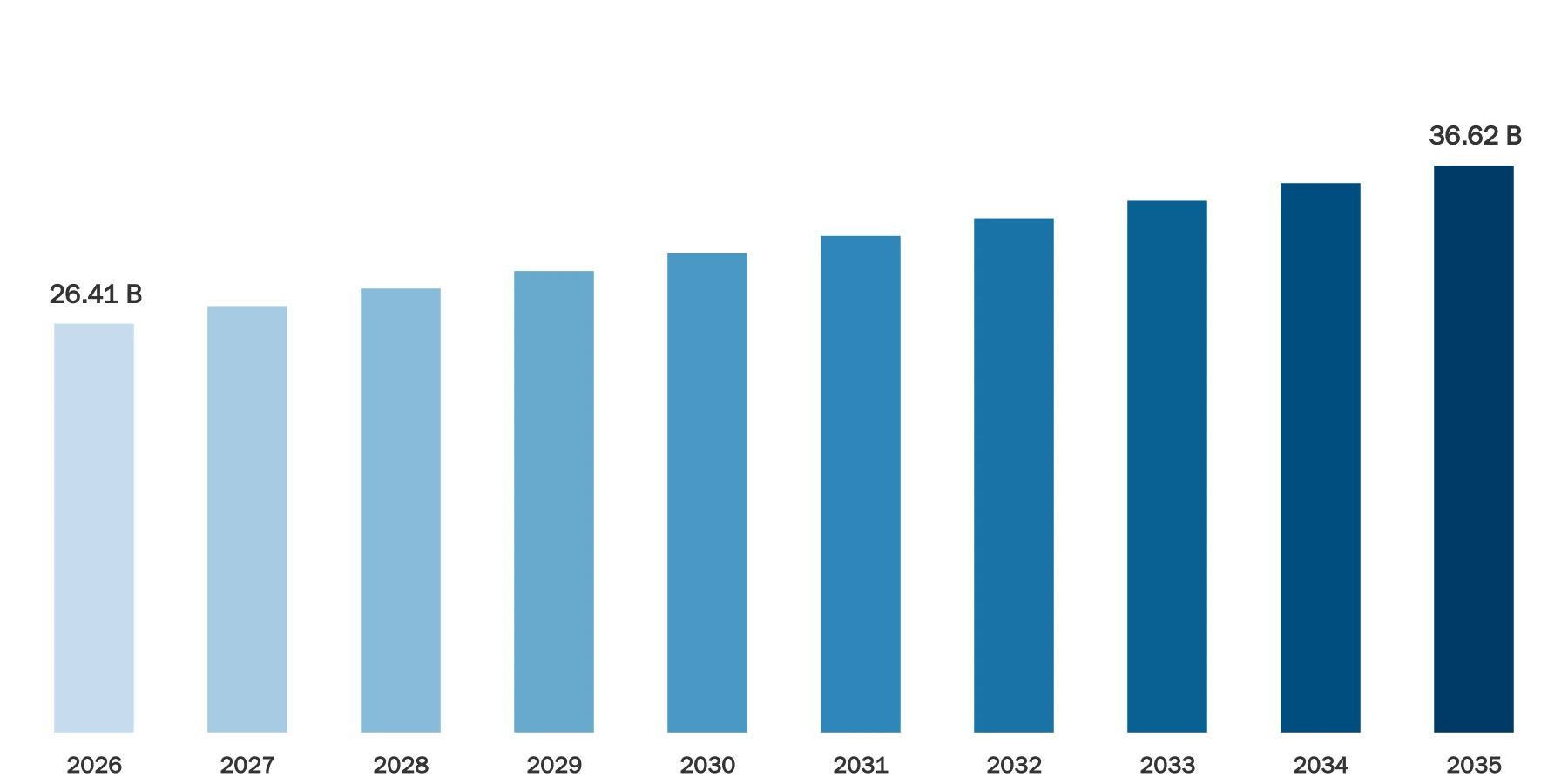
Source: Econ Market Research
Coated fabrics are materials that have been treated with a layer of polymer or other substances to enhance their performance and characteristics. These fabrics often consist of a base fabric, which could be made of textiles like cotton, polyester, or nylon, and are then coated with various materials such as PVC (polyvinyl chloride), PU (polyurethane), rubber, or silicone.
The coating process imparts several beneficial qualities to the fabric. It can make the fabric water-resistant or waterproof, protecting it from moisture and making it suitable for outdoor and wet environments. Coated fabrics can also become more durable, resistant to abrasion, and provide protection against UV radiation and chemicals. Additionally, coatings can offer improved aesthetics, like adding a glossy or matte finish to the fabric.
The coated fabrics market is a dynamic sector within the global Textile industry, characterized by the application of specialized coatings onto diverse types of fabrics to enhance their properties and functionalities. This market',s growth is driven by its extensive utility in various sectors, including outdoor and leisure products, transportation, industrial, and healthcare. coated fabrics are integral to manufacturing high-performance products like rainwear, tents, and awnings, providing reliable weather protection.
The automotive industry benefits from these fabrics for upholstery and interior components due to their aesthetics and durability. Industrial applications encompass conveyor belts, industrial curtains, and protective clothing, where resistance to abrasion and chemicals is crucial. Furthermore, coated fabrics find application in healthcare settings for items like hospital mattresses and protective covers due to their hygienic properties. As consumer demands for functional and versatile textiles grow, the coated fabrics market continues to evolve, pushing for innovations in coating technologies and sustainable practices. The ability to customize coatings to meet specific requirements, coupled with their diverse applications, positions coated fabrics as an essential player in shaping the future of textiles across multiple industries.
Coated Fabrics Dynamics
The coated fabrics market is influenced by a dynamic interplay of various factors that shape its growth and trends. Technological advancements play a pivotal role, driving innovations in coating materials and application techniques, leading to improved fabric properties and expanded applications. Consumer preferences for functional and durable products also fuel demand, propelling the market',s expansion. Environmental concerns drive the adoption of sustainable practices, pushing for eco-friendly coating materials and production methods.
Regulatory standards and guidelines related to safety, quality, and environmental impact significantly influence market dynamics, necessitating compliance and driving product improvements. Industry diversification contributes to the market',s resilience, with coated fabrics finding applications in sectors like automotive, outdoor gear, healthcare, and industrial applications. Economic factors, including global economic conditions and disposable income levels, impact market demand, especially in the consumer goods segment. Supply chain efficiency, raw material availability, and pricing fluctuations play a role in shaping market dynamics.
Competition among manufacturers, both established and emerging players, drives innovation and pricing strategies, influencing overall market competitiveness. Moreover, shifts in consumer lifestyle trends, such as the growing interest in outdoor activities, impact product preferences and drive market growth in specific segments. Overall, the coated fabrics market remains dynamic and responsive to evolving technological, environmental, and consumer-driven changes, making it a crucial component of the broader textiles industry.
Coated Fabrics Drivers
Rising Demand for Functional and Sustainable Solutions
Consumers are increasingly seeking products that not only offer high performance but also align with environmental and ethical values. The push for sustainability has LED to a focus on eco-friendly practices and materials in all industries, including textiles. Coated fabric manufacturers are responding by developing coatings made from renewable resources, reducing the use of harmful chemicals, and adopting energy-efficient production methods. This aligns with global efforts to reduce carbon footprints and minimize environmental impact.
Adopting sustainable practices not only resolves environmental issues but also resonates with customers who value ethical consumption. As sustainability becomes a core consideration, the coated fabrics market must adapt by offering products that balance performance, durability, and eco-friendliness. This trend has also spurred collaborations between manufacturers, researchers, and environmental organizations to develop innovative, greener coating solutions, driving the industry toward a more sustainable and responsible future.
Expanding Applications in Various Industries
The versatility of coated fabrics enables their integration into a wide array of sectors, capitalizing on their enhanced properties and functionalities. In the automotive industry, coated fabrics are utilized for upholstery, interior trims, and airbag components. Their durability and aesthetic appeal make them ideal for creating comfortable and visually appealing interiors that endure wear and tear. Similarly, the outdoor gear sector benefits from coated fabrics in the production of rainwear, tents, and awnings. These fabrics', ability to repel water, resist abrasion, and provide UV protection aligns with the demands of outdoor enthusiasts seeking reliable performance in various weather conditions.
Industrial applications encompass a range of products such as conveyor belts, industrial curtains, and protective clothing. Additionally, in healthcare, coated fabrics find use in items like hospital mattresses, covers, and curtains due to their hygienic properties and ease of maintenance. As each industry seeks materials that combine functionality and longevity, coated fabrics continue to play a crucial role by adapting to and meeting the unique demands of various applications, ultimately contributing to the market',s growth and stability.
Restraints
Increased Production Costs
The coated fabrics industry is sensitive to the fluctuating costs of raw materials, particularly specialized polymers, chemicals, and additives used in coatings. These price variations can create uncertainty in budgeting and planning for manufacturers, impacting their ability to offer competitive prices to consumers. As the market strives to meet rising consumer expectations for performance, durability, and sustainability, balancing these factors becomes a critical challenge. Developing and utilizing advanced coatings, as well as adhering to stricter environmental and safety standards, can elevate the expenses associated with manufacturing.
Environmental Concerns and Regulations
With growing global awareness of environmental issues, consumers, regulatory bodies, and advocacy groups are scrutinizing industrial practices, including those in the textiles sector. Coating processes often involve the use of chemicals and materials that can have adverse environmental effects during production, usage, and disposal phases. Strict regulations aimed at reducing pollution, conserving resources, and minimizing waste generation impact the way coated fabrics are manufactured. Manufacturers are required to adhere to strict guidelines, invest in pollution control measures, and adopt sustainable practices. Failure to comply with these regulations can result in legal penalties, damage to brand reputation, and restricted market access.
Opportunities
Smart Coated Fabrics for Technological Integration
The opportunity presented by smart coated fabrics for technological integration is a fascinating path within the coated fabrics market. As technology continues to advance, textiles are being transformed into interactive and functional components, offering a wide range of applications and benefits. Coated fabrics with embedded sensors, conductive materials, and interactive features are at the forefront of this innovation. These smart-coated fabrics have the potential to transform various industries.
In the healthcare sector, they can be used for monitoring patients', vital signs, tracking body movements, and even delivering medication through the fabric. In sports and fitness, smart coatings can offer real-time performance data to athletes, aiding in training and preventing injuries. The automotive sector can benefit from coatings that integrate touch-sensitive controls, enhancing both safety and user experience. Investors in the creation of smart coated fabrics will be able to take advantage of a market that is expanding quickly.
Innovations in Sustainable Coating Technologies
With the growing emphasis on environmental consciousness and eco-friendly practices, consumers are increasingly seeking products that align with their sustainability values. This presents manufacturers with a chance to lead by developing coatings that minimize environmental impact. Research and development efforts can focus on water-based coatings that reduce or eliminate the use of harmful Solvents, bio-based materials derived from renewable resources, and coatings that are designed for easy recyclability. These innovations not only supply to eco-conscious consumers but also address regulatory pressures for reduced chemical emissions and waste. By accepting sustainable coatings, manufacturers can position themselves as industry leaders, attracting a growing market segment that places a premium on both performance and environmental responsibility. This opportunity extends beyond consumer preferences, as many businesses are also adopting sustainability goals throughout their supply chains.
Segment Overview
By Product Type
Based on product type, the global coated fabrics market is divided into polymer-coated fabrics, rubber-coated fabrics, and fabric-backed wall coverings. The polymer-coated fabrics category dominates the coated fabrics market. Further polymer-coated fabrics segment is classified into vinyl-coated fabrics, PU-coated fabrics, PE-coated fabrics, and others. The vinyl-coated fabrics segment dominates in the polymer-coated fabrics segment. These fabrics, coated with synthetic polymers like PVC and PU, offer a unique blend of durability, weather resistance, flexibility, and cost-effectiveness.
Their widespread use spans industries, including textiles, automotive, construction, and more. The waterproof nature of polymer coatings makes them indispensable for rainwear and outdoor gear. In architecture, they find application in roofing membranes and awnings. Their durability suits transportation needs, from car upholstery to aerospace interiors. Furthermore, the medical, industrial, and military sectors benefit from their resistance to chemicals and wear. While other coated fabric types exist, polymer-coated fabrics stand out for their adaptability to diverse environments. This dominance is expected to persist as innovations in polymer technology continue to enhance their performance, ensuring their relevance across various sectors.
By Application
Based on the application, the global coated fabrics market is categorized into transportation, protective clothing, industrial, roofing, awnings and canopies, furniture and seating, and others. The transportation category leads the global coated fabrics market with the largest revenue share. This leadership position can be attributed to the extensive utilization of coated fabrics in various transportation modes and applications. From automotive to aerospace, coated fabrics play a pivotal role due to their versatile characteristics.
In the automotive industry, coated fabrics find application in upholstery, seat covers, and interior trims, benefitting from their durability, ease of cleaning, and aesthetic appeal. Similarly, in aerospace, coated fabrics are used for seat covers and interior panels, addressing the industry',s stringent safety and quality standards. Similarly, industrial applications involve the use of coated fabrics in manufacturing processes, conveyor belts, inflatable structures, and other equipment where durability, abrasion resistance, and chemical resistance are vibrant. Also, Coated fabrics are employed in roofing membranes to provide waterproofing and weather resistance for buildings. They are used in both residential and commercial construction.
Coated Fabrics Overview by Region
The global coated fabrics market is categorized into North America, Europe, Asia-Pacific, and the Rest of the World. Asia Pacific emerged as the leading region, capturing the largest market share. This dominance can be attributed to several factors, including rapid industrialization, urbanization, and a growing consumer base across countries in the region. The rise in disposable income, coupled with changing lifestyles, has propelled the demand for products like protective clothing, and outdoor furniture. Countries like China, India have witnessed substantial growth in various industries that heavily rely on coated fabrics. The booming automotive, construction, and industrial sectors in Asia Pacific contribute significantly to the increased demand for coated fabrics.
Competitive Landscape
In the global coated fabrics market, a few major players exert significant market dominance and have established a strong regional presence. These leading companies remain committed to continuous research and development endeavors and actively engage in strategic growth initiatives, including product development, launches, joint ventures, and partnerships. By pursuing these strategies, these companies aim to strengthen their market position, expand their customer base, and capture a substantial share of the market.
Key Players
Continental AG
Sioen Industries NV
Saint-Gobain Performance Plastics
Trelleborg Group
Serge Ferrari Group
Low & Bonar (Freudenberg Performance Materials)
SRF Limited
OMNOVA Solutions Inc.
Spradling Group
Cooley Group Holdings, Inc.
Bo-Tex America
Mauritzon, Inc.
Graniteville Specialty Fabrics
Santex Rimar Group
Endutex Coated Technical Textiles
Recent Developments
In December 2021, Trelleborg&rsquo,s acquisition of coated fabrics operation was finalized. Trelleborg Group has completed the acquisition of a business that produces polymer-coated fabrics for specialized applications from the privately held US company Alpha Engineered Composites.
Coated Fabrics Market Report Scope & Segmentation
| Attributes | Details |
|---|---|
Market Size (Current) | US$ 26.41 Billion in 2026 |
Market Size (Forecast) | US$ 36.62 Billion in 2035 |
Growth Rate | CAGR of 3.69% from 2026 to 2035 |
Forecast Period | 2026 – 2035 |
Base Year | 2025 |
Historical Data Available | Yes |
Regional Scope | Global |
Segments Covered | By Material Type
By Application
|
Frequently Asked Questions
Common questions about this report
The study period covers historical insights and forecast projections for the period 2026-2035.
About the Author
Market research expert with years of industry experience

Related Reports
Explore more market insights from the same category