Cloud Kitchen Market Overview
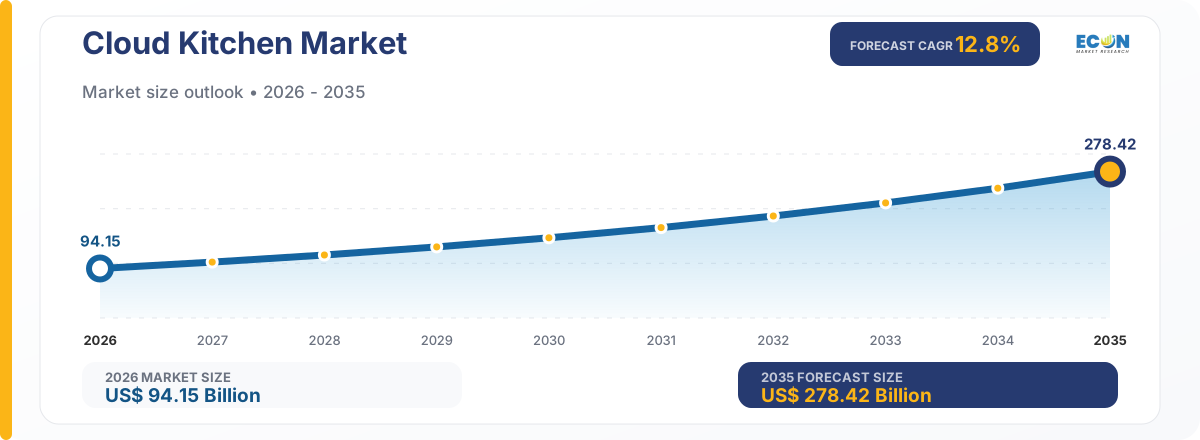
As per Econ Market Research analysis, the Global Cloud Kitchen Market valuation stood at US$ 94.15 Billion in 2026 and is expected to reach US$ 278.42 Billion by 2035, growing at a steady CAGR of 12.8% from 2026 to 2035. 2025 serves as the base year.
A cloud kitchen is a new food service model where food is prepared in professional kitchens and delivered directly to customers', doors. Unlike traditional restaurants, it has no dine-in area for customers. The business model will focus entirely on ordering online and delivery on third-party platforms like Uber Eats or DoorDash. This enables businesses to lower their rent and personnel costs while still meeting the future level of demand for easily accessed food.
In the last couple of years, the market for cloud kitchens has grown rapidly based on the shifts in changing consumer behaviors and the growing number of online food delivery services. Home-cooked food is preferred by many people nowadays, cloud kitchens include all kinds of cuisines, which leads to accommodating multiple tastes. The other attraction towards this model for entrepreneurs is that running many brands from one kitchen saves them from the higher costs of a new venture launch. With continued advances in technology, it',s expected that cloud kitchens will implement new solutions such as automated cooking and smart inventory management.
Dynamic Insights
The growing factor is demand for food delivery. This, however is also in turn spurred by online ordering platforms and a lifestyle change. With growing busy schedules, more consumers opt for quick dining services, wherein restaurants would be forced to adapt and adjust to this new wave through the implementation of cloud kitchens. It eventually works both ways-on the side of the consumer, where one',s need is satisfied and on the businessman',s end, whose overhead cost will be lower compared with those traditional restaurants.
The other key driver is the speed of technological innovation in kitchen equipment, food preparation processes, and delivery logistics to facilitate the operational function of cloud kitchens. Data Analytics can also be used for customer insight, and menus may be prepared selectively based on the different tastes of clients as their preferences change with time to assure complete appeal of the offerings. Market challenges include stiff competition as well as regulatory hurdles. The more players joining the market, the more necessary it becomes for them to differentiate their unique offerings and marketing strategies.
Drivers Insights
Growing Demand for Food Delivery Services
Growth in consumer appetite for food delivery largely fuels the market for cloud kitchens. Consumers have become busier over time and thus require convenient meals for their busy lives. This trend was very alive during and after the COVID-19 pandemic due to efforts to stay safe and within the comfort of one',s home while getting food deliveries. Cloud kitchens, focusing on delivery and takeout in most cases, are in an ideal position to reap this demand. Catering to a broad range of the customer preferences for offering diverse cuisines and quick service, they lead to higher volumes of orders and more loyalty from the customers.
Cost Efficiency and Flexibility
Cloud kitchens provide a more cost-effective alternative to traditional restaurants. By eliminating the need for a physical dining space, businesses can significantly reduce overhead costs such as rent, utilities, and front-of-house staff. This financial flexibility allows operators to experiment with different culinary concepts and menu offerings without the significant risk associated with conventional restaurant setups. Furthermore, cloud kitchens can quickly adapt to market trends by introducing new brands or modifying menus based on consumer preferences, which enhances their competitiveness and responsiveness in a fast-paced market.
Restraints Insights
Intense Competition
The cloud kitchen market is experiencing rapid growth, attracting numerous entrants seeking to capitalize on the trend. This influx of competitors intensifies the battle for market share, making it challenging for individual cloud kitchens to stand out. Differentiating through unique menu offerings, branding, and customer service becomes crucial for survival. Additionally, established food delivery platforms often favor larger, more recognized brands, making it difficult for smaller cloud kitchens to gain visibility and traction. This competitive landscape can lead to pricing wars, further squeezing profit margins.
Regulatory Challenges
Operating a cloud kitchen involves navigating various health and safety regulations, which can differ significantly by region. Compliance with food safety standards, sanitation practices, and zoning laws is essential but can be complex and time-consuming. Additionally, as the market evolves, regulations may also change, posing potential challenges for existing operators to remain compliant. These regulatory hurdles can result in increased operational costs and administrative burdens, particularly for new entrants who may lack experience in managing compliance issues.
Opportunities Insights
Expansion of Culinary Offerings
The cloud kitchen model allows for rapid experimentation with different cuisines and culinary concepts, presenting significant opportunities for growth. As consumers increasingly seek diverse dining experiences, cloud kitchens can introduce new brands or menus that cater to niche markets, such as plant-based options, international cuisines, or health-focused meals. This flexibility not only attracts a broader customer base but also encourages repeat business as consumers explore new flavors. Moreover, the ability to quickly pivot and adapt to culinary trends positions cloud kitchens favourably in an ever-changing food landscape.
Segment Analysis
By Nature of Kitchen
The nature of the kitchen is another means through which the cloud kitchen market can be segmented into standalone cloud kitchens, chain cloud kitchens, franchised cloud kitchens, and virtual restaurants. Independent standalone cloud kitchens operate alone and are totally focused on food delivery, without any brand affiliation. Chain cloud kitchens, however, are entities under a parent brand or Franchise, allowing consistency in food quality and service across various locations. Franchised cloud kitchens help entrepreneurs operate under an established brand with reputation and support. Virtual restaurants, finally, have no physical dining space at all and can run a number of brands under just one kitchen by using online platforms to fulfil orders.
By Offering
When considering the offerings, the cloud kitchen market includes food preparation, order management, food delivery, marketing, data analytics, and other services. Food preparation encompasses the entire cooking process, utilizing high-quality ingredients to ensure customer satisfaction. Order management systems streamline the order-taking process, ensuring accurate and timely deliveries.
Food delivery is a critical offering, leveraging partnerships with delivery platforms to reach customers efficiently. Additionally, marketing services focus on brand promotion and customer engagement, while data analytics helps operators understand consumer behaviour, optimize menus, and improve operational efficiency. The inclusion of other services may include packaging solutions, customer support, and specialized culinary consultations, enhancing the overall cloud kitchen experience.
By Business Model
In terms of business models, the cloud kitchen market can be categorized into Bring Your Own Kitchen, Kitchen as a Service, Fully Equipped Kitchens, Semi-Equipped Kitchens, and Order Management &, Delivery. The Bring Your Own Kitchen model allows chefs or entrepreneurs to utilize existing kitchens to launch their food businesses without significant investment in infrastructure.
Kitchen as a Service provides fully operational kitchen spaces that entrepreneurs can rent, complete with equipment and support services. Fully equipped kitchens come with all necessary appliances and tools, while semi-equipped kitchens offer a basic setup, allowing operators to customize as needed. Finally, the Order Management &, Delivery model focuses on providing solutions for processing orders and coordinating deliveries, making it easier for businesses to manage logistics without handling the cooking aspect themselves.
By Type
The cloud kitchen market by type can also be segmented into commissary/shared kitchens, kitchen PODs, independent cloud kitchens, food trucks, incubator kitchens, and others. Commissary/shared kitchens provide shared spaces where multiple food businesses can operate, allowing for reduced costs and resource sharing. Kitchen PODs are the portable kitchen units that can be deployed in different locations and provide ease of access to food preparation facilities.
Independent cloud kitchens offer a form of freedom to create without any affinity with a brand name, therefore, they are free to introduce innovative gastronomic delights. Food trucks are mobile locations equivalent to on-site catering services that provide food service options to different places and events. Incubator kitchens focus on fostering new food ventures through mentorship, access to resources, and shared usage of the kitchen. These incubators encourage innovation and entrepreneurship.
Regional Analysis
North America, primarily the US leads in this market due to the ever-growing demand for food delivery services and because of the good tech infrastructure in place. Busy lifestyles with a growing appetite for diverse cuisines propelled the cloud kitchen model throughout this region. Major cities such as New York, Los Angeles, and San Francisco are great centers for this model as consumers increasingly turn to online platforms to meet their dining needs. Asia-Pacific is one of the major drivers in the cloud kitchen market due to rapid urbanization and changing consumer patterns.
India and China are experiencing growth in food delivery mainly because of an expansion of middle-class populations and penetration of smartphones for online ordering. The diverse regional and international cuisines provide cloud kitchens with differentiation opportunities. Europe is also embracing the concept of cloud kitchens. The states of the UK and Germany are also adopting this track due to the surging demand for convenient dining solutions. Concerns of sustainability and health-consciousness have reflected in the menus, so the services offered by the cloud kitchens also have to be amended according to the need of these menus.
Competitive Landscape
Key players in this landscape include significant food delivery aggregators, including Uber Eats, DoorDash, and Grubhub, as they go through their relationship with cloud kitchens to efficiently deliver services. In addition to logistics support, these platforms open the doors to a much larger customer footprint for cloud kitchens. On the other hand, large restaurant chain firms have been embracing the cloud kitchen model as one of the means through which they can diversify their activities to keep up with the rising demands for delivery. This, in turn, creates a competitive environment.
Start-ups are also entering the market more and more, primarily with new, innovative business models and technology as a differentiator. Many new entrants, though, focus on niche specialties: healthy meals, ethnic cuisines, or plant-based. This strong position usually appeals to targeted consumer groups. With this dynamic marketplace, effective branding and marketing would be what differentiates a cloud kitchen from established players in that brand creation largely levels the playing field. Another advantage of investment in technology for companies has been made competitive, this is especially in menu optimization and engagement with customers combined with the use of automation to increase the efficiency of operations.
List of Key Players:
Dahmakan
Kitchen United
Kitopi
Rebel Foods
Zuul
Ghost Kitchen Orlando
CloudKitchens
Franklin Junction
Nextbite Brands LLC
REEF TECHNOLOGY INC.
Virturant Brands
Global Cloud Kitchen Report Segmentation:
Cloud Kitchen Market Report Scope & Segmentation
| Attributes | Details |
|---|---|
| Market Size (Current)Current market valuation | US$ 94.15 Billion in 2026 |
| Market Size (Forecast)Projected market valuation | US$ 278.42 Billion in 2035 |
| Growth RateCompound Annual Growth Rate | CAGR of 12.8% from 2026 to 2035 |
| Forecast PeriodAnalysis timeline | 2026 – 2035 |
| Base YearReference year for analysis | 2025 |
| Historical Data AvailablePast market data availability | Yes |
| Regional ScopeGeographical coverage | Global |
| Segments CoveredMarket segments analyzed | By Type
By Product Type
By Nature
|
Frequently Asked Questions
Common questions about this report
The study period covers historical insights and forecast projections for the period 2026-2035.
About the Author
Market research expert with years of industry experience

Dipali Bhingare serves as the Market Research Director at Econ Market Research. With a focus on translating complex global economic shifts into actionable business intelligence, she oversees the strategic direction of comprehensive market studies. Her work empowers organizations to navigate volatile industries through data-driven forecasting and deep-dive competitive analysis.