

CBD Oil Extract Market
CBD Oil Extract Market Size, Share, Trends, Growth, and Industry Analysis, By Source (Hemp, Marijuana), By Product Type (Full-Spectrum, Broad-Spectrum, Isolates), By Distribution Channel (B2B, B2C (Hospital Pharmacies, Online, Retail)), Regional Analysis and Forecast Period 2026-2035
CBD Oil Extract Market Overview
As per Econ Market Research analysis, the Global CBD Oil Extract Market size amounted to US$ 1.55 Billion in 2026 and is anticipated to grow to US$ 13.62 Billion by 2035, recording a CAGR of 27.6% during 2026–2035. The base year taken for analysis is 2025.
CBD Oil Extract Market Size 2025-2035 (USD Billion)

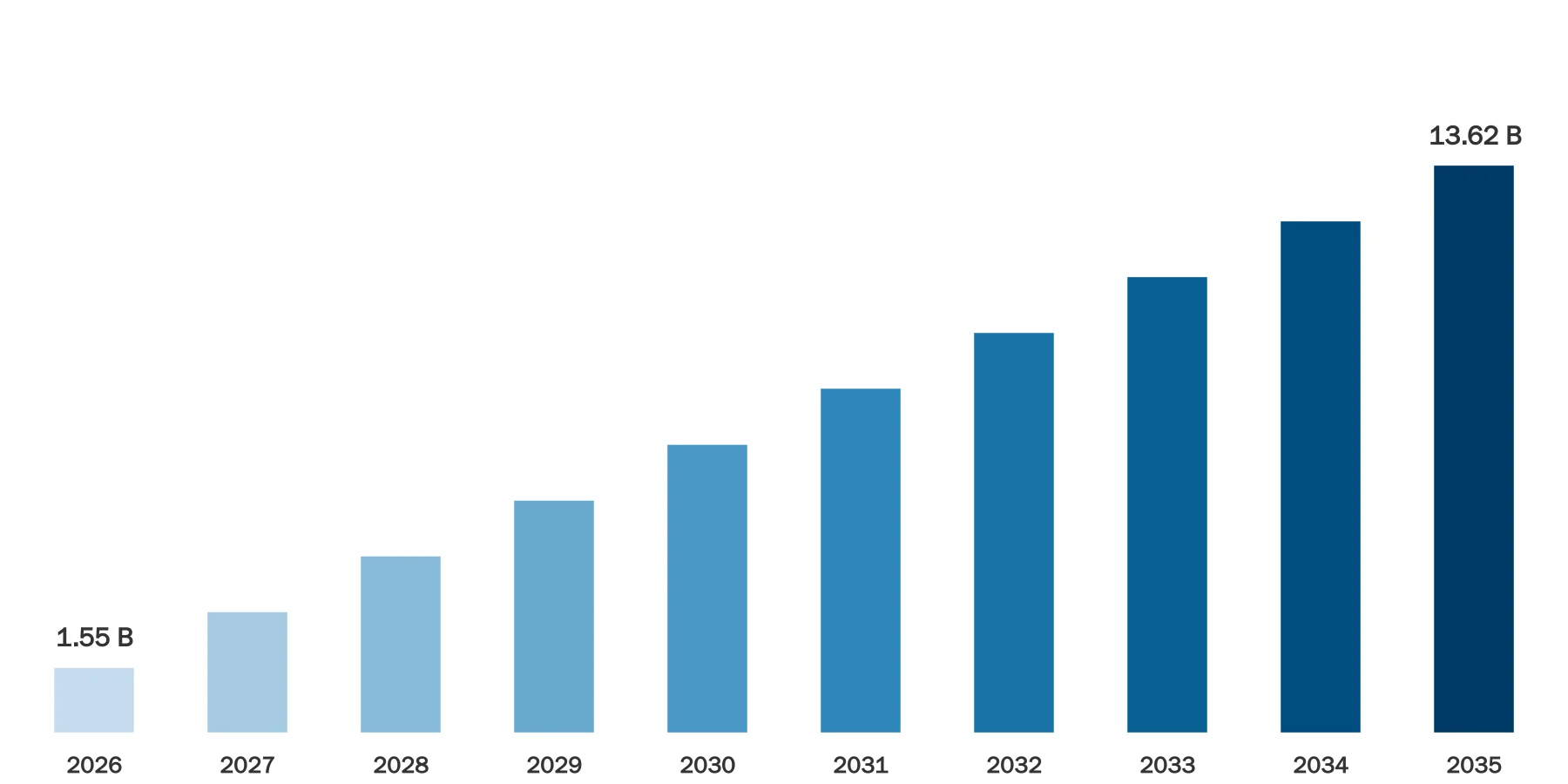
Source: Econ Market Research
The global CBD Oil extract market is a fast-growing sector of the health and wellness industry. Cannabidiol, or CBD, is a non-psychoactive chemical derived from the cannabis plant. Unlike THC, another chemical found in cannabis, CBD does not produce a ",high.", Instead, it is frequently utilized for its putative therapeutic effects, which include pain alleviation, less anxiety, and better sleep quality.
CBD oil demand has increased in recent years as more people learn about its potential health advantages. This rise is being driven by rising consumer interest in natural and holistic health treatments, as well as a growing acceptance of cannabis-derived goods. Legalization of hemp-derived CBD in several regions has further fuelled the market',s rise. The market is characterized by a wide range of products, including oils, tinctures, capsules, and topical applications, catering to diverse consumer needs. As research continues to explore the full potential of CBD, and as regulations evolve, the market is expected to continue its upward trajectory, offering opportunities for innovation and expansion across the globe.
CBD Oil Extract Dynamics
Consumer demand is a primary driver, fuelled by growing knowledge of CBD',s potential health advantages, such as chronic pain relief, anxiety reduction, and improved sleep. This increased interest is fuelled by a broader trend toward natural and wellness-oriented products, as people look for alternatives to standard medications.
Regulatory changes have a huge impact on the market. The legalization of hemp-derived CBD in several places has created new commercial potential. However, the regulatory landscape is still complex and differs by nation, affecting market access and product development. Companies must negotiate these restrictions carefully to guarantee compliance and capitalize on rising market opportunities.
Additionally, the market faces challenges such as the need for standardization and quality assurance. Variability in product formulations and concentrations can impact consumer trust and market stability. Ongoing research and development efforts aim to address these issues by improving product consistency and exploring new applications for CBD.
CBD Oil Extract Drivers
Increasing Consumer Awareness and Demand
The increased public knowledge of CBD oil',s potential health benefits is a significant market driver. As research demonstrates its ability to treat ailments such as chronic pain, anxiety, and sleeplessness, more people are turning to CBD oil as a natural alternative to standard pharmaceuticals. This shift toward natural wellness products is consistent with broader changes in consumer health and lifestyle choices, which drives demand. Consumer interest in CBD is increasing as it becomes more widely available and acknowledged, fuelling market growth.
Expanding Legalization and Regulation
The increasing legalization of hemp-derived CBD products in various regions around the world is a crucial factor propelling market growth. Countries like the United States, Canada, and several European nations have implemented regulations that allow for the sale and use of CBD oil, significantly expanding market access. This legal acceptance not only opens up new markets but also encourages investment in research and development, leading to a wider range of innovative CBD products. As more jurisdictions adopt favourable regulations, the market is expected to continue its expansion.
CBD Oil Extract Restraints:
Regulatory Uncertainty and Complexity
Despite progress toward legalization, the regulatory landscape for CBD oil remains complex and fragmented. Different countries and states have different rules and regulations governing CBD products, which can create hurdles to market access and complicate compliance for manufacturers. This regulatory ambiguity can impede market expansion and cause discrepancies in product quality and safety, impacting consumer trust and market stability.
Quality and Standardization Issues
The CBD oil market faces challenges related to product quality and standardization. Variations in product formulations, concentrations, and purity levels can impact consumer confidence and market reliability. Without standardized quality control measures, consumers may be wary of product effectiveness and safety. Ensuring consistent quality across products is crucial for maintaining market integrity and fostering consumer trust.
CBD Oil Extract Opportunities:
Growing Interest in Preventive Healthcare
The growing tendency toward preventive healthcare creates an opportunity for the CBD oil business. Customers are increasingly looking for items that promote general well-being and prevent health problems before they occur. CBD oil',s potential advantages for stress relief, sleep improvement, and overall wellness are consistent with this preventative health trend. By marketing CBD oil as a component of a holistic health regimen, businesses may tap into a rising section of health-conscious customers seeking proactive solutions.
Segment Overview
By Source Type
The CBD oil extract industry is divided into two segments based on the source: hemp and marijuana. Hemp-derived CBD is the most prevalent source because to its legal status and reduced THC concentration, making it a popular choice for a variety of products. Hemp is grown specifically for its CBD content and is often subject to tight regulations. Marijuana CBD, on the other hand, is derived from cannabis plants with greater THC levels and is commonly utilized in areas where recreational or medical marijuana is permitted. The choice between hemp and marijuana sources impacts product composition, legality, and market preferences, which influences total market dynamics.
By Extract Type
CBD oil extracts are categorized into full-spectrum extracts and cannabis isolates. Full-spectrum extracts contain a broad range of cannabinoids, terpenes, and other compounds from the cannabis plant, providing an ",entourage effect", where multiple components work together to enhance the therapeutic benefits. In contrast, cannabis isolates are purified forms of CBD with no other cannabinoids or compounds, offering a product with a high concentration of CBD alone. This segmentation impacts the product',s efficacy, consumer preference, and pricing, as full-spectrum extracts are often valued for their potential enhanced effects, while isolates are favoured for their purity and lack of THC.
By Extraction Method
The extraction method segment includes solvent-based and non-solvent-based methods. Solvent-based extraction utilizes chemicals like ethanol or CO2 to separate CBD from the plant material, which can be efficient but may leave residual Solvents in the final product. Non-solvent-based methods, such as CO2 supercritical extraction, use pressurized carbon dioxide to obtain CBD without the use of solvents, often resulting in a cleaner and more refined product. The choice of extraction method affects the quality, safety, and cost of the CBD oil, influencing consumer preferences and industry standards.
By Distribution Channel
Distribution channels for CBD oil include B2B (business-to-business) and B2C (business-to-consumer). B2B distribution involves supplying CBD oil to other businesses, such as manufacturers, wholesalers, and retailers, who then sell the products to end consumers. B2C distribution, on the other hand, involves selling directly to consumers through online platforms, retail stores, or specialized dispensaries. The distribution channel impacts market reach, customer engagement, and pricing strategies, with B2C channels allowing for direct interaction with consumers and B2B channels facilitating bulk transactions and broader market access.
By End Use
The CBD oil industry is classified into four end-use categories: medical, personal use, pharmaceutical, and wellness. Medical use includes products designed to treat specific health concerns, such as pain management or anxiety reduction, with an emphasis on therapeutic efficacy. Personal use encompasses typical consumer products for everyday wellbeing and lifestyle development. CBD oil is used in pharmaceuticals by including it into prescribed drugs, which must adhere to stringent regulatory criteria. Wellness items, such as vitamins and cosmetic products, are designed to boost general health and well-being. Each end-use category caters to diverse customer wants and regulatory restrictions, influencing market development and growth.
CBD Oil Extract Overview by Region
The market in North America, particularly in the United States and Canada, is well-developed as a result of broad legalization of hemp-derived CBD and growing acceptance of cannabis-based goods. The United States market benefits from a strong regulatory environment and substantial consumer demand, which is driven by both medicinal and wellness uses. Canada also promotes a well-regulated sector with substantial development potential.
The market in Europe is developing as rules surrounding hemp-derived CBD products become more uniform. Countries such as Germany, the United Kingdom, and Switzerland are driving growth, thanks to increased consumer awareness and favourable regulatory conditions. However, discrepancies in rules across EU member states might affect market consistency and product availability. In Asia-Pacific, the CBD oil market is emerging, with significant growth potential. Australia and New Zealand have made strides in legalizing and regulating CBD products, fostering market growth. In contrast, other regions in Asia face stricter regulations and slower adoption, which can hinder market development.
CBD Oil Extract Market Competitive Landscape
Major participants in the industry include Charlotte',s Web, CBDistillery, and Medterra, all of which have vast product portfolios, great brand awareness, and major R&,D investments. These organizations benefit from established supply chains, regulatory compliance knowledge, and broad distribution networks, which position them as market influencers.
In addition to these major brands, there is a growing number of smaller, inventive businesses that focus on niche markets and specialized products. To differentiate themselves, these companies frequently highlight novel formulations, organic sourcing, and cutting-edge extraction technology. Start-ups and smaller businesses are utilizing direct-to-consumer models and digital marketing methods to capture market share and engage with health-conscious consumers seeking high-quality, transparent products.
The competitive landscape is also shaped by collaborations and partnerships within the industry. Companies are forming alliances with research institutions, health organizations, and other stakeholders to advance product development, validate health claims, and navigate regulatory challenges. Additionally, the market is witnessing increased mergers and acquisitions as larger players seek to expand their portfolios and enter new geographic regions.
CBD Oil Extract Key Players:
Aurora Cannabis Inc.
Cannara
CannTrust
Canopy Growth Corporation
CANNABIS Aphria
Curaleaf
CURA CS, LLC.
Dixie Brands
GW Pharmaceuticals plc.
Hexo
KANNAWAY LLC.
KAZMIRA
NewAge Inc.
The Cronos Group
The Supreme Cannabis Company, Inc.
Tilray
VIVO Cannabis Inc.
CannazALL
Alkaline88, LLC.
CBD Oil Extract Recent Developments
In Jan 2024, Benuvia Operations, LLC, a leading FDA-registered, DEA-licensed, and cGMP-certified company specializing in pharmaceutical cannabinoids, and PharmaCielo Ltd. the Canadian parent company of Colombia&rsquo,s top producer of dried flower and medicinal-grade cannabis extracts, PharmaCielo Colombia Holdings S.A.S., are excited to announce a strategic partnership. This collaboration aims to produce cGMP pharmaceutical-grade Active Pharmaceutical Ingredients (",APIs",) for the global market, including Brazil, Australia, Europe, and the U.S.A.
In Dec 2023, SOMAÍ, Pharmaceuticals Unipessoal LDA, a European pharmaceutical and biotech company with EU-GMP certification that distributes cannabinoid-containing pharmaceuticals worldwide, has announced a significant three-year marketing and distribution agreement with Canify AG, a licensed pharmaceutical company specializing in Medical Cannabis. This partnership represents SOMAÍ, Pharmaceuticals&rsquo, strategic move into the German market through a collaborative brand-building effort and also expands Canify&rsquo,s portfolio to include extracted cannabis products.
CBD Oil Extract Report Segmentation
CBD Oil Extract Market Report Scope & Segmentation
| Attributes | Details |
|---|---|
Market Size (Current) | US$ 1.55 Billion in 2026 |
Market Size (Forecast) | US$ 13.62 Billion in 2035 |
Growth Rate | CAGR of 27.6% from 2026 to 2035 |
Forecast Period | 2026 – 2035 |
Base Year | 2025 |
Historical Data Available | Yes |
Regional Scope | Global |
Segments Covered | By Source
By Product Type
By Distribution Channel
|
Frequently Asked Questions
Common questions about this report
The study period covers historical insights and forecast projections for the period 2026-2035.
About the Author
Market research expert with years of industry experience

Related Reports
Explore more market insights from the same category