

Bioreactors and Fermenters Market
Bioreactors and Fermenters Market Size, Share, Trends, Growth, and Industry Analysis, By Type (Single-Use Bioreactors, Stainless Steel Bioreactors), By Bioprocess Type (Batch andamp; Fed-Batch, Continuous), By Scale (Lab-Scale, Pilot-Scale, Industrial-Scale), By End-User (Biopharmaceutical Companies, CROs andamp; CMOs, Academic andamp; Research Institutes), Regional Analysis and Forecast Period 2026-2035
Bioreactors and Fermenters Market Overview
As per Econ Market Research analysis, the Global Bioreactors and Fermenters Market reached a valuation of US$ 29.1 Billion in 2026 and is anticipated to grow to US$ 73.7 Billion by 2035, at a CAGR of 10.9% during the forecast timeline 2026–2035. The base year considered is 2025.
Bioreactors and Fermenters Market Size 2025-2035 (USD Billion)

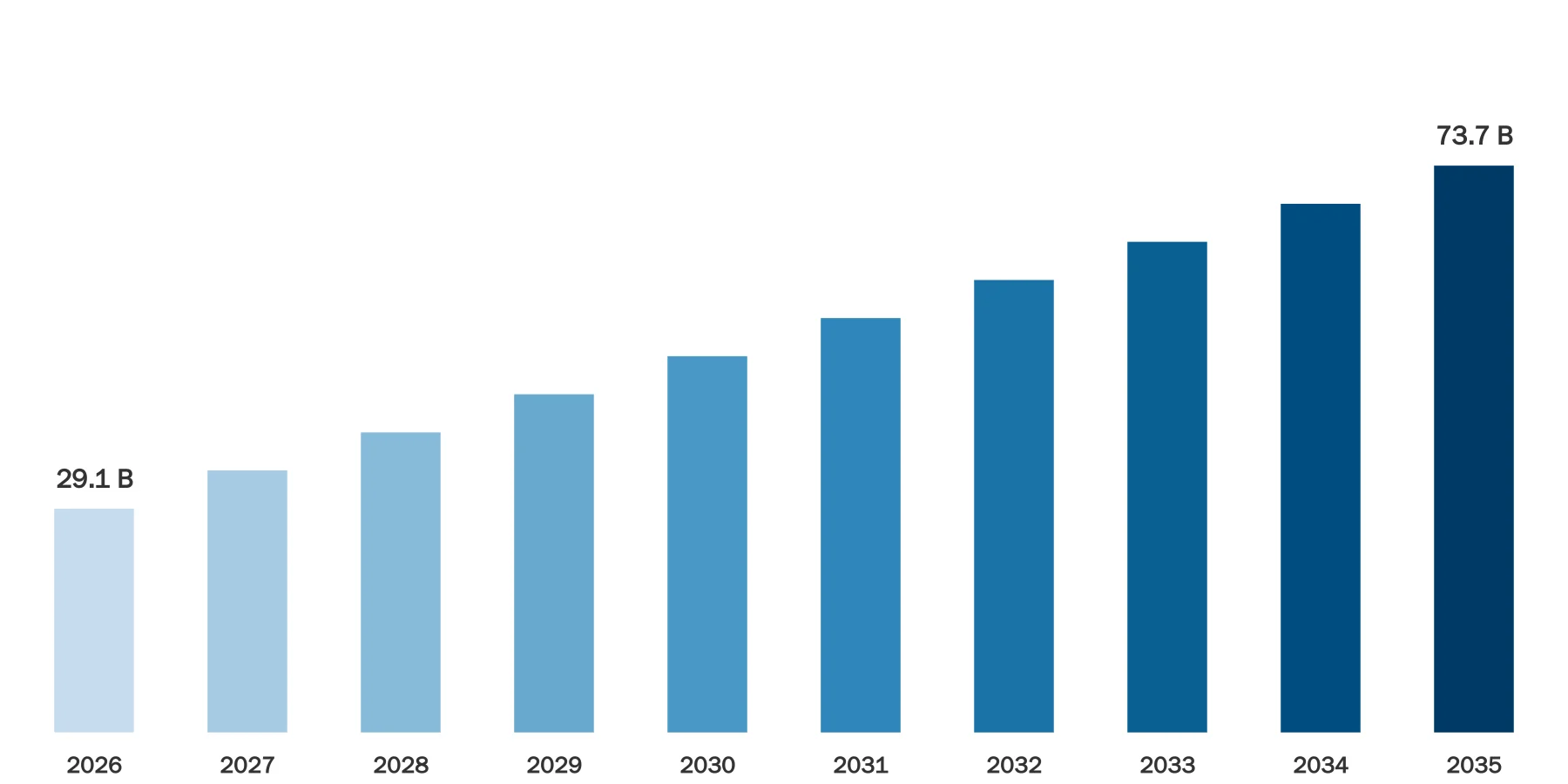
Source: Econ Market Research
Bioreactors are containers designed to provide a controlled environment for the growth of microorganisms, cells, or enzymes that catalyse biochemical reactions. Fermenters are specific types of bioreactors, used especially to perform fermentation processes in which the microorganisms break up sugars into alcohol, acids, or gases. These technologies can be considered the most critical in biotech, pharma, and food and beverage industries for efficient production of high-grade product.
The market for bioreactors and fermenters is growing due to the rising demand for biologics and biosimilars in healthcare, coupled with greater emphases on sustainability within the food sector. Technological progress, including automation and process optimization, enhance the performance and scalability of the systems. Increasing personal medicine trends along with soaring expenditure in research and development also propel the market. North America is an area dominating the market share with an inclusive pharmaceutical industry and well-developed research capabilities. In the other areas, increasing shares have been registered, one of which is Asia-Pacific-boosted by growing healthcare needs and investment in Biotechnology.
Dynamic Insights
Some of the major drivers driving this trend are the increasing demand for Biopharmaceuticals and biologics. This is primarily due to advanced care and personalized medicine. With the creation of new therapies, the implementation of efficient methods of production becomes more prominent. The second large driver is the advancement of biotechnology and the consideration of sustainable food development, which is prompting the use of bioreactors and fermenters.
However, the market also has challenges that may limit growth. The market is characterized by high up-front investment costs and operational complexities. This excludes smaller companies from participating in this market. Stringent regulatory requirements for the production of biologics also create complications when applying for approval, further delaying product launches. Opportunities are, however numerous. The Asia-Pacific region is growing investment in both biotechnology and healthcare infrastructures, thus building a way for future market expansion. Further automation and digitalization of bioprocessing also open up opportunity for innovation, leading to better efficiency and scalability.
Drivers Insights
Growing Demand for Biopharmaceuticals
The driving factors behind the growth of the biopharmaceuticals market have been the rise in chronic disease and the aging population. In manufacturing, biologics such as monoclonal antibodies and vaccines also require bioreactors and fermenters. Advanced treatment has proven to be successful in clinical practice since it offers targeted treatment for diseases.
The increasing demand for biopharmaceutical production with high quality is thus driven by the revolution of healthcare across the world towards personalized medicine. Demand drives innovation and investment in bioreactor technologies to enable the manufacturer to achieve productivity and economy in meeting the increased and large-scale demands for biologics.
Advancements in Biotechnology
Advances in biotechnology, particularly in bioprocessing and cell culture techniques, are increasingly making the bioreactors and fermenters more efficient. Techniques such as continuous processing, automation, and real-time monitoring systems are enhancing yield, reducing production times, and lowering operational costs. By virtue of these advantages, manufacturers can increase their production while ensuring the same quality of product.
Integration of Artificial Intelligence and machine learning into bioprocessing systems is further optimizing production parameters with better resource utilization and minimal wastage. The demand for bioreactors and fermenters in the development of biotechnology research will increase proportionate to the growth of the industry, hence encouraging competitiveness in productions.
Restraints Insights
High Initial Investment Costs
The high capital investment required to set up advanced bioprocessing equipment is one of the biggest factors challenging the market for bioreactors and fermenters. Smaller companies and start-ups often cannot afford the massive costs of purchasing and installation of sophisticated bioreactor systems. The large capital hurdle creates a barrier to entry for the market and restricts innovation.
In addition to this, the continuously ongoing costs of maintenance and operation can be a heavy burden and make it even unaffordable for the smaller companies to fight it out with the major players in the market. Thus, this restraint can avoid market growth because of its slowing down rate of new technologies adoption.
Stringent Regulatory Compliance
The biopharmaceutical industry is highly regulated with the concern of safety and effectiveness of the product. However, this complexity has made compliance tougher for manufacturers with regulations from regulatory agencies such as FDA and EMA which hampers these manufacturers to navigate these regulations and test their products by severe practices such as documentation.
Delays in receiving regulatory approvals can weigh on the time-to-market for new products and technologies. Such a complex regulatory environment may also form a greater hurdle to entry into a market, especially for new entrants and smaller companies that would not have resources or systems to manage compliance well.
Opportunities Insights
Focus on Sustainable Manufacturing Practices
The biopharmaceutical and food industries are gaining a significant emphasis on sustainability and environmental considerations. Consumers of today are increasingly turning towards green considerations, and manufacturers', focus has come into consideration to a considerable extent for sustainable production. Bioreactors and fermenters adopting green technologies-including waste minimization and energy-efficient operations-can aim for such productivity. Companies can innovate in the development of more sustainable bioprocessing solutions to the best of their alignment to the global goal of sustainability. Focusing on the environmentally friendly production methods will help make companies more competitive in the marketplace and open doors for consumers, as well as regulators, to accept them with open arms.
Segment Analysis
By Product
The market primarily consists of two main products: bioreactors and fermenters. Bioreactors are sophisticated vessels designed for controlled biochemical reactions, facilitating the growth of microorganisms or cells. They are vital for producing a range of biopharmaceuticals, including proteins and enzymes.
Fermenters, a subset of bioreactors, focus specifically on fermentation processes, where microorganisms convert substrates into valuable products such as alcohol and organic acids. Both bioreactors and fermenters vary in size and design, catering to the needs of different applications, from small-scale research to large-scale industrial production.
By Fabrication Material
The fabrication material of bioreactors and fermenters is crucial for ensuring product quality and maintaining sterility. The primary materials used in manufacturing these systems include glass, stainless steel, and single-use technologies. Glass bioreactors offer excellent visibility and are commonly used in laboratory settings for smaller-scale applications.
Stainless steel bioreactors are favoured in large-scale production due to their durability, resistance to corrosion, and ability to withstand high pressures and temperatures. Single-use systems have gained popularity due to their convenience, reduced contamination risk, and lower cleaning costs, making them ideal for flexible manufacturing processes.
By Bioprocess Type
Within the bioprocess type segment, batch, fed-batch, and continuous processes are included. In batch process, all the ingredients are added at one time, and without any added input, it waits for the reaction to finish. It is simple and well-suited when production volumes are small. In fed-batch processes, during cultivation in the bioreactor, the nutrients are constantly supplied which increases productivity as well as long growth phases. This type of processing involves the continuous input of raw materials in conjunction with the removal of products for the maximum yield and scalability. Every bioprocess type has its own advantages, which meets the specific production requirements in various industries.
By Biologic Type
The biologic type of segment involves the categorization of the produced biologics by using bioreactors and fermenters. This includes categories such as antibodies, vaccines, cell therapies, and other biologics. Antibodies, especially monoclonal antibodies, are essential for the treatment of different diseases including cancer and autoimmune disorders.
Vaccines are used to prevent infectious diseases. Their production process is essentially a part of bioreactors. Cell therapies include the application of living cells into the body to treat or prevent diseases. The other category of biologics is highly diversified, consisting of a range of products such as enzymes and hormones, thus underlining versatile uses of bioprocessing technologies.
By End-User
The end-user segment includes biopharmaceutical companies, contract research organizations, academic and research institutions, and beverage companies. Biopharmaceutical companies are the main end-users of bioreactors and fermenters, using these technologies to develop new therapy products and manufacture innovative medicines. Contract research organizations support the process of developing drugs in the industry and, therefore, may frequently require bioprocessing equipment in the case of research and clinical trials.
Bioreactors are educational and research-based apparatuses for academic and research institutions, which enhance innovations in the field of biotechnology. Fermentation technology is employed in the beverage industry to produce alcoholic beverages, functional drinks, and other fermented products, with cross-industry applications of bioprocessing technologies thereby confirmed.
Regional Analysis
North America is a key market due to reasons such as the mature biopharmaceutical industry, higher investments in research and development, the presence of big players, more advanced manufacturing facilities, and stronger regulatory systems. The United States has essentially been the heart of innovation in terms of biopharmaceuticals, accounting for a significant portion of the production requirements of bioreactors and fermenters for the production of biologics and biosimilars.
On the other hand, bioreactors and fermenters are emerging strongly in the Asia-Pacific region. Countries like China, India, and Japan are fast growing their economies, increasing healthcare expenditures, and developing a biotechnology sector. Government initiatives to promote biotechnology and pharmaceuticals and an increase in the number of research-based institutions are constructing the region',s capabilities in biomanufacturing.
Another driver that is likely to drive growth in this region includes the increasing interest in personalized medicine and rising incidence of chronic disease. Europe will be another large regional market for biopharmaceutical production, where high regulatory standards apply with a focus on quality and safety. Countries like Germany, France, and the UK are at the forefront, with strong manufacturing franchises of established biopharmaceutical companies utilizing advanced bioprocessing technologies.
Competitive Landscape
The major companies in the market are Thermo Fisher Scientific, Sartorius AG, Merck KGaA, and GE Healthcare, which have long experience, wide portfolios of products, and stronger R&,D capabilities. They are continuously investing in technology and expanding their manufacturing capacities to cater to the increasing demand for bioprocessing equipment. Collaborations and partnerships are some of the common strategies among such companies to enhance their market presence, gain access to new technologies, and expand into emerging markets.
More specialized companies and start-ups are emerging in the market. Such companies specialize in specific niches, such as single-use bioreactors, and also have interest in automation solutions. Such companies may also be agile, responsive to the prevailing market trend, and thus offer new products for specific needs of customers. The increasing focus on sustainability and green practices has also led companies to emphasize green technologies in bioprocessing solutions.
Rapid technological developments and investments in automation, real-time monitoring systems, and digital solutions have also played a role in the competitive dynamics. It is the case that companies in the bioreactors and fermenters market will have to deal with intensifying factors like high compliance in a regulation-oriented environment and cost pressures, while still having to exploit new markets and product innovation opportunities.
List of Key Players:
Applikon Biotechnology
Eppendorf
Solida Biotech
Solaris Biotech
Sartorius
Cytiva
Bionet
Ollital Technology
Merck
Parr Instrument Company
Shanghai Bailun Biological Technology
Global Bioreactors and Fermenters Report Segmentation
Bioreactors and Fermenters Market Report Scope & Segmentation
| Attributes | Details |
|---|---|
Market Size (Current) | US$ 29.1 Billion in 2026 |
Market Size (Forecast) | US$ 73.7 Billion in 2035 |
Growth Rate | CAGR of 10.9% from 2026 to 2035 |
Forecast Period | 2026 – 2035 |
Base Year | 2025 |
Historical Data Available | Yes |
Regional Scope | Global |
Segments Covered | By Type
By Bioprocess Type
By Scale
By End-User
|
Frequently Asked Questions
Common questions about this report
The study period covers historical insights and forecast projections for the period 2026-2035.
About the Author
Market research expert with years of industry experience

Dipali Bhingare serves as the Market Research Director at Econ Market Research. With a focus on translating complex global economic shifts into actionable business intelligence, she oversees the strategic direction of comprehensive market studies. Her work empowers organizations to navigate volatile industries through data-driven forecasting and deep-dive competitive analysis.
Related Reports
Explore more market insights from the same category