

Bacon Market
Bacon Market Size, Share, Trends, Growth, and Industry Analysis, By Product Type (Standard Bacon, Ready-to-Eat Bacon), By Meat Type (Pork, Beef, Turkey, Chicken), By Cut Type (Sliced Bacon, Bacon Bits/Crumbles, Slabs), By Distribution Channel (Foodservice, Retail), Regional Analysis and Forecast Period 2026-2035
Market Overview
As per Econ Market Research analysis, the Global Bacon Market accounted for US$ 76.49 Billion in 2026 and is expected to surpass US$ 98.93 Billion by 2035, witnessing a CAGR of 2.9% throughout 2026–2035. The analysis is based on 2025 as the base year.
Bacon Market Size 2025-2035 (USD Billion)

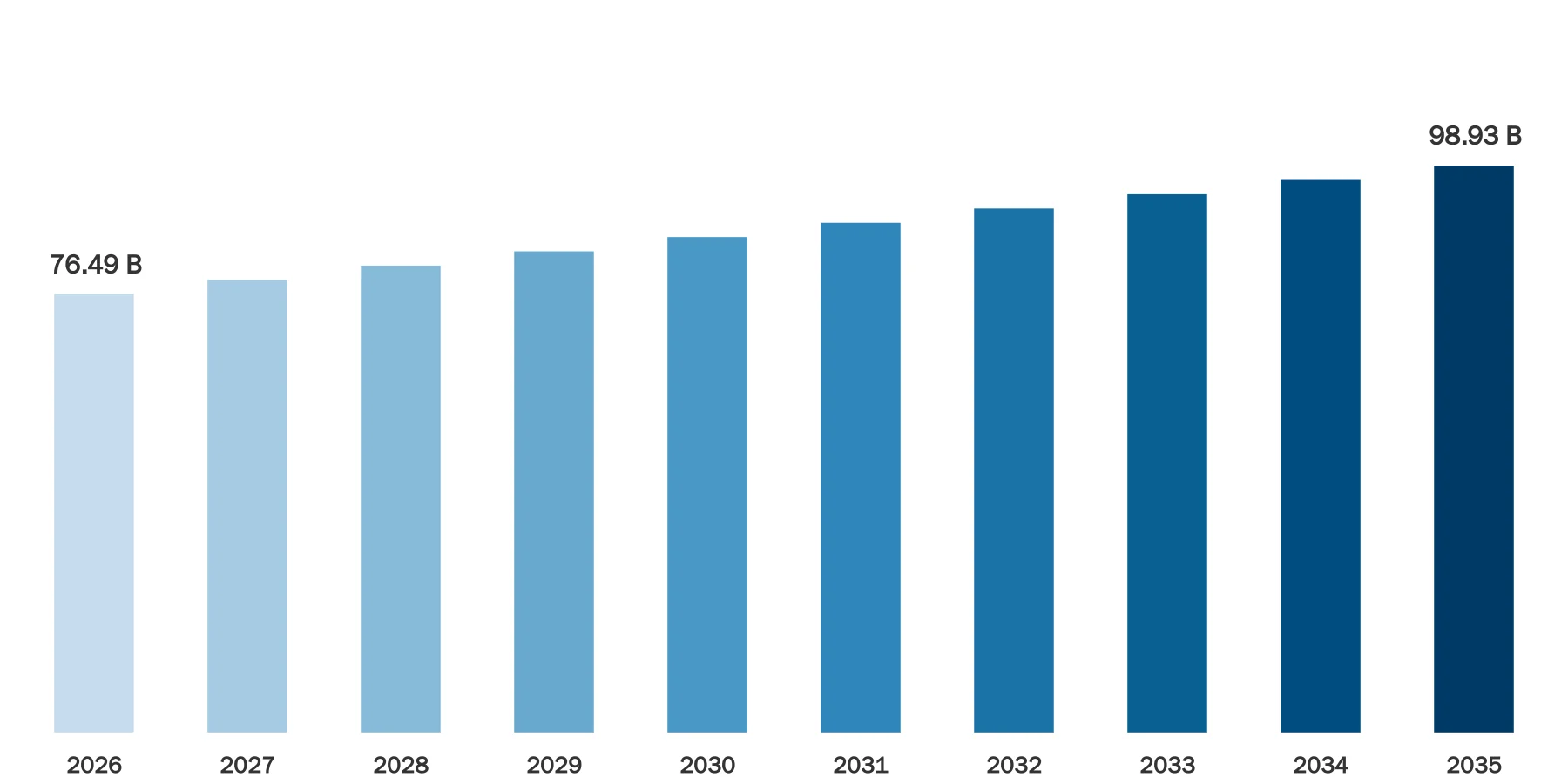
Source: Econ Market Research
The manufacture and marketing of cured pork belly strips define the bacon market, a vibrant segment of the food business. Because of its rich flavor, adaptability, and extensive use in a variety of culinary applications, bacon is very popular. In addition to being a necessary morning staple, it',s also popular in salads, sandwiches, and a variety of other cuisines as a flavor enhancer. Bacon has progressed beyond its basic forms over time, with artisanal and flavored variations meeting a range of customer tastes. As consumers place a greater focus on sustainability, quality, and health-conscious options, the bacon market is responding to these changes by providing a variety of options.
Bacon Dynamics
Growing customer demand for healthier options has resulted in a demand for a variety of bacon options, including flavored and lean variants. By releasing cutting-edge, high-end, and ethically sourced goods, producers are responding to these trends. Further influences on market dynamics are changes in the price of meat, interruptions in the supply chain, and worldwide economic variables. Cost-effectiveness and efficiency are influenced by technological developments in production and distribution. In order to achieve sustainable growth and satisfy the evolving needs of today',s discriminating customers, cooperation within the industry is essential as the bacon market navigates these issues.
Bacon Drivers
Innovation and Premiumization
The market for bacon is seeing innovation and premiumization due to customers', growing desire for distinctive flavors, premium goods, and gourmet experiences. Producers use unique flavor profiles, handcrafted production techniques, and premium ingredients to set themselves apart from the competition. This driver is indicative of a larger trend toward more sophisticated eating establishments and a willingness to spend more for higher materials and workmanship. Bacon producers can keep a competitive edge in the market and grab consumer interest by consistently innovating and focusing on premiumization.
Changing Consumer Preferences
Different bacon options are what consumers are looking for, including as slimmer cuts, variations with less sodium, and unique flavors. The necessity for bacon producers to be adaptable and flexible in order to satisfy changing consumer demands is highlighted by this driver. Maintaining market relevance and sustaining customer pleasure requires an ability to recognize and adapt to shifting consumer preferences, whether it',s satisfying health-conscious consumers or exciting palates with novel flavors.
Restraints:
Supply Chain Disruptions
Disruptions in the supply chain have a substantial negative influence on production, availability, and distribution, which limits the bacon market. Natural disasters, transportation problems, or livestock diseases can all impede the movement of raw materials and completed goods. Shortages of supplies, higher manufacturing costs, and difficulties satisfying customer demand are the results of these disruptions. Uncertainty in the supply chain can also impair consumer confidence, threaten market stability, and interfere with bacon producers', and retailers', long-term expansion plans.
Health Concerns
As customers grow more conscious of the health hazards connected to consuming processed and high-fat pork, there are noticeable limitations in the bacon market due to health concerns. Demand is dropping in part because of studies connecting bacon intake to diseases including cancer and heart disease. Sales are impacted when health-conscious customers look for alternatives or cut back on bacon. Strict laws governing health claims and labeling further limit the market. Sustaining consumer confidence and market viability requires addressing these issues with innovative products and open communication.
Opportunities:
Convenience and Ready-to-Eat Products
There is a demand for pre-cooked, microwaveable, or pre-packaged bacon items due to busy lifestyles and an increasing desire for quick supper options. Bacon producers can satisfy consumers who are always on the go, busy families, and people looking for quick meal alternatives by providing these convenient options. Additionally, bacon can be included in new consumption contexts like snacks and salads, and sandwiches thanks to convenience-focused goods.
Leveraging e-commerce platforms
Because internet buying is becoming more and more popular and convenient, bacon manufacturers may now reach a wider audience outside of traditional retail channels. They may provide a large selection of bacon items directly to customers by creating an online presence, making ordering and delivery simple. Additionally, e-commerce platforms give chances for customized promotions, targeted marketing, and the collection of insightful consumer data to improve customer satisfaction and optimize product offerings.
Segment Overview
By Type
Based on type, the global bacon market is divided into dry cured, immersion cured, pumped bacon, and others. The dry-cured category dominates the market with the largest revenue share in 2023. The process of making dry-cured bacon involves rubbing salt and seasonings all over the pork belly. After that, the bacon is given a long time to cure, which lets the salt seep into the meat and extract moisture to help preserve it. Bacon that has been cured by immersion is made by immersing the pig belly in a brine solution that contains sugar, salt, water, and curing agents such as sodium nitrite or sodium nitrate. Pumped bacon, sometimes called brine-injected bacon, is made by employing specialized equipment to inject a curing solution into the pork belly.
By Product Type
Based on the product type, the global bacon market is categorized into standard bacon and ready-to-eat bacon. The ready-to-eat bacon category leads the global bacon market with the largest revenue share in 2023. As the name implies, ready-to-eat bacon is bacon that has been cooked ahead of time and packaged so that it may be consumed right away without further cooking. Usually sold as precooked slices or strips, this variety of bacon is thoroughly cooked during manufacturing. The term ",standard bacon", describes the type of bacon that is traditionally consumed after being cooked. This kind of bacon is frequently utilized in a variety of culinary applications and is usually sold raw and uncooked, whether in slices or slabs.
By Distribution Channel
Based on the distribution channel, the global bacon market is segmented into supermarkets and hypermarkets, independent retailers, specialist retailers, and others. The supermarkets and hypermarkets segment dominates the bacon market. Supermarkets and hypermarkets are huge grocery stores that house a variety of food items, including bacon.
Serving a wide range of patrons, these businesses frequently stock different bacon brands and kinds. Independent retailers function autonomously from larger chains and include specialty food stores, corner stores, and smaller grocery stores. Butcher shops, charcuteries, and gourmet food stores are examples of stores that specialize in particular product categories and are referred to as specialist retailers.
By Nature
Based on nature, the global bacon market is divided into organic and conventional. The organic category dominates the market with the largest revenue share in 2023. Pigs reared on approved organic farms that follow stringent organic farming guidelines are used to create bacon that is certified organic. The use of artificial fertilizers, growth hormones, antibiotics, synthetic pesticides, and genetically modified organisms (GMOs) in pig feed and management is forbidden under these regulations. Alternatively, conventional bacon comes from pigs that are reared using standard farming practices, which may include synthetic fertilizers, antibiotics, pesticides, and other inputs.
Bacon Overview by Region
The global bacon market is categorized into North America, Europe, Asia-Pacific, and the Rest of the World. North America emerged as the leading region, capturing the largest market share in 2023. Bacon is a common element in many recipes and a mainstay in North American diets, hence the area has a strong heritage of bacon eating. Furthermore, a reliable supply of bacon to satisfy consumer demand is guaranteed by North America',s robust pork sector, a plethora of hog production facilities, and effective distribution networks.
The region',s inventive food culture and varied culinary environment have also sparked the creation of a wide range of bacon flavors and products, which have helped the industry expand throughout North America by meeting changing customer demands. Throughout the forecast period, Asia-Pacific is anticipated to post a significant CAGR. The demand for bacon and other Western-style food products in the region is being driven by factors such as increasing urbanization, increased disposable incomes, and shifting dietary habits. In addition, the developing food service sector, growing retail networks, and rising consumer awareness of bacon',s culinary versatility are all contributing to the market',s growth. Furthermore, the region',s sizable population base creates a sizable consumer market, providing plenty of opportunity for bacon producers to profit from Asia-Pacific',s expanding demand.
Bacon Competitive Landscape
In the global bacon market, a few major players exert significant market dominance and have established a strong regional presence. These leading companies remain committed to continuous research and development endeavors and actively engage in strategic growth initiatives, including product development, launches, joint ventures, and partnerships. By pursuing these strategies, these companies aim to strengthen their market position, expand their customer base, and capture a substantial share of the market.
Bacon Market Leading Companies:
Foster Farms
Fresh Mark Inc.
Great British Meat Company
Hormel Foods Corporation
Karro Foods Group Limited
Maple Leaf Foods Inc.
OSI Group
Seaboard Corporation
Smithfield Foods Inc.
The Kraft Heinz Company
True Story Foods
Tyson Foods Inc. and various others.
Bacon Recent Developments
In August 2022, Hormel Foods intended to implement a fresh business strategy. Hormel Foods Corp. established three divisions to implement a new business plan: international, food service, and retail. The goal of the new operating model is to help Hormel achieve its strategic goals, which include becoming a leader in the food service industry, strengthening and expanding its core brands, expanding its reach globally, increasing its scale in snacking and entertaining, boosting the expansion of its cultural and food-forward portfolios, and revolutionizing the business.
Bacon Market Report Segmentation
Bacon Market Report Scope & Segmentation
| Attributes | Details |
|---|---|
Market Size (Current) | US$ 76.49 Billion in 2026 |
Market Size (Forecast) | US$ 98.93 Billion in 2035 |
Growth Rate | CAGR of 2.9% from 2026 to 2035 |
Forecast Period | 2026 – 2035 |
Base Year | 2025 |
Historical Data Available | Yes |
Regional Scope | Global |
Segments Covered | By Product Type
By Meat Type
By Cut Type
By Distribution Channel
|
Frequently Asked Questions
Common questions about this report
The study period covers historical insights and forecast projections for the period 2026-2035.
About the Author
Market research expert with years of industry experience

Dipali Bhingare serves as the Market Research Director at Econ Market Research. With a focus on translating complex global economic shifts into actionable business intelligence, she oversees the strategic direction of comprehensive market studies. Her work empowers organizations to navigate volatile industries through data-driven forecasting and deep-dive competitive analysis.
Related Reports
Explore more market insights from the same category