

Baby Food Market
Baby Food Market Size, Share, Trends, Growth, and Industry Analysis, By Product Type (Milk Formula, Dried Baby Food, Prepared Baby Food, Others), By Category (Organic, Conventional), By Form (Powder, Liquid, Solid), By Distribution Channel (Supermarkets/Hypermarkets, Pharmacies, Convenience Stores, Online Retail), Regional Analysis and Forecast Period 2026-2035
Market Overview
As per Econ Market Research analysis, Global Baby Food Market size stood at US$ 124.62 Billion in 2026 and is projected to reach US$ 225.64 Billion by 2035, growing at a CAGR of 6.83% over the forecast period 2026–2035. 2025 is taken as the base year.
Baby Food Market Size 2025-2035 (USD Billion)

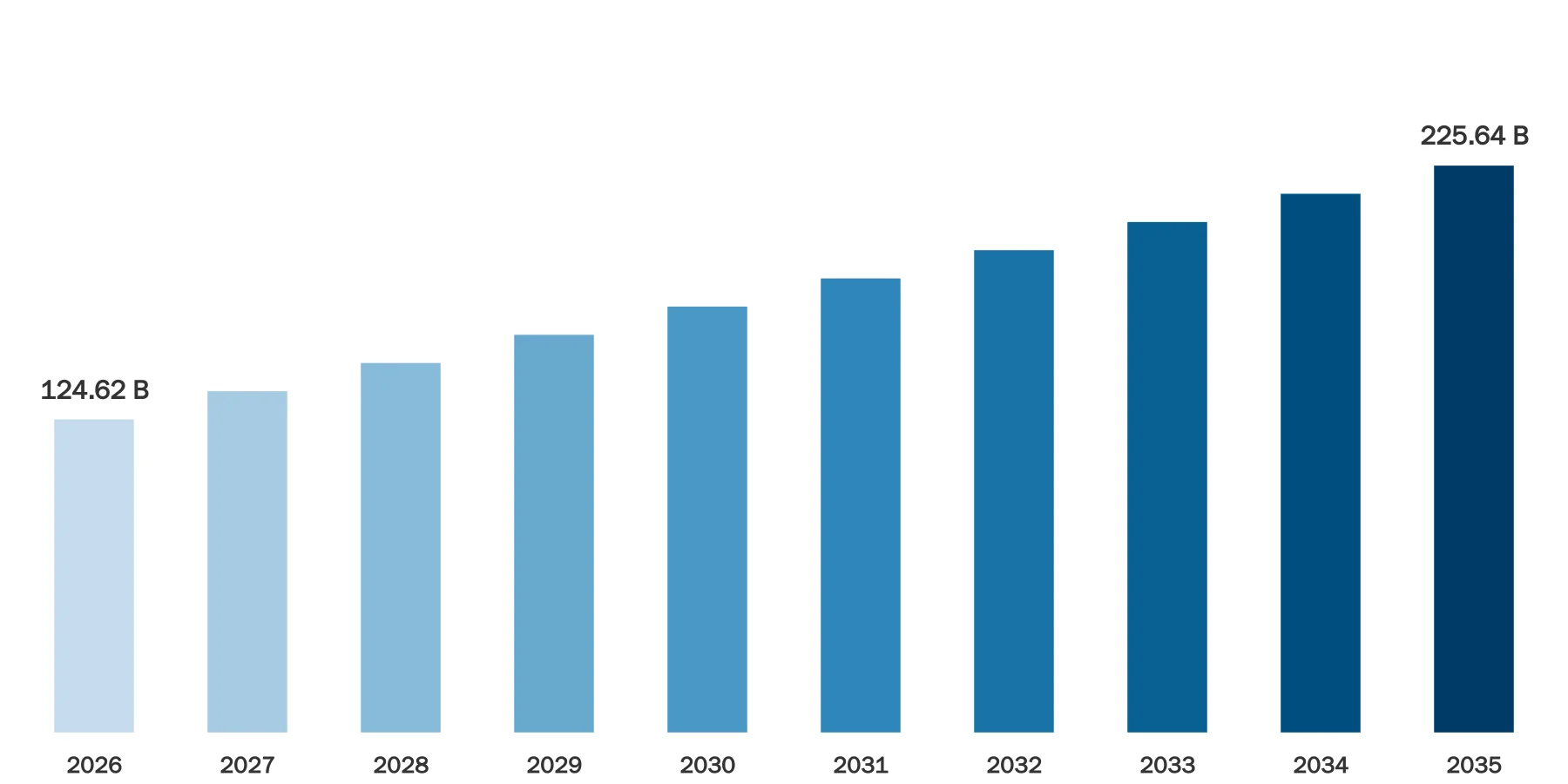
Source: Econ Market Research
Meeting the dietary requirements of newborns and toddlers, the baby food market is a quickly expanding sector. A wide variety of items, like as purees, cereals, snacks, and formula, are available in the market, driven by growing recognition of the significance of early childhood nutrition. Demand for novel and organic products is driven by concerns from parents about quality, health, and convenience. To accommodate changing customer tastes, major players frequently provide new flavors, textures, and packaging. Strict safety regulations that prioritize supplying nutrient-rich, well-balanced products to promote babies', healthy growth are what define the market and will likely influence early childhood nutrition in the future.
Baby Food Dynamics
There are several elements that impact the dynamics of the infant food business, such as evolving parenting methods, heightened consciousness about nutrition, and an increasing focus on natural and organic ingredients. Product innovation is fueled by shifting consumer desires, such as the need for convenience and a wider range of flavor profiles. Market trends are also influenced by government laws, parental worries about allergies, and economic issues. The proliferation of e-commerce platforms enhances product visibility and accessibility. To obtain a competitive advantage, important players form partnerships and engage in strategic marketing. In general, the market shows how societal, economic, and consumer-driven forces interact dynamically to shape the infant food product landscape.
Baby Food Drivers
Rising Trend of Organic and Natural Products
Parents', increased worries for the health and well-being of their infants are fueling the trend toward more organic and natural baby food items. A growing number of parents are looking for products without artificial additives or pesticides, having learned about the possible advantages of using natural and organic components. This pattern influences consumers', decisions to buy, supporting a larger cultural movement in favor of healthy lives. In order to satisfy the demands of consumers who are health-conscious in the constantly changing baby food market, manufacturers are producing and promoting baby food options that have organic and natural certifications.
Innovation in Flavors and Textures
The changing need of consumers for a wide range of enticing options is what',s driving innovation in baby food flavors and textures. Infants', palates should be developed early on, therefore parents try to expose them to a range of tastes and textures. In response to shifting consumer preferences, manufacturers consistently offer intriguing and inventive flavor profiles along with a variety of textures. By improving the whole sensory experience for infants making the switch to solid foods, this trend complies with the wider consumer expectation for variety and customization.
Restraints:
High Cost of Organic and Specialty Products
A wider range of consumers are prevented from acquiring these high-end solutions due to affordability issues, which may provide an economic barrier for many. The increased manufacturing costs linked to premium ingredients and certification procedures drive up retail prices even with the growing demand for organic products. This restriction limits the market',s inclusiveness and can prevent parents on a tight budget from having access to these specialty and health-conscious options.
Safety Concerns and Product Recalls
Contamination, poor quality control, or incorrect labeling might result in health hazards and recalls later on, which can damage a brand',s reputation. Strict safety regulations, traceability, and quality control become essential. These kinds of things can have negative effects on a company',s reputation, financial losses, and legal ramifications. This poses a serious problem for companies in the cutthroat baby food market.
Opportunities:
E-commerce and Direct-to-Consumer Channels
Baby food makers have direct access to a larger consumer base through e-commerce and direct-to-consumer channels, which presents a substantial opportunity in the market. The growing inclination towards e-commerce facilitates more effective marketing, more efficient distribution, and more visibility for brands. Direct client interactions allow businesses to get insightful feedback, customize marketing campaigns, and enhance customer satisfaction. In the cutthroat infant food business, this trend offers opportunities for growth, market expansion, and enhanced brand engagement by catering to consumers', evolving expectations for easy and accessible buying experiences.
Development of Eco-Friendly and Sustainable Packaging Options
Customers are selecting products with environmentally conscious packaging more and more as environmental responsibility becomes more and more important. Businesses that invest in sustainable solutions not only lessen their influence on the environment, but also satisfy consumer demand for morally and ecologically responsible products. This trend enables companies to stand out from the competition, draw in eco-aware customers, and connect their brand to larger sustainability initiatives all of which promote enduring client loyalty and a favorable brand image.
Segment Overview
By Nature
Based on nature, the global baby food market is divided into organic and inorganic. The organic category dominates the market with the largest revenue share in 2023. Many people believe that organic baby food is better for the environment and healthier. In an effort to give babies a more natural and healthful diet, it does not include artificial additives, preservatives, or pesticides. Compared to organic options, inorganic infant food is usually more accessible and may be less expensive.
By Product Type
Based on the product type, the global baby food market is categorized into milk formula, ready baby food, mother milk substitute, cereal food, vegetable and fruit purees, frozen foods, and others. The ready baby food category leads the global baby food market with the largest revenue share in 2023. Prepackaged, convenient infant foods that save parents time and effort by requiring little preparation. Pureed fruits, vegetables, and meats can fall under this category.
Products made to replace breast milk in cases where nursing is not feasible, such as formula or other replacements. The first solid food given to babies is baby cereal, which is often in the form of powder. For the baby',s growth and development, these cereals are enhanced with vital nutrients. Pureed fruits and vegetables, usually in the form of jars or pouches, offer a smooth and readily assimilated introduction to a diverse range of flavors and sensations for infants. Purees, finger foods, and meals made from frozen baby food have a longer shelf life without sacrificing nutritional value.
By Ingredients
Based on ingredients, the global baby food market is segmented into fats and oils, lactose, protein, flour, vitamins &, minerals, and others. The protein segment dominates the baby food market. Proteins, which are essential for growth and development, can be found in dairy, meat, or plant-based foods for infants. The proteins found in infant formulae are sourced in a balanced manner. Baby food frequently contains fats and oils from plant-based sources such as vegetable oils, fish oil, or other fats. The natural sugar present in milk, including formula and breast milk, is called lactose. It functions as a supply of carbohydrates, giving the infant energy.
By Distribution Channel
Based on the distribution channel, the global baby food market is divided into supermarkets and hypermarkets, small grocery retailers, convenience stores, online stores, and others. The supermarkets and hypermarkets category dominates the market with the largest revenue share in 2023. Large retail stores provide a large selection of baby food items, such as cereals, purees, snacks, and formula. Parents may shop for all they need in one place at these stores.
Nearby or local supermarket stores that might stock a range of things for infant meals. While they might not have as wide of a selection as larger businesses, they are nevertheless convenient for the local population. E-commerce sites and internet merchants who provide a large selection of infant food items. Parents can explore and buy things online through this channel, which also offers the convenience of home delivery.
Baby Food Overview by Region
The global baby food market is categorized into North America, Europe, Asia-Pacific, and the Rest of the World. Asia-Pacific emerged as the leading region, capturing the largest market share in 2023. Convenient infant food items that are nutritionally balanced are in high demand due to factors like changing lifestyles, rising disposable incomes, and rapid urbanization. A substantial consumer base is provided by the region',s enormous population, especially in nations like China and India. Market expansion is also fueled by the adoption of Western parenting practices and a rising understanding of the significance of nutrition for young children.
The growth of international baby food companies in the region and government programs promoting newborn health are further factors in Asia-Pacific',s leadership position. Throughout the forecast period, North America is anticipated to post a significant CAGR. Sustained market growth is facilitated by a persistent focus on health-conscious consumer trends, heightened awareness of newborns', nutritional needs, and the growing popularity of organic and natural baby food products. The need is also fueled by the growing number of working parents who are looking for easy-to-use yet wholesome infant food options.
Baby Food Competitive Landscape
In the global baby food market, a few major players exert significant market dominance and have established a strong regional presence. These leading companies remain committed to continuous research and development endeavors and actively engage in strategic growth initiatives, including product development, launches, joint ventures, and partnerships. By pursuing these strategies, these companies aim to strengthen their market position, expand their customer base, and capture a substantial share of the market.
Baby Food Market Leading Companies:
Nestlé,
Danone S.A.
Reckitt Benckiser Group plc
Abbott
China Feihe Limited
HiPP
The Kraft Heinz Company
Hero Group
Yili Industrial Group Co. Ltd
Kewpie Corporation, and various others.
Baby Food Recent Developments
In June 2023, The Canadian organic baby food firm was acquired by Nature',s Path. Love Child Organics, a Canadian-based organic baby food and kids snack company is being acquired by Nature',s Path Organic Foods. Through the acquisition, Love Child Organics products will be allowed to be sold in the US market by Nature',s Path Organic Foods.
In April 2023, A deal has been reached by Kraft Heinz to sell its infant food business in Russia to Chernogolovka, a regional food and beverage company. The two factories, the ",Umnitsa", and ",Sami s usami", brands, and the rights to the Heinz Baby brand for a maximum of six months are all part of the deal.
In October 2021, With the option to purchase an additional 29% of Amara',s shares at a USD$100,000,000 valuation, Eat Well Investment Group Inc. is happy to announce that it has reached a definitive agreement to acquire a preferred equity position in PataFoods, Inc. dba Amara Organic Foods, a rapidly expanding plant-based baby food brand in North America.
In June 2021, The biggest and fastest-growing plant-based kid nutrition company, Once Upon a Farm, has announced the acquisition of Raised Real, a well-known organic baby food meal delivery service with a focus on plants, along with all of the business',s operational assets.
Baby Food Market Report Segmentation
Baby Food Market Report Scope & Segmentation
| Attributes | Details |
|---|---|
Market Size (Current) | US$ 124.62 Billion in 2026 |
Market Size (Forecast) | US$ 225.64 Billion in 2035 |
Growth Rate | CAGR of 6.83% from 2026 to 2035 |
Forecast Period | 2026 – 2035 |
Base Year | 2025 |
Historical Data Available | Yes |
Regional Scope | Global |
Segments Covered | By Product Type
By Category
By Form
By Distribution Channel
|
Frequently Asked Questions
Common questions about this report
The study period covers historical insights and forecast projections for the period 2026-2035.
About the Author
Market research expert with years of industry experience

Related Reports
Explore more market insights from the same category